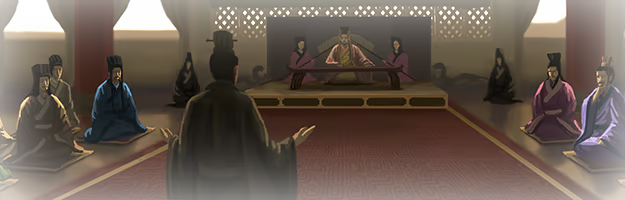
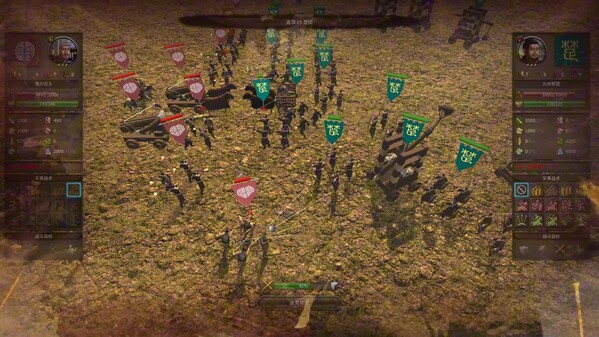
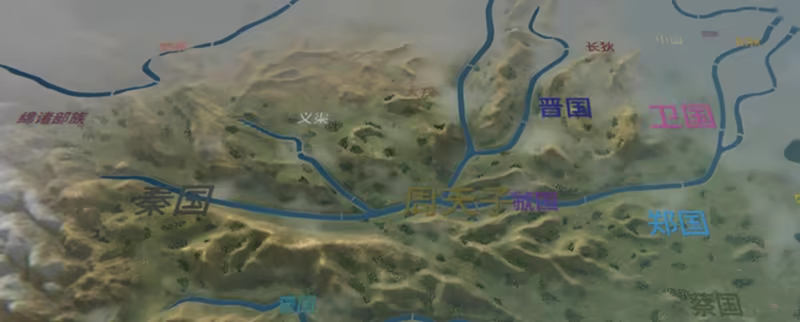
NationWar 2.0 is a big strategy game based on the theme of the Spring and Autumn and Warring States period. There are more than 60 countries to choose from in the game. Map 1: 1 restores the mountainous landscapes and rivers of China.
Modeled estimate, not a reported figure. How we estimate →
Media
About
NationWar 2.0 is a big strategy game based on the theme of the Spring and Autumn and Warring States period. There are more than 60 countries to choose from in the game. The game incorporates historical celebrities during the Spring and Autumn and Warring States Period, a hundred controversies, economic and trade culture, and war strategy. Map 1: 1 restores the mountainous landscapes and rivers of China. Three civilizations (Huaxia, primitive, nomadic), and the competition of eight cultures. Can you rule the world like Qin Shihuang?

The game started on the Chinese earth in the eighth century BC. At this time, the once powerful Zhou royal family, due to the faintness of the emperor and the constant civil strife of the royal family, has gradually declined.
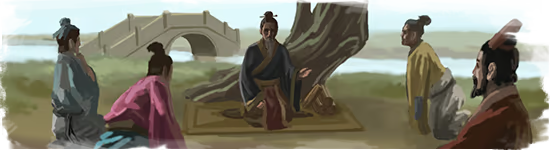
The most terrible disaster that the royal family will face soon, but everything has not been settled yet. Whether it is the ZTE Zhou Dynasty, rebuilding order, restoring Zhou Li, or competing for the Central Plains, replacing it, or even changing the summer into the Central Plains, all in the hands of players.
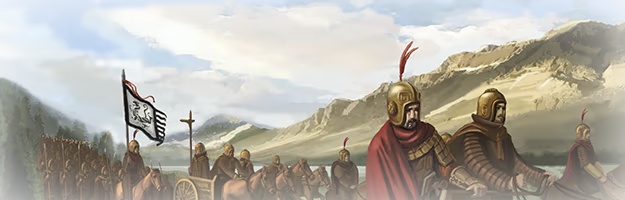
The game contains the vast majority of countries in the Spring and Autumn Period, including their respective arms, characteristics, and culture.
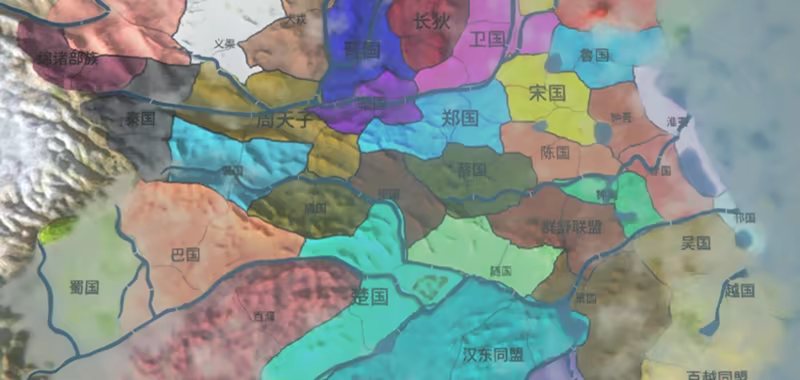
A strategic map contains all, players can either raise the perspective to overlook, or pull down the perspective to view the details.
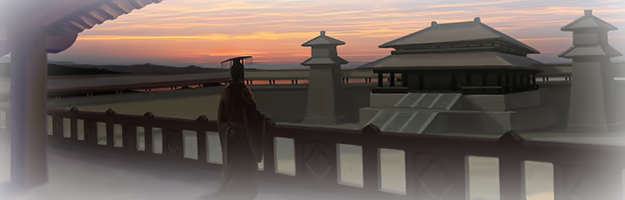
1. Classic technology tree: After research, the technology tree made according to the development history of Chinese science and technology, each technology has related verses or sentences quoted from Chinese classics.
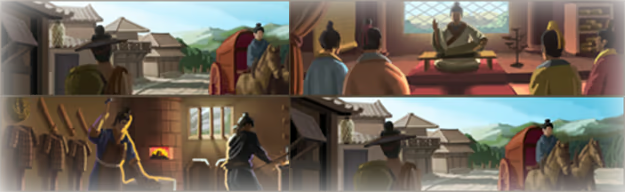
2. Trade resources: In the Spring and Autumn period, countries traded quite frequently, and businessmen like the "Jiranjia" genre and Fan Li were born. The game is close to history and specially designed. Players can manipulate trade, appoint businessmen, and collect profits.

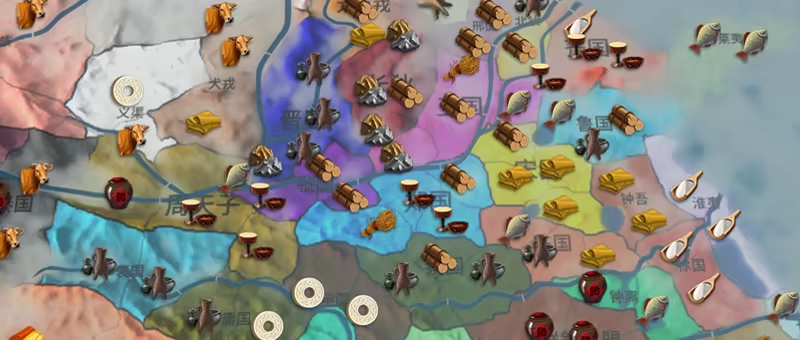
3. Hundred schools of contention: Various thinkers appeared frequently during the Spring and Autumn and Warring States Periods. In National War 2.0, doctrine and thought became the core play point of the game, including not only the unique play of various doctrines, but also the need to consider characters when appointing or removing official positions The accompanying doctrine attributes.

4. Character system: Character avatars are randomly generated and will not be repeated. Players can register queens, harem harems, multiple heirs, exchange captives, buy hearts, and suppress dissidents. There are also many historical celebrities in the game that can be recruited by players.
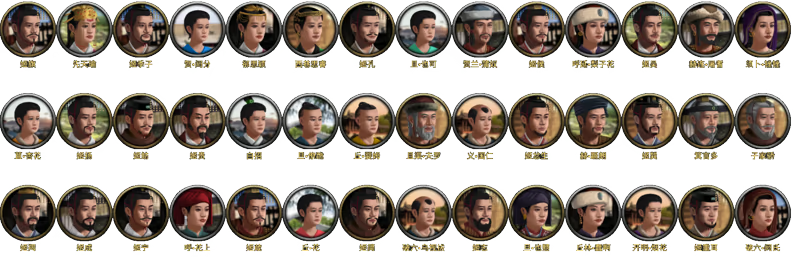
5. Changeable heir system: Players need to register the queen at the right time and set up the prince (which is not suitable too early and too late) to maximize the simulation of historical scenarios.
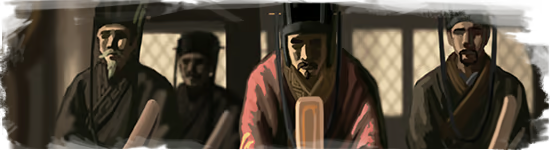
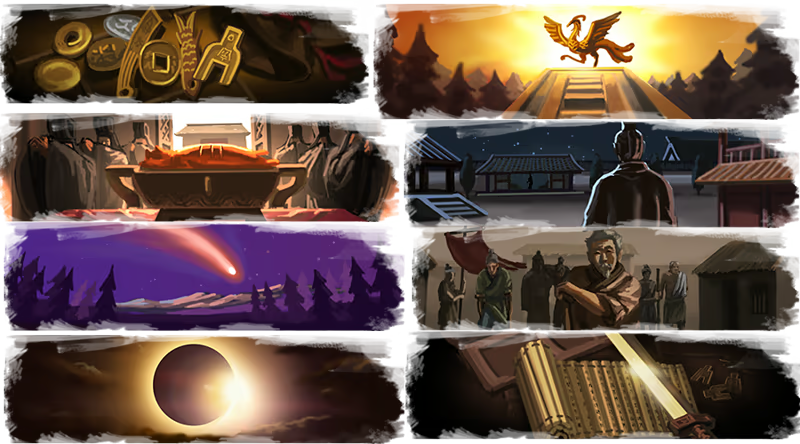
6. Rich historical events: Players need to make timely and reasonable decisions on some unexpected situations, can you become a Mingjun?
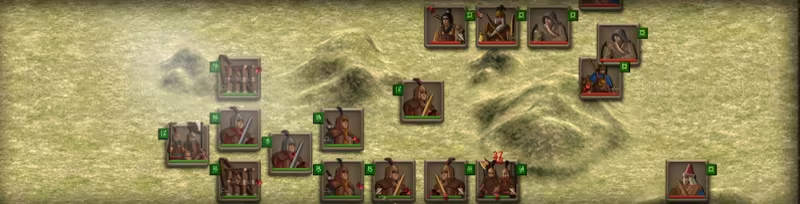
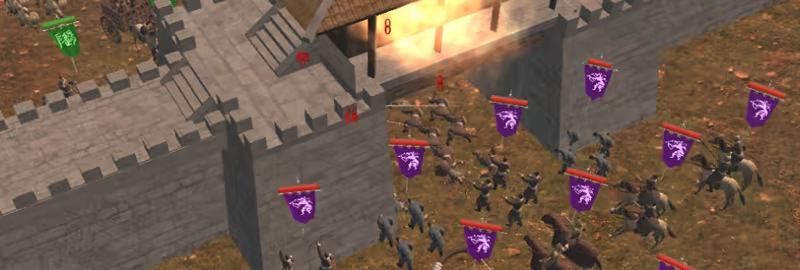
7. Complex battles: including impassable mountains, rivers, strategic locations, military supplies, morale, and mutual restraint of arms, the coordination of various tactics, and the advantages of various arms under different terrains are different.
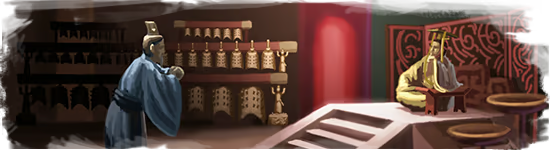
8. Realistic diplomacy: Players can find allies, marry with other countries to prevent aggression, and can also provoke opponents, far and near attacks, trading materials, cutting land for mercy, and late-game diplomatic talents such as Su Qin and Zhang Yi are available for recruitment.
Genres
Stats
All-time low is the lowest price we've recorded for this game since we started tracking it.
Languages: Simplified Chinese*, Traditional Chinese*, English*languages with full audio support
Engagement
Hours played at review time, across 41 reviews with recorded playtime.
Reviews
Themes across 41 recent reviews and how positive each mention is. A keyword signal, not full sentiment analysis.
positive critical· bar length = how often the theme comes up
Reviews
一座城,连驻军带守军带城里的人力加一起不到9k,叛乱原地能蹦出14k叛军,这是巢都开了混沌传送门了?我领兵打仗的儿子天天想造我的反,战帅附体了属于是。一座城每回合只能进行一次操作,这行政效率帝国内政部直呼内行。 坏了我他娘的玩到中古战锤了?
喜歡中國歷史就會喜歡這遊戲.給Yiming鼓勵個讚. 再給兩個建議,200個小時了, 不同類型的國家都玩過了,有點膩了,沒動力再開新檔了. 希望: 1.增加更多春秋時代的國家,百家姓都上.我想大部分人都會玩自己祖宗的國家. 100個國家才過癮. 2.增加宗廟系統.可以追憶自己辛苦創業的歷代君王, 何年生死,何年創建制度,何年消滅敵國,何年佔領城市.......
垃圾steam要求評論不然我真的不想嘴 一般難度幾乎無時無刻都被宣戰 從頭打到尾 想休息也不行 機械重複感太重 我已經跟鄰國100友好度了結果還是被三到五國聯合宣戰 你媽的會不會做遊戲 把外交上限設多一點很難嗎
要不你做个金手指吧,跟骑砍战团一样,这游戏本来就比较冷门 基本上没人会直接玩 要开挂 GM指令比较不好输入麻烦 CE修改器没法用
第一:我很新喜欢这个游戏。 第二有以下几点不足。 1.没办法看海,自动几次后,会因为谏言未处理,就直接卡住了,无法进入下回合。必须在傍边一直操作。 2.战斗设定有问题,占领城池后,复叛概率太高,一直在处理叛乱,无法发展。 3.没办法 按EBTER 键,进行确定操作,必须要鼠标。 4.在GM 模式中,调取的GM 菜单全是英文。 5.在GM 模式中没办法直接占领城市。 6.看海模式不是在以上帝视角观看,还是在初选国家的视角。
NationWar2, developed and published by Yiming, is an ambitious grand strategy game set during one of the most turbulent and fascinating eras of Chinese history—the Spring and Autumn and Warring States periods. It seeks to capture the complexity of that time, when dozens of kingdoms rose and fell through a mixture of war, diplomacy, reform, and philosophy. In doing so, it offers a sandbox experience that emphasizes freedom of approach and long-term planning over spectacle or linear storytelling. Rather than being a polished AAA production, NationWar2 feels more like a passion project—one that values historical depth and systemic interconnection above flashy presentation. The result is a game that is both rewarding and occasionally frustrating, but undeniably full of ambition and cultural flavor. Players begin by selecting one of more than sixty nations, each with distinct starting conditions, resources, and political situations. The overarching goal is simple: expand your influence and survive in a constantly shifting landscape of alliances, rivalries, and ideological clashes. However, achieving this goal requires managing a complex network of systems that touch every aspect of governance. You must oversee domestic development, maintain armies, guide your nation’s philosophy, and handle diplomacy with rival states. Each turn represents a critical decision in the life of your realm—whether to strengthen your economy, reform government institutions, build fortifications, or march to war. The pacing is deliberate, forcing you to think several moves ahead, as short-sighted decisions can have consequences that echo for generations. One of the most distinctive features of NationWar2 is its emphasis on doctrine and ideology. Instead of focusing solely on military expansion, the game integrates a robust philosophical system inspired by historical Chinese thought. You can choose to guide your nation under different schools of belief—Confucianism, Legalism, Mohism, Daoism, and others—each providing unique bonuses and influencing your subjects’ loyalty, productivity, and political stability. Adopting one doctrine may improve public order and efficiency, while another could inspire innovation or strengthen your armies. This layer of ideological governance gives the game a sense of depth and authenticity that sets it apart from Western grand strategy titles. Decisions feel meaningful not only because they shape your nation’s capabilities, but because they reflect a worldview that determines how your people live and how your rivals perceive you. Diplomacy and warfare form the other pillars of gameplay. The diplomatic system allows for trade agreements, alliances, and marriages between factions, while also leaving room for betrayal and opportunism. The AI factions pursue their own interests and adapt to your actions, leading to shifting balances of power across the map. The military system, though turn-based, captures the strategic tension of pre-modern warfare. Terrain, rivers, and fortifications all play important roles, and battles are influenced by morale, supply, and troop composition. Careful planning can allow a smaller, better-prepared force to defeat a larger one, especially when aided by favorable terrain or high-quality officers. The interplay between logistics, positioning, and timing adds texture to each campaign, though the learning curve can be steep for newcomers who must grasp the game’s many interconnected systems. Visually, NationWar2 prioritizes clarity over flash. The map is clean and functional, displaying a stylized vision of ancient China’s geography with its mountains, rivers, and trade routes. The interface is dense but organized, providing access to a wealth of data without overwhelming the player once they’ve acclimated to its structure. The game’s minimalist presentation serves its purpose: this is a title about strategy and decision-making, not cinematic spectacle. The soundtrack and sound effects complement this subdued tone with traditional motifs and ambient soundscapes that fit the historical context. While it may not boast the production values of a major studio title, its presentation reinforces the sense of focus and purpose that defines its gameplay. Like many independently developed strategy games, NationWar2 is not without its rough edges. Bugs, localization issues, and balancing inconsistencies can occasionally undermine the experience. Some players have reported minor interface glitches or untranslated text strings, and while these do not ruin the game, they remind you that this is a project built on limited resources. The pacing can also become uneven in longer campaigns. Early turns are rich with new opportunities, discoveries, and diplomatic intrigue, but as your empire grows, the repetitive nature of certain management tasks begins to show. The AI, while competent, can sometimes act predictably, leading to mid-game stagnation. These issues, however, are partially offset by the developer’s ongoing updates and the game’s inherent replayability. Each nation presents a fresh strategic puzzle, and the dynamic systems ensure that no two playthroughs unfold exactly the same way. What keeps NationWar2 engaging is the sense of scale and continuity it offers. The game captures the feeling of steering a civilization through centuries of uncertainty, balancing ambition with caution, progress with stability. The inclusion of characters, heirs, and succession adds a human element to the grand strategy, reminding players that nations are built not only by armies but by individuals—rulers, philosophers, and generals whose fates intertwine with the state’s destiny. Watching your dynasty age, adapt, and evolve gives the experience a narrative rhythm that emerges naturally from gameplay rather than scripted events. In this way, the game echoes the spirit of classic strategy titles like Romance of the Three Kingdoms and Europa Universalis, while maintaining a distinct identity rooted in Chinese history and philosophy. NationWar2 is ultimately a game for patient thinkers. It rewards those who enjoy slow, methodical strategy and the satisfaction of mastering interlocking systems over time. Its imperfections are evident, but they coexist with an underlying vision that feels both personal and thoughtful. Yiming’s creation succeeds in capturing the essence of grand strategy within a uniquely Chinese framework—one where ideology, diplomacy, and legacy matter as much as warfare. It may not have the polish of larger studio productions, but it offers depth, character, and atmosphere that few indie titles achieve. For players willing to look beyond its surface roughness, NationWar2 is a deeply rewarding experience—a meditation on power, philosophy, and endurance in a world where every decision shapes the rise and fall of nations. Rating: 7/10
五一入手的这游戏玩了几天发现一些问题 1电脑AI短时间可以瞬间爆兵,我部队在边上观察1回合可以爆6K的兵,攻城只能在第3回合开始,那样等到开始城里就有庞大的兵,AI就会放弃攻城,然后野外开打,部队打没了,继续开始的流程,我看的刑国被周围所有势力围攻,过了20回合战争结束,部队依旧满编,这根本没法打,200回合困难模式AI一座城都没被攻下,游戏都没法玩下去了 2兵种最后的4个兵种义军,墨家战士,强盗弓箭,马贼招募都不需要人力,几乎没代价,上手就800人即战力,性能还比同兵种强,那些同兵种存在的意义是什么,可能也是造成1问题的原因,尤其是强盗只需1威望,我一下就能招募1个满编军团无敌了,人力成摆设 3威望加的太快了,那些负面都是摆设,王后还能开宴会,打仗外交,随便就99了,还能无限刷人才,吊打AI 4世子只能有3个,满了就不能加入了,你还无法解雇他们,只能暗杀,如果他们计略还比你高,那杯具了,你可能只能用一个垃圾做皇帝 目前发现这些主要问题已经影响游戏体验
地图太大,战斗时间太长,灭掉周围两三个国家后就不想玩了,太累
很有意思的国产游戏,国产的维多利亚时代的感觉,还不贵
虽然乍一看,界面相对于简陋,但游戏系统完全不输市面许多的策略游戏。游戏涉及经济、人才、外交、军事、政治的管理,游戏玩起来的感觉已经有《文明6》和《十字军之王2》的爽感。如果能将新手引导、不同城市能建造哪些不同的兵种、军队与军队之间物资、人员的交换完善一下,那就很好了。期待下一部作品!
Related
Related
Trends
Modeled estimate over time, reconstructed from Steam's monthly review histogram.
Audience
Estimated from the language of this game's reviews — a proxy for where players are, not official Steam demographics.
Related
| Jianghu Survivor | $232.9K | 1.2K | 87% | $6.99 |
| Starblast | $232.9K | 1.1K | 81% | $9.99 |
| FORM | $232.9K | 981 | 91% | $14.99 |
| Survive the Fall | $232.9K | 671 | 69% | $12.49 |
| TyranoBuilder Visual Novel Studio | $232.9K | 785 | 85% | $14.99 |
| Sorcery! Parts 1 and 2 | $233K | 757 | 88% | $12.99 |