NationWar: Annals, developed and published by Yiming, is a deeply ambitious grand strategy and real-time tactics hybrid set during China’s Warring States period, a time when the lands were fractured among rival kingdoms vying for supremacy. It presents an intricate blend of state management, diplomacy, philosophy, and warfare, giving players an opportunity to command their chosen nation across a sprawling and dynamic political landscape. The game’s central goal is to unify the known world under your rule, but how you achieve that—through military conquest, careful alliances, or ideological domination—is entirely up to you. It’s a simulation that rewards patience, strategic foresight, and a willingness to learn the intricate systems that govern its world. For those who enjoy layered strategy experiences and historical authenticity, NationWar: Annals offers a fascinating, albeit sometimes unwieldy, sandbox of ancient statecraft.
The first impression the game gives is one of scale and complexity. The map is massive, divided into numerous states, each with distinct cultures, relationships, and resources. Players begin by selecting a faction—ranging from major kingdoms like Qin, Chu, and Zhao to smaller, less influential states—and immediately face the daunting task of establishing political stability while managing expansion and survival. The game does not guide the player through heavy-handed tutorials; instead, it throws you into the deep end, expecting you to learn through experimentation. This approach can be intimidating but also rewarding for those who appreciate discovery and freedom. Every turn or moment in NationWar: Annals involves making meaningful decisions, whether that’s balancing taxation, appointing officials, researching new ideologies, or preparing armies for campaign. The interplay of systems ensures that the experience never feels static; even when the battlefield is quiet, there’s always political intrigue brewing behind the scenes.
One of the game’s standout features is its philosophical depth, which ties into governance and diplomacy in interesting ways. Players can shape their state’s identity by embracing different schools of thought such as Confucianism, Taoism, or Legalism, each offering distinct bonuses and social consequences. Confucian governance might promote harmony and loyalty among citizens but could weaken military aggression, while Legalism strengthens order and control at the cost of morale. These ideological choices ripple through your state’s relationships with others, affecting diplomacy, trade, and even internal stability. It’s a fascinating system that reflects the intellectual ferment of the era and adds a layer of realism rarely seen in strategy games. By allowing philosophy to influence mechanics, NationWar: Annals creates a dynamic link between political theory and practical governance, mirroring the historical debates that shaped ancient Chinese thought.
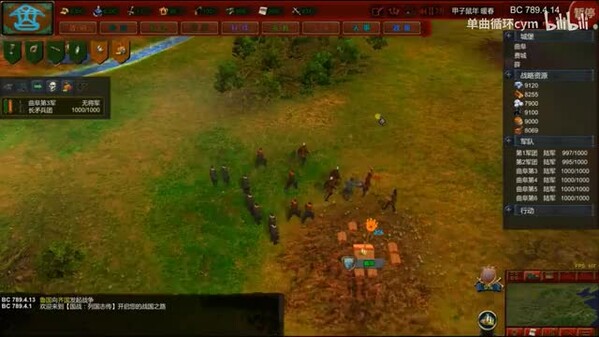
Warfare in NationWar: Annals operates on a dual scale—strategic and tactical. On the overworld map, players must manage armies, supply lines, and recruitment while planning territorial expansion. When conflicts occur, the game transitions into real-time combat sequences that allow direct control over troops. You can pause the action, issue commands, and then resume, blending the methodical pacing of strategy with the intensity of an RTS battle. The combat is functional rather than flashy, relying on troop positioning, timing, and resource management more than visual spectacle. Though the unit animations and visuals are minimalist, the battles carry weight thanks to the consequences tied to victory and defeat. Every engagement drains resources, manpower, and morale, forcing the player to consider whether war is worth the cost. The result is a game that values careful planning and long-term strategy over brute force, a design choice that suits the philosophical tone of the period it portrays.
Beyond warfare, NationWar: Annals offers an expansive suite of management tools that simulate the responsibilities of a ruler. Players oversee the economy, maintain infrastructure, conduct trade, manage corruption, and respond to natural disasters or rebellions. Each decision carries trade-offs—raising taxes may strengthen your treasury but provoke unrest, while investing in trade routes can boost income at the cost of military readiness. Appointing officials introduces another layer of complexity, as these figures come with their own strengths, weaknesses, and loyalties. The player must learn to balance merit and trust, promoting capable administrators while keeping potential rivals in check. This constant juggling act gives the game a sense of realism, capturing the delicate equilibrium required to hold an empire together during an age of instability.
However, NationWar: Annals is not without its challenges and flaws. The game’s ambition often exceeds its level of polish, and the interface can feel cumbersome, especially during the first few hours of play. Information is abundant but not always clearly presented, which can lead to confusion when trying to interpret economic data, political standings, or military logistics. The translation, while serviceable, occasionally falters, leaving some descriptions awkward or unclear, which can further complicate understanding certain systems. Additionally, the AI, while capable in some respects, can behave erratically in diplomacy or combat, making outcomes inconsistent. The procedural nature of events and random factors sometimes lead to abrupt swings in difficulty, demanding adaptability from the player. These rough edges reveal the game’s indie roots, but they don’t completely undermine the experience—rather, they create a sense of raw ambition struggling against technical limitations.
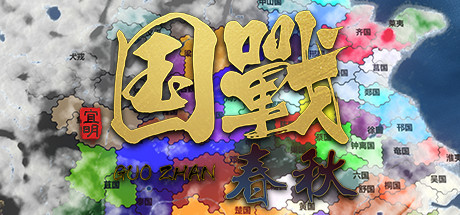
Visually, the game adopts a clean but functional style. The map is serviceable, with color-coded territories and visible trade routes, while units and city structures are represented through simple, icon-based designs. Though not graphically impressive, the minimalist art direction serves its purpose, keeping the focus on mechanics and decision-making rather than spectacle. The music and sound design contribute modestly to atmosphere, with traditional motifs underscoring the game’s historical context, though the audio can feel sparse compared to the depth of the systems. Yet, this simplicity allows players to focus on the broader simulation rather than distractions of presentation, reinforcing the intellectual and strategic nature of the experience.
Ultimately, NationWar: Annals is a rare and intriguing creation—an indie grand strategy game that dares to explore the complexities of ancient Chinese statecraft with both respect and ambition. It combines economic management, philosophical development, and tactical warfare into one cohesive, if occasionally rough, experience. Its imperfections are clear, but so is its heart; few games attempt to capture this historical era with such depth of simulation. For players who appreciate patience, depth, and systems-driven gameplay, it offers a compelling sandbox that rewards long-term engagement. It’s not a game for everyone—its steep learning curve, unpolished interface, and slow pacing may deter casual players—but for dedicated strategists willing to invest time and curiosity, NationWar: Annals stands as a bold and distinctive entry in the genre, one that brings the political and intellectual drama of the Warring States to life in a way that feels both authentic and deeply satisfying.
Rating: 6/10