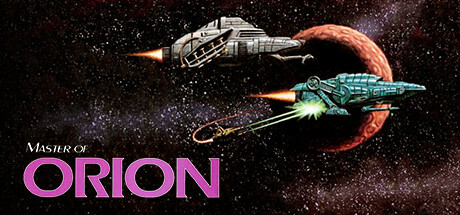
Forge an empire in a universe where population growth is stripping away planetary resources. Colonize unknown planets and trade with other races for their knowledge.
Modeled estimate, not a reported figure. How we estimate →
Media

About
Genres
Stats
All-time low is the lowest price we've recorded for this game since we started tracking it.
Languages: English*, French, German*languages with full audio support
Engagement
Hours played at review time, across 41 reviews with recorded playtime.
Reviews
Themes across 41 recent reviews and how positive each mention is. A keyword signal, not full sentiment analysis.
positive critical· bar length = how often the theme comes up
Reviews
Suchtfaktor seit 1996
One my all time favorites from childhood. Got me into 4X and I've never looked back.
expansion, technology, politics, espionage overall great game ...and brings back childhood memories
Yes
Schönes Retro Spiel!
Achieves depth with simple mechanics. Don't forget to increase the cycles on DOSBox (CTRL + F12).
This game is a great strategy game that does not disappoint! Addictive. 9 out of 10 rating.
Master of Orion developed by SimTex and published on Steam by Wargaming Labs is widely regarded as one of the foundational pillars of the 4X strategy genre. Originally released in the early 1990s, it established many of the conventions that would later define space-based empire-building games. Even decades after its debut, its streamlined yet strategically rich design continues to resonate with players who appreciate thoughtful turn-based gameplay and the thrill of guiding a fledgling civilization toward galactic dominance. At the start of each campaign, players select one of several distinct alien races, each with unique traits that influence research, diplomacy, population growth, or combat efficiency. The galaxy is procedurally generated, ensuring that no two playthroughs unfold in exactly the same way. Beginning with a single homeworld and a modest fleet, the primary objectives revolve around exploration, colonization, technological advancement, and strategic expansion. Scout ships chart nearby star systems, revealing planets with varying resource levels and habitability conditions. Choosing which worlds to colonize—and when—forms the backbone of early strategy, as expansion can secure vital resources while overextension can leave systems vulnerable to rival powers. Technological research is one of the game’s defining strengths. Rather than overwhelming players with excessive micromanagement, the research tree is broad but comprehensible, offering meaningful choices that shape the direction of an empire. Advances in propulsion allow deeper exploration, improved weaponry strengthens fleets, and industrial upgrades enhance planetary productivity. Each decision carries long-term implications, and the gradual unlocking of advanced technologies creates a satisfying sense of progression. The balance between accessibility and depth is one of the reasons the game remains compelling; it avoids excessive complexity while still providing enough strategic nuance to reward careful planning. Diplomacy plays a central role in the evolving galactic landscape. Rival empires negotiate trade agreements, technology exchanges, alliances, and, inevitably, declarations of war. The artificial intelligence may not match modern standards in sophistication, but it creates dynamic and unpredictable interactions that influence campaign outcomes. A well-timed alliance can deter aggression, while technological superiority may provoke hostility. Players must weigh diplomatic overtures against military readiness, as a peaceful empire can quickly find itself surrounded by hostile neighbors if relations deteriorate. Space combat, resolved through tactical engagements, emphasizes ship design and preparation rather than real-time reflexes. Players customize fleets by selecting weapon types, defensive systems, and propulsion technologies. Combat outcomes depend heavily on these design decisions, reinforcing the importance of research and strategic foresight. While the visual presentation of battles is simple by contemporary standards, the underlying mechanics offer a satisfying layer of tactical depth. Victory is rarely achieved through sheer numbers alone; efficiency and technological advantage often prove decisive. Visually, Master of Orion reflects its era with pixel-based graphics and straightforward interface design. Yet this simplicity contributes to its clarity. Menus are functional and focused, presenting essential information without unnecessary embellishment. The minimalistic aesthetic allows players to concentrate on strategic decisions rather than spectacle. Sound design is similarly understated, offering atmospheric cues that complement the sense of commanding a growing interstellar empire. One of the enduring qualities of Master of Orion is its pacing. The turn-based structure encourages deliberate thought, and the “just one more turn” phenomenon is ever-present. Campaigns evolve gradually from cautious exploration to large-scale interstellar conflicts, with each phase presenting new challenges. Victory can be achieved through military conquest or political influence within the Galactic Council, offering multiple paths to success and encouraging replayability. Despite its age, the game’s design remains remarkably resilient. Modern players may find certain conveniences absent—such as extensive tutorials or advanced automation—but these omissions highlight the purity of its strategic framework. It demands engagement and rewards thoughtful decision-making, rather than relying on spectacle or layered complexity. Ultimately, Master of Orion stands as a landmark in strategy gaming history. Its elegant systems, balanced mechanics, and enduring replay value cement its reputation as a genre-defining title. For players interested in the roots of space-based 4X strategy, it offers a compelling experience that continues to demonstrate how strong design fundamentals can transcend technological limitations. Even decades later, guiding a single world into a galactic empire remains as satisfying as ever. Rating: 8/10
One of the best games ever made. Sunk over 1100+ hours into it and counting. This isn't counting the hours spent on my Packard Bell back in the mid 90's which probably was much more than that ;)
I've been playing this game for 33 years. I think that's enough of an endorsement for this game.
Related
Related
Trends
Modeled estimate over time, reconstructed from Steam's monthly review histogram.
Momentum
Pace estimated from the game's recent review growth (our daily snapshots) at its own sales-per-review ratio — a momentum signal, not booked sales.
Engagement
DAU/MAU are modeled from peak concurrent players (≈×8 and ×28) — Steam publishes no active-user counts, so treat these as rough estimates, not reported figures.
Audience
Estimated from the language of this game's reviews — a proxy for where players are, not official Steam demographics.
Related
| Clash of Clans | $2.6B | 61.4M | 90% | Free |
| Plants vs. Zombies™ | $1.9B | 5.7M | 75% | Free |
| Clash Royale | $1.9B | 41.6M | 89% | Free |
| Lords Mobile: Kingdom Wars | $1.9B | 9.2M | 90% | Free |
| Stick War: Legacy | $1B | 3.2M | 96% | Free |
Related
| Lionheart: Legacy of the Crusader | $74.7K | 177 | 85% | $19.99 |
| The Journey Down: Chapter Two | $74.7K | 560 | 96% | $7.49 |
| Swarm Grinder | $74.7K | 1.2K | 78% | $3.19 |
| Robot Wants It All | $74.7K | 193 | 90% | $19.99 |
| Alien Market Simulator | $74.7K | 149 | 85% | $12.99 |
| Antonball Deluxe | $74.7K | 889 | 96% | $4.99 |