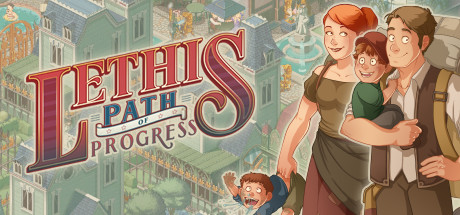
Lethis - Path of Progress is a city-builder in a victorian steampunk setting.
Modeled estimate, not a reported figure. How we estimate →
About
Genres
Stats
All-time low is the lowest price we've recorded for this game since we started tracking it.
Languages: English, French, German, Spanish - Spain, Russian, Simplified Chinese
Engagement
Hours played at review time, across 40 reviews with recorded playtime.
Reviews
Themes across 40 recent reviews and how positive each mention is. A keyword signal, not full sentiment analysis.
positive critical· bar length = how often the theme comes up
Reviews
DO NOT BUY THIS GAME! It has a major unresolved issue with properly loading all the needed files the majority of the time you try to start a map. This bug results in black boxes where your houses/trees were suppose to be. It appears this issue has been around for a number of years but the dev ignores it. This game really should not even be for sale on steam.....
The game has great visuals and an interesting setting. Unfortunately gameplay wise it feels like every game plays out very similar and once you solve the formula you kinda replay the same startup every time. It's not a bad game, but it's not great either. It's just very "okay".
The game is buggy missing ground textures can't render at the right resolution. Game play wise there is a very specific formula for how you build your town. Once you get the formula then you can build easily but there is no challenge as you have to always follow the formula. leads to very boring city designs
Unplayable resolution issues.
animated by silly billies, praises communism and calls it progress, among other woke garbage in there
Injugable. Tiene un gran problema con el tema de la resolución y la gráfica. He podido jugar algo pero con muchos fallos que lo hacen tedioso y te dejas la vista... Una lástima porque este tipo de juegos estilo Olimpo Zeus, o Faraón están muy entretenidos pero no puedo recomendarlo con un gran fallo que además se ve por comentarios y foros que no soy el único...
Lethis – Path of Progress, developed and published by Triskell Interactive, is a charming and ambitious city-building game that aims to revive the spirit of classic management titles such as Caesar III, Pharaoh, and Zeus: Master of Olympus. What distinguishes it immediately is its unique setting—an alternate steampunk world where progress is powered by condensed steam rather than electricity. As the player, you assume the role of an imperial city planner responsible for expanding the industrial and cultural frontier of the Lethis Empire. What unfolds is a blend of nostalgic design and modern aesthetic sensibility, a tribute to the classic 2D builders of the late 1990s wrapped in the visual language of hand-drawn artistry. Lethis is a game that strives to combine beauty, logic, and difficulty, and while it doesn’t always reach the heights of its inspirations, it offers a fascinating journey through a world defined by both elegance and constraint. Visually, the game is captivating. Every frame feels like a living illustration, rich with color and texture. The cities you build are bustling with life—tiny citizens stroll along cobblestone streets, steam-powered contraptions puff and churn in the background, and ornate Victorian-style buildings rise elegantly from the grid. Triskell Interactive’s hand-drawn art direction is meticulous and full of personality, evoking a world that feels simultaneously whimsical and industrial. The steampunk aesthetic is not just a cosmetic overlay but a defining part of the world’s identity; factories hum with energy, airships float lazily above the skyline, and monuments exude an atmosphere of mechanical grandeur. The soundtrack deserves equal praise: its orchestral score swells with warmth and nostalgia, and each track seems designed to evoke the slow, satisfying rhythm of building and sustaining a city. The visual and auditory presentation together create a serene yet bustling tone, one that captures the joy of creation even as the gameplay demands constant vigilance. The structure of Lethis – Path of Progress follows the traditional blueprint of classic city-builders: construct housing, provide amenities, establish industry, and balance the intricate chains of production that keep your citizens content. Each mission introduces a new city to develop, with its own terrain and objectives, ranging from simple economic targets to complex industrial goals. The campaign spans over two dozen scenarios, and each one feels like a standalone challenge that builds upon the knowledge gained from previous attempts. The player must oversee not just resource gathering but also manufacturing, logistics, and trade, ensuring that each component of the urban machine functions in harmony. The introduction of roadblocks and patrolling worker mechanics adds a distinct strategic layer. Citizens and workers move through the streets rather than teleporting between structures, which means that city design and traffic flow have direct consequences on productivity. This small detail gives Lethis a tactile sense of realism; every road, intersection, and layout decision matters. Yet this same attention to logistics can be both a strength and a source of frustration. The game’s systems, while faithful to its classic influences, are not always transparent. Workers may fail to reach their destinations for reasons that are not immediately clear, and the user interface, though serviceable, doesn’t always provide the clarity needed to diagnose problems efficiently. A single misplaced roadblock or bottleneck can lead to cascading failures across your economy—food stops reaching houses, factories run out of materials, and entire neighborhoods collapse into ruin. This can make the experience feel punishing, especially for players who are used to modern city-builders that emphasize accessibility and flexibility. The learning curve is steep, and the game often assumes familiarity with old-school logic, which can be daunting for newcomers. Those who persevere, however, will find satisfaction in mastering the delicate balance between chaos and order that defines a functioning steampunk city. Another area where Lethis struggles is in its sense of progression. While the premise of managing a steam-powered empire suggests a grand narrative of technological advancement, the game’s time period remains static. Each mission exists within roughly the same era, and there’s little visual or mechanical evolution as the campaign advances. You never truly feel the empire changing or innovating, which limits the sense of achievement beyond completing each map’s objectives. This lack of evolution makes the long campaign feel repetitive, as you often rebuild the same city structures with only minor variations. The economy, while well-designed in its chain dependencies, eventually becomes predictable. Once you learn the optimal production patterns, the challenge shifts from creative problem-solving to rigid optimization. The sandbox mode provides freedom from objectives, but the same limitations carry over, meaning that replayability depends largely on how much you enjoy the process of building for its own sake. Despite these flaws, Lethis has an undeniable charm that makes it hard to dismiss. The sheer artistry of its presentation, combined with its faithful recreation of classic design philosophies, makes it feel like a love letter to a bygone era of city-building games. The developers’ respect for those older titles is evident in every detail—from the subtle animations of workers hauling goods to the careful pacing that forces you to plan instead of rush. There’s also a quiet philosophical quality to the game’s pacing. Lethis is not about expansion for its own sake but about maintaining equilibrium. You’re not building an empire of infinite growth but nurturing a complex machine whose parts must be in perfect harmony. In this way, the game captures the spirit of the industrial age it depicts: progress comes at a cost, and efficiency often clashes with beauty. For players drawn to management games that reward patience and observation, Lethis – Path of Progress offers a deeply satisfying, if occasionally exasperating, experience. It invites you to slow down, to think spatially and systematically, and to appreciate the interconnectedness of urban design. The game doesn’t hold your hand, and that independence can feel refreshing in an era of overly guided experiences. At the same time, its insistence on old-school difficulty and its lack of evolution keep it from achieving greatness. It is a game of exquisite style and admirable ambition, yet one that sometimes feels trapped by the very nostalgia it celebrates. Ultimately, Lethis – Path of Progress is a work of passion and craft, a visually stunning ode to the city-builders of the past that both honors and inherits their quirks. It succeeds most in creating atmosphere and evoking wonder, and even when its mechanics falter, its world remains a joy to inhabit. Triskell Interactive’s creation reminds players that progress is not always linear—it is a balance between beauty, control, and imperfection. For those willing to embrace its deliberate pace and occasional opacity, Lethis offers a rewarding glimpse into a lovingly imagined industrial dreamscape, one powered as much by nostalgia as by steam. Rating: 6/10
Doesn't work properly in Linux (Steam Deck/Proton). The map tiles don't render properly, just showing the starry UI interface background - so I could only run it for long enough to leave this review. Regardless of developer intention, games should be built properly so that emulation of this nature works. There's no excuse for poor workmanship, and issues like this are how you tell. Ever wonder why it's only "most" games that work under proton? It's because the people who make the others aren't any good at their jobs. For context, this issue has been widely reported and the developers have responded to say they know about it - more than five years ago. Still no fix. Not recommended.
First of all, I didn’t encountered any technical issues (PC platform), as of 2026 when I played this, the game was stable in the few hours I have on it. With that out of the way, I can rant about everything else, and there is plenty. To start off, the game is compared to the likes of Caesar, Emperor, Zeus, Pharaoh; I played all of those, not to a hard core degree but enjoyed 1-2 scenarios or free-play in them. And yeah, this game is alike them BUT it just lacks the charm those old games. Let me start with something scrapped out, the military aspect. There are no conflicts in this game, and not just military but civil too, they took out the whole unrest factor. Regarding factors, the only one left is the building’s integrity, aka they collapse if they are not checked/maintained often. For those who didn’t played any of such games, these kind of factors, you manage them by constructing special buildings which send workers on patrol in a designated area which you can control with road blocks, and ofc, you need housing to build your workforce. The housing system is an upgrade-able one, you can increase a house level by fulfilling the needs of the residents inside them. These are things like, fresh water, food, medicine, entertainment, etc. In this game, to upgrade a house the residents require water, food, decorations (they increase appeal), alcohol, entertainment, newspaper, medicine, etc in that order. Here comes the other problem I had with this game, do you know how to make alcohol? If you answered by building a barley, vineyard, or various fruit orchards, and distill them, well you are so very wrong… in this game you do it by building ranger huts to go hunt Fae, yep, the rangers catch fairies from the woods which get crushed and turned to absinthe… Not all the game is this weird, you can also build a farm and turn barley into beer, but I had to mention the most wtf moment I had in this game when I started. Next is the steam system, this acts like electricity, it powers up certain buildings. I would’ve liked to see it more used, like implementing a steam upgrade to some buildings such as the windmill, boosting the production. But as is, steam plays a minor role in a steampunk game. And while this steam thing is not present in the older games, they took out other aspects, such as religious buildings and learning ones, which is weird, I mean In a steampunk game I would’ve expected an engineering school or something like that. It might be small details but there are more. Next is something cosmetic. There are no animals, or fish. Apart from certain trees with animated animals in them and fae trees, the world feels so lifeless, and couple this up with the cartoonish graphics, just makes land/water look so bland. Ohh, but on the bright side, they got tombs scattered randomly. Don’t get me wrong, I do like the artwork and building’s designs, but the world textures and lack of things moving around (not counting the things you build) just make the world feel bland. Speaking of details, in the other games, if you right click anywhere in the game it gives you a panel with extra info about the thing you click on. For ex. If you click on a fertile/farm land, it tells you that you what you can build here and it has additional facts you can read from the ? Button in a corner. In this game however, that is limited, there is no ? Button, and you can left-click on certain things, mainly buildings. Next is the soundtrack, or lack of sounds to be more specific. It has background music, a generic one too, which can’t even loop properly. When a track ends, its just stops, and the next begins, in some tracks the stop was so sudden I thought my speakers died. Do you wana know how sound is in the other games? Well, in Emperor, the more you build the city the louder will become with citizens/workers making noises, certain buildings making noises when they operate, animals having sounds too; I will let the lack of VA slip in this game, but the other SFX, I aint giving it a pass for that. Anyway I already filled 2 Word pages with this, so to conclude, for me, it is a game washed out of many elements which made those older games so enjoyable years ago. From the lack of military, to no fires forming in the city, to the lack of details both in sound and graphics, to removing of religion and learning factors. In the end, it is an alright game, but that’s just it, alright. The reason I rec. it it is just because we finally got modern city-builder in the style of the old ones (cuz I cannot think of any other modern game similar to those), so at very least I can give it the “At least you tried” medal and it does work, especially if you didn’t played the older ones, then you should find this as an ok game.
Terrible. The game is fine, but I've had to debug and repair c++ redistributables so many times. The game crashes randomly. And this last time, the game still refuses to launch. I've followed so many online instructions, reinstalled, launched in administration mode, etc., etc., etc. The game just isn't worth all this headache.
Related
Related
Trends
Concurrent players on Steam, sampled daily since tracking started.
Momentum
Pace estimated from the game's recent review growth (our daily snapshots) at its own sales-per-review ratio — a momentum signal, not booked sales.
Audience
Estimated from the language of this game's reviews — a proxy for where players are, not official Steam demographics.
Related
| Retro City Rampage™ DX | $864.6K | 2.4K | 88% | $14.99 |
| Breach & Clear | $865K | 2.4K | 83% | $9.99 |
| Shining Resonance Refrain | $865K | 1.4K | 69% | $29.99 |
| Guns, Gore & Cannoli | $864.3K | 3.6K | 92% | $9.99 |
| Infernax | $864.2K | 2.2K | 93% | $9.99 |
| Zoochosis | $863.9K | 2.4K | 61% | $11.24 |