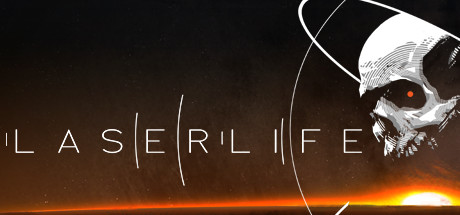
Laserlife, developed and published by Choice Provisions, is a mesmerizing blend of rhythm, art, and philosophy that challenges the traditional expectations of what a rhythm game can be. Rather than focusing on score-chasing or competitive play, it aims to create a reflective experience, fusing movement, music, and imagery into a cohesive meditation on memory and human existence. The premise is both minimal and profound: the player controls two beams of light—representations of alien intelligence—who have discovered the remains of a human astronaut floating in deep space. Through rhythmic interaction, these entities attempt to reconstruct the astronaut’s memories, piecing together fragments of a life long extinguished. This simple yet evocative concept serves as the backbone for a game that is less about competition and more about immersion, emotion, and contemplation.
From the moment Laserlife begins, its presentation pulls the player into an otherworldly dreamscape. The visuals are an explosion of color and motion, painted in luminous neon hues and abstract patterns that pulse in sync with the soundtrack. Each level unfolds as a surreal journey through the void, where shapes, particles, and waves of light dance to the beat of a hypnotic electronic score. The art style feels at once futuristic and organic, as if memories themselves have taken on physical form, swirling in endless rhythm. The camera glides smoothly through tunnels of geometric symmetry, creating the sensation of drifting through thought and time. This combination of fluid movement and visual poetry evokes a mood that is both melancholic and transcendent—a cosmic elegy for the fragility of memory and the impermanence of identity.
At its core, Laserlife’s gameplay is built on the synchronization of rhythm and reflex. Players control two laser beams using dual analog sticks, guiding them to collect glowing orbs that align with the beat. The game’s structure is divided into multiple phases within each level, each representing a different aspect of the astronaut’s recollection. In one phase, you collect molecular fragments of memory floating through space; in another, you align patterns of light to harmonize these fragments; in yet another, you race through a corridor filled with obstacles that symbolize mental dissonance. The dual-stick control scheme demands coordination and concentration, as both hands must work independently yet in perfect unison. When executed well, the movement feels instinctive and fluid, almost like conducting a symphony of light. At its best moments, the gameplay and the soundtrack fuse perfectly, creating a sense of transcendence where rhythm becomes an act of remembrance.
The musical design of Laserlife deserves special mention for its ability to carry the emotional weight of the experience. The electronic soundtrack flows between soothing ambient passages and pulsing beats, shaping the mood of each sequence. Rather than functioning as a background element, the music is integral to the gameplay and storytelling, guiding both tempo and tone. The auditory and visual harmony gives the game a meditative rhythm—there’s no traditional dialogue or exposition, yet every sound and light pattern feels charged with meaning. The player becomes less of a participant and more of a conduit, channeling energy through memory and motion. The repetition of beats and the cyclical structure of levels mirror the act of remembering itself—fragmented, imperfect, and looping in on itself.
While the experience is undeniably beautiful, Laserlife’s ambition also limits its accessibility. It is a short game, lasting only a few hours, and its structure remains largely consistent from start to finish. Once the player grasps the rhythm of its sequences, the variation between levels becomes more aesthetic than mechanical. Some players may find this repetition meditative, while others may see it as a lack of depth. The controls, while responsive on the whole, can feel slightly twitchy in certain sections, especially when the visual spectacle becomes overwhelming. The game also offers limited incentive for replay beyond improving one’s synchronization score, which, given its introspective tone, feels secondary to the experience itself. For those expecting a traditional rhythm game with competitive scoring systems and high replayability, Laserlife may feel more like an art installation than a game.
Despite these shortcomings, Laserlife succeeds brilliantly in what it sets out to do: to evoke feeling through the union of sound and motion. It’s a work of digital art that explores humanity from a cosmic perspective, transforming gameplay into a metaphor for the reconstruction of memory and the persistence of life beyond death. Its short length feels deliberate, reinforcing the idea that memory—like light—is fleeting and fragile. The astronaut’s story is not told through words but through rhythm and sensation, and in that silence lies its greatest power. It’s a reminder that games can communicate emotion and philosophy as effectively as film, literature, or music when designed with intent and artistry.
Laserlife is ultimately an experience of sensation and reflection rather than mastery or competition. It invites players to slow down, to listen, and to lose themselves in its hypnotic pulse. The combination of minimalist storytelling, immersive audiovisual design, and rhythmic flow makes it an unforgettable journey, even if it lasts only a few hours. For those who value games as art and are willing to embrace abstraction over explanation, it offers something rare—a contemplative, emotional voyage through sound, light, and memory. For everyone else, it remains a curious anomaly: a game that dares to treat rhythm not as a challenge, but as a language of remembrance.
Rating: 7/10