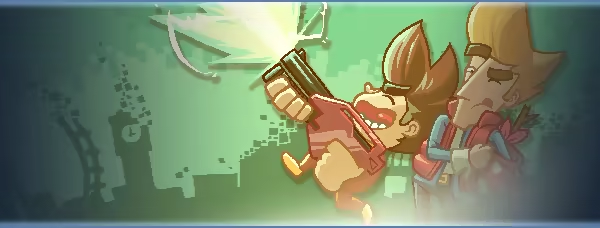
A fast-paced Point-and-Click adventure AND an indie platfomer in one! Join adventurer Ben and wannabe indie darling Dan in a race against time to stop all the Apocalypses happening at the same time.
Modeled estimate, not a reported figure. How we estimate →
About

WHY PLAY ONLY ONE GENRE OF GAME when you could be playing two slightly different ones at the exact same time?
He has one foot stuck in the 90s, his feet never leave the floor, and he’s happiest collecting any old junk he can lay his hands on, in the hopes of combining it all together to solve a satisfying puzzle.
...has aspirations to be the next big hit indie platform character. He's got everything he needs: he's hip, he's sensitive, and his nose is a different colour to the rest of his face.
LAIR OF THE CLOCKWORK GOD sees you switching between both characters and using their unique abilities together in a race-against-time effort to stop all the Apocalypses happening simultaneously, by teaching an old computer about feelings.
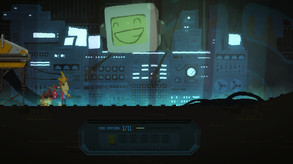
Solve classic point-and-click style puzzles as Ben to create unique upgrade items for Dan, so he can jump higher, run faster and blast away at everything with a shiny new gun. Then, run and jump as Dan to unlock new areas and exciting new puzzles for Ben!

If you haven't played the old Dan and Ben games (you should), or you have but can't remember what happened, there's NO NEED TO WORRY! Lair of the Clockwork God is a STANDALONE Dan and Ben Adventure, which means you need to know absolutely nothing about Ben There, Dan That! or Time Gentlemen, Please! whatsoever. None of the original plot is referenced, the characters are re-introduced expertly, etc etc. It's all good.
Stats
All-time low is the lowest price we've recorded for this game since we started tracking it.
Languages: English**languages with full audio support
Engagement
Hours played at review time, across 40 reviews with recorded playtime.
Reviews
Themes across 40 recent reviews and how positive each mention is. A keyword signal, not full sentiment analysis.
positive critical· bar length = how often the theme comes up
Reviews
HILLARIOUS AND WELL-THOUGH ADVENTURE Nice piece of inventive gamedev right here :) I REGRET NOTHING!
Tedious
Overall I will give this a recommend, though I will say the humor in this game is a very specific niche of meta humor, that I don't think will be for everyone. Plus getting used to shifting between the two mechanics will take some time to get used to. These comments aside, there is a really well done game. One section in particular had the most fun puzzles and one of the best meta jokes I've ever experienced. I will say that the game will be more fun if you treat it less as a narrative-driven game, and more like a series of sketch comedies one after another with a throughline. So as said before, it is still a recommend as I had fun playing it.
Sadly this is a narrow recommend. The game does a lot of neat stuff that's worthy of attention, but its let down by a few things: - The control scheme never quite gelled for me (I used keyboard + mouse), I got used to it, but it wasn't that fluid switching between characters to do different things. Part of me was just pining for the two character to be merged into one, so you could platform and point & click without switching. - The ending. I don't want to spoil, but I found it disappointing and damaged a lot of the game for me. I wanted more of a cullmination of all the themes of the game, and it just doesn't give us that. But there are a lot of positives. - The puzzle solving can vary and be a bit unintuitive at times, but other times it's super creative and just fun. Good point and click puzzles are a pleasure when you finally realise what you need to do, and this game touches on that a lot, doing truly perverse and crazy and creative stuff. The use of [spoiler]duct tape[/spoiler] was fun for instance. - British humour and slang. I have not heard the term "John Thomas" in years, and "standing around like a lemon" is a term a British friend I have uses a lot, but don't really hear anywhere else except for this game. It's just nice some of the more understated turns of phrase are used. - Ocassional pontification. Sometimes the game dive in and discusses some theme or other. As I said above, I felt there could have been more done to build up on the themes, but the discussion they do have can be pretty fun. The [spoiler]Feeling Old[/spoiler] level for example has a couple of good observations mixed in. I liked playing this game for the most part, and apprecaite it's doing stuff that's different, just sadly not overly enthusiastic about it.
Funny.
Un puzzle design notevole e una vena dissacrante rendono possibile una sintesi apparentemente impossibile.
[h1][b] Reseña de Lair of the Clockwork God[/b][/h1] [h2]Resumen del Juego[/h2] Lair of the Clockwork God es ese experimento raro (y peligrosamente efectivo) donde un juego de [b]plataformas 2D[/b] se mete de lleno con un [b]apuntar y clic[/b], y en lugar de explotar en la cara… decide hacerlo con estilo. Es [b]Acción/Aventura[/b] con vibra [b]indie[/b], ritmo [b]casual[/b] y un sentido del humor que claramente no pidió permiso para existir. La propuesta gira en combinar dos formas de jugar que normalmente se ignoran o se insultan mutuamente: saltar como si tuvieras reflejos y resolver rompecabezas como si tuvieras paciencia. Todo envuelto en una comedia con mala leche, guiños meta y una ambientación medio [b]posapocalíptica/ciencia ficción[/b] que se toma lo justo en serio para que el chiste pegue más fuerte. Primera impresión: “Esto es una tontería brillante”. Segunda impresión: “Ok, esto está demasiado bien escrito para el internet”. Tercera impresión: “¿Por qué me está funcionando tan bien este híbrido?”. Y así te tiene. [h2][b]Engranajes Bien Aceitados vs. Tornillos Flojos[/b][/h2] Lo Bueno: Humor negro y comedia meta que realmente pega (sí, existe) Rompecabezas y secciones de apuntar y clic bien integradas con el plataformeo Gran banda sonora que acompaña sin estorbar y hasta se luce Buena trama para ser “el juego que se burla de los juegos” Steam Cloud + logros (21) para los que necesitan validación digital Lo No Tan Bueno: Compatibilidad parcial con mando: o sea, “funciona… pero no te emociones” Si odias los rompecabezas o los plataformas, aquí te obligan a convivir (y a sufrir) Al ser un jugador, la soledad se siente… ideal si tu plan es discutir con el juego y perder El humor puede ser demasiado “controversialcito” para quien viene a relajarse sin pensar [h2]Tabla de Evaluación[/h2] [table] [tr][th]Aspecto[/th][th]Puntuación (0-10)[/th][th]Comentario[/th][/tr] [tr][td]Jugabilidad[/td][td]8[/td][td]El híbrido plataformas + apuntar y clic funciona sorprendentemente bien.[/td][/tr] [tr][td]Dificultad / IA[/td][td]7[/td][td]Retos más por diseño de puzzles y timing que por “IA”; justa, a ratos punzante.[/td][/tr] [tr][td]Contenido[/td][td]7[/td][td]Suficiente variedad para sostener la idea sin quemarla.[/td][/tr] [tr][td]Gráficos / Video[/td][td]7[/td][td]Pixel art 2D cumplidor: no presume, pero tiene personalidad.[/td][/tr] [tr][td]Historia[/td][td]8[/td][td]Bien escrita y con timing cómico; no es relleno para saltar.[/td][/tr] [tr][td]Ambientación[/td][td]7[/td][td]Ciencia ficción posapocalíptica con identidad clara y buen tono.[/td][/tr] [tr][td]Efectos (VFX)[/td][td]6[/td][td]Correctos; no es un festival visual, pero acompaña.[/td][/tr] [tr][td]Música[/td][td]8[/td][td]Gran banda sonora: discreta cuando debe y memorable cuando quiere.[/td][/tr] [tr][td]Voces[/td][td]6[/td][td]No es su carta más fuerte; cumple sin ser el gancho principal.[/td][/tr] [tr][td]Diversidad[/td][td]6[/td][td]Variedad de situaciones y humor, pero no es un juego “amplio” en enfoque.[/td][/tr] [tr][td]Rendimiento[/td][td]8[/td][td]Al ser 2D/pixelado, va estable y sin drama innecesario.[/td][/tr] [tr][td]Rejugabilidad[/td][td]6[/td][td]Más para vivir la experiencia que para repetirla mil veces.[/td][/tr] [tr][td][b]Total Puntuaciones (Muy Bueno)[/b][/td][td][b]7.0[/b][/td][td]Una mezcla rara que sale bien: divertida, inteligente y con filo.[/td][/tr] [/table] [h2]Conclusión (Muy Bueno)[/h2] Lair of the Clockwork God es el tipo de juego que se siente como una discusión entre dos géneros… y tú en medio tratando de sacar lo mejor de ambos. Y lo logra: es gracioso, tiene rompecabezas con intención y plataformas con ritmo, sin caer en el “mira qué random soy” que suele matar a la comedia en videojuegos. ¿Es para todos? No. Si vienes buscando solo acción, te vas a quejar de los puzzles. Si vienes por aventura tranquila, el plataformeo te va a pedir manos. Pero si te gusta cuando un indie se atreve a mezclar ideas y además tiene [b]buena trama[/b] y música, aquí hay calidad real. Con [b]652 recomendaciones[/b] no es un secreto oculto, aunque ver [b]1 jugador actual[/b] sí se siente como entrar a una fiesta buena… al día siguiente. Aun así, para un título de un jugador, eso no le quita mérito: se juega por lo que es, no por la multitud. [h3]Recomendación de Compra (Recomendado)[/h3] Puntuación Total: 7.0/10 Número de jugadores activos al momento de hacer esta review: 1 Descuento máximo registrado: N/A Veredicto: [i]Recomendado[/i] Si te gustan los indies con personalidad, comedia con colmillo y una mezcla real entre plataformas 2D y apuntar y clic, dale. Solo entra con la mentalidad correcta: aquí no te consienten; aquí te hacen reír mientras te ponen a pensar… y a fallar saltos como si fuera tradición familiar.
It's pretty good. Solid gameplay foundation, silly adventure game logic, and I particularly enjoyed the acidic writing.
eh um jogo muito bom o problema eh se acostumar com a jogabilidade do personagem Ben mas depois q se acostumar o jogo vai ficando melhor com o tempo e muito engraçado tb satirizando e fazendo piada com muitas coisas :D
Lair of the Clockwork God is a rare kind of indie game that feels both lovingly nostalgic and sharply contemporary, blending two traditionally separate genres into a single experience that constantly reinvents itself. Developed and published by Size Five Games, the title stars long-running series characters Ben and Dan, who embody two opposing philosophies of game design. Ben represents the slow, methodical logic of classic point-and-click adventures, while Dan is a fast-moving, jump-happy platformer hero obsessed with modern action tropes. Rather than choosing between these styles, the game commits fully to both, building its entire structure around the friction, cooperation, and comedy that emerge when they collide. The narrative premise is as absurd as it is clever, revolving around a looming, multi-layered apocalypse orchestrated by a literal ancient machine that must be taught what it means to be human. This setup becomes an excuse for relentless satire, poking fun at video game conventions, genre evolution, and cultural anxieties surrounding technology and progress. The writing is dense with jokes, meta commentary, and unexpected emotional beats, often shifting from sharp parody to sincere reflection without warning. Dialogue is consistently witty and self-aware, making even mundane interactions entertaining, while the overarching story cleverly escalates into something far more thoughtful than its silly exterior initially suggests. Gameplay is where Lair of the Clockwork God truly distinguishes itself. Players switch freely between Ben and Dan, each of whom interacts with the world in fundamentally different ways. Ben’s gameplay revolves around talking to characters, collecting items, and solving logic puzzles through dialogue and inventory combinations. Dan, by contrast, tackles physical challenges using jumps, wall climbs, switches, and timing-based platforming. The brilliance lies in how these systems are intertwined; progress often requires solving both types of problems in tandem, forcing players to think about spaces and solutions from two perspectives at once. A locked door might require Ben’s conversational skills to obtain an item, while Dan must physically reach an otherwise inaccessible area to make that solution possible. The pacing benefits greatly from this dual-structure design. When puzzles slow down, platforming picks up the momentum, and when reflex-heavy sections risk becoming repetitive, the game shifts back to clever dialogue or absurd logic puzzles. This constant alternation keeps the experience fresh across its runtime, ensuring that neither genre overstays its welcome. Even players who are typically uninterested in one of the two styles are likely to remain engaged, as the game rarely demands deep mastery of either. Instead, it focuses on accessibility, creativity, and humor-driven problem solving. Visually, the game embraces clean, expressive pixel art that supports both gameplay styles effectively. Environments are colorful and varied, filled with visual jokes, interactive elements, and subtle details that reward curiosity. Character animations convey personality more than realism, reinforcing the comedic tone and making even simple movements feel expressive. The soundtrack complements this aesthetic with playful, energetic tracks that adapt well to both puzzle-solving and platforming moments, while sound effects and voice delivery further enhance the game’s comedic timing. One of the game’s greatest strengths is how deeply its humor is integrated into its mechanics. Jokes are not limited to dialogue or cutscenes; they frequently become part of puzzle solutions, gameplay rules, or player expectations. The game is unafraid to subvert its own logic, occasionally using absurd reasoning as a valid solution or deliberately misleading players for comedic payoff. At the same time, beneath the jokes lies a surprisingly sincere commentary on creativity, obsolescence, and the value of human imperfection in a world increasingly driven by systems and algorithms. While the platforming is intentionally forgiving and not especially demanding compared to dedicated platformers, this design choice aligns with the game’s broader philosophy. Precision and difficulty are secondary to flow, experimentation, and humor. The point-and-click elements similarly avoid frustration by keeping inventory management streamlined and logic intuitive, even when the solutions are playful or unexpected. This balance makes the game welcoming to a wide audience without sacrificing cleverness. Ultimately, Lair of the Clockwork God succeeds because it understands exactly what it wants to say and how it wants to say it. It is a game about genres, about collaboration, and about the absurdity of progress, all wrapped in a package that is consistently funny, inventive, and heartfelt. By refusing to choose between old and new design philosophies, it creates something uniquely its own—an experience that feels like both a celebration and a critique of gaming history. For players who enjoy smart writing, genre-blending mechanics, and games that aren’t afraid to be silly while still meaningful, Lair of the Clockwork God stands as one of the most memorable and original indie titles of its generation. Rating: 9/10
Related
Related
Trends
Modeled estimate over time, reconstructed from Steam's monthly review histogram.
Momentum
Pace estimated from the game's recent review growth (our daily snapshots) at its own sales-per-review ratio — a momentum signal, not booked sales.
Audience
Estimated from the language of this game's reviews — a proxy for where players are, not official Steam demographics.
Related
| Vtuber Hack | $282.4K | 121 | 84% | $54.99 |
| Fallen Priestess: My Sister's Demonic Bloodline | $282.3K | 624 | 73% | $18.99 |
| Premium Bowling | $282.8K | 458 | 93% | $19.99 |
| INDUSTRIA 2 | $282.8K | 443 | 52% | $19.99 |
| Embark | $282.2K | 389 | 60% | $24.99 |
| Flinthook | $282.9K | 840 | 74% | $14.99 |