A cosmic horror roguelike tactical deck builder. Fight nightmarish creatures, add cards to your deck, discover powerful curios and combine all their unique effects in game breaking synergies. Awaken and Hunt the Pale Gods.
Modeled estimate, not a reported figure. How we estimate →
About
Hunt the Pale Gods is roguelike tactical deck-builder, hunt horrific monsters and use their powers against them.
Add powerful cards to your deck, loot ancient curios that break the rules of the game and discover wild synergies. Nightmarish bosses wait to test you and your deck, with unique card rewards that stack the odds in your favour. You will need it.

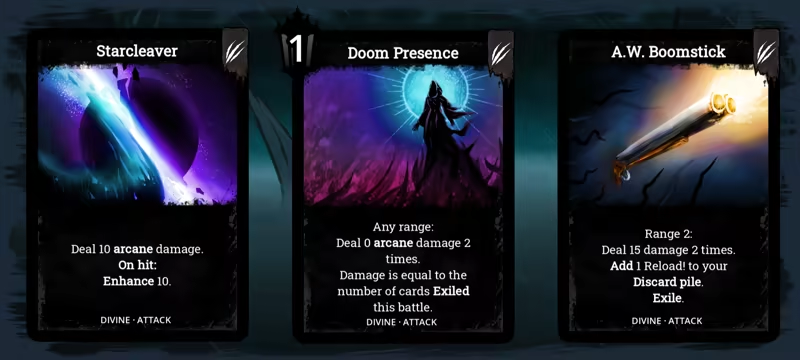
Once you defeat a powerful foe, you will be offered extremely rare divine cards. They unlock wild synergies and combos, making every run unique and changing the way you play the game.
You will face five different aspects of the Pale Gods. Each aspect has unique foes, mechanics, and card rewards. Shape your deck, discover game breaking combinations, and awaken your true potential. No run is the same!
PRIMORDIAL: Savagery and blood magic. Call upon the primal strength surging within.
PROGENY: Time and space. Manipulate reality and the flow of time.
ABYSSAL: Wrath from the deep. Command sea and stone to crush anyone in your way.
UMBRAL: The dark beyond. Lurk in the shadows and become the terror in the void.
EYE: The cult of the Ashen Absolution. Ancient secrets and cleansing flames.
Battles flow, standing still means defeat. Movement and positioning are critical. Dodge enemy attacks, rush in on the offense, steal the powerful altars and utilize the terrain features to your favor.
Press the attack, break your foes and force them to STAGGER. Use this window to obliterate them or catch your breath. Be careful, you are just as easily staggered. Plan and control the battle!
The path ahead is uncertain. Each individual path choice matters now, it defines the next battle and the card rewards you will be offered. The future is unknown, do not waste time. Choose wisely, choose boldly!
250+ Unique cards, to unleash upon your enemies.
120+ Curios, with game breaking effects.
11 Characters, with their own mechanics.
40+ Events, with unique choices that shape your run.
13 Horrifying bosses, that stand in your way.
Genres
Stats
All-time low is the lowest price we've recorded for this game since we started tracking it.
Languages: English**languages with full audio support
Engagement
Reviews
Themes across 40 recent reviews and how positive each mention is. A keyword signal, not full sentiment analysis.
Reviews
What a hidden gem! This is Slay the Spire with Lovecraftian "C'thulhu"-aesthetics that you play on a square map, somewhat similar to Duelyst IF you only had your Commander on the field. You don't summon any creatures to fight for you. Instead your cards are various attacks, spells, skills and tricks your hero character cast around. Movement and enemy manipulation plays a role since avoiding attack is often smarter than tanking it. You only move via cards (and few other special things), but as cards are elegantly made they start combining multiple effects that make thematic sense. There are 7 schools of skills that play well in to the Lovecraftian theme, but also make sense design wise. Card could for example have 1 move combined with 1 discard from one school and 1 move and 1 exert (discard in the beginning of next turn) from another. As you progress the game, the cards will get more refined towards the schools. You always "duel" on a map (at the least in the easy difficulty that the game locks you in before you clear the game once), meaning there's just one opponent for you to beat. Gameplay plays around few card types: Offensive cards: ATTACKS (physical) and ABILITIES (arcane). RITUALS that last until the end of the combat, helpful buffs. Last type of cards are ...the ones that do everything else. "Mana" mechanics is STAMINA. You always start on max stamina (e.g 5/5) when the combat BEGINS, but during the turns you gain just +1 stamina normally. Your max stamina does not increase as turns pass but you don't lose your stamina either. Some cards cost no stamina, so building your deck as you run through the various events and encounters comes to also controlling the balance of stamina cost, mana cost, synergies and just pure deck thinning. Fights vary through not only enemy types but also random modifiers that the fight scenarios have. These Critical Modifiers can be beneficial or not, which means playing around those is helpful as well. The effects last only for the said duel, which mean that your roguelike-runs truly vary. +Player choice plays a huge role +Strategic, tactical but doesn't play like a deterministic puzzle (of which I find abhorrent) +Plays well / fast / without pointless waiting +Decent audio (the guitar track in the trailer is NOT what you will be hearing in game) -First time user experience could use more easing in; it's pretty rough to run through those menus -Bit rough around the edges but it could still use a round of polish (for one man operation this is fantastic as it is!) -UX/UI could use slight improvements, e.g. buffs and debuffs become bit too intensive to read through -> some kind of summary would help HIGHLY RECOMMENDED!
Media

Related
Related
Price dynamics, follower growth, revenue and sales trajectories with interactive tooltips
This and every other Pro feature is free until October 20, 2026. A free account is all it takes.
Hours played at review time, across 40 reviews with recorded playtime.
positive critical· bar length = how often the theme comes up
Hunt the Pale Gods is an impressively dark and mechanically rich roguelike deckbuilder that manages to carve out its own identity through a combination of tactical movement, oppressive cosmic horror, and highly strategic combat design. Developed and published by Nick Papageorgiou, the game throws players into a ruined world plagued by incomprehensible divine entities known as the Pale Gods. Rather than simply copying the formula established by other card-based roguelikes, the game introduces positioning-focused combat and aggressive battlefield management that make encounters feel far more dynamic than standard turn-based deckbuilders. The result is a tense and deeply rewarding experience that constantly pushes players to think carefully about every move, every card, and every risk they take. The combat system is the centerpiece of the entire game and easily its strongest feature. Battles take place on a grid where positioning matters just as much as deck construction. Enemies telegraph attacks across certain areas of the battlefield, forcing players to move strategically while balancing offense and defense at the same time. This seemingly simple addition completely changes the pacing of combat. Instead of passively exchanging attacks, players are constantly repositioning, planning routes, and trying to maintain control of increasingly dangerous encounters. Every battle feels active and intense because poor positioning can lead to devastating damage or instant collapse even if the player’s deck is otherwise powerful. The stagger mechanic further elevates combat by adding another layer of tactical pressure. Aggressive attacks can break enemy defenses and create openings for massive combos, but enemies are capable of staggering the player as well. This creates a constant back-and-forth tension where momentum can shift rapidly during difficult fights. Boss encounters especially benefit from these mechanics because they require careful planning and adaptability rather than simple damage optimization. The game consistently rewards smart decisions, but it also punishes mistakes harshly, giving combat a satisfying sense of danger throughout every run. Deckbuilding itself offers a tremendous amount of variety. Players gradually acquire cards, relics, and divine abilities that can combine into devastating synergies depending on the chosen strategy. Some builds focus on relentless aggression and blood-based magic, while others emphasize manipulation of shadows, elemental effects, mobility, or battlefield control. The game encourages experimentation constantly, and discovering combinations that completely transform a run is one of the most satisfying aspects of the experience. The card pool feels large enough to support many different playstyles, and successful builds often emerge from unexpected interactions between abilities and relics. The different divine paths available during runs help replayability significantly. Each Pale God aspect introduces unique themes, enemies, and gameplay mechanics that subtly reshape how players approach combat and deckbuilding. Some routes emphasize overwhelming offensive power, while others focus more heavily on manipulation, control, or survival mechanics. These distinctions help ensure that runs rarely feel repetitive because the game continually encourages players to adapt to different circumstances and experiment with new strategies. Outside of combat, the roguelike structure is extremely effective at maintaining tension. The branching map system forces players to make difficult decisions regarding risk and reward, while random events introduce opportunities that can either strengthen a build dramatically or ruin an otherwise promising run. The game constantly creates the feeling that survival is uncertain, which fits the cosmic horror atmosphere perfectly. Every encounter feels dangerous because even strong decks can collapse quickly if players become careless or overly confident. Visually, Hunt the Pale Gods embraces a grim and disturbing art style filled with grotesque creatures, ruined landscapes, and occult imagery. The environments feel bleak and oppressive, reinforcing the idea that the world itself is collapsing under the influence of incomprehensible entities. Enemy designs are especially memorable because they successfully capture the unsettling feeling associated with Lovecraftian horror without relying solely on gore or shock value. Spell effects and combat animations may not be technically advanced, but they communicate information clearly while maintaining the game’s dark aesthetic identity. The audio design complements the atmosphere extremely well. The soundtrack relies heavily on eerie ambient music and tense battle themes that constantly reinforce the sense of dread hanging over the world. Combat sound effects are impactful, especially during stagger breaks and powerful ability activations, giving attacks a satisfying sense of weight. The soundscape overall helps immerse players in the bleak setting without becoming repetitive during longer play sessions. The game’s biggest weakness is probably its difficulty curve. Hunt the Pale Gods can be brutally unforgiving, especially for players unfamiliar with tactical deckbuilders. Early runs may feel overwhelming until players fully understand how movement, positioning, and synergy-building interact together. RNG can also occasionally create frustrating situations where useful cards or relics simply fail to appear. Some runs feel dramatically stronger than others depending on available rewards, which may irritate players who prefer more consistent progression systems. The narrative itself is also relatively subtle. While the atmosphere and worldbuilding are excellent, the game relies more heavily on implied lore and environmental storytelling than direct narrative development. Players hoping for extensive character interactions or detailed story sequences may find the lore somewhat vague. However, this ambiguity also strengthens the cosmic horror tone because the Pale Gods feel mysterious and unknowable rather than fully explained. What ultimately makes Hunt the Pale Gods so compelling is how confidently it combines multiple systems into a cohesive experience. The tactical movement mechanics prevent combat from becoming repetitive, the deckbuilding offers constant experimentation, and the oppressive atmosphere gives the world a strong identity that lingers long after a run ends. It feels like a game built with a clear creative vision rather than a generic attempt to imitate successful roguelikes. Hunt the Pale Gods stands out as one of the more inventive indie deckbuilders in recent years. Its combination of strategic positioning, punishing combat, and cosmic horror atmosphere creates an experience that feels tense, rewarding, and highly replayable. While its difficulty and randomness may not appeal to every player, fans of challenging roguelikes and dark fantasy card battlers will likely find an enormous amount to appreciate here. It is a smart and atmospheric game that proves the deckbuilding genre still has room for fresh ideas and bold experimentation. Rating: 9/10
Cool combos to discover, tons of replayability, lots of build archetypes. Recommend
I first played this as a demo and it's great to see it's full release come. I cant wait to get in deeper into the game. As some people have mentioned i can be difficult but thats the nature of these games, they are supposed to be hard. Don't let that put you off this little gem of a game.
Hunt the Pale Gods is a cosmic horror roguelike deck-builder that delivers a visually striking and thematically rich experience. The game excels in its eerie atmosphere and intricate card synergies, allowing players to craft powerful combinations that feel genuinely rewarding. However, while its mechanics are engaging, some players may find the difficulty settings and overall replayability lacking, making long-term investment in the game less compelling.
Hunt the Pale Gods has a wide variety of card types and potential combos and decks you can build. The developers did a great job balancing it so that you can try a different strategy each run. The game play loop is satisfying, but where I think the game is lacking is in story/motivation. I had already beaten the main boss several times before I unlocked a second character, and would have to play many more runs before unlocking the next. For some people that might be enjoyable, but for me there wasn't enough change between runs or advancement of any sort of story line to keep me going. Overall worth the purchase and runs well on steam deck if you use the touch pad.
Very solid roguelike deckbuilder.
I paid $2 for this game during Steam's Deckbuilder's Fest and I've loved every minute. I've paid $20 or $30 on deckbuilders that don't have an ounce of the love and heart that has been poured into this game. Lovecraftian creatures and bosses have great designs. Card art is incredible. Great synergy between each Pale God deck. Seriously underappreciated game. Will easily sink many more hours into this.
This is a game clearly made with a lot of love by someone who is really into Lovecraftian lore as well as turn based gaming / roguelike deckbuilders. I haven't spent much time on it yet but in general it is extremely dense, as in rich in gameplay mechanics and it's gonna take a while to figure it out. Worth taking a look at if you enjoy turn based / grid based games since they're very rare in roguelike format. Also the art and atmosphere is top notch. Only issue is that it's extremely dense in terms of mechanics so be prepared to sit and try to understand what's happening.
It's a pretty fun deck-builder with many different strategies
Selling now
See how fast this game is selling right now — estimated copies and revenue per day from recent review growth.
Players by region
Where this game's players are, estimated from review languages.
Related
| Game | Estimated lifetime revenue | Reviews | Review score | Price |
|---|---|---|---|---|
| $17.5K | 80 | 95% | $7.99 | |
| $17.5K | 158 | 92% | $4.99 | |
| $17.5K | 122 | 90% | $7.99 | |
| $17.5K | 301 | 94% | $2.99 | |
| $17.5K | 207 | 47% | $3.99 | |
| $17.5K | 225 | 85% | $4.99 |
Related
| Game | Estimated lifetime revenue | Reviews | Review score | Price |
|---|---|---|---|---|
| $12.1M | 23.3K | 92% | $19.99 | |
| $4.4M | 5.6K | 87% | $19.99 | |
| $1.1M |
| 1.5K |
| 76% |
| $19.99 |
| $742.4K | 2.4K | 91% | $12.99 |
| $426.4K | 640 | 84% | $19.99 |
| $212.1K | 792 | 76% | $14.99 |