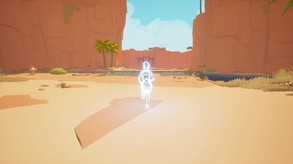
In Hourglass you can create a time-clone of yourself to solve challenging puzzles. You will play as Aywa, a young adventurer who is traveling to Egypt to find her missing father - an archeologist, who never returned from his latest expedition.
Modeled estimate, not a reported figure. How we estimate →
About
Stats
All-time low is the lowest price we've recorded for this game since we started tracking it.
Languages: English*, German, French, Italian, Spanish - Spain, Portuguese - Brazil, Simplified Chinese, Japanese, Russian, Traditional Chinese, Korean*languages with full audio support
Engagement
Hours played at review time, across 40 reviews with recorded playtime.
Reviews
Themes across 40 recent reviews and how positive each mention is. A keyword signal, not full sentiment analysis.
positive critical· bar length = how often the theme comes up
Reviews
Hourglass — это захватывающая игра-головоломка с Нео-Египетской тематикой, выполненная от первого лица. Ее атмосфера погружает вас в загадочный мир древних пирамид и таинственных ритуалов. Если вы уже знакомы с подобными головоломками от первого лица, механика Hourglass покажется вам знакомой. Головоломки сбалансированы так, чтобы быть не слишком легкими и не слишком сложными — вам предстоит нажимать кнопки, размещать кубы на нажимных пластинах и активировать различные механизмы. Это позволит открывать двери, запускать движущиеся платформы и преодолевать бездонные ямы или реки, а также достигать высоких уступов. В более поздних уровнях появляются диски телепортации, которые позволяют мгновенно перемещаться между двумя точками, что добавляет новые возможности для решения задач. Уникальной особенностью Hourglass является возможность создавать призрачного клона вашего персонажа. Этот клон может выполнять определённые действия, которые затем воспроизводятся автоматически, пока вы занимаетесь другими задачами. Например, вы можете встать на движущуюся платформу, пока ваш клон стоит на нажимной пластине и активирует механизм — таким образом вы решаете головоломки с помощью координации действий двух персонажей. Подытожу: Hourglass — это атмосферная и увлекательная игра с отличной графикой и плавным геймплеем. За время моего прохождения не возникло никаких проблем с частотой кадров, ошибками или сбоями. Рекомендую всем любителям головоломок и приключений. [strike] Зачёркнутый текст [/strike]
Antik Mısır atmosferini zaman klonlama ve ışınlanma gibi mekanikler ile birleştiren, farklı fikirlere sahip başarılı bir bulmaca oyunu. En dikkat çekici mekaniği ise yaptığınız hareketleri kaydedip zaman klonunuzla birlikte çalışarak bulmacaları çözmek. İlerledikçe bu mekanik yeni kurallarla birleşiyor ve her bölüm bir öncekinden daha yaratıcı oluyor. Bulmacalar genel olarak tatmin edici olsa da bazı bölümlerde gereksiz yere hassas zamanlama isteniyor. Milisaniyelik hatalarda bile başarısız olabiliyorsunuz ve çözümü bildiğiniz halde defalarca denemek zorunda kalmanız zaman zaman sinir bozucu olabiliyor. Buna rağmen özgün fikirleri, başarılı atmosferi ve zekice tasarlanmış bulmacaları sayesinde türü sevenlerin kesinlikle şans vermesi gereken oyunlardan biri.
I really wanted to like this game. But even though it's relatively short, I lost interest about halfway through and only finished it because I thought it might be worth it in the end, and I knew it wouldn't take much longer. I liked the game's aesthetics and some of the puzzles, especially at the beginning. However, the game does keep to a very similar puzzle mechanic throughout, which becomes repetitive over time, even with the introduced twists and additions. The music was OK, but nothing special; only the very last song was really noticeable. I did not like the timed puzzles, which were very frustrating given that your character can only walk at a slow 'calmly strolling through the woods' pace. I also HATED the puzzles that required you to discover vague mechanics that felt like exploiting glitches in the physics or abilities. And please give me the ability to skip the cutscenes of doors slowly opening or the character slowly putting a crystal in a socket, I spent what felt like 30 minutes in these cutscenes. Also a bit more variety in the optical level design would have been nice, but was okay, considering the length of the game. Also, it was the least captivating story I have witnessed in a long time. You set out to find your father, but forget about him 90% of the time. Then, when [spoiler] you finally find him, he's just sitting in his cave. You open the secret door and that's it. End of game. [/spoiler] There was zero character, zero stakes and zero tension. In the game 'Call of the Sea', you have almost the exact same setup: Your loved one went on an expedition and never returned, so you arrive by boat at the location where he went and search for him. In "Call of the Sea", you find remnants of your husband's expedition, unravel what he found and what happened to him. The atmosphere gets thicker, darker and more tense, and you get this bad feeling in your gut that something went horribly wrong. All of this is accompanied by comments from the main character that convey her worry for him and her love for him. In this game, you see the main character listening to the radio and hearing that her father is missing. She switches channels because she wants to distract herself. Finally, she pulls herself together and goes to search for him and ... nothing happens. No traces of him are found during the game (except for a couple of glimpses of his ghostly form), and nothing is ever revealed about him, what he found, or why he went out in the first place. There is so much lost potential. And that last point is my main gripe. I don't think this game is bad; it's just that I can't recommend it. The fact that you developed this game with only 2–3 people is very impressive. I feel like you demonstrated with this game that you are capable of great things. I really hope you can take some of the feedback from me and others on this game and improve it. I am sure that if you develop another game taking the feedback into account, your next game will be great. You've shown that you're capable, and I'm very much looking forward to your next release if you build on that.
$3 can't get you a lot these days. $3 for a sale is decent.... however, this game is filled with tedious parts of waiting, waiting, and waiting some more. running, running, running, and running some more. it's really just boring. your mind is not always engaged. you breeze through the puzzles, and when youre not, youre wondering if this undeveloped game has caused a bug where you left behind something that you shouldn't have. albeit the mission is clear, it's not always clear that you're actually playing as intended. if you accidentally fall with a cube? the cube resets. causing you need to run, run, run some more. wait, wait, wait some more after using the blue portals. it really just feels like everything is designed to waste time as much as possible. i'd rather spend the $3 on a carton of eggs. save your time. besides... the "story" and environment are unicolor and underwhelming. youre only playing this game because of its puzzles, and even that, you might as well play a truly challenging game if that's what youre after. 3/10. a great try from clearly an independent developer, but, the game feels like it's early access or just simply unfinished. for someone who is red-green colorblind too, it's a complete eyesore. sorry.
Hourglass is a thoughtfully constructed first-person puzzle adventure that revolves around a single, elegant idea and explores it with confidence and restraint. Developed and published by Cyberwave, the game places time manipulation at the center of its identity, using it not as a spectacle but as a tool for careful reasoning and spatial planning. Rather than overwhelming the player with mechanics, Hourglass builds a steady, cerebral experience that rewards patience, foresight, and an appreciation for clever design. The game follows Aywa, a young explorer searching for her missing father amid deserts, ruins, and ancient structures inspired by Egyptian mythology. The narrative is intentionally understated, delivered primarily through environments and subtle visual cues rather than dialogue or exposition. This light storytelling approach works in the game’s favor, giving context and motivation without interrupting the flow of puzzle-solving. The mystery of lost civilizations and forgotten technology provides a fitting backdrop for a game centered on time, memory, and repetition. The core mechanic defines nearly every interaction in Hourglass. Players can record their actions for a short period, rewind time, and then watch a past version of themselves repeat those actions exactly. These time echoes become essential tools, allowing players to cooperate with their former selves to solve puzzles that would be impossible alone. Holding switches, activating platforms, triggering pressure plates, and synchronizing movements across multiple timelines all become part of a single logical sequence that must be planned in advance. The mechanic is intuitive but surprisingly deep, encouraging players to think several steps ahead rather than rely on improvisation. Puzzle design is where Hourglass truly shines. Early challenges introduce the time-recording system in a clear and forgiving way, ensuring players understand both its potential and its limitations. As the game progresses, puzzles grow more intricate, layering additional elements such as portals, moving platforms, and environmental hazards on top of the time mechanic. Solutions rarely rely on reflexes; instead, they demand clarity of thought and the ability to visualize overlapping actions across different moments. When a solution finally clicks, the satisfaction comes from understanding rather than brute force. The pacing is measured and deliberate. Hourglass never rushes the player, and failure is treated as part of the learning process rather than a punishment. Resetting puzzles is quick, encouraging experimentation without frustration. That said, later sections can become demanding, requiring precise timing and careful setup. These moments may challenge players who prefer more forgiving puzzle games, but they are consistent with the game’s emphasis on mastery and logical consistency. Visually, the game adopts a clean, stylized look that prioritizes readability. Environments are atmospheric without being cluttered, ensuring that important puzzle elements stand out clearly. Desert landscapes, stone ruins, and mysterious structures create a strong sense of place, while lighting and color subtly guide attention where it is needed. The visual design supports the gameplay rather than competing with it, which is crucial for a puzzle-focused experience. Sound design complements this restraint. Ambient audio and music underscore the sense of isolation and discovery without becoming intrusive. The absence of constant narration or dramatic cues reinforces the player’s role as an observer and problem-solver, allowing moments of insight to feel personal. Silence is used effectively, giving space for concentration and reflection during more complex puzzles. In terms of scope, Hourglass is a compact experience, typically completed in a relatively short span of time. However, it makes efficient use of that length, avoiding filler and ensuring that nearly every puzzle introduces a meaningful idea or variation. While there is limited replay value once all puzzles are solved, the journey itself feels complete and cohesive, making the game memorable despite its modest runtime. Ultimately, Hourglass stands as a strong example of focused indie design. It demonstrates how a single mechanic, when explored thoughtfully, can sustain an entire game without needing excessive systems or narrative complexity. Players who enjoy first-person puzzle games built around logic, timing, and spatial reasoning will find Hourglass to be a rewarding and intellectually satisfying experience, one that respects the player’s intelligence and delivers its ideas with clarity and confidence. Rating: 8/10

I noticed a lot of reviews mentioning the Talos Principle and Portal, and then that leads to disagreement as to whether Hourglass needs to be "that good" or whether it's fair to compare it and hold it to that standard. Guys, this is just a bad game. It's a very low effort, going through the motions, knock-off, coat-tail type of game. If "fake it 'til you make it' were a game. The puzzles are very yada-yada: simple, or tedious, or both. The developer is not even a little bit invested in the premise, the world, the character, the setting, etc. There's also a lot of 'waiting' baked into the mechanics, since most puzzles are some form of baton-pass where your clone has to act first, and then you move in parallel to 'sync up' with your clone. Would I spend time on it if it were free? I would not.
That's hard but its good ! That's what she said...
Primeiramente, esse é um jogo que cairia bem a recomendação "depende", e como toda minha analise, nesse caso avalio pelo geral então pendendo para um sim. Acho que preciso <b>iniciar pelos pontos negativos</b> ou pelomenos, que me incomodaram, o primeiro é o "Suspensão de descrença" do espectador, tudo bem que é um jogo mas, o seu personagem principal simplismente chega em um local, vê portais, mecanismos que abrem com blocos, plataformas flutuantes e etc, e "tudo normal", nenhum apontamento e etc, sem nenhuma introdução prévia, alem da história ser praticamente, um "pano de fundo" para justificar o personagem estar ali, alguns jogos só abandonam a história (resolva os puzzles, se divirta, fim), e outros aprofundam bem (portal, fez e etc), aqui, fazem o padrão "voce está aqui por um motivo, que se você não souber tudo bem". Alem disso, o design tem alguns efeitos estranhos, toda agua parece ser "cercada por led" por ter um contorno branco, alem das luzes também terem esse contorno branco. (algumas partes são realmente led, mas não todas). <b>ENTRETANTO, DE POSITIVO</b>, o jogo inciou de um modo que eu acreditava que seria "mais do mesmo", mas conforme o jogo foi avançando ele foi demonstrando ter puzzles realmente desafiadores, alguns levando bons minutos (20, 40 minutos) para descobrir como resolver, e depois que "resolvido" aquela famosa sencação de "era tão simples e eu não vi". Os puzzles evoluem de modo que, com as mesmas mecanicas, você descobre novas funcionalidades para resolver cada cenário. No geral, em uma boa promoção como eu peguei (algo em torno de 5 reais), valie a pena para umas 5 a 6 horinhas (dependendo do seu nível de lógica) de diversão.
Lots of fun puzzles!! Later ones really make you think outside the box, which was awesome!! Great progression and learning curve throughout the levels as well.
精巧的物理解密,机制简单却不失挑战性
Related
Related
Trends
Concurrent players on Steam, sampled daily since tracking started.
Audience
Estimated from the language of this game's reviews — a proxy for where players are, not official Steam demographics.
Related
| Fluid Engine PC Live Wallpaper | $11.3K | 156 | 71% | $2.59 |
| Hexoscope | $11.3K | 221 | 88% | $2.99 |
| A Gay Love Story About Gay Love | $11.3K | 719 | 89% | $0.99 |
| Endless Bounty | $11.3K | 134 | 93% | $5.99 |
| "Glow Ball" - The billiard puzzle game | $11.3K | 142 | 27% | $2.99 |
| Britannia | $11.3K | 103 | 73% | $3.74 |