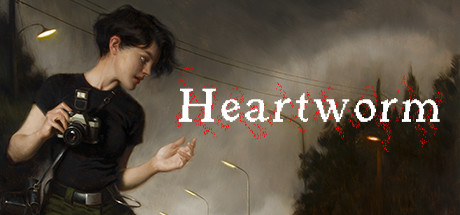
Pass through the threshold and enter a world born of memories. Defend yourself with a camera while solving death’s mysteries in a reverent evolution of 90’s survival horror, integrating both fixed cameras and over the shoulder perspectives.
Modeled estimate, not a reported figure. How we estimate →
Media

About
Sam, unable to move on from the death of her beloved grandfather, falls down an internet rabbit hole chasing the promise of reuniting with him.
Following the lead of a mysterious forum, she finds herself at a supposedly supernatural house in the mountain, hoping to make contact with the other side.
A journey through grief and loss within retro-inspired atmospheric environments.
4-6 hours of gameplay with multiple endings
Both pre-rendered and in-game cutscenes
A focus on exploration with classic puzzles, and limited combat using a camera as a weapon
A modern control scheme with 3rd person over-the-shoulder aiming and optional classic tank controls
Optional pixelation and retro effects calling back to the first 3D console era for a more authentic experience
A haunting original soundtrack
Experience a psychologically-focused narrative love letter to late 90s genre staples Silent Hill and Resident Evil.
Stats
All-time low is the lowest price we've recorded for this game since we started tracking it.
Languages: English*, French, German, Japanese, Portuguese - Brazil, Spanish - Latin America*languages with full audio support
Engagement
Hours played at review time, across 42 reviews with recorded playtime.
Reviews
Themes across 42 recent reviews and how positive each mention is. A keyword signal, not full sentiment analysis.
positive critical· bar length = how often the theme comes up
Reviews
Oh boy, I’m kinda on a pickle with this one. Let’s start with the graphics and the ambience. They are REALLY good, the design and thought put into levels make them enjoyable to stand in. Puzzles are great most of the time. The rest of the game is… underwhelming. It’s easy to see where this game comes from in terms of inspiration, but the mix that comes out of it isn’t necessarily good. From what I understand the game threads about loss and how the protagonist, Sam, “deals” with it. This is a good subject to try and connect with the player but the game fails to do so in my opinion. All the personality of the main character rests in the 3d model, the rest of it (voicelines, documents, thoughts, cutscenes…) shows nothing about her. I expected something more emotional, more personal, a glance that she is so struck about losing someone that she’s okay with losing herself in order to get a tiny little something about that person, and all you see about that is bland, lines that feel that someone is just reading, robot movement and weird philosophical soliloquies that feel more like a lecture than someone reacting to a messed up place. Things just happen like “Duh, I’m here cause I have to, pfft.” Mechanically it is weird, halfway through the game you’ll encounter enemies that are way faster than you and, at some point, some of those may be able to stunlock you or hit you in cheap ways. Like I said, kind of a pickle cause I wanted to like this game and even though I enjoyed it, I’m not sure I liked it. I don’t feel like it’s worth its regular price but its Dev has potential. If you like survival horror it may be a nice game to play, but sadly I cannot recommend it.
I'm giving this a "technical thumbs up." It does everything it says it's going to on the cover- but what it doesn't promise is cohesion, and this game lacks it. Moon logic, mixed with the Silent Hill exploration, Resident Evil's management system, and Fatal Frame's combat doesn't necessarily shake out into an enjoyable experience. I know that sounds harsh, and it is. I've been second guessing my recommendation for a minute now. However, it IS designed with love, and appreciation for the genre- it just sadly isn't that most interesting or satisfying to play. I found it to almost, ALMOST, be making fun of those experiences- but it never evolves from homage to parody, so I think this is an honest attempt to create a "chocolate and peanut butter" Silent Evil kinda thing- and tbh, it just doesn't quite work out. A+ for the effort, but execution needed to be frank- less. More focus on enemies or puzzle design, but this falls in-between all.
I, too, enjoy thinking about and loving the idea of Signalis way way more than actually playing it. I did not finish this game and I'm sad writing this, because this game is aesthetically beautiful, but playing this is, ♥♥♥♥♥♥♥, excruciating. I wish there were a walking simulator mode where I didn't have to deal with this horrendous and tedious combat.
Hard review to write, but since I've not felt like picking this game up again, it's time to share my thoughts. I loved playing the the first few levels. The game's got that old-school feel (not just because of the graphics) with challenging puzzles and a captivating story. I wanted to find out what was going to happen next so badly... until I got to the level in the wilderness, where it becomes too frustrating to play. The map is huge and full of enemies, and sadly, the camera combat mechanic is only entertaining for so long. Will I finish this game? Maybe in a few months. But right now, I feel no spark to play again.
While I think this game is pleasant to look at, I think the actual contents are poorly executed both in gameplay and story, which comes together to make something I think is shallow and even somewhat boring. Firstly, I think the gameplay is sorely lacking with many of its problems coming down to its level design. About two thirds of this games main levels are very long. Like, actually physically long corridors. You may well spend about a tenth of your whole playthrough just waiting for the run button to carry you from one place to another. (Additionally, this width of space also makes enemies very easy to avoid and renders them nuisances rather threats or aspects of engaging gameplay.) Furthermore, there is almost nothing to the levels that isn't strictly necessary in completing the main story. This is to such a degree that doors you can't go through aren't even depicted on the map. From the instant you enter any room, the map screen will show you which doors are "real" and which are "fake". It's an odd decision that only serves to remind you that you're playing a video game. It eliminates any sense of exploration, scale, or believability to the world. The game's story also falls very short. Whenever a character speaks, they'll be telling you exactly what they're thinking, the significance of it, and how you are meant to interpret it. I am not someone who thinks subtlety is an end- all, be-all of good writing, but this game could have certainly benefited from more clever conveyance of its already simplistic ideas. As it is, the game asks nothing of the player to actually mentally engage with it. Finally, I think this game suffers from an over-reliance on homage. As anyone looking at it may notice, it borrows its entire identity from Resident Evil or Silent Hill. It goes so far in this pursuit that there are instances where an entire zone or sequence of camera angles may be pulled directly from those games without particular rhyme or reason. There is one section of the third area which copies a stairwell from RE1 almost exactly. The colour of the wallpaper, the photo-frame decor, the camera angles, the placement of the enemies, location of the save room, the list goes on. I think that some restraint should have been shown before the notion of "borrowing" became a cause for concern about the game's ability to be original. (As a side-note, the third levels inspiration from RE's mansion inadverdently makes it the best one by not being comprised of overly long corridors) Overall, I think Heartworm is a game which is very attractive and reminds of other games we've liked in the past, but I think would have benefitted from more thorough consideration of its execution.
Personally, when an enemy knocks you down and chain knocks you down before you can escape leading to a cheap death I lose any interest in continuing.
Overall, there's nothing really *wrong* with Heartworm, but I'm not sure it really does anything that right, either. Okay, it's generally quite playable, the music is broadly decent, and I appreciate that it doesn't overstay its welcome, so it's admittedly not all bad. It is, however, just a bit too slavish and doesn't offer anything particularly noteworthy, which is compounded by a trite narrative that fails to draw the player in or give them the remotest reason to care. It's... fine, but nothing more than that. Maybe that'll work for some, but that makes it hard for me to recommend.
Got the best ending on my first playthrough which I don't think I've ever done in a survival horror before glad they didn't take inspiration from silent hill 1 on that, but they did take the piano puzzle [spoiler] which was the only one I needed a walkthrough on because being able to play the piano or at the very least being able to hear what note is being played then play 8 different notes in a row, shouldn't be a prerequisite for a puzzle [/spoiler]
Heartworm, developed by Vincent Adinolfi and published by DreadXP, is a survival horror experience that deliberately channels the spirit of late-90s classics while anchoring itself in a deeply personal and melancholic narrative. Rather than modernizing the genre with streamlined systems or cinematic pacing, it embraces slower movement, deliberate exploration, and a heavy reliance on atmosphere. The result is a game that feels intentionally old-school, not just in how it looks, but in how it asks players to engage with it. The story follows Sam, a young woman grappling with grief who becomes fixated on the possibility of reconnecting with the dead. Her search leads her to a remote house rumored to act as a gateway to another realm, setting the stage for a journey that is as much about internal struggle as it is about external horror. The narrative unfolds gradually, relying on environmental details, scattered notes, and subtle visual cues rather than direct exposition. This approach encourages players to piece together meaning on their own, creating a sense of discovery that aligns with the game’s themes of memory and loss. Gameplay draws heavily from classic survival horror design. Fixed camera angles, limited inventory space, and deliberate movement create a constant sense of vulnerability. Exploration is central, with interconnected environments that require careful navigation and frequent backtracking. Puzzles are integrated into this structure, ranging from straightforward tasks to more abstract challenges that demand close attention to detail. While these elements contribute to the game’s authenticity, they can also slow the pacing, particularly when solutions are not immediately clear. Combat is handled in a distinctive way that ties directly into the game’s themes. Instead of conventional weapons, Sam uses a camera to confront enemies, capturing them in photographs to weaken or repel them. This mechanic reinforces the idea of preserving moments and confronting memories, giving combat a conceptual layer beyond simple survival. At the same time, it introduces a resource management aspect, as film is limited and must be used carefully. While the system is thematically strong, it remains relatively simple in execution and does not evolve significantly over the course of the game. Atmosphere is where Heartworm consistently excels. The visual style, inspired by early 3D horror titles, uses low-resolution textures and fixed perspectives to create a sense of unease that feels both nostalgic and effective. Environments shift between grounded, familiar spaces and more surreal, dreamlike settings, reflecting the instability of the narrative. The soundtrack plays a crucial role in reinforcing this mood, blending ambient sounds with melancholic tones that enhance both tension and introspection. Together, these elements create an experience that feels immersive without relying on constant intensity. However, the game’s commitment to its retro roots comes with trade-offs. Navigation can be cumbersome, with large areas and minimal guidance leading to moments of uncertainty. The pacing can feel uneven, particularly during extended periods of exploration or when players struggle to identify the next objective. Combat, while conceptually interesting, lacks depth and can feel secondary to the overall experience. Additionally, while the narrative introduces compelling themes, it does not always fully develop them, leaving certain aspects feeling incomplete. What ultimately distinguishes Heartworm is its sense of personal expression. The game feels like a reflection of its creator’s ideas and experiences, particularly in how it handles themes of grief and memory. This gives it an emotional weight that elevates it beyond a simple homage to classic horror games. Even when its mechanics falter, its atmosphere and tone remain consistent, creating moments that linger long after the game has ended. In the end, Heartworm is a thoughtful and atmospheric entry in the survival horror genre that prioritizes mood and meaning over mechanical complexity. It may not appeal to players seeking fast-paced action or modern design conveniences, but for those who appreciate slow, reflective horror experiences, it offers something distinctive and memorable. Its imperfections are evident, but they do little to diminish the impact of its overall vision. Rating: 7/10
Great survival horror! It's a lot of fun
Related
Related
Trends
Concurrent players on Steam, sampled daily since tracking started.
Audience
Estimated from the language of this game's reviews — a proxy for where players are, not official Steam demographics.
Related
| CRYO | $173.2K | 486 | 89% | $14.99 |
| Human Host | $173.2K | 485 | 82% | $16.88 |
| Gilded Shadows | $173.2K | 159 | 94% | $29.99 |
| FlyInside Flight Simulator | $173.3K | 147 | 67% | $34.99 |
| MotoGP™21 | $173.3K | 2K | 82% | $3.74 |
| The Golf Club VR | $173K | 514 | 68% | $9.99 |