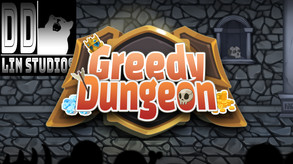
Greedy Dungeon is an enjoyable indie roguelike that successfully combines dungeon exploration, deck-building strategy, and RPG progression into a compact but rewarding adventure. Developed by Dern Lin and published by DDLin, the game embraces familiar mechanics while presenting them in a way that feels approachable and satisfying. Rather than overwhelming players with an excessive number of systems, it gradually introduces new mechanics that naturally build upon one another, creating an experience that is easy to learn yet capable of providing many hours of replayability. Every journey into its procedurally generated dungeons presents fresh opportunities, encouraging players to adapt their strategies instead of relying on a single formula. Although its presentation is modest compared to larger titles in the genre, the gameplay loop proves engaging enough to keep players returning for another run.
Exploration forms the foundation of the experience, with randomly generated dungeons ensuring that every expedition offers a different layout, enemy arrangement, and collection of rewards. This unpredictability captures the spirit of roguelike games, making each run feel like a new challenge rather than a simple repetition of previous attempts. Players constantly face decisions that test both patience and ambition, choosing whether to push deeper into dangerous territory for greater rewards or play more cautiously to preserve valuable resources. This balance between risk and reward aligns perfectly with the game's title, as greed often tempts players into situations where careful planning becomes essential for survival. Even though the environments are visually straightforward, they effectively support the gameplay by keeping the focus on tactical choices instead of environmental distractions.
Combat revolves around a customizable deck of cards that determines every offensive, defensive, and supportive action during battle. As players continue progressing, they steadily unlock additional cards that allow for increasingly diverse strategies. Some builds focus on overwhelming enemies with relentless attacks, while others prioritize defense, resource efficiency, or carefully timed combinations. The card system rewards experimentation because there is rarely a single correct solution to every encounter. Success depends on understanding how different cards complement one another and how they can be adapted to the challenges presented by each dungeon. Since every new card is earned through gameplay rather than external purchases, progression feels consistently rewarding and gives players a genuine sense of accomplishment as their collection expands.
One of the game's strongest progression systems comes from its equipment and smithing mechanics. Instead of constantly discarding older abilities in favor of newly acquired ones, players can strengthen their favorite cards through upgrades that improve their long-term usefulness. Equipment plays an equally important role by increasing attributes that directly influence combat, including attack power, defense, available mana, and hand size at the beginning of encounters. These upgrades have a noticeable impact without making the game feel unbalanced, allowing players to steadily develop stronger characters while still requiring careful decision-making in every battle. This sense of continuous growth gives every successful dungeon run additional value, since collected resources contribute to meaningful permanent improvements.
As players advance further into the game, relics become another important layer of customization. These powerful passive items significantly alter combat by introducing special bonuses that interact with specific playstyles and deck compositions. Some relics encourage aggressive strategies, while others reward defensive planning or efficient resource management. Because relic combinations vary from run to run, they encourage players to experiment with different approaches rather than relying exclusively on familiar tactics. This system substantially improves replay value by ensuring that even experienced players continue discovering fresh synergies between cards, equipment, and passive abilities. The gradual introduction of relics also helps maintain a satisfying progression curve, preventing the game from revealing all of its strategic possibilities too early.
The combat itself strikes an appealing balance between accessibility and tactical depth. Every encounter requires thoughtful management of available mana, careful sequencing of cards, and consideration of future turns rather than focusing solely on immediate damage. Players who rush into battles without planning often find themselves struggling later in longer dungeon runs, while those who carefully conserve resources are rewarded with greater consistency. Battles move at a comfortable pace that allows strategic thinking without becoming slow or tedious, making the game equally suitable for brief play sessions or extended runs. This approachable design makes Greedy Dungeon welcoming for newcomers while still offering enough strategic depth to satisfy experienced fans of card-based roguelikes.
From a visual standpoint, Greedy Dungeon adopts a clean and practical art style that prioritizes gameplay clarity over graphical complexity. Character illustrations, enemy designs, and interface elements are all easy to understand, allowing players to quickly evaluate their available options during combat. While the environments do not feature highly detailed artwork or elaborate animations, they remain functional and appropriate for the game's overall scope. The soundtrack complements the fantasy setting with pleasant background music that supports exploration and combat without becoming repetitive, while the sound effects provide satisfying feedback for attacks, abilities, and victories.
Despite its strengths, the game does have a few limitations. Players searching for an extensive narrative, cinematic storytelling, or an enormous amount of endgame content may find its overall scope somewhat modest. After many successful runs, some enemy encounters and dungeon events inevitably begin to feel familiar despite the procedural generation. The visual presentation, while effective, also lacks the polish and spectacle found in higher-budget productions. However, these shortcomings rarely overshadow the quality of the core gameplay because the developers clearly focused their efforts on creating engaging mechanics instead of relying on presentation alone.
Greedy Dungeon succeeds by delivering a polished blend of strategic card battles, rewarding character progression, and replayable roguelike exploration. Its interconnected systems encourage experimentation while providing a steady sense of growth that keeps every successful run meaningful. The combination of deck customization, equipment upgrades, relic collection, and procedurally generated dungeons creates a satisfying gameplay loop that remains enjoyable well beyond the opening hours. Although it may not compete with the genre's largest releases in terms of content or production values, it stands out as a thoughtfully designed independent title that offers excellent value for players who appreciate tactical decision-making and replayability.
Rating: 7/10