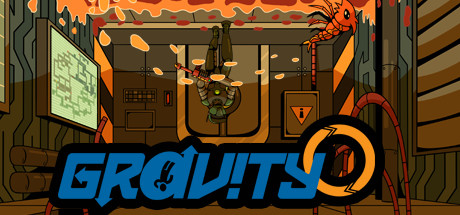
Gravity Spin is a tough as nails 8 bit retro metroidvania (retroidvania) with a literal spin - on gravity. Spin the world on its head and be careful not to get too confused.
Modeled estimate, not a reported figure. How we estimate →
Media

About
Stats
All-time low is the lowest price we've recorded for this game since we started tracking it.
Languages: English
Reviews
恐らくSteamでプレイしている人は世界中で数えるほどもいないマイナーゲームですが もしこのレビューを見ている人がいるのでしたら、黙って戻るボタンでこのゲームの ストアページから離れることを推奨します。 人にもよりますが3~6時間ぐらいでクリアできると思います(私は4時間少々) 良い点 音楽 RTA向きかもしれません。激しくストレスが溜まりますが達成感は少しだけあります。 悪い点 上記以外は基本悪いです。特筆すべき点は、メトロイドヴァニア形式の探索方式にハードコアな難易度を突っ込んだせいでファミコン世代の強者以外遊べないクソゲーに仕上がっていることにあります。他にも具体例を挙げると際限がないのですが主要なクソゲー要素を列挙します。 ・ゲーム開始時に重力を反転する機能があるのですが、Y軸しか反転しないため反転すると進行方法が左右逆になり どっちにいっているのか毎回確認しないと迷子になりやすいです。 ・この重力反転を初見のマップで利用すると、1撃死する溶岩、電撃などに突っ込んで死ぬことが多々あります。 ・敵の被ダメが異常に強く、ゲーム開始時にエネルギーが4メモリしかないのに3ダメージ与えてくる敵が ゴロゴロうろついています。 ・ゲーム開始時に武器はありません。基本回避して第2フロアの武器パーツを取得する必要があります。 ・操作性が非常に悪く、足場もジャンプギリギリのところに配置や敵と衝突するような狙った配置のため 基本慣れるまで何度も死にます。普通のゲーマーなら耐えられないストレスになると思います。 ・セーブポイントが特定のゲートのみの中間地点方式のため、上述した何度も死んでかなり遠くからやり直す ということが多々起きるため非常にストレスがかかります。 ・マップが、一方通行の罠みたいな構造になっていることがあり、ただでさえうっとおしい敵を倒しつつ 移動するためストレスが更に増幅します。 ・ボスがどこにいるのかわかりません。 ※慣れてくるとどこに配置しているのか簡単にわかりますがそんなことを慣れたい人いないと思います 以上のようなファミコン世代のゲームにありがちなストレスな部分が満載ですので、挑戦しないほうがいいです。 配信的にはバグは少なく問題ないためクソゲーをいかに面白く伝えるかという視点で素材としては使えそうです。 最後にもう一度書きますが、絶対買わない方がいいです。
After playing this game for 30 mins I can wholeheartedly wish I could get my $4 back. I tried to salvage the purchase and failed. After collecting the first power up, I could only make about 3-5 screens of progress before I died and literally had to start over with the beginning story. After the 30 mins were up, I rage quit, and came here immediately to write this scathing review. Unless you like a game with no direction and nightmarish difficulty that makes dark souls look like a day at the beach; save your money and go somewhere else.
I really love Metroidvanias and would really like to give this a thumbs up BUT - How can it be that you lose 80% health by just walking through a door? A door that you walked through three times before! - How ist it that you have this gravity spin and it just works when IT WANTS to work? This is not hard as nails, this is xxxx Pro: - Good retro atmosphere - Crisp controller feeling - Soundtrack I do not refund because I like support people that produce Metroidvanias.
ファミコンでありそうなグラフィックが刺さりまして、PVを確認後即購入。 しかしその判断が大きな過ちでした。実際にやってみるまで分からない事もあるものですね……。 初期時点で4ライフしかないです。なのに大体は2被弾で死にます。 しかも敵が避けられないような配置になってます。 何度もやられて何度もやられて突破を試みましたが、私にはそれが叶いませんでした。 初期時点では攻撃も出来ない為、敵をやっつけながら進む事さえも出来ません。 何故最序盤からこんな鬼畜な造りにしたのでしょうか、プレイヤーにきちんと遊ばせる気はあるのでしょうか。 反重力がテーマのようですが、強制的に解除されてしまう地帯もあります。 初見ではその仕様に気付けず、進もうとしても進めないのやり取りを長く繰り返していました。 すぐやられてタイトル画面に戻されての繰り返しと言う事もあり、このゲームをやるくらいならば他のゲームをした方が良いとの結論に至りました。 本当にファミコン時代のクソゲー、高難易度と理不尽を履き違えているかのような、そういうゲームとの印象でした。 私に残ったのは大きなストレスのみでした。
Gravity Spin is a retro-style metroidvania that takes a familiar exploration formula and transforms it through a creative gravity manipulation mechanic that constantly challenges the player’s sense of direction and movement. Developed by ERMedia and published by Plug In Digital, the game places players inside a damaged asteroid station after a devastating collision leaves the facility unstable and close to destruction. Equipped with a malfunctioning powersuit and limited resources, the protagonist must navigate dangerous corridors, abandoned laboratories, hostile creatures, and collapsing structures in search of a way to repair the station before everything falls apart. While the setup itself is fairly simple, the gameplay mechanics and atmosphere give the experience a much more distinctive identity than many smaller indie platformers. The gravity rotation system is unquestionably the centerpiece of the entire game. At nearly any moment, players can rotate gravity and completely alter the orientation of the environment. Walls instantly become floors, ceilings turn into pathways, and enemy movement changes depending on the current direction of gravity. What makes the mechanic especially challenging is that the player’s controls rotate along with the world, forcing constant mental adjustment during exploration and combat. This creates a gameplay experience that feels genuinely unique because progression depends heavily on spatial awareness and the ability to adapt quickly to constantly shifting environments. Exploration follows the traditional metroidvania structure closely. The asteroid station functions as one large interconnected map filled with hidden upgrades, locked pathways, environmental hazards, and secret areas waiting to be discovered. As players gain new abilities and improve their equipment, previously inaccessible sections gradually open up, encouraging backtracking and experimentation. The world design rewards curiosity consistently, and uncovering shortcuts or hidden rooms creates a satisfying sense of progression that keeps exploration engaging throughout most of the adventure. The game’s atmosphere is one of its strongest qualities. The retro pixel-art visuals and isolated science fiction setting create a feeling of loneliness and tension that fits the gameplay extremely well. The station feels abandoned, damaged, and unstable, constantly reinforcing the idea that disaster could strike at any moment. Dark corridors, industrial environments, and malfunctioning systems all contribute to a world that feels hostile and uncomfortable to navigate. The minimalist visual style actually strengthens the atmosphere because it keeps the focus on environmental tension and movement rather than excessive visual detail. The difficulty is intentionally demanding and often unforgiving. Gravity Spin clearly embraces old-school game design where mistakes carry meaningful consequences and survival depends heavily on patience and precision. Platforming sections become increasingly dangerous as environmental hazards and enemy encounters grow more complicated deeper into the station. Rotating gravity during difficult jumps or combat encounters can quickly become disorienting, especially during moments where precise timing is essential. The game rarely gives players an easy path forward, which creates both satisfying victories and occasional frustration. Combat remains relatively simple but works well enough within the larger exploration framework. Players gradually acquire stronger weapons and abilities while fighting hostile creatures scattered throughout the station. Battles focus more on positioning and survival than elaborate combos or advanced combat mechanics. Since enemies are also affected by gravity shifts, encounters can become chaotic as the orientation of entire rooms changes during fights. This creates situations where manipulating gravity becomes both a combat strategy and a movement tool at the same time. The soundtrack complements the retro science fiction atmosphere effectively. Chiptune-inspired music and ambient electronic tracks reinforce the feeling of isolation while supporting the game’s nostalgic identity. The audio design generally remains understated, allowing exploration and gameplay tension to remain the primary focus. Combined with the pixel-art visuals, the soundtrack helps create a strong retro identity that feels authentic rather than purely nostalgic imitation. One of the game’s more impressive qualities is how fully it commits to its central mechanic. Gravity manipulation is not treated as a simple gimmick used occasionally for puzzles. Instead, the entire game world is designed around constantly forcing players to rethink movement, navigation, and combat through shifting gravity. This commitment gives Gravity Spin a very strong mechanical identity that helps it stand apart from many smaller metroidvania titles. However, the same gravity system that makes the game memorable can also become extremely frustrating. Constantly rotating the environment and reorienting controls can feel overwhelming during difficult sections, especially when combined with precise platforming or enemy attacks. Certain areas require rapid gravity changes while avoiding hazards, creating moments where failure feels more disorienting than challenging. Players who struggle with spatial adaptation may find the gameplay exhausting over longer sessions. The difficulty balance can also feel harsh at times. Progression occasionally depends heavily on trial-and-error experimentation, and the lack of extensive guidance may leave some players wandering through the station unsure about where to go next. The old-school design philosophy clearly values discovery and persistence over accessibility, which will appeal strongly to some players while alienating others who prefer smoother pacing and more direction. Another limitation is that the gravity mechanic carries most of the experience by itself. While the core idea remains interesting for a long time, the game introduces relatively few major systems beyond gravity manipulation and exploration. Players who fail to connect with the central mechanic may eventually feel that the gameplay lacks enough variety to maintain long-term engagement. Despite these issues, Gravity Spin succeeds because of how original and focused its design feels. The game fully understands the appeal of exploration-heavy retro platformers while introducing a mechanic that genuinely changes how players think about movement and navigation. The asteroid station becomes increasingly satisfying to explore as players slowly master the unusual controls and begin understanding how every section of the environment connects together. For fans of classic metroidvanias and difficult retro-inspired platformers, Gravity Spin offers a creative and rewarding adventure filled with challenging exploration and memorable mechanics. Its punishing difficulty and intentionally disorienting gameplay will not appeal to everyone, but players willing to adapt to its unusual gravity system will likely find a surprisingly engaging and atmospheric science fiction platformer hidden beneath its old-school presentation. Rating: 5/10
Have a hard time recommending this one, SO I WON'T. Tl;dr - terrible sound, awful gameplay mechanics and controls and the constant disorienting because the gravity shifter also mirrors the horizontal level layouts. The sounds are so torturous muting them should be the default setting. Especially the projectile sounds that make OBS audio visualizations spike red every time. Also the game design is super arduous to the point it becomes the main obstacle in the game. The soundtrack consists of sharp electronic music tracks that even a person like me that prefers that stuff finds itself turning it off after about a minute. I checked on it from time to time in new areas and every new track was equally dejectable. Also a lot of instadeath obstacles such as lava pools and extremely rare checkpoints, meanign there is a long slog between every single one. At least the progress you do such as the new items stick with you even if you die after getting them, so it could be worse. I feel like it would nothing short of a bloody vendetta I would be inviting upon myself by claiming it to be great or worth trying. It is difficulty and suffering from start to finish with zero payoff in sights. I do like the stuff the guy puts out. If we consider Biomech to be teetering on the edge of not being recommendable, Gravity Spin is leagues bellow that level of quality. This is at best a challenge game for those ones who like difficult game mechanics or the Nintendo Hard design. Either this one is an especially weak entry or every single one in the catalogue is. Either way I do not find this one to have what most people consider "fun" as gameplay. It is a rare game to have no redeeming factor to me. Even the hacked infinite health fails to make it tolerable.
Imagine playing original NES Metroid but you die in 3 hits and every time you die you restart at the opening elevator screen. The gravity swap mechanic is very disorienting because for some odd reason it also flips the rooms left to right as well as top to bottom.
Related
Related
Trends
Concurrent players on Steam, sampled daily since tracking started.
Momentum
Pace estimated from the game's recent review growth (our daily snapshots) at its own sales-per-review ratio — a momentum signal, not booked sales.
Related
| Food and Girls | $315.6 | 51 | 86% | $0.99 |
| Glasses and Girls | $315.6 | 51 | 82% | $0.99 |
| Dances and Girls | $322 | 52 | 83% | $0.99 |
| Carnival and Girls | $334.4 | 53 | 85% | $0.99 |
| Anime Sunset Ride | $334.4 | 54 | 67% | $0.49 |
| Cosmic Journey PC Live Wallpaper | $336.3 | 52 | 71% | $0.49 |
Related
| 7 Days to Die | $425.3M | 403.5K | 87% | $44.99 |
| Euro Truck Simulator 2 | $421.6M | 932.1K | 97% | $19.99 |
| Mount & Blade II: Bannerlord | $309.8M | 293.9K | 88% | $49.99 |
| Palworld | $279.6M | 445.8K | 94% | $20.99 |
| Clair Obscur: Expedition 33 | $263.7M | 178K | 95% | $47.99 |
| The Forest | $254.8M | 678.5K | 96% | $19.99 |