
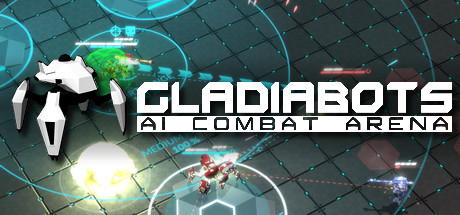
Assemble your robot squad, construct their AI and send them in the battle arena to see your strategy play out. Iterate, improve and repeat until you outsmart all your opponents and friends online.
Modeled estimate, not a reported figure. How we estimate →
Media
About
Genres
Stats
All-time low is the lowest price we've recorded for this game since we started tracking it.
Languages: English*, French, Italian, German, Spanish - Spain, Simplified Chinese, Hungarian, Japanese, Portuguese - Portugal, Russian, Ukrainian, Dutch +2 more
Engagement
Hours played at review time, across 41 reviews with recorded playtime.
Reviews
Themes across 41 recent reviews and how positive each mention is. A keyword signal, not full sentiment analysis.
positive critical· bar length = how often the theme comes up
Reviews
The game is alright. If its for you its worth a play, but it has problems. The Good: It has a fun premise and the AI options give more control than you might expect. While the gameplay only has a few mechanics it has enough depth to keep itself going. The visual style is simple but works. There are a few awkward UI bits, but nothing beyond typical indie game things. The Bad: The coins currency and cosmetics is really overbearing, expecially given the small size of the game. The game gets boring fast with little replayability. Many times you are just running your script to win the level, waiting for an extended period, then moving on. Once you have a decent AI its mostly tweaking tiny aspects hoping for mild improvement, or changing things nearly randomly hoping to get lucky with the emergent behavior. These tedious improvements feels dull and uninspired and they are most of the gameplay after about an hour or so. I am someone who normally likes these types of nitty-gritty design challenges but I still had trouble keeping interest.
I was a little worried after reading the negative reviews. But it turns out that none of the negative reviews are based on the actual game. No problems with the multiplayer account. Plenty of fun even for single players. Programming interface is very clear and easy to use. The game is easy on hardware. Overall very entertaining.
Awesome concept, excellent execution. If i were a kid getting this on a NAG disc or some other type of demo disk, I would have shared it with everyone i knew. Genius.
I would love something like this but with open world
Gladiabots is a unique strategy title developed by GFX47 and co-published with WhisperGames that replaces fast reflexes and direct control with the challenge of designing artificial intelligence. Instead of steering robots in the heat of battle, players construct behavior trees that determine how squads act on the battlefield. Each encounter becomes less about rapid decision-making and more about careful planning, logical structure, and constant iteration. The result is a game that appeals to players who enjoy problem-solving, experimentation, and watching their strategies unfold in sometimes unexpected ways. At its heart, Gladiabots is about crafting AI routines through an intuitive visual editor. Players connect nodes that represent conditions and actions, building branching flowcharts that dictate how units behave in specific circumstances. A robot might be instructed to retreat if its health falls below a certain percentage, prioritize capturing objectives when enemies are far away, or attack the nearest target unless a higher-priority threat appears. The system strikes a balance between accessibility and depth, ensuring that those without programming knowledge can still engage while offering enough complexity to satisfy players who want to refine tactics endlessly. The flexibility of the system means that even small adjustments to a rule can drastically change how a match plays out, making the design process feel meaningful. The single-player campaign serves as both tutorial and testing ground, introducing new mechanics gradually and then layering them into increasingly difficult missions. With hundreds of challenges, it provides plenty of opportunities to experiment and refine strategies before venturing into competitive play. Multiplayer adds another dimension by allowing players to pit their creations against each other, either in real-time or asynchronously. Modes like elimination, domination, and resource collection prevent the experience from feeling repetitive and force players to design AIs that can adapt to different objectives. Competing against other players’ squads highlights the strength of the system, as even a well-polished AI may falter when faced with strategies it wasn’t designed to anticipate. Visually, Gladiabots is understated but functional. Arenas are clean and uncluttered, designed to highlight tactical positioning and make robot actions easy to follow. While the graphics lack flash, this minimalist approach serves the gameplay well, keeping focus on the AI behaviors rather than spectacle. The user interface is polished and intuitive, which is essential when navigating complex decision trees. The clarity of the design ensures that players spend more time experimenting and less time struggling with the tools. Performance is stable across platforms, and the game runs smoothly even on modest systems. The experience, however, is not without its challenges. The slower pacing of trial-and-error design can feel tedious for those accustomed to more immediate payoffs. Matches may become frustrating when AI routines fail due to overlooked details, and the satisfaction comes only after repeated refinement. For some, this loop is rewarding; for others, it may feel more like debugging than gaming. While the variety of game modes helps, eventually strategies begin to converge, and the discovery of optimal behaviors can reduce the excitement of experimentation. Players who enjoy the puzzle-like aspect of tweaking and optimizing will embrace this, but those looking for more dynamic or cinematic gameplay may find the appeal limited. Additional content comes primarily in the form of cosmetic upgrades rather than gameplay changes. Skins and visual customization allow players to personalize their squads, but the core mechanics remain untouched. This keeps the playing field balanced and ensures that progression is tied to player creativity rather than optional purchases, though it also means that new gameplay variety depends largely on community competition and personal experimentation. Overall, Gladiabots is an impressive indie project that carves out its own niche within the strategy genre. By shifting control away from direct unit commands and toward logical AI construction, it challenges players to think like programmers and tacticians. Its accessible design, deep systems, and robust multiplayer make it a rewarding experience for those who enjoy iteration and problem-solving. While its slower pace and minimalist presentation may not suit everyone, for players with a taste for strategic experimentation, Gladiabots delivers a distinctive and satisfying challenge. Rating: 8/10
Muito bom, joguei muito no celular Se alguem que estiver lendo, tiver contato com professorres, tente recomendar esse jogo, acredito que deve ser legal passar ele em uma aula ou outra pras crianças aprenderem um pouco de logica de programação, e quem sabe abrir o caminho pra alguma conhecer e se interessar pela area
Наличествуют баги, как минимум с корректным определением дистанции до цели. Противники явно стоят в средней зоне, но условие на такое расположение противников срабатывает через раз. Получается ты решение задачи составил, но из-за бага оно не работает. Уж если игра про алгоритмы, то весь функционал должен работать очень точно.
abandonware (not that it got many updates at all) and not good
If you already know how behavior trees work, this game is immediately obvious to understand and play, as that's the game. You are challenged to write behavior trees for your teams to accomplish missions. I have to say it feels a bit like work to me. I paid for a game that is asking me to do the same work they had to do to write their AI. Well why wouldn't I rather do that on my own game instead of theirs? I have. The beauty of behavior trees is the complexity of behavior available. You can make these bots do almost anything, and it's relatively simple to construct their programming using graphical nodes. If you have never played with a behavior tree, this can be a lot of fun and a good introduction (unless you are overwhelmed by it). The options are overwhelming, which if you were writing your own game you would know exactly what you want and the number of options would be manageable. So the game will feel a little overwhelming. But I also find myself where I can't help it - I just want to try out an idea and see how it works. If you're a programmer, then this is almost a must-have. Sooner or later you will want to use behavior trees, and this is a good introduction. I do have some slight buyer's regret with this game though. I am pretty sure if I had just read this guide I would have skipped this title, as it's just not much fun at a certain point: https://steamcommunity.com/sharedfiles/filedetails/?id=3264429176
I genuinely had so much fun at the start of the campaign that I've lost track of time for almost 4 entire hours, which is more than worth the couple bucks I paid for this. I've spent almost 3 of those hours just programming and debugging the framework for a single all-purpose generalist AI that can make decent decisions when operating in a group, and once I was happy with it, I just let it loose and watched it complete several chapters without any more input from me. Whether this was the intended design of the game, this felt amazing and I enjoyed it quite a lot. However, the game has next to zero mechanics rewarding all that effort, other than you completing the missions. No meaningful progression or milestones, just a few 'credits' for the in-game cosmetics store, which, in my opinion, is being monetized way too aggressively for how simple the game is. So as soon as my generalist agent stopped beating everything in its path due to an increase in the complexity of the maps and the complexity of the enemy agents, the whole gameplay loop started to feel more like a chore than a fun game. Micromanaging portions of a swarm of smaller robots might have stayed more fun to play with for me, but when you only got 4, and the game expects you to tailor each of them separately to the map and the opponent without ever rewarding all the increasing effort that takes, the fun programme-y auto-battler quickly turns into a boring RTS with units you can't control directly.
Related
Related
Trends
Concurrent players on Steam, sampled daily since tracking started.
Momentum
Pace estimated from the game's recent review growth (our daily snapshots) at its own sales-per-review ratio — a momentum signal, not booked sales.
Audience
Estimated from the language of this game's reviews — a proxy for where players are, not official Steam demographics.
Related
| Dicefolk | $390.9K | 1K | 89% | $14.99 |
| Tesla vs Lovecraft | $390.9K | 1.2K | 90% | $14.99 |
| Red Faction II | $390.7K | 1.3K | 52% | $9.99 |
| Conquest of Elysium 4 | $390.6K | 564 | 89% | $24.99 |
| Steel Seed | $390.6K | 410 | 78% | $39.99 |
| Arizona Derby | $391.2K | 667 | 76% | $18.99 |