
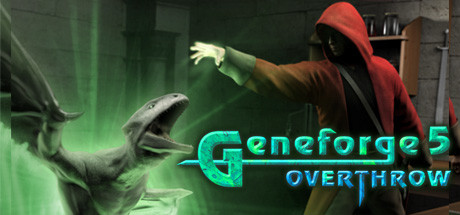
Geneforge 5: Overthrow is an Indie fantasy role-playing adventure, the final chapter of the epic Geneforge Saga. Return to the world of the Shapers one final time. Explore a vast, war-torn world, create and mold your own army of strange, powerful monsters, and choose a side to help lead to final victory.
Modeled estimate, not a reported figure. How we estimate →
Media
About
Geneforge 5: Overthrow is an Indie fantasy role-playing adventure, the final chapter of the epic Geneforge Saga. Return to the world of the Shapers one final time. Explore a vast, war-torn world, create and mold your own army of strange, powerful monsters, and choose a side to help lead to final victory.
Geneforge 5: Overthrow features nine character classes and an enormous world with over 80 areas to explore. Choose among five different factions, each with its own beliefs, cities, and quests. Help the rebels or fight them. Slay your enemies or use stealth and diplomacy to outwit them. Your choices will shape the world, and there are dozens of different endings. Choose for yourself how the saga will finally end.
Genres
Stats
All-time low is the lowest price we've recorded for this game since we started tracking it.
Languages: English
Engagement
Hours played at review time, across 40 reviews with recorded playtime.
Reviews
Themes across 40 recent reviews and how positive each mention is. A keyword signal, not full sentiment analysis.
positive critical· bar length = how often the theme comes up
Reviews
As a decades-long fan of the series, this title conflicts me the most. It's the slowest, grindiest, and most RNG-dependant game of the pentalogy, with a story that disappointingly limps to the finish line. It's a shame that this is the last game of the series, because while GF3 seems to be the primary candidate for a rework/touch-up, I'd argue that big parts of this game could use it more. Yet in some ways it also feels like the final exam after a long series of tests. Every mechanic is utilized (to some degree or another), every character can do anything given enough artifacts (which are by far the most powerful of the series), and I've had some of the sweatiest, most skill-intensive fights at the endgame. So my overall opinion is very mixed. The Good: -Every mechanic is utilized to it's fullest. You WILL use some combination of combat, creations, and diplomacy/infiltration, regardless of character class. Traps are the deadliest they've ever been, some combat areas are intentionally difficult to encourage stealth, and properly building up combat/creation skills leads to smoother level progression & loot hauls -Significant rewards for memorizing game knowledge, specifically skill trainers, artifact component locations, and utilizing infiltration skills to grab lategame-tier rewards early -Creations are at their absolutely strongest here. Don't get attached, treat every area as a new puzzle, and build a new team accordingly. Lategame bosses will absolutely test your knowledge in this regard -Artifacts are also at their strongest, every character can eventually do anything given enough time. Knowing what artifacts are available in what chapter, and the optimal route to obtain them, can lead to very powerful early-midgame scaling. Certain factions can also be rushed (even if temporary) to secure access to powerful components earlier than usual -5 different factions: 3 Rebel, 2 Loyalist. It's very possible to exploit them for early rewards, and pivot later -Perfectly playable on Steam Deck, albeit with a few limitations and slower movement/ability usage. No graphical slowdowns from my games The Bad: -Number one top complaint: combat is way too grindy. Health values are universally set way too high, especially on Torment difficulty. Lategame fights tend to drag on for way too long, and it's actually more efficient to skip certain 30-40 min set-piece battles and run through them to save time. A few examples to put things into context: One endgame boss has over 10k health on Torment, not including resistances Most hover around 6k - 8k with varying resists The TUTORIAL boss has more health than the final boss of the original GF1 -Probably the weakest story of the series. GF3 might have been dull at times, but there are entire plot lines here that are built up only to go nowhere. Of the multiple factions, there are functionally 2 ending paths: 4 Loyalist with some variations, and 1 Rebel. A lot of Shaper leaders re-use dialogue for quests, even when it doesn't make sense. There's an enormous bias towards going Rebel in general, as the Shapers actively enslave you at the start of the game, and pretty much universally call you an abomination to your face -If you're bad at stealth and don't know how to combat-flick to evade patrols, I really hope you learn fast here. Infiltrator skills are 100% required to avoid miserable fights. However, stealth detection is also wildly inconsistent, many enemies just straight up ignore it, and combat flicking has a bad habit of interrupting patrol pathing -Shaping skills outstrip all other combat paths, period. Even traditionally solo classes like Serviles will want a couple backup War Tralls by the end of the game. Battle Magic doesn't scale the same way it did in previous titles, and it's no longer possible to solo blast through hordes. High Mental Magic is required for every class -War/Shock Tralls come very close to invalidating all other creation types. They're cheap, efficient, and not terrible difficult to get to 1k health each (plus general resistances, even to magic). There are also 2 fairly accessible canisters in the late-midgame & early-lategame for +4 effective skill. In contrast, Ur-Drakon and Eyebeast canisters are both locked to the very final area of the Shaper endings -The final challenge area boss dies hilariously quickly to Tralls. In fact many bosses end up being mages who have 0 physical resistances -Artifacts are not fully balanced, some blatantly invalidate others, and some components come VERY late into the game, limiting overall choice. Frankly most builds will end up looking very similar by the end, regardless of character class: Assassin Boots invalidate every other option. They could literally just increase AP and nothing else, and they'd still be better than everything else. They're also the easiest endgame item to acquire, very possible to quickly join Astoria's faction and have it before first meeting Ghaldring Smoking/Firesteel Gauntlets provide a massive magic boost that virtually every class wants. Solidified Flame also neatly winds up next door to the Pure Quicksilver that you need for boots Belts actually have some options, but Ur-Drakon Skin for shaping-focused options is way easier to obtain than Unmelted Ice for healing-focused variants Black Iron Greaves giving +5 Quick Action and Parry invalidates the +2 extra Spellcraft from Firesteel Greaves -Weird graphical glitches caused by lamp pots activating/deactivating. I suspect something tied to screen size or graphics settings/refresh rate. For a series that's usually pretty rock-solid for stability, it's weird to encounter it now Conclusion: I can't fully recommend this one. It has good moments, but it's also surrounded by entries with better writing and faster combat. Geneforge 4 was a masterclass in both aspects, so it's confusing why this one fumbled at the finish line. I suspect burnout, to be honest, which doesn't particularly bode well if each remake seems to take roughly 3 years to complete.
If you've played any of the other Geneforge games and liked them, chances are you'll like this one too. This final chapter in the saga is bittersweet if you're a fan of the series. On the one hand, its the last one,... but on the other hand, it's got so much of what made the series great. It has very deep, rich, complex storytelling. The game is a "choices matter" game and the story changes and evolves with each choice. I love uncovering the stories making connections to characters and events from previous games and learning how the newest events are shaping Terrestria. My preferred mode of playing is to generally ride the thin neutral line as long as I can and some of the previous games in the series made that almost impossible. Geneforge 5 makes it possible (if you make your choices carefully) to play the neutral line almost right up to the end when you pretty much have to make a choice to finish the game. It does give you a lot of ending choices for which factions you can join including an options that almost rides a neutral line. There are 5 factions and 5 main endings, but there's also variation in those endings based on things like who you've killed. One of the other things I love about Geneforge is the exploration. I love discovering every map tile, uncovering every space on the mini map, locating all the secrets. With Geneforge games that can be quite difficult for several reasons. First, there's the sheer size of it. I've seen varying reports of how many map locations there are in the game ranging from 77 to 85. I believe the most official answer I've found from Spiderweb Games was "more than 80." I don't know how many there are for sure or which locations I may have missed but in my play through I discovered 80 unique locations on the map, but I didn't record locations that may be multiple levels like a basement or a second floor. While those areas have their own mini map and count as another location they generally don't show up as their own tile on the main map, so they could ccount for those missing 5 locations reported on the high end of 85. For comparison on world size, G1 = 77, G2 = 62, G3 = 91, and G4 = 80. There are only two main maps, but the world feels very large and it takes a long time to explore it all and finish the game. I spent about 115 hours to complete my first playthrough. Again for comparison I spent G1 = 60.6 hrs, G2 = 496.8 hrs, G3 = 56.9 hrs, G4 = 82.7 hrs. Time spent is a mix of relative difficulty and world size, but by comparison G5 is either the 2nd or 3rd largest game based on map locations and was the second longest playthrough. That says to me its a pretty big world to explore. You could certainly finish the game in less time especially if you don't try to complete every quest or explore every area. However, it is always going to be a longer game. Nothing is dramatically different from previous games in terms of gameplay or art style. Graphics are only ever so slightly improved from previous games, but still very dated looking, it doesn't hinder playability or enjoyment in my opinion. It's still an isometric view, turn-based combat, RPG. My only issue with any of these is that in some areas there are relatively large combat segments that include many, MANY opponents and sometimes allies. Being turn based, you sometimes are waiting for 10 or more NPCs to make their moves, outside your field of vision. This can be tedious and takes a very long time till your next turn. These games are all apparently being re-made and I've not tried or read much of anything about Geneforge 1-Mutagen but if it hasn't already been implemented an option to quick-skip through NPC combat turns would be a really good feature to include. If you've never played a Geneforge game before and are considering playing G5, you can easily hop right into it. You don't have to have any knowledge of the previous games. While there are recurring characters and references to past game events and characters none of it will impact game play. Anything you need to know about characters, places, or the past will be explained as far as it's relevance to the game. If you think you might want to play the series then definitely start with 1. You can frequently find the whole Geneforge Saga bundle on sale if your willing to wait, but if you like turn-based combat RPGs with complex stories, the bundle would give you enough of a cost to playtime to enjoyment value to make it worth the cost at full price.
Love Jeff's games but this one has a super bad bug. About 13 hours into the game - after speaking to Astoria - my character just spontaneously dies for no reason at all. No enemies - no mines - nothing threatening - he just screams and dies. I can't even stay alive long enough from re-loading the game to determine if there's anything legitimate causing it (i.e. poisoning? radiation? the thing in my chest?). I die about 3 seconds after loading the game and I'm in a perfectly safe place in a friendly region too. Really ruined this game for me.
Ultimamente cerco di capire come viene gestita la difficoltà in un certo titolo e ritengo che questo sia un aspetto dai più molto trascurato. A volte mi capita di leggere in giro commenti su quanto un certo titolo sia troppo facile o troppo difficile, ma quello che leggo non mi soddisfa. Tutti, secondo me, non vogliono affrontare la questione dal punto di vista più “analitico”. Ora, non è che io ne sia in grado, ma mi piacerebbe vedere affrontata la questione in modo più sistematico. Quando un titolo è troppo difficile? Lo è perché frustrante? Ma la frustrazione è la difficoltà o la difficoltà è un problema di fondo di calibrazione? O è mancanza o mediocrità di testing (se lo testa l’autore direi che non sta testando nulla)? Ci si aspetta che ogni titolo sia difficile? Un titolo molto story based è giusto che diventi troppo difficile? Perché c’è gente che nei VG cerca solo la sfida, non accontentandosi di cercarla ma di valutare come perdenti tutte le altre proposte? A nome di chi o di quale teoria? Perché a volte si considera giusta una difficoltà quando questa è palesemente mal calibrata (frustrante) e si ritiene più divertente ripetere troppe volte una fase affinché risulti divertente? A nome di quale teoria? Io non mi diverto così. Così come quando osservo boss con decimiliardi di HP. È divertente vedere la spugna in azione? Se ho capito come ucciderlo, perché ci devo stare mezz’ora? Lo stesso vale per le cose troppo facili. Ricordo ad esempio Sensible Soccer, a volte confuso con le sue iterazioni World, spacciato per il miglior gioco di calcio su Amiga: a parte la mancanza di tante cose calcistiche (assenza di gioco sulle fasce e di cross, all’anima delle mancanze…), ricordo la delusione quando, dopo averlo acquistato originale, già la stessa sera vincevo tutte le partite con almeno 6 gol di scarto… soldi buttati nel cesso, altroché! Tutto questo per dire che Steam dovrebbe ammettere anche un semaforo giallo per le valutazioni, colore che userei per questo titolo. Siccome non c’è, allora penso sia giusto dare a questo titolo solo la sufficienza facendogli pesare l’aspetto della difficoltà. La difficoltà di questo titolo è senza senso e me ne sono accorto modificandola in real time (si può fare dal menu). Il problema è che iniziando a normale le cose diventano molto complicate abbastanza presto, a differenza dei precedenti titoli, più scorrevoli (ma attenzione, anche in quelli comunque questo aspetto rimane molto problematico). Il giocatore viene spesso portato in situazioni di stasi in cui ogni strada per proseguire sembra inaccessibile perché gli si vengono presentati contro degli scontri davvero tosti e fuori luogo rispetto al suo livello. Questo è sempre vero per le missioni secondarie o le esplorazioni a piacere, ma anche per seguire la campagna principale le cose si fanno spesso tremende. A un certo punto bisogna raggiungere un personaggio passando per una cripta, ma tra il dire e il mare si sovrappongono dei nemici, l’ultimo dei quali va affrontato con una tattica ben precisa, ma sempre al limite della sopportazione. Tutto normale, dirà un vero esaltato giocatore di ruolo. No dico io, perché quello che dico avviene ANCHE affrontando la sfida a livello di difficoltà CASUAL. Il problema è proprio qui: perché chiamare in questo modo la difficoltà più facile quando rappresenta quella difficile in qualsiasi altro gioco ben progettato? Durante tutto il gioco, qualunque sia il vostro grado di protezione, verrete SEMPRE avvelenati nei combattimenti finché non incontrerete quelli che fanno danno da gelo (o elettrico?) che vi sfonderanno gli HP con un solo colpo. Per poi affrontare nemici con doppi colpi (gli scontri sono a turni) e che spesso vi stunnano o confondono la mente (gli Unbound, zio parco). Ripeto, non voglio accusare la difficoltà in sé, attenzione. Accuso esplicitamente la mancanza di calibrazione all’interno dello stesso livello di difficoltà o scalandolo: scala pessimamente e a livello casual i nemici sparsi saranno ciofeche, ma in alcuni punti troppo frustranti. Peccato, alla fin fine, dopo tutto, arrivare alla epica battaglia finale uscendone vincitori porta una gran bella soddisfazione. A questo si aggiungono fasi in cui vi è il respawn dei nemici, da affrontare con alleati e comunque correndo non soffermandosi per battagliare. Ma inizia, in questi casi, uno scambio di turni tra noi e il nemico semplicemente inguardabile (immaginate di dover aspettare una quindicina di turni prima che tocchi a voi, magari in una situazione invincibile, e bisogna aspettare il proprio turno per caricare un altro salvataggio). Ed è un peccato, perché questi giochi sono piccoli gioielli, direi dei Baldur’s Gate dei poveri. Sì, sono come i BG, con la differenza che l’apparato grafico è molto vetusto e dominato da un riuso degli asset e degli effetti sonori esagerato (quello che vedrete nelle prime ore vedrete fino alla fine: tutti gli oggetti e l’aspetto delle locazioni sarà sempre lo stesso: cambierà solo la conformazione delle mappe). La storia però è sempre ben raccontata, il livello di scrittura altissimo (la pazienza dell’autore a scrivere poemi per descrivere ogni NPC è da invidiare, anche se con il tempo, dopo tante ore, tanta prolissità inizia a stancare un po’). Rimanere bloccati in questo gioco è anche una tortura perché in rete non si trova quasi nessuna informazione e l’unica guida presente è parziale e morta da anni. Ci sono video di walk su YT, ma talmente lunghi che trovare la propria posizione nel gioco diventa un secondo lavoro… In giro si legge che è il più difficile di tutti. Io direi che è quello calibrato peggio di tutti e consiglierei di giocarlo a difficoltà casual: la sfida rimarrà eccome. Oltre significa farsi male non divertendosi (non scherzo, lo scrivono anche nei forum gente che è appassionata di questi titoli). Spiderweb Software non è nuova in questo: ad esempio in Avadon una delle strade per arrivare a un finale è praticamente improponibile: che senso ha metterla come opzione se il giocatore non sa cosa lo attende? Anche in quel caso, se è voluto, è stato voluto male. Lo consiglio? Dipende da chi siete: se siete amanti di questo genere e volete soffrire e impegnarvi tanto, anche in situazioni ingiuste (non sarà una passeggiata) allora sì. Ma dovete giocare anche i precedenti Geneforge (la storia è un continuo con personaggi che si ripresentato e tutto qui giunge alla conclusione). Per tutti gli altri no, statene alla larga, non è cosa per voi. 6/10
This game always keeps me coming back. i haven't finished games 2-3 but once i tried 5, the format and ability to play on my ultra wide screen really has me hooked. i've never been an easy difficulty fan, but taking away much of the challenge somehow makes me appreciate this game much more for what it is.
Should have the story-rich tag too. Amazing work. Worth a play if you can read, despite the horrendous graphics and UI. 8/10
The dramatic conclusion to an epic saga! This is the pinnacle of the Geneforge game series. I love the continuation of G4's quality of life improvements like no inventory weight limit, the new class available for the player character (Sorceress!), and the stunning array of meaningfully different factions to choose from. This is a game series where every side is forced to make hard choices to win a desperate war, and the "shades of gray" morality system really shines through - and all the same, there are still clear differences between characters that are despicable vs characters forced to do despicable things. I cannot recommend this game series more highly, and Geneforge 5 makes a very approachable entry to the series with a robust combat system, engaging tactical choices, compelling world building, and impactful choices for the player to make.
这和阿佛纳姆的重置版是蜘蛛网的巅峰—— 打倒龙族之后,我学会了大眼gazy的最后一次突变,但还有什么用吗?世界的危险全都已经被我拔除,是时候去和丽塔利亚汇报了。我来到山谷门口,这个曾经把三代主角带入地狱的丽塔利亚就站在我眼前,和以前曾经为龙族效力的那个疯子不同,现在的她看起来善良,平和。我把泰格的细菌炸弹毁了,泰格的关键人物被我杀了,泰格的变种大军被我消灭了;拉法尔不愿意交出当年九人议会的钥匙我只好亲自从他身上拿走了;艾斯利亚看到地精通道里冒出来的辐射蟑螂大军崩溃了,她总算明白无限突变的坏处,不过艾斯利亚太过强大,丽塔本身并不想让我和她起矛盾,所以用了较为平稳的手段来表述适当的结果;我把阿尔旺城市里的间谍捅死,获得了他的信任,但我也关闭的他的大军实验室,我没有参与暗杀阿尔旺,shaper世界的明君已经不多,至少不能让泰格独掌大权;龙族理所当然必须死绝,令人意外,最后时刻艾斯利亚还是带人来帮我,她的善良不允许我孤军奋战,龙族被我踏平了 ,葛丽塔说这一切和她无关,我sl了一次,第一次捅死她,逃生通道塌陷了,第二次让她走,她才走了一步就被逃生通道砸死——看来她横竖都得死,葛丽塔曾经是个好人,在她陪三代主角经历了那么多后却为了一个龙族人造人放弃了良善,真是搞笑。丽塔利亚平静的听我讲完全部经历,她点点头,这一切就是最好的解决了,她把她手上的曾经的九人议会钥匙给了我,然后离去准备退隐,作为三代四代战争的推动者,这已经是她能获得的最大的仁慈。曾经shaper和rebel的协议全貌终于在我面前展现,果然仅仅是一纸协议而已。最终我也踏上了返乡的历程,经历这一切后 ,仅仅用过一次或者说因为我本身就是基因制造的完美产物所以基因制造池并没有对我造成任何影响,龙族不存在了它们召唤出来的基因制造也消散无踪,shaper或rebel再也不能用基因突变害人了,九人议会最终解散 因为根本凑不齐九个人了,我学会了所有的召唤物突变,理所当然的成为最强大的法师之一但也最终选择退隐,除非哪一天龙族再带着考验人性的基因制造池回归否则我觉得没需要我再次出山的那一天。
Хорошая игра!!!
I'm going to say no.
Related
Related
Trends
Modeled estimate over time, reconstructed from Steam's monthly review histogram.
Momentum
Pace estimated from the game's recent review growth (our daily snapshots) at its own sales-per-review ratio — a momentum signal, not booked sales.
Audience
Estimated from the language of this game's reviews — a proxy for where players are, not official Steam demographics.
Related
| Concordia: Digital Edition | $75.1K | 183 | 82% | $19.99 |
| Floor Kids | $75.1K | 168 | 88% | $19.90 |
| Head's Adventures:chibichibi | $75.1K | 371 | 98% | $7.99 |
| The Horrorscope | $75.1K | 1.1K | 94% | $1.99 |
| MACHI KORO With Everyone | $75.1K | 119 | 66% | $24.99 |
| Seraph's Last Stand | $75.1K | 4.3K | 94% | $0.99 |