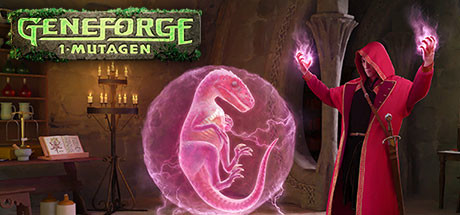
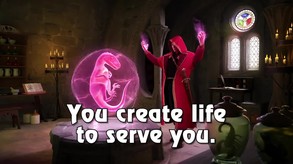
Unique, truly open-ended fantasy adventure in a strange, new world. Use battle or cunning to change the world, served by your own army of custom-made mutant monsters. Over 80 zones to explore and 50+ hours of gameplay. Multitudes of skills, abilities, factions, treasures, and servants to create.
Modeled estimate, not a reported figure. How we estimate →
Media

About
Genres
Stats
All-time low is the lowest price we've recorded for this game since we started tracking it.
Languages: English**languages with full audio support
Engagement
Hours played at review time, across 41 reviews with recorded playtime.
Reviews
Themes across 41 recent reviews and how positive each mention is. A keyword signal, not full sentiment analysis.
positive critical· bar length = how often the theme comes up
Reviews
Lack of scaling options for the graphics and UI mean I can't play it, having vision problems.
Ultimately it is a good game but there are some caveats. The world, however, is interesting and while both series from Spiderweb I've played (This and Exile/Avernum) are unique, this one obviously takes the cake. Interplay with you being practically a (very feeble) god for the serviles is interesting! The Good: - Compared to spiderweb games the graphics are good, compared to other indie games, completely passable - Story is good (with caveats) and interesting and there are a lot of choices to be made - Moment to moment gameplay is very good at least with a shaper build - Naming your swarm of angry creatures in funny ways. - The atmosphere is good - Exploration is often rewarding and the world building makes you very immersed The Bad: - The game does not have ANY sort of way of telling you if you left something important somewhere (or for you to make notes on the map) - No music, sure, it's not a big deal breaker but at this point of remasters, it would've been welcome. - Some quests are confusing/obtuse/do not resolve from the quest log (a bug? Or am I missing something) - hub based gameplay, while clearly a design choice, loses in exploration excitement to the Avernum series - Last (for linux players not the least) there are some weird performance problems in this that are not present in Avernum, mainly with spellcasting / spell effects slowing the game to a crawl for the duration of the effect. AFAIK a linux problem. As a Spiderweb game? 9/10 For someone hopping in from more modern rpg's? 7/10 (still worth it, just shows it's age)
Geneforge 1 – Mutagen is the remaster of the old-school CRPG Geneforge 1 from 2001. Compared to the original, the UI and graphics look much better now. A few skills and mechanics were changed (mostly for the better), and the story was slightly expanded. However, you can’t change your character’s appearance anymore, which I find a bit disappointing. Maybe I'm biased, but I’ve never played a Spiderweb Software game I didn’t like. This one has all the things I expect and love in a CRPG: strategic combat, exploration, an interesting world with a good story, and steady character progression. The story/lore is a big part of why it works for me. There’s no classic “good vs evil“ here. Every faction has its reasons and often solid arguments for being the way they are. Choosing a side never feels clear-cut. Of course, you can just ignore everyone and do your own thing. The game doesn’t punish you for that, apart from missing some good items. Every NPC can die, even important ones and quest givers, though they’re harder to kill. And if fighting isn’t your thing, you can finish the whole game with stealth and diplomacy as long as you avoid the more enemy-heavy zones. Quests in general can often be solved in different ways. Higher difficulties like Veteran and Torment are there if you want them. (Side note: The Geneforge Saga would also make for a good book) At the start you choose between three classes. The Guardian is melee-focused, the Agent leans toward stealth, and the Shaper summons creatures. I enjoyed playing the Shaper the most. You can build a small group/army of creatures (up to eight, if I remember correctly) and each one has different skills and spells. It‘s important (especially on higher difficulties) to learn about enemies’ weaknesses and use the right creatures to counter them. The game starts in a small enclosed zone on a barred island. Each zone can have up to four exits at its edges, marked by blue ground. Walking onto one of them brings you to the world map. The direction you leave from determines which new zone gets unlocked. There are roughly eighty in total, and you’ll revisit many of them while doing quests. Fast travel is only available after a path has been cleared, which can happen in different ways: simply passing through, killing all hostile creatures or a boss, or finishing a quest. On the world map, cleared areas show up in green and uncleared ones in red. Hovering over them also tells you if a quest is there. You can move around a zone freely, but once an enemy sees you, the game switches to a grid and shifts into turn-based combat. At the start of each round you get a set amount of action points, so you have to carefully plan where to move and what attack to use. Fighting requires a lot of strategy. Enemies can flank or ambush you (or leap straight at your weak caster). There are many spells, weapons, potions, and buffs to work with, so fights rarely feel the same. The inventory system is simple but clever. You only have one character with an inventory (your creatures can't carry stuff), so it fills up fast. But you have a junk bag where you can put everything you want (unlimited). You can only take stuff out of it when you're in a friendly village though, so be careful what you put in there. You can also sell everything in the junk bag at once at a vendor instead of selling items one by one. The save system deserves a short mention. You can save (normal+quicksave) whenever you want outside of combat, but the game also creates an autosave every time you enter a new zone. That actually saved me several times from soft-locking myself. There are zones where new enemies respawn constantly, so I found myself low on health and couldn't leave the zone to travel back to a town to heal (health, essence, and mana get refilled when entering a friendly town). If you don’t mind (A LOT of) reading and the graphics don’t bother you, this is a solid RPG with plenty to do. The game looks rough and a little old and janky, but it’s not as bad or hard as it first seems. A bit of planning helps, especially with buffs, combat positioning, and using enemies’ weaknesses against them. I’m looking forward to the next part of the series and hope that Geneforge 3-5 get a remaster too.
Jeff Vogel is a legend and while all his games may not have the best art or sound, they indisputably have the most soul out of anything else. Every head must bow, every tongue must confess, Jeff Vogel is the king of Indie games.
Build-a-bear meets Fallout 1 & 2. This game seriously owns, but a word of advice - get mechanics 3 at a minimum within your first 2 level ups. It helps A LOT.
Don't be dissuaded by the old school graphics, it's an excellent CRPG with a compelling story and a fairly fun and unique setting.
Unlike the Avernum re-remakes I think all the gameplay changes in this one are generally agreed to be improvements over the original. Widescreen support is great too. I think the designs/sprites for a lot of the shaper creations were better in the original, but that's a minor quibble. Remake specific stuff aside, this is a *fantastic* rpg with a really good story, highly recommended.
came for the dinos, stayed for godhood
I played through the original Geneforge 1 several times years ago and first played through Mutagen on Epic after the giveaway. I've always considered Geneforge Spiderweb's weakest series, behind Avernum, Queen's Wish, and Avadon (in that order). I find managing groups of generic creations tedious compared to working with fully fleshed out parties, the map system of clearing discrete node by discrete node is less interesting to me than the more open worlds of the others, and the way you get force railroaded right from the start into one of three very sharply defined factions I find off putting from a story perspective. They're still good games (well, at least the first three, I'm not sure if I ever finished 4 and 5 all the way to the end) but not great games like Avernum or Queen's Wish or very good games like Avadon. That said, I was surprised on my latest (I think fifth time including original and remake) playthrough of Geneforge 1 to have my best experience with the series doing a Torment, solo, pacifist run to pick up three achievements that didn't immediately unlock when I launched the Steam version and it read in my Epic saves. I thought I'd give that a shot and in all likelihood find it too hard and tedious to stick with, but it was actually surprisingly the most engaging way I've found to play the game. The earlier sections in particular are engrossing when you have to be very strategic and careful in what regions you can clear to green status, which areas within which regions you safely enter, where you can lure monsters back to friendly characters to have them do the killing, where and how the game lets you completely bypass combat by heavily pumping up leadership and mechanics, where you can revisit areas after getting more stealth to move further into previously effectively blocked off areas -- all a lot of fun. Surprisingly, once you get into mid to late game and you're aligned with the Takers and have 11 leadership, 14 mechanics, and 12-15 stealth (and that's all you need; I had a bunch of unspent skill points when I finished the game) a Torment, solo, pacifist approach becomes probably the easiest time I've had in any Spiderweb game at any difficulty level, cakewalk rush through the entire NW and NE sections of the map containing Trajkov, the Geneforge itself, and Goettsch.
Geneforge 1 – Mutagen, developed and published by Spiderweb Software, is a rich and ambitious isometric CRPG that revives one of the most unique role-playing concepts in the genre: the ability to create life and command it as both a tool and a moral burden. Rather than merely remastering the 2001 classic, Spiderweb reimagines it through updated visuals, expanded writing, refined mechanics, and new areas, while preserving the core identity that made Geneforge a cult favorite. The result is a sprawling, open-ended RPG experience that emphasizes freedom, consequence, and strategic depth in ways few modern games attempt. You begin the game as an apprentice Shaper, part of an elite society whose members wield the forbidden art of creating living, thinking organisms from raw biological essence. After a mysterious attack leaves you stranded on Sucia Island — a place long sealed and abandoned by your order — you quickly discover that the island’s creations have evolved far beyond what the Shapers intended. Some crave freedom, some resent their creators, and others seek power for themselves. This setup creates an immediate sense of mystery, drawing you into a world defined by competing ideologies and moral ambiguity. From your first steps on Sucia, it becomes clear that Mutagen is not a linear RPG but a complex web of choices, allegiances, and consequences, where your decisions shape both narrative direction and gameplay style. One of the game’s most compelling strengths is its immense freedom. Mutagen offers more than eighty interconnected zones, numerous factions with conflicting agendas, multiple routes through quests, and diverse character build paths. You can play as a warrior who crushes foes with brute strength, a powerful spellcaster who manipulates the battlefield with destructive magic, or a Shaper who constructs an army of creatures tailored to specific challenges. The shaping system, in particular, elevates the gameplay: each creation has its own abilities, stats, and potential upgrades, and your capacity to control them depends on your own skill investment. Push your shaping abilities too far, and your own creations may rebel — a constant reminder that power in this world comes with risk. This dynamic makes every choice meaningful, encouraging experimentation while forcing you to consider long-term consequences. Exploration is the backbone of Mutagen’s experience. Sucia Island is full of ruins, abandoned laboratories, hidden workshops, rebel camps, hostile factions, and intricate lore. Each location feels handcrafted, with environmental storytelling woven through notes, conversations, computer terminals, and ancient mechanisms left behind by the Shapers. The open structure allows players to approach challenges in their own way: confront threats head-on, negotiate uneasy truces, sneak past dangers, or manipulate factions behind the scenes. This flexibility gives Mutagen its distinctive flavor — one where you’re not simply following a story, but actively carving your own path through a morally fractured world. The game frequently rewards observation, creative thinking, and a willingness to take risks. Narratively, Mutagen excels by refusing to offer easy answers. The factions you encounter — from oppressed creations seeking independence to radical groups looking to reshape or destroy the Shaper order — are presented with nuance rather than clear-cut morality. You can support the establishment, empower renegade creations, or forge your own ideology that defies both sides. The writing reflects Spiderweb Software’s signature style: clear, concise prose enriched with strong world-building and subtle political commentary. Conversations matter, choices echo throughout the campaign, and the ultimate resolution depends entirely on your philosophy and decisions. Mechanically, Mutagen remains faithful to its CRPG roots: turn-based combat, ability-focused character progression, and resource management all play central roles. The tension of balancing your essence between shaping creatures and casting spells adds strategic complexity, while encounters challenge you to adapt your approach rather than relying on a single tactic. At the same time, the game retains some of the clunkier edges of its classic design. Combat animations are simple, environments are functional rather than visually lush, and the UI — while improved — still reflects the studio’s focus on systems over presentation. Players seeking high production values or cinematic storytelling may find the aesthetics modest, but for those who value mechanical depth and narrative freedom, these limitations are easy to overlook. Perhaps the most impressive aspect of Geneforge 1 – Mutagen is how thoroughly it supports experimentation. Few RPGs allow such drastic variability in playstyle and outcome. You can finish the game through diplomacy, stealth, overwhelming force, or a combination of all three. Entire factions can rise or fall based on your decisions. Entire regions can remain unexplored or be conquered methodically. Mutagen invites replay, not through superficial branching choices, but through fundamental shifts in how the world responds to your actions. In the end, Geneforge 1 – Mutagen stands as one of the most distinct and liberating RPG experiences available on Steam. It is dense, demanding, and unapologetically old-school, but its depth, originality, and narrative complexity more than compensate for its simple graphics and utilitarian interface. For players who enjoy long-form, choice-driven RPGs where their decisions genuinely matter — and who are willing to immerse themselves in a world built on creation, control, rebellion, and consequence — Mutagen delivers an unforgettable journey. Spiderweb Software has crafted not just a remake, but a rejuvenation of a classic that still feels ahead of its time. Rating: 8/10
Related
Related
Trends
Concurrent players on Steam, sampled daily since tracking started.
Audience
Estimated from the language of this game's reviews — a proxy for where players are, not official Steam demographics.
Related
| 7 Days to Die | $425.3M | 403.5K | 87% | $44.99 |
| Don't Starve Together | $130.6M | 373.1K | 95% | $14.99 |
| Warhammer 40,000: Rogue Trader | $48.8M | 46.5K | 88% | $49.99 |
| The Scroll of Taiwu : Beyond The Dome | $51M | 56K | 66% | $29.99 |
| Mewgenics | $56.1M | 51.7K | 90% | $29.99 |
| Divinity: Original Sin - Enhanced Edition | $26.2M | 27.1K | 89% | $39.99 |
Related
| Dominatrix Simulator: Threshold | $179.7K | 855 | 82% | $13.29 |
| Forensics: Crime Scene Detective | $179.8K | 249 | 58% | $19.99 |
| The Occupation | $179.8K | 413 | 60% | $29.99 |
| Seedsow Lullaby | $179.7K | 529 | 97% | $20.99 |
| de Blob | $179.8K | 427 | 88% | $19.99 |
| Billionaire Lovers | $179.7K | 3.8K | 95% | $2.99 |