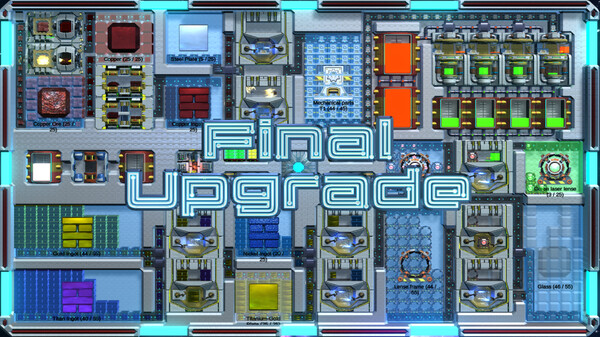
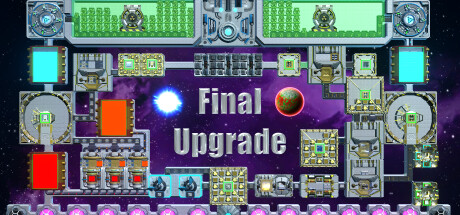
Help humanity to spread throughout the cosmos by exploring new worlds, building space factories and setting up trade routes. Research advanced technologies to increase efficiency and unlock new paths of development. Fight off other artificial intelligences in your goal to reach the Final Upgrade!
Modeled estimate, not a reported figure. How we estimate →
Discounts
Every price cut of more than 20% we have observed, in each market that quoted one, with this game's chart position on either side of it. These are episodes, not a model: a sale is one event, and one event cannot tell you what the next one will do.
Reviews, worldwide (the counter carries no country): 0/day in the week to Aug 25 → 0.57/day in the week after.
For scale, across Steam · Top Sellers · Brazil over the last 30 days: the 26 chart moves that followed a price cut of more than 20% went a median of 7 places towards #1, and the 2,400 moves with no price cut behind them went 2 away. One store, one chart, one country — it is the only place we have enough observations to say even that.
Prices outside the United States have been collected since 6 August 2026 and chart positions since 19 July 2026, so a cut older than that has no market to compare and a market that joined later has no history yet. Nothing here is converted between currencies.
About
Engagement
Reviews
Themes across 46 recent reviews and how positive each mention is. A keyword signal, not full sentiment analysis.
Reviews
I think the UI is atrocious... especially the tech tree where everything pops and flickers into view as you click on it so there's a bunch of difficulty making sense of where you are or where you came from. It also irks me that you are building everything for "colonists" but you never actually see any nor does the game have any colony elements.. Otherwise it's very cool with lots of potential.. I'll wait for some more updates before playing it more
100
Absolutely does not worth the price. It seems like a mix of factory and colony building game but it's practically just plopping down blueprints and then automating extra routes for the transport ships.
Media

Related
Related
Price dynamics, follower growth, revenue and sales trajectories with interactive tooltips
This and every other Pro feature is free until October 20, 2026. A free account is all it takes.
Genres
Stats
All-time low is the lowest price we've recorded for this game since we started tracking it.
Languages: English, Russian, French, German, Spanish - Spain, Portuguese - Brazil, Simplified Chinese
Hours played at review time, across 46 reviews with recorded playtime.
positive critical· bar length = how often the theme comes up
Sorry, but I can't recommend it, and I regret buying it. Honestly, I would consider this game to be in a "closed alpha" state rather than actually released. It feels like something developed by a very good engineer, but with absolutely no care put into the UI, music, or gameplay. Music → I enjoy good music, and I can also tolerate something simple and basic. Unfortunately, here you NEED to mute it. I think they have something with "silence" between tracks or whatever, who knows. UI → The user interface is so stupidly designed that I'm basically shocked. You have to keep going back and forth between just a couple of build modes to reach THE SAME build menu. Want to create a pattern? Too bad, now you need to go through the pattern builder. Want to modify a pattern? Bad luck, now you need to go back to the builder menu. Want to build your modified pattern? Bad luck again — that's another menu just for placing patterns, that look exacly the same. Honestly, I don't remember any game that has driven me this crazy without simply being considered as "bugged." Automation → Very limited, but at least there is some. Graphics → They're okay, if you ignore all the text and windows, which look like placeholders. Opponents → Dumb or borderline cheating, with nothing in between. Not fun to play against. And finally, my main reason for playing these kinds of "builders" is the achievements. You basically get the first couple just by finishing the tutorial, and then the next ones require an insane amount of grinding. Nothing special, just grinding. I don't see any way to get them without sinking 100+ hours into this game. >.>
This game is vaguely similar to AI Wars. But at its core it is a puzzle game, not a factory, automation or 4X game. Everything is a mystery for you to figure out. The interface, the economy (very different from other factory games I have seen), the combat, the optional challenges. Take combat for example. There are enemy factions on the map. You have to go to war with them. Those factions just teleport in fleets from nowhere. The fewer planets they have left, the stronger those new fleets are and the more often they teleport in the next one. Now figure out how to beat them. Solving this and the other puzzles IS the game. Why the downvote? I went in expecting a factory game. That is not what this is. I found the struggles against the interface and the against the automation systems of the economy particularly unpleasant. Figuring everything out is not impossible, it just takes time. But I did not enjoy the time I spent doing so and would have much rather spent it in some factory game or on another round of AI Wars. And when you have things figured out, it again takes a lot of time to apply that knowledge. You are forced to micro-manage things for hours on end, thanks to a complete lack of quality-of-life features. Others may feel differently, but to me that part was just hours and hours of boredom. So this game just isn't for me.
Pretty fun, brought during early access, not disappointed
I am enjoying this game, I really love the creative sideview with gravity take on this.
Meh....it's a TEMU X-4 with extra steps.
Final Upgrade, developed and published by TaosX, is a sprawling automation and space-strategy sandbox that imagines the galaxy not as a battlefield or a frontier of exploration, but as a massive industrial canvas waiting to be systematized. It takes the core appeal of factory-building games—the joy of turning raw matter into complex, self-sustaining production webs—and expands it outward until production chains span star systems, planets, and entire fleets of player-designed ships. Instead of embodying a conquering empire or a wandering explorer, the player becomes an architect of interconnected processes, building a mechanized civilization whose strength comes not from firepower, but from logistics, efficiency, and relentless technological momentum. It is a game that asks players to think like an engineer rather than a commander, designing not just individual machines, but the invisible flow between them. The early game introduces this vision through modest beginnings. A handful of vessels mine asteroid fields, basic crafting modules produce simple components, and the player learns how to automate fundamental resource loops—metal refining, energy distribution, storage allocation, and material transport. What differentiates Final Upgrade from genre peers is how quickly even these early systems reveal hidden layers of complexity. Ships are not static vessels purchased from a menu—they are modular constructions whose internal layout, propulsion arrangement, cargo space, and computing capacity directly influence their performance. A transport freighter with a poorly optimized interior may bottleneck an entire supply chain, and a miner lacking structural support may operate inefficiently. This design philosophy—where every detail matters—establishes a satisfying sense of authorship over the entire industrial ecosystem. As the player expands into new star systems, the scale increases dramatically. Individual planets become specialized industrial centers, contributing unique resources or manufacturing capabilities. Trade routes must be automated and safeguarded. Energy production, once a simple concern, becomes a galaxy-wide balancing act. Supply shortages in one sector cascade into distant manufacturing delays, forcing players to monitor and redesign logistics networks rather than merely placing more machines. The game thrives on these emergent problems—never scripted, always systemic—giving progression a natural, self-generated rhythm. Instead of waiting for a quest or objective, players feel pushed onward by the consequences of their own decisions, and victory comes from taming the chaos they created. The technological progression system reinforces this expanding scope. Research is not just a checklist of upgrades—it unlocks new building blocks for creative engineering, new transportation models, new hull designs, new automation tools, and ultimately, the ability to construct staggering megastructures that reshape entire star systems. Mastery comes not from grinding resources, but from learning how to integrate these technologies into existing infrastructure without destabilizing what already works. Late-game empires become dizzyingly complex organisms—ships ferrying advanced components between orbital foundries, refineries feeding terraforming operations, computational stations optimizing traffic, and automated fleets maintaining the entire industrial lattice with minimal player oversight. Watching the galaxy run itself becomes one of Final Upgrade’s most rewarding endgame experiences. Visually, the game embraces clarity over spectacle. Its interface-driven presentation favors crisp icons, readable galaxy maps, and clean ship schematics, ensuring that even enormous networks remain understandable at a glance. Planets, starfields, and nebulae provide atmosphere, but never overshadow the informational backbone that drives decision-making. The soundscape reinforces this functional beauty—soft ambient hums, mechanical pulses, and understated musical themes that support long sessions without fatigue. It’s a game built for focus rather than adrenaline, and its aesthetic choices reflect that purpose. However, the game’s ambition also creates barriers. The learning curve can feel imposing, especially for players unfamiliar with automation or logistical simulations. Tutorials help, but they cannot fully prepare players for the complexity that unfolds hours later, when intersystem production chains require troubleshooting and strategic redesign. The interface, while powerful, demands patience and experimentation. Some players may crave stronger guidance, clearer goals, or narrative framing to contextualize their actions. Performance may dip in massive late-game networks, and occasional rough edges remind players that Final Upgrade is the product of a small, evolving indie effort rather than a polished corporate release. But for players who enjoy wrestling with complexity, these challenges become part of the appeal rather than deterrents. Final Upgrade ultimately succeeds because it respects the intelligence and curiosity of its audience. It does not simplify or shrink its systems to broaden its reach—it trusts players to rise to the challenge, to experiment, fail, redesign, and gradually transform a handful of miners into a galaxy-spanning industrial civilization. It offers the fantasy of engineering mastery rather than conquest, and derives excitement not from explosions or scripted drama, but from witnessing a perfectly optimized supply chain operate across light-years. Few games capture the thrill of creation on such a grand, systemic scale. For fans of automation sandboxes, complex management simulations, modular ship design, and open-ended strategy, Final Upgrade offers a deep, demanding, and immensely satisfying experience—one that rewards long-term thinking, analytical problem-solving, and a fascination with interconnected systems. It asks for time, patience, and commitment, but it gives players a galaxy that becomes unmistakably theirs—built not through brute force, but through elegant efficiency. Rating: 7/10
Muito top, mas depois de um tempo esta crashando se você estiver com muitas fábricas/naves.
Players by region
Where this game's players are, estimated from review languages.
Related
| Game | Estimated lifetime revenue | Reviews | Review score | Price |
|---|---|---|---|---|
| — | 0 | — | — | |
| $47.5M | 91.7K | 97% | $19.99 | |
| — | 0 | — | — | |
| $5.2M | 10.5K | 80% | $14.99 | |
| $843K | 1.1K | 44% | $24.99 | |
| $594.5K | 849 | 85% | $18.99 |
Related
| Game | Estimated lifetime revenue | Reviews | Review score | Price |
|---|---|---|---|---|
| $367.2K | 610 | 81% | $9.59 | |
| $367.2K | 723 | 78% | $14.99 | |
| $367.4K | 442 | 70% | $29.99 | |
| $367.4K | 703 | 61% | $19.99 | |
| $367.4K | 1.9K | 46% | $9.99 | |
| $367.5K | 576 | 46% | $7.99 |