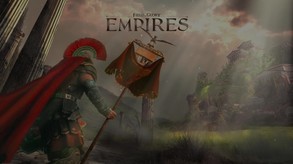
Field of Glory: Empires is a grand strategy game in which you will have to move in an intricate and living tapestry of nations and tribes, each one with their distinctive culture.
Modeled estimate, not a reported figure. How we estimate →
About


Genres
Stats
All-time low is the lowest price we've recorded for this game since we started tracking it.
Languages: English, French, German, Spanish - Spain
Engagement
Hours played at review time, across 40 reviews with recorded playtime.
Reviews
Themes across 40 recent reviews and how positive each mention is. A keyword signal, not full sentiment analysis.
positive critical· bar length = how often the theme comes up
Reviews
As a student of ancient military history, and particularly the age of Alexander and the Diadochi, I enjoy many aspects of this game. As with the Total War games, it brings together the strategic aspects with the tactical, with its building and maneuver on the games strategic map of the world, and resolving battles on a tactical map ( via its Empire Battles interface with Field of Glory II). Lots to enjoy. There are several features, though that ultimately make the game tedious, and eventually unplayable. Which is unfortunate, because with a bit of tweaking the developers would have a game for the ages. Let me list them, with brief explanations: 1. The Loyalty feature overpowers the game. We can argue if constant deteriorating loyalty and revolts is historically accurate (it isn't), but it doesn't make the game more fun or playable. Which is, after all, the goal of any game, right? Loyalty, especially in your home territory, should be high and stay high, so long as you are not losing wars or being raided by a neighbor. Or have an idiot in charge. Which brings me to... 2. Leaders: they come and go randomly, with odd and ahistorical names, and tend to be bad. The player has no choice, and it throws off game play. The only historical leader you get is the the one you start turn 1 with, and even that one doesn't live as long as they historically did, but die randomly. All after that are out of the blue, with no succession system, family tree, or (for me the most irritating) historically accurate names. (For instance, the Seleucids, and Macedonian dynasty, have Persian (sort of) names. Not an Antiochus, Demetrius, or Seleucus to be found! The Antigonids, most of whom were either named Antigonus, Demetrius, with the odd Philip and Perseus in the end, NEVER have such names; but instead unusual or made-up Greek-like names.) The developers should fix the names and add a family tree succession system, in which the oldest son inherits. Or, here's a novel idea, use the historical succession when possible. I.E, after Seleucus I, his son Antiochus I inherits the Seleucid crown. With the Antigonids, Antigonus Monopthalmus (One Eyed) is followed by Demetrius I (the Besieger), who is followed by Antigonus II Gonatus, etc. Crack a book, do a little homework. Which reminds me.... 3. Small matter, but make the kings leaders who can be generals of one of the faction's army. This was an age of warrior kings. The army was commanded in battle by the ruler. And, BTW, all kings were warriors and generals, though not all were competent at either. 4. This is one you may not be able to fix, but the tactical transference system from Field of Glory: Empire to Field of Glory II does not produce accurate representation of the player's army. Especially with larger armies, all the units don't make the transfer from strategic to the tactical. This can be very irritating, when on the strategic map you have a unit of elite Companion cavalry or, say, Silver Shields, and when you go to the Field of Glory II tactical battle those units are missing. I have read that this is an abstract representation, but if it could be made a more exact transference, it would make the game so much better. Well, those are my chief beefs. If these tweaks are ever made, let us know. I'll play the game again. OH, one more suggestion: add an Age of Justinian/Dark Ages Scenario. That would rock!
Field of Glory: Empires is an ambitious, slow-burning grand-strategy game that invites players to guide a civilization through centuries of political tension, territorial ambition, cultural evolution, and military struggle across the classical Mediterranean world. Developed by AGEod and published by Slitherine Ltd., the game stands apart from more streamlined 4X titles by embracing a deep, historically grounded simulation that demands patience, foresight, and an appreciation for long-term statecraft. Rather than offering quick conquests or rapid expansion, it asks players to think like ancient rulers—balancing growth with stability, wealth with war, and ambition with the inevitable decline that threatens all empires. It is a dense, cerebral experience, rewarding those who take the time to master its interconnected systems and penalizing those who treat ancient empire-building as a simple matter of painting the map one color. The foundation of the game lies in its detailed economic and administrative framework. Provinces produce resources, populations grow and migrate, trade routes form, and infrastructure develops according to your strategic choices. Each region has natural strengths—fertile plains, mineral-rich hills, or coastal access—that influence how it should be developed. Over time, you must decide whether to specialize your provinces for agriculture, commerce, industry, or military support. This micromanagement is never superficial: resource shortages can cripple your expansion, cultural stagnation can slow your political influence, and poor infrastructure can leave your armies overextended and vulnerable. More than simply collecting numbers, the system paints a picture of a living, breathing realm shaped by your decisions and the natural rhythm of history. One of Field of Glory: Empires’ most distinctive mechanics is its Culture–Decadence–Legacy system, which transforms empire-building into a long-term balancing act. As your civilization grows, decadence naturally accumulates—reflecting corruption, stagnation, and the societal strain of rapid expansion. If decadence outweighs cultural advancement, your empire risks slipping into decline, fragmentation, or outright collapse. Meanwhile, Legacy serves as your overall measure of long-term impact and historical significance, rewarding thoughtful governance rather than reckless aggression. This triad of systems ensures that even dominant empires cannot simply steamroll weaker neighbors without consequence. The game effectively captures the historical reality that great powers rise and fall not only through war but through internal pressures, cultural resilience, and the ability to adapt. It creates a strategic landscape where restraint can be just as powerful as conquest. Military operations operate on a strategic map and are shaped by logistics, terrain, army composition, and the abilities of your generals. Battles are resolved through a statistically driven system that emphasizes planning over spectacle; however, players who desire direct control can export any battle into Field of Glory II, Slitherine’s tactical wargame, fight it manually, and import the results back into the campaign. This feature offers a remarkable degree of customization, allowing players to choose whether to let grand strategy remain abstract or engage in the tactile thrill of battlefield command. Armies must be carefully composed, as elephants, cavalry, skirmishers, and heavy infantry each bring specific advantages and vulnerabilities. Leadership also matters enormously: a brilliant commander can elevate an otherwise average force, while a poor one can doom even a large army. Though battles play out quickly on the campaign layer, their consequences echo across years of gameplay as provinces shift hands, borders change, and power structures evolve. Diplomacy and internal politics form the third pillar of the experience. Peace is often more advantageous than war, especially when trade deals and alliances can offer long-term stability. Mismanaging loyalty in newly conquered regions can lead to revolts, while ignoring diplomatic relationships can result in multi-front conflicts that your economy cannot sustain. The game does not coddle the player: it expects you to take an active role in balancing military strength with diplomatic finesse, all while maintaining domestic satisfaction. This multifaceted approach mirrors the real-world complexities of ancient governance much more authentically than many strategy games dare to attempt. Yet this depth has a price. Field of Glory: Empires presents a steep learning curve, and its interface—though functional—is densely packed with information that can overwhelm newcomers. The pacing is deliberate, even slow, with turns representing full years and major shifts unfolding gradually. Players accustomed to flashy graphics, frequent battles, or clearly guided objectives may find the game demanding or even austere. But this is not a game designed around spectacle; it is built around contemplation, planning, and watching the slow churn of history unfold according to your choices. Some will find this engrossing, others tedious, and the divide between the two rarely narrows. For those willing to commit, however, the game becomes a uniquely rewarding experience—more simulation than conquest fantasy. It offers a sense of historical immersion that is hard to find elsewhere, capturing the fragility and grandeur of ancient civilizations with remarkable fidelity. Managing prosperity, preventing collapse, steering cultural advancement, and leaving a meaningful legacy all feel significant, and victories—whether diplomatic, economic, or military—carry weight because they emerge from a complex web of interconnected systems. In the end, Field of Glory: Empires is a thoughtful, challenging, and deeply layered grand-strategy game that aims to simulate the dynamics of ancient empire management rather than simply entertain through conquest. It excels at creating a world where every decision carries consequences, where internal politics matter just as much as territorial gain, and where the passage of centuries feels genuinely transformative. For strategy enthusiasts who appreciate depth, historical authenticity, and long-term planning, it stands as one of AGEod and Slitherine’s most compelling achievements. For players seeking something lighter or faster, it will feel too dense—but for the devoted strategist, it is a rewarding and memorable journey through the rise and fall of ancient powers. Rating: 8/10
Considering I'm into my 7th year playing this game and have also now 100%-ed the achievements, maybe it's about time to drop a positive review. FoG Empires is one of the best historical grand strategy games out there, and is generally a delight to play. The graphical presentation is nothing to write home about, but then again I would also say the game aesthetics have their own special charm that grows on you. There are many other interesting things that could be said about the game mechanics, level of abstraction and so on, but other reviewers here have already done a great job summarizing all of that.
I really wanted to like it, but it's just so mind-numbingly tedious. The UI is honestly terrible. There's huge amounts of critical information completely hidden from you. It's minimalist in a completely dysfunctional way. It's not even the menus within menus experience like Distant Worlds or a Paradox game. There's just very little information on the game's systems available. You get a lot of top level superficial information but tons of stuff is always happening under the hood that requires rote knowledge to make sense of. I found the manual okay but typically I just had a browser open while trying to play to look stuff up. The game's most impactful mechanic, development of cities, doesn't seem to have a dependency tree anywhere so you just have to know what's good and what leads to what. Most of your time is spent picking buildings, which is neat, right up until you figure out which buildings are good and then it's just a matter of spamming reshuffle until you get one of the structures you actually want. There aren't actually any meaningful choices to make because structures finish so fast in well optimized regions that you can afford to waste as much time as you want shuffling. The result will be that even giving the AI a generous handicap your cities will be massively more productive at an equivalent population size. Population growth is absurdly simplistic and nonsensical. You would think that geography and natural resources would concentrate pop in specific areas but not so! You can create thriving metropoli in barren desert wastelands with surprising ease. Troops are too cheap and too fast to produce. Typically it's maintenance that gets you, but both you and the AI can rebuild your entire army turn after turn after turn for decades of in-game time, turning wars between large powers into an endless attritional grider with no decisive battles. This may be semi-historically accurate, but given how long it takes to process turns, it just becomes boring after you've destroyed your six-hundreth Roman Legion. The combat sysem makes a kind of internal sense, but it leads to extremely rote army design and ridiculous outcomes because of several factors. First, rerolls are paramount and realistically you are at the mercy of whether or not your empire arbitrarily decides to give you a super-general or not. Next, frontage: I realize why this exists, but it enforces ridiculous outcomes. Battles where a smaller force defeats a larger force due to clever maneuver and terrain are not exceptional. There can be no Battle of Cannae where a troop composition and its use was just right. Every battle the decisive arm is heavy infantry with just the right amount of support troops to cap out the region's frontage. True cavalry is, as far as I can tell, almost completely pointless, because most battles you will not be able to use most of your force so flanking can't happen. FOG2 export has its own issues, particularly it tends to make wiping out enemy armies too easy whereas using the actual game's combat system might make it functionally impossible if they have superior troops or generals. Strategically, armies are both too agile and too cumbersome at the same time. In a good simulation of ancient warfare, armies are actually pretty hard to convince to accept battle if they don't think they can win. Games like the current total wars handle this reasonably well with stuff like stances so you can attempt to avoid battle if you have space or faster soldiers and just don't want to commit. In Empires, you have no actual choices to make at the strategic or tactical layers. Your only decision is troop composition, since you need to optimize for the strange combat system to be able to win battles. You also can't move through territory you don't control without attacking it, which is dumb, since basically everyone was doing this all the time (how can you set a game in the Punic Wars while prohibiting Hannibal's famous march across the Alps?) There's a lot of jank in army management. You can have weird stuff happen when armies bump into each other because of the weird pre-planned 'impulse' system it uses for processing troop movements. For example, you can have some troops moving passed a friendly walled city, but an enemy army flies over and intercepts them, but since you don't get to make any choices regarding the garrison that the city generates to help fight the ensuing battle, it's possible for the city to instantly fall without even a siege because the game automatically decided you ought to turn out the entire garrison to get slaughtered. Effectiveness/starvation is weirdly harsh and actually can make it super difficult to attack across water if every region has a walled city so you aren't allowed to take a beachhead and instantly begin to starve to death as soon as you land. It all feels really clunky and unpredictable. Diplomacy is basically nonexistent. You can sort of coax other nations into doing stuff if you dump cash on their heads over and over, but that's it. You basically just pulverize them militarily and then turn them into a client-state since anything else is too time consuming, expensive and transient. The AI sucks. Not really notable though, because the AI always sucks. The decadence mechanic seems to do nothing. Maybe I figured it out too fast? Supposedly this is meant as an anti-blobbing mechanic, but if you don't overextend and build lots of good buildings to manage it you probably will never feel it. In my first campaign I was just in wall to wall golden ages. The AI doesn't seem to have any issues with it either, all the games I played had Macedonia and Rome paint most of the map without ever having a civil war or really even lose any territory. If you ever do over-blob yourself, you just need to make sure you have a client state ally or two that you can dump all your unwanted regions on. I'm not sure this is intended though, if it was I would think the game would let you create new client states out of unwanted provinces or something. Random objectives are fine, but ultimately not that impactful since basically every war is a war of extermination. Theoretically you can settle for a few regions but it's typically easier to destroy an adversarial state or turn it into a client. Decisions are, again, fine, but after you've seen the ones for your civ they cease to be interesting. What do I like about FoG:E? Not much. I like exporting big battles to FoG2, although the AI is pretty bad so you aren't likely to actually lose unless you have a gigantic disadvantage in numbers or troop quality. I did really like the trade and development systems for the first twenty hours but completely lost interest in them once I'd seen most of the developments and was now just clicking through a dozen panels a turn using rote logic. I really wanted to like it, but this is honestly among the least fun 4x games I've ever played.
Its not fun. While there is an interesting idea behind it, the implementation is very rough. You have to lead your nation in a way that leaves a mark on history. The game tries to simulate a declining/stagnating society, but doesnt do it very well. At least not in a fun way. Presentation values are rather simple. Its not an issue for a game like this, but I cant help of thinking about games from 20 years ago like Chariots of War and Spartan, that seemed to look somewhat nicer. The UI is pretty poor in that the information it provides, particularly in regard to numbers, can be quite confusing. The message/event UI is cumbersome. While starting a game I wanted to take a nation thats easier, and the two easiest nations described were Macedon and Egypt. It turned out to be complete nonsense as expanding as an obscure tribe somewhere far away is much easier than Macedon, and I will explain why. There are a lot of neutral areas on the map which you can conquer if you beat the garrison, which is not that hard. When you are surrounded by nations, you need to fight their armies and siege their fortified cities. As Macedon I was constantly raided and got debuffs, which I couldnt really do anything about, but attack my neighbours. Problem is they are defending in mountanous areas and I have an army suited for flat terrain. And I dont really have units I can recruit that are suited for the mountains. You also cant do anything in regards to battle other that build an army of a certain composition. Again, in game from 20 years ago like Chariots of War and Spartan you had more options. Watching the fight play out feels lousy and the auto resolve doesnt give you any info what happened. While a region has different terrain which effects how you fight, there are absolutely no differences in regards to region development. A region in the middle of the Arabian peninsula can be developed just as well as the one in the nile delta. Only difference is that at the start of the game some are already developed more than others. Development is also cumbersome because of the RNG building system. You get 6 random building to develop, 1 for each category of building there is. If you dont like them, you can roll for new ones. But I dont understand what is this supposed to simulate other frustration in regards to planning. Its not that the other building arent available, they are just not available right now. There are mechanics in the game that relate to culture and earning score which symbolizes the legacy of your nation, but it doesnt feel that great. And there are multiple other smaller or maybe not so small things I could talk about, but I think I got the main ones across. All regions are the same, combat isnt fun, UI is cumbersome and planning is a chore. It has a cool idea behind it, but it really falls flat in what its offering, Im sorry to say. 3/10
+ 古典時代的回合式4X遊戲 (希臘、羅馬活躍的那個時代) + 不同文化有不同的單位池 成功建立行省後能召募地域特殊單位 + 大量可選建築物 + 有"頹廢"機制 保障小派系的成長和生存空間 (巨大派系只要有耐性處理好瑣事後還是可以為所欲為) + 戰鬥有過程 (這樣說可能聽起來很笨 但回合式4X遊戲之中挺多款都沒這東西的) + 有斯巴達 (雖然這派系初期有夠難用而且不會像主題電影的主角陣營那樣把敵人按在地上磨擦) -- 沒有中文 (上面提到的"頹廢"機制 雖然為保障遊戲性提供了很大的益處 不過算是比較少見的系統初玩的時候需要不少時間去理解 而且遊戲中的隨機事件能提供很大的助益 但選擇這些事件的選項卻偏偏要先讀一大堆英文 所以真的挺扣分的) ======================================================== 本人喜歡希臘題材的戰略遊戲 準確來說是想玩一些可以靠玩家發展擴大經濟體量 讓斯巴達可以農出一大票重裝步兵跟方陣兵四處找人戰他OO的遊戲 這種題材的遊戲這麼多年斷斷續續的尋找 比較有名的有某S社的即時戰略全面戰爭羅馬2 (但我比較想玩回合制4X 所以羅馬2玩了一段時間後又再繼續找了) 找了好幾款冷門的回合制和即時戰略又帶有希臘重步兵的遊戲 但基本上都是很可惜 有點美中不足 (不是經濟系統很累贅就是根本沒獨特單位 不同派系只是換支旗換個名 用同樣的兵種在互撞然後拚派系加成這樣.....) 把剛上市時各種劣評某P社的帝國羅馬翻出來重新研究了幾星期 P社出的 可取之處當然是有的 但不大賣和被劣評也不是沒理由的 光是被那大族酬庸分餅和行省軍團只準分4隊的綁手綁腳做法 已經把興奮感給磨個七七八八了 (雖然可以裝mod啦 但你懂我懂P社 三不五時便更新一兩下 MOD的製作者都不知幾年沒更新了.....(ry 最後實在對這些遊戲有需求 所以連沒中文的遊戲也開始找了 正巧遇到這款遊戲特價 發行商又是常光僱的那家 所以就試了一下 還挺滿意的 因為這款還是有夠冷門的 所以就隨便寫點甚麼留個好評
This game has some unusual but excellent mechanics in place to simulate the difficulties that come with expanding too far, too fast. In most or at least many 4x games the only limit to how big your army gets or how fast you conquer the map is your available funds. In this game you can certainly attempt to spam units and conquer everything in sight but your empire will quickly collapse from within as your economy crashes and your provinces revolt. Unlike other games that unexpectedly spawn rebel armies in random provinces as an artificial brake on rapid expansion this game models the infrastructure and economy so that civil unrest is both predictable and preventable but often at the cost of putting off military campaigns until the nation is in better shape socially and economically. There is a bit of a learning curve but the manual is very helpful and there are several very good tutorials on Youtube. I recommend Strategy Gaming Dojo's excellent, 12 part tutorial. The game also includes several short video tutorials but I didn't find them especially helpful. If you own Field of Glory II you can export battles (except for sieges and naval battles) to that game and fight them tactically - kind of like a turn based Total War. This is the feature that eventually prompted me to buy the game. However, the battle resolution system in Empires is so good I more often than not find myself just resolving the battles in game without bothering to go into Field of Glory II. I also appreciate that I do not have to micromanage everything from family drama to individual political appointments. In fact, the only time you have to worry about making appointments in the game is when you assign generals to command your armies - and assigning good commanders matters. You do not micromanage politics or trade in the game. Pretty much you're just establishing policies and the overall direction you want to go in and the game handles the rest. It's very different than what I've gotten used to but I really like it. If anyone remembers Master of Orion II, the economy and infrastructure is handled similarly to that. If you've played both games you know what I mean. If you enjoy grand strategy, especially in this time period, I strongly recommend the game. I also recommend getting Field of Glory II but only if you enjoy tactical level battles and don't mind the turn based format.
I really like the decadence mechanic, it sets a difference from other games were you straight up gobble all the map and call it a day, on this one you have to think more and manage your nation better, the autobattles is wayy better than other titles too, probably the best has far i know, and the fact you can connect the battles to another game (FOG) makes it better too bad there isnt late antiquity campaign
Great game. Because of its subtle intricacies this is a game less for Total War fans, more so for those who like Paradox games in concept but are disappointed each time in the lack of agency and fun those offer. This game has actual strategic choices to make. It shines in the amount of buildings to develop your regions with, coupled with its elegant trade system (no route babysitting). Combat is a mixed bag: the autoresolve system is neat but it's sometimes frustrating to get the right troops fighting. The biggest negative is the user interface. It's passable, but it could be so much better. The game has a wealth of numbers and mini-systems to grok, but it presents the info in a very unfriendly way. If they manage to step this up, this series would easily become a true and known rival to paradox. Btw, I can recommend the DLC. It adds boons and impediments, and regional decisions. These are great additions, although maybe not for your first run.
One of the best grand strategy games I've ever played. You don't have to pair it with Field of Glory 2. I like the fact that it isn't just a map painter... there is strategy to your moves! 10/10!
Related
Related
Trends
Concurrent players on Steam, sampled daily since tracking started.
Audience
Estimated from the language of this game's reviews — a proxy for where players are, not official Steam demographics.
Related
| Uncle Chop's Rocket Shop | $782.5K | 1.2K | 86% | $19.99 |
| Corsairs Legacy - Pirate Action RPG & Sea Battles | $782.5K | 1.2K | 75% | $19.99 |
| BRAVELY DEFAULT FLYING FAIRY HD Remaster | $782.8K | 813 | 92% | $39.99 |
| EMPULSE | $782.9K | 1.5K | 74% | $19.99 |
| Dungeon Siege | $781.2K | 4.2K | 82% | $6.99 |
| Astebreed: Definitive Edition | $780.7K | 1.6K | 88% | $19.99 |