Immerse yourself in an adaptation of an old story about Ewan Berrington.
Modeled estimate, not a reported figure. How we estimate →
Media

About
Stats
All-time low is the lowest price we've recorded for this game since we started tracking it.
Languages: English, Russian, Japanese, Simplified Chinese, Portuguese - Brazil, Turkish, Ukrainian, Italian, French, German, Spanish - Spain, Polish +2 more
Engagement
Reviews
Themes across 40 recent reviews and how positive each mention is. A keyword signal, not full sentiment analysis.
Reviews
Walking simulator with a bit of horror, there are some creatures that chase you, I died a few times I love the aesthetics Brutalist architecture But, sadly, it's way too short, I wish I could walk there for eternity, heh 9/10
[h3] 好失望 [/h3] 比起新版我还是更喜欢旧版那种震撼人心的感觉。旧版专注展示精神世界,沉浸感更足,充满神秘学的味道;新版则加了许多的追逐战和收集元素,更突出生存恐惧感,但对濒死体验的代入感大大减少,建议都去看看旧版的游戏视频。 题外话:我小时候也经历过濒死体验。没有游戏里这么恐怖刺激,是大家都很耳熟的走马灯。当时感觉整个世界的时间都变慢了,就像子弹时间。放平常里仅需两秒我就会触地,但当时的我感受到的是在很慢地坠落。然后我看到我以前的经历一幕幕扑面而来,突然我就身处其中了,我在濒死体验里又重新经历了一遍我的人生。它不像做梦那么模糊,也不是电影式的放片,而是真正的重走一遍人生,再次亲身体会到当初的快乐和幸福,但都发生在一瞬间。 几年前我搜相关资料的时候,发现伊州大学Fanning教授的濒死体验跟我的体验几乎一模一样,后来又接触到了赛斯资料,里面有一段描述也跟我当时经历的感受很像,他说:“人具有多重空间性。 过去,现在未来及轮回全都在一时点上。 灵魂可以在弹指间经历它一切的历程。感受到所有曾经影响过自己或具决定性的情绪及动机。” 又再扯一个题外话,赛斯的理论挺有意思的,他主张人死后是有灵魂存在的,我们轮回、人生剧本都是大我选择好的,有点类似多周目游戏走不同的线。所以人生重遇到不好的事不要太深陷其中了,只是你经历过好的人生了想体验不同线的人生。也不要做傻事,进度中断又会重启一样的人生,不如好好活着走完。失去重要的人也不要过于伤心了,死后灵魂还会相遇,再一起去轮回人生,死亡这个概念仅限于肉体,就像死亡搁浅2里说的:“死亡不是终结。”
Related
Related
Trends
Modeled estimate over time, reconstructed from Steam's monthly review histogram.
Hours played at review time, across 40 reviews with recorded playtime.
positive critical· bar length = how often the theme comes up
Обычный день на работе
Very short (took me 45 minutes, although I did not hunt secrets,) walking simulator horror game with a couple of chases, platforming and key hunting sequences. There's multiple endings and at least one map you can only visit if you found all of this one optional item which is hidden on each level. The design of the game is a mix of brutalist concrete megastructure with humanoid mesoamerican monsters and appears to take place inside of a dream. Story? No story! Been a while since I played a horror game without a story, they used to be quite common in the indie scene but now you mostly see them in games made for game jams.
Nice lil' horror walking sim, though it does take a handful of levels before it gets interesting. Liked that there were small secrets to find, and the hidden robot mission was very cute!
Классная короткая индюшка с мегаструктурами, хоррор-элементами и плот-твистом в конце. Саму игру добил за минут 50, еще столько же ушло на получение ачивок.
Bought this on a sale, went in mostly blind, thought it'd be some artsy walking simulator with nice atmosphere. Turned out to be one of the most oppressive feeling games I've ever played. I didn't want to be there but still I couldn't stop playing. I would close the game thinking "ok, I can't any more" for me to just fire it back up 2 minutes later to keep going. Short but excellent. I'm not lying when I say this is now an all time favorite game.
This is a cool surreal experience. I´d recommend it to people who liked Journey, Limbo ,The Beginner´s Guide and maybe SOMA. It´s very simple, most of the game consists of running around in strange environments, collecting glowing cubes and running away from monsters, but it definitely does have atmosphere. The monster designs are interesting. The encounters are more stressful than actually scary, but I think that this kinda serves the purpose of leaving space for curiosity and interest in progressing in the game´s strange surreal world with these huge imposing environments instead of being scared of seeing a monster around every corner. I would´ve preferred the story to be sprinkled in throughout the game rather than it being dumped on you all at once at the end, but I understand why they did it this way - it definitely packs an emotional punch, especially the bonus level. The concept is really good, and they managed to do it in a way that isn´t super cheesy.
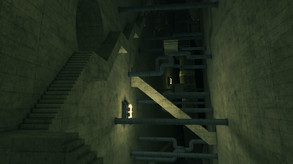
Fibrillation HD, created by Egor Rezenov, is best understood not as a conventional game but as an abstract, introspective experience that uses the language of interactivity to explore themes of mortality, consciousness, and disorientation. It deliberately avoids traditional structures—there are no clear objectives, no power progression, and very little in the way of direct explanation. Instead, it places the player into a fragmented, surreal space and asks them to navigate not just its environments, but the emotional and psychological weight those environments carry. The premise is intentionally ambiguous yet quietly powerful. You inhabit the perspective of a man caught in a liminal state, drifting between life and death, with the outside world only faintly audible through distorted sounds and fragmented voices. Rather than presenting a linear narrative, the game builds its story through implication. Echoes of hospital machinery, muffled conversations, and rhythmic pulses suggest a body struggling to survive somewhere beyond the player’s reach. This indirect storytelling creates a sense of unease that feels more personal than scripted, allowing players to project their own interpretations onto what is unfolding. Gameplay is stripped down to its bare essentials, focusing almost entirely on movement, observation, and evasion. There are no weapons, no upgrades, and no sense of empowerment—only the constant need to keep moving and avoid threats that often feel as abstract as the environments themselves. Progression can feel uncertain, with maze-like structures and shifting perspectives that disorient more than they guide. This design is intentional, reinforcing the core theme of helplessness. The player is not meant to master the space but to endure it, navigating through confusion in much the same way the protagonist appears to be struggling through a collapsing state of consciousness. The environments are where the game truly distinguishes itself. Stark, geometric structures inspired by brutalist architecture dominate the landscape, forming endless corridors, towering staircases, and impossible layouts that seem to defy spatial logic. These spaces often feel empty yet oppressive, as though they exist solely to emphasize isolation. Transitions between areas can be abrupt and dreamlike, further blurring the sense of continuity. At times, it feels less like exploring a physical world and more like moving through fragments of thought or memory, each area representing a different aspect of the protagonist’s inner state. Sound design plays a crucial and understated role in shaping the experience. Rather than relying on music, the game uses ambient noise to create tension—subtle breathing, distant echoes, and the persistent rhythm of a heartbeat become the primary tools for immersion. This minimalist approach heightens the sense of vulnerability, as every sound feels significant and often unsettling. However, the lack of a more dynamic audio landscape can occasionally make the experience feel sparse, particularly during extended periods of exploration where little changes sonically. In terms of pacing, the game is brief, typically lasting only a few hours, but it uses that time effectively. The compact length ensures that the experience remains focused and intense, avoiding the risk of overstaying its welcome. Replayability is limited, as much of the impact comes from the initial sense of discovery and interpretation. Once the player has pieced together the underlying themes, subsequent playthroughs may feel less impactful unless approached with a desire to uncover subtle details or reinterpret the symbolism. What ultimately defines Fibrillation HD is its commitment to being an artistic expression rather than a traditional entertainment product. It does not aim to satisfy players looking for clear goals, mechanical depth, or narrative closure. Instead, it offers a contemplative experience that prioritizes mood and interpretation over clarity. This makes it inherently divisive—those open to experimental design may find it deeply engaging, while others may struggle with its lack of direction and conventional structure. In the end, Fibrillation HD succeeds as a piece of interactive art that uses minimalism to powerful effect. Its abstract design, haunting atmosphere, and thematic focus create an experience that lingers not because of what it explicitly shows, but because of what it implies. It is not a game for everyone, but for those willing to embrace its unconventional approach, it offers a uniquely immersive and thought-provoking journey into the unknown. Rating: 8/10
Was watching back some of Markiplier's old horror games and stumbled on this gem when he forgot to finish the original. Played through the entire game and thoroughly enjoyed my time! Not a huge fan of puzzle platforming with less-than-ideal movement controls (especially when dealing with the monsters) but the liminal and abstract world design helped to keep me engaged regardless. Highly recommend anyone try this out!
Momentum
Pace estimated from the game's recent review growth (our daily snapshots) at its own sales-per-review ratio — a momentum signal, not booked sales.
Audience
Estimated from the language of this game's reviews — a proxy for where players are, not official Steam demographics.
Related
| THE ENIGMA MACHINE | $28.4K | 376 | 90% | $4.99 |
| ! Wild Russia ! | $28.4K | 76 | 57% | $19.99 |
| Gem Miner TD | $28.5K | 73 | 97% | $12.99 |
| Legacy of Dorn: Herald of Oblivion (Classic) | $28.5K | 188 | 86% | $5.99 |
| Shadowgrounds Survivor | $28.5K | 804 | 61% | $1.49 |
| The 39 Steps | $28.4K | 1.6K | 76% | $0.99 |