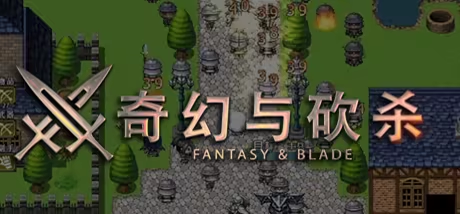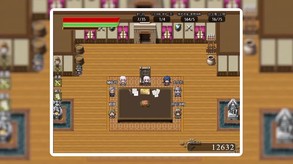
With a rich and powerful system and gameplay of group warfare action role-playing games, open world, hundred people warfare, challenge the boss, Players will continue to grow in their own way and create legends that belong to you in the open chaotic world of sword and magic.
Modeled estimate, not a reported figure. How we estimate →
Media

About

Genres
Stats
All-time low is the lowest price we've recorded for this game since we started tracking it.
Languages: Simplified Chinese
Engagement
Hours played at review time, across 40 reviews with recorded playtime.
Reviews
Themes across 40 recent reviews and how positive each mention is. A keyword signal, not full sentiment analysis.
positive critical· bar length = how often the theme comes up
Reviews
有中文 有成就
type error cannot read properties of id undefined
背景設定不錯,遊戲方式也挺好的 但就是武器裝備跟士兵太蛋疼 武器都很機掰,也很難操作(常被小兵卡死) 而且死掉就結束遊戲直接跳到開頭畫面也是很煩(還不能跳過) 玩到爆氣來留負評,我這人很少負評的,但我這真的受不了了 還買DLC的我真的跟個低能兒沒兩樣
一般
召唤眷属直接报 type error cannot read properties of id undefined 玩不了
大地图行走太慢
Fantasy & Blade, developed and published by the Chinese indie studio Juewang, is an ambitious blend of action, role-playing, and simulation that strives to merge multiple genres into a single, cohesive experience. Released on Steam in 2019, it positions itself as a “fantasy and slashing” adventure where the player is free to carve their own path in a world torn between war and opportunity. At its core, the game offers both large-scale combat and personal progression, letting you choose between the life of a warrior, a strategist, a merchant, or even a farmer. It attempts to create a sandbox where sword and strategy coexist, where economic ambition can be just as valid as military conquest. The opening moments of Fantasy & Blade set the tone for its freedom. You begin as a lone adventurer with modest means, thrust into a sprawling world that feels both lively and dangerous. The design encourages experimentation rather than adherence to a single playstyle. Players can lead an army into battle, commanding troops in chaotic encounters that resemble small-scale strategy skirmishes, or they can focus on exploration and trade, traveling between villages and cities to buy and sell goods. The game even includes elements of farming and property management, allowing you to build a personal domain. These systems create a sense of progression that extends beyond combat, giving players multiple ways to engage with the world. Whether you rise to power through violence or commerce, the sense of personal authorship is central to the experience. Combat, however, remains the most immediate and engaging aspect of the game. Battles unfold in fast-paced, hack-and-slash fashion, where timing and positioning are key. You often find yourself surrounded by enemies, forced to balance aggression with awareness as you dodge and strike. The inclusion of companion soldiers and support units adds a tactical layer to the action, turning fights into dynamic clashes rather than isolated duels. Character development deepens the system further, as players can specialize in different fighting styles and magical disciplines. Warriors can rely on raw power and weapon mastery, while mages manipulate elements and area effects to control the field. This flexible approach gives the combat a satisfying rhythm, though it’s clear the developers were inspired by larger, more complex titles in the genre. Outside of combat, Fantasy & Blade tries to offer a sense of living simulation. You can buy property, manage farmland, hire workers, and invest in trade routes, giving the game an economic layer that sets it apart from typical hack-and-slash games. These features contribute to the illusion of an evolving world, one that rewards patience and long-term planning. Unfortunately, while the breadth of systems is impressive for an indie production, the depth is uneven. Farming and trading are functional but relatively shallow, offering enough to feel engaging for a while but not enough to sustain players over dozens of hours. This reflects the game’s wider identity: a collection of ambitious ideas, each implemented competently but rarely refined to perfection. Technically, Fantasy & Blade bears all the hallmarks of an independent project. The visuals, while serviceable, are modest compared to big-budget role-playing games. Character models and environments carry a rough, utilitarian quality that sometimes clashes with the scope of the developer’s vision. Lighting and particle effects work well enough to create atmosphere during combat, but animations can appear stiff and transitions between actions occasionally break immersion. The same can be said for the interface and performance. Menus are functional but cluttered, and optimization issues—such as frame drops and loading hitches—can occasionally disrupt the flow of play. These limitations are noticeable but forgivable when viewed in the context of a small team striving to create something far larger than its resources should allow. In terms of tone and world-building, the game evokes a curious mix of high fantasy and grounded struggle. The setting, though not heavily narrated, feels like a realm caught in the aftermath of collapse. Towns stand on the edge of ruin, soldiers roam the roads, and magic is both a gift and a curse. The absence of heavy-handed storytelling allows players to project their own narratives onto their journey. It’s a design choice that enhances immersion for some while leaving others wishing for a stronger plot to anchor their progress. What Fantasy & Blade does achieve, however, is a distinct atmosphere of independence—a sense that every victory, every field harvested or battle won, belongs entirely to the player’s initiative. Despite its technical roughness, Fantasy & Blade stands out as a testament to ambition. It attempts to be a strategy game, an action RPG, and a life simulation all at once, and while it doesn’t fully master any single element, the way these systems interact produces something intriguing. There is a sense of genuine effort behind every aspect of its design, a creative spark that transcends its limited production values. The game’s flaws are visible—the repetitive combat loops, the uneven pacing, the lack of refinement—but so too is its passion. It offers moments of unexpected satisfaction, whether it’s leading a small army to victory against overwhelming odds or watching your farmland yield its first profitable harvest. Ultimately, Fantasy & Blade is a rough but compelling experiment in freedom and hybrid design. It will not appeal to everyone—those looking for polished graphics or deep narrative storytelling will likely find it lacking—but for players who enjoy indie games that push boundaries and explore multiple systems at once, it offers something unique. It embodies the spirit of independent development: flawed, ambitious, creative, and deeply personal. While it may never rival mainstream RPGs in scope or sophistication, it captures the essence of discovery that made early sandbox games so captivating. For those willing to look past its imperfections, Fantasy & Blade is less a product and more a glimpse into the limitless imagination of its creator. Rating: 7/10
太过于简陋和乐色
缝合怪 但是还算有点意思。
一個很獨特的RPG遊戲
Related
Related
Trends
Modeled estimate over time, reconstructed from Steam's monthly review histogram.
Momentum
Pace estimated from the game's recent review growth (our daily snapshots) at its own sales-per-review ratio — a momentum signal, not booked sales.
Audience
Estimated from the language of this game's reviews — a proxy for where players are, not official Steam demographics.
Related
| The Sand Man | $16.6K | 367 | 94% | $2.99 |
| Critical Mass | $16.6K | 441 | 69% | $1.99 |
| Battle Group 2 | $16.6K | 527 | 83% | $1.19 |
| F-Rank hero story | $16.6K | 73 | 89% | $10.99 |
| Vesper: Zero Light Edition | $16.6K | 89 | 84% | $9.99 |
| CreaVures | $16.6K | 176 | 77% | $4.99 |