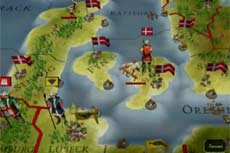
Europa Universalis III Complete includes the original Europa Universalis III as well as the expansions In Nomine and Napoleons Ambition Europa Universalis III delves deeply into the areas of exploration, trade, warfare and diplomacy.
Modeled estimate, not a reported figure. How we estimate →
About
Genres
Stats
All-time low is the lowest price we've recorded for this game since we started tracking it.
Languages: English, German
Engagement
Hours played at review time, across 40 reviews with recorded playtime.
Reviews
Themes across 40 recent reviews and how positive each mention is. A keyword signal, not full sentiment analysis.
positive critical· bar length = how often the theme comes up
Reviews
Europa universalis community. If you read this, merry christmas. <3
One of the best strategy games ever, period. The player can take the helm of any nation spanning the 15th through early 19th centuries. You are given the opportunity to reshape world history as you see fit. The only drawback is that the expansions are almost mandatory to experience the game at its fullest. This is easily Paradox's best release to date.
Playtime: ~13 hours (After 3800 hours in EU4) Recommended? No. I decided to try EU3 in 2025 after the release of EU5, mostly out of curiosity. I have spent thousands of hours in EU4, so I wanted to see what the previous generation of the series actually played like. I went through the tutorial and a few short campaigns, and while I really tried to give it a fair chance, I found the experience very difficult to enjoy. The first problem that stood out was the UI. A lot of the information the game gives you is unclear, and several mechanics are barely explained. Many advisors have modifiers that the game never defines anywhere. Infamy is a good example. It shows up on the bar at the top, which would make you assume it's really important, but the game never tells you what it does or how it works. Even checking the manual wasn’t immediately helpful because the terminology in the manual and the terminology in the game do not always match. The best way I could understand infamy was that it's almost as EU4's modifiers aggressive expansion and overextension were combined into one, or that they were split into 2 rather, from the modifier that is infamy. The economy system also felt awkward to manage. You get most of your income once a year, but expenses are monthly, which makes it hard to keep track of whether you will end the year with money or accidentally run out months beforehand. The budget sliders are small and hard to control, and adjusting them precisely is frustrating. I also never found a clear way to repay loans after taking them, which made the whole financial side of the game feel unintuitive. War declarations are another area where EU3 shows its age. You can declare war on a small neighbor and suddenly a totally unrelated country on the far side of Europe becomes the war leader and brings in all of its allies. In EU4 I have only experienced that if you attack someone inside the HRE and the Emperor is suddenly called it, but in EU4 they at least updated the game so it tells you someone will be called in to protect your war target and if they can call in their own allies. Basically, in EU3 there is no good way to predict who you are actually going to be fighting, which makes planning wars very unreliable. And the biggest issue when it comes to wars in EU3 is probably getting a Casus Belli or justification for war. Compared to EU4, there are very few reliable options. Sometimes you are lucky to have cores or claims, but in some circumstances you don't even get claims, although the mission specifically tells you to conquer certain provinces. Then you realise it's actually possible to fabricate claims, but only if you have spies and you place them in another country's capital, but fabcricating claims with spies has extremely restrictive conditions, so most of the time it is not even available. Such as the target country must be a monarchy government type with low legitimacy. So as Denmark for example, almost all nearby nations are monastic orders or republics, which you can't fabricate claims on, and it basically leaves No CB wars as the only consistent option. Overall, playing EU3 reminded me a lot of the earliest versions of EU4 before many of its systems were cleaned up. It makes sense for a game from its time, but it is hard to go back to now. I am glad I tried it to understand where the series came from, but I do not expect to play it again and nor do I recommend anyone else to do so.
The greatest game of all time
The game has a smart system where random events guarantee you won't have too much fun. And when things do go your way the game bugs the f out. Few games have pissed me off as much as this one
This game is rather outdated at this point, but still reasonably cool. Modding it is easy!
I'm a high school world history teacher. This game is far more historically accurate than any other game my students have introduced me to. I highly recommend it.
Europa Universalis III is a grand strategy game developed by Paradox Interactive that offers an impressively deep and complex simulation of global politics, warfare, trade, and diplomacy between the late Middle Ages and the early modern era. Released in 2007 and available on Steam with several expansions, it set a high bar for historical strategy games at the time and laid much of the groundwork for the success of its eventual sequel, Europa Universalis IV. Even today, despite its dated visuals and interface, EU3 remains a compelling title for those interested in immersive, large-scale historical gameplay that rewards long-term planning and strategic thinking. The game spans the period from 1399 to 1821 and places you in control of virtually any country that existed during that era, from major European powers to small, obscure nations. This immense freedom of choice is a defining feature. You can guide England through centuries of colonization, attempt to restore the Byzantine Empire, unify Japan, or lead an African or Native American tribe into a dominant global position. Each choice comes with its own challenges, and part of the game’s appeal is how differently each playthrough can unfold based on your nation's starting situation, regional politics, and random events. One of the most ambitious elements of Europa Universalis III is its simulation of internal and external pressures on a nation. It’s not just about conquest; you also have to manage domestic policies, religious conflict, technological advancement, dynastic succession, national stability, and economic systems. The internal management system is governed by a set of sliders and decisions that allow you to slowly shape your nation's political philosophy, such as moving toward centralization, serfdom, or free trade. Your choices influence everything from tax income to manpower, naval range, and diplomatic flexibility. Balancing all of these aspects without destabilizing your realm is both challenging and rewarding. Diplomacy plays a central role in your expansion. Whether you're forming alliances, royal marriages, claiming thrones, or inciting revolts in enemy territories, the game offers a wealth of options for indirect strategy. The AI, while not flawless, does a reasonable job of reacting to your moves and forming coalitions to counter rising powers. Aggressive expansion can lead to international backlash, so players must be mindful not just of immediate gains, but of their long-term reputation and the coalitions that may form against them. Espionage, cultural influence, and religious conversions are also tools in your arsenal, offering non-military paths to power. Combat, on the other hand, operates through a blend of real-time movement and probabilistic battles, with a heavy emphasis on terrain, morale, and leadership. Hiring generals and admirals with high stats can make a significant difference in warfare, especially when fighting across difficult terrain or against numerically superior enemies. Unlike more micro-heavy tactical games, EU3 focuses on the broader strategic picture: positioning your forces, timing your wars, and managing attrition during long campaigns. Naval warfare also plays a critical role for colonial empires, as blockades and naval supremacy can isolate or strangle enemies economically. The trade and colonial systems in Europa Universalis III are intricate and rewarding for players who enjoy economic gameplay. You can invest in Centers of Trade, build merchant fleets, and manipulate regional influence to dominate lucrative markets. Colonization, especially after the Age of Discovery, becomes a significant aspect of gameplay for many countries, with opportunities to spread influence across the Americas, Africa, and Asia. The game simulates the challenges of colonization through attrition, native unrest, and the slow development of new provinces. Over time, trade routes shift, colonial wars erupt, and global empires rise and fall, all dynamically driven by player decisions and AI responses. Visually, Europa Universalis III is functional but clearly of its era. The map is serviceable and the unit models are simple, though later expansions do improve textures and add more visual polish. What the game lacks in graphic fidelity, it more than makes up for in scope and depth. The interface, especially for new players, can feel overwhelming and unintuitive at first. Tooltips and menus are numerous and not always clearly explained, but as you invest time, the system starts to make more sense, and the learning curve becomes part of the game's satisfaction. Mastery feels earned. The expansions—such as In Nomine, Heir to the Throne, and Divine Wind—add significant improvements to gameplay, including better AI, more dynamic historical events, enhanced mission systems, and more nuanced military and diplomatic mechanics. These expansions are practically essential for anyone looking to get the best out of Europa Universalis III, and the complete version with all content installed is a far more balanced and feature-rich experience than the base game alone. Europa Universalis III is not a game for those looking for instant gratification or simple mechanics. It’s a game that unfolds over hours—sometimes dozens or even hundreds—of careful planning, adaptation, and historical experimentation. Every session is different. Some games will be spent slowly building up a regional power; others will have you racing against rival empires in a global struggle for supremacy. The combination of historical detail, strategic depth, and sandbox freedom makes it uniquely rewarding. Though surpassed in many ways by its successor, EU4, Europa Universalis III still holds a significant place in the grand strategy genre. It’s an ideal choice for those who enjoy deep, open-ended systems and are willing to invest the time to learn its complexities. For history buffs, empire builders, and strategy fans alike, Europa Universalis III is an intricate and absorbing journey through one of the most transformative periods in world history. Rating: 8/10
从2018玩到2024,之前入坑这款游戏时在某个游戏盒上玩了几年时间之后又补票玩了千余小时。这代游戏是有挺多的mod:群雄,春秋,游牧,城市风云,都蛮不错的,不过更喜欢原版5.1&5.2,就像玩V3不太喜欢玩RA,变动的太多不是很喜欢。 讲下自己玩这款游戏方面,玩拜拜拉通涨爆桨帆锁海峡扔间谍大概1410年就能全吞奥斯曼,玩跛子如果偷懒可以选1405年然后直接向东一路吃成立莫卧儿,玩卡卡可以开局联统阿拉贡之后贸易7级率先探索殖民全美洲;有些小国也是很好玩的,以前有段时间喜欢玩阿散蒂,在马里旁边那个一块金矿地小国,开局爆五笔贷款拉九支雇佣兵sl一个四冲击以上的君主将军,能消灭对面12支的兵,之后吞包含两块金矿地的四块地发展;有些小国主要是贸易小国:梅克伦堡、拉古萨、纳瓦拉,科技超前很多可以选种地还是去当球长/州长;土著也挺好玩,5.2版本在中南美洲土著里宗教决议里有个神中神的决议可以一直贩卖人口()不过玩土著到了16th西化以后基本上就是和欧洲殖民者对打,陆军传统很容易90%。5.2里有个随机弹出的事件可以和欧洲殖民者关系瞬间拉满:改宗天主教,这个事件概率非常低,之碰就到过两次。带明由于派系原因基本上没法扩张,paradox倒是做了许多事件,虽然带明科技效率只相当于欧洲的四成,拉满自由&开拓可以赶上欧洲;玩幕府如果统一了别点决议可以一路吃地,反正恶名天皇背() 5.2相比5.1更容易闪退不知道什么原因,5.1倒是总坏档。大概想到的东西就这些了
Играл на пиратских версиях. Купил игру для поддержания разработчика. Добавьте русский язык и я сменю отзыв на положительный.
Related
Related
Trends
Modeled estimate over time, reconstructed from Steam's monthly review histogram.
Momentum
Pace estimated from the game's recent review growth (our daily snapshots) at its own sales-per-review ratio — a momentum signal, not booked sales.
Engagement
DAU/MAU are modeled from peak concurrent players (≈×8 and ×28) — Steam publishes no active-user counts, so treat these as rough estimates, not reported figures.
Audience
Estimated from the language of this game's reviews — a proxy for where players are, not official Steam demographics.
Related
| Crusader Kings III | $148.7M | 141.7K | 90% | $49.99 |
| Victoria II | $14.8M | 20K | 92% | $19.99 |
| Rebel Inc: Escalation | $742.2K | 7.4K | 82% | $4.49 |
| Crusader Kings II | $0 | 73.8K | 91% | Free |
| Europa Universalis IV | $215.5M | 136.9K | 88% | $49.99 |
| Total War: MEDIEVAL II – Definitive Edition | $31.2M | 36.1K | 96% | $24.99 |
Related
| Battle Chef Brigade Deluxe | $1.2M | 2.8K | 95% | $19.99 |
| SURV1V3 | $1.2M | 1.8K | 81% | $24.99 |
| Call of Juarez | $1.2M | 4.5K | 81% | $9.99 |
| Songs of Silence | $1.2M | 2.7K | 81% | $13.49 |
| Trials Evolution: Gold Edition | $1.2M | 2.2K | 74% | $19.99 |
| Reign Of Kings | $1.2M | 14.8K | 57% | $2.49 |