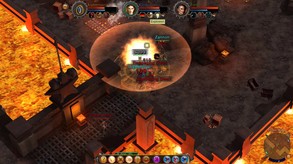
Ember is a homage to classic role-playing games (RPG) that features a deep branching story, endless exploration across dynamic and living environments, a robust skill system, and an intricate crafting system.
Modeled estimate, not a reported figure. How we estimate →
About
Genres
Stats
All-time low is the lowest price we've recorded for this game since we started tracking it.
Languages: English**languages with full audio support
Engagement
Hours played at review time, across 40 reviews with recorded playtime.
Reviews
Themes across 40 recent reviews and how positive each mention is. A keyword signal, not full sentiment analysis.
positive critical· bar length = how often the theme comes up
Reviews
The game is okay. It has decent gameplay, a story that is easy to follow, although I did miss some quest markers in my map overview at times, and not a huge world. Didn't like the click to walk mechanism, but that is a personal preference. However the lack of a skill bar was really an issue for me, you just have 3 action buttons where only items can be assigned to. Now there already isn't a skill tree, so any skills you have are gear dependent and can later be added to gear with runes. But to use them you have to click the skill buttons, located at your character portraits at the top center of the screen. Given the "click to walk" mechanism, and having to click on tiny buttons on the top of my screen to use a skill, I've found myself disengaging and walking away mid fight a lot of the times I was using some of the skills. This got me killed in more than a few fights... Overall still a decent game and had fun it it so far, but would've liked to atleast be able to assign skills to the 3 available quick slots.
Ember is an isometric action role-playing game developed by N-Fusion Interactive and published by 505 Games, conceived as a tribute to the classic CRPG era that defined the late 1990s and early 2000s. From its opening moments, it is clear that the game draws inspiration from genre staples such as Baldur’s Gate and Ultima VII, embracing a top-down perspective, real-time combat with tactical pause, expansive quest design, and an emphasis on player-driven exploration. Rather than chasing modern cinematic spectacle, Ember focuses on delivering a traditional fantasy adventure rooted in worldbuilding, character progression, and handcrafted environments. The story places players in the role of a resurrected Lightbringer, awakened in the fractured world of Domus. Long ago, celestial artifacts known as Embers infused the land with life and magic, but their power is waning. As civilization teeters on collapse and shadowy forces rise, the Lightbringer must navigate political conflicts, ancient ruins, and supernatural threats to preserve what remains of the world’s fading light. The narrative leans heavily into classic fantasy tropes—lost knowledge, moral ambiguity, rival factions, and looming darkness—but it maintains a consistent tone that supports its sprawling quest structure. While the story rarely subverts expectations, it sustains engagement through sheer scope and the density of tasks and characters populating the world. Exploration is one of Ember’s strongest pillars. The world is segmented into large, interconnected areas ranging from dense forests and deserts to underground dungeons and fortified settlements. Environmental detail contributes to immersion, with weather effects and day-night cycles adding subtle dynamism. The game encourages players to wander off the main path, complete side quests, and uncover hidden objectives scattered throughout its many regions. With dozens of quests available and a campaign that can stretch beyond thirty hours, Ember provides a substantial amount of content for players willing to engage thoroughly with its world. Combat unfolds in real time but can be paused at any moment to issue commands, allowing players to balance reflexive action with deliberate strategy. This hybrid system makes encounters flexible; easier fights can be handled fluidly, while more challenging battles benefit from careful planning. Character progression revolves around skills tied to weapon types, magic schools, and equipment choices. Rather than locking players into rigid classes, Ember offers a degree of build experimentation, enabling varied approaches such as melee-focused warriors, spellcasting specialists, or hybrid combatants. However, some players may find that gear quality significantly influences combat effectiveness, occasionally overshadowing long-term skill investment. Crafting plays a surprisingly central role in progression. Players can gather ingredients and materials from the environment to cook food, forge equipment, and create enchanted items. Crafting is not merely supplemental—it can meaningfully impact survivability and combat efficiency. Discovering new recipes expands customization possibilities and adds an additional layer of engagement beyond quest completion. For players who enjoy resource management and incremental improvement, this system provides satisfying depth. Despite its strengths, Ember’s design occasionally reveals its indie origins. Dialogue and character interactions sometimes lack the nuance or emotional complexity found in more modern narrative RPGs. NPCs can feel static outside of quest-related interactions, limiting the sense of a fully reactive world. Combat, while functional, may feel repetitive over extended play sessions, and the tactical pause, though helpful, can disrupt pacing during prolonged encounters. Additionally, interface elements and inventory management systems, while serviceable, lack the refinement seen in larger-budget productions. Visually, Ember embraces a hand-painted aesthetic with richly textured environments and atmospheric lighting. The art direction complements its fantasy tone, creating landscapes that feel cohesive and inviting. While not cutting-edge in graphical fidelity, the world design reflects careful craftsmanship. The musical score and ambient sound design further reinforce the medieval-fantasy atmosphere, supporting exploration and combat without dominating the experience. Ultimately, Ember stands as a heartfelt homage to classic isometric RPGs. It does not attempt to revolutionize the genre, but rather to recapture its essence: expansive quests, open exploration, character customization, and a layered fantasy setting. Its depth in crafting and skill systems offers meaningful engagement, while its narrative and worldbuilding provide a steady foundation for adventure. Though it carries rough edges and occasionally dated design choices, Ember succeeds in delivering a substantial and nostalgic role-playing experience. For players who appreciate traditional CRPG structures and are willing to embrace a slightly old-school sensibility, it offers a rich and rewarding journey through a fading world illuminated by fragile embers of hope. Rating: 7/10
YEAHHHHHHHHHHHHH! I finally finished it!!! I was looking for an RPG that doesn't have 3 million walls of texts and each skill requires an essay of 30+ pages to read... And then you have fifteen hundred other skills all over the place... That makes me only understand one and there are so many stats... That you start to wonder how you will ever make it through life again...? Well in this game...! There are simple rules. Simple tactics. There are ONLY 3 equippable skills and 2 passive skills. The game teaches you the Basics, drops you off and then you go explore and do what needs to be done. I liked almost everything. The opening CG, the ending CG, the quests, the decisions, the skills, the... You get it. All was fun!!! I did however think my character was a bit too dumb lol. I mean... They told him stuff and he forgot it immediately. I have to forgive him I suppose... He is a corpse n all. The companions... Well, those surely blindly followed me everywhere and agreed on everything I did lol. Granted I am a nice companion, but... They were okay with me murdering a guy in the middle of the night because he was a baddie and wouldn't give me the ITEM I needed?! Eh well. I found it hilarious. Oh yeah! The Books! I liked the stories in them. Some I couldn't find a continuation to and then realized... Maybe I shouldn't... *-* Ah yeah and running everywhere... 's okay up until the end of the game, especially when you have everything you wanted... You wish you could ride the horse... I don't know if you could... I couldn't find the stables anymore and the polar bears tried to kill me, instead of letting me ride them. D: Last thing... You gotta be really close to an item to actually have it pop up as interactable. Our MC doesn't have really good Depth Perception. Either way, this was worth it. I may not have been overly attached to anything or emotional about it... Up until the end. Good stuff. YEAH!!!
Сюжет проходится примерно за 9 часов. Может меньше. Еще пару часов на доп задания. Если они будут у вас работать. Русификатор может их заруинить, как это было у меня. В остальном - эта игра для паладинов от паладинов про паладинов. Наслаждайтесь ролью героя и спасителя мира, тут есть всё что для этого нужно. И враги, и магия света, и столица Светоград и выбор между добрыми и плохими поступками. Всё на месте. За свои деньги игра отрабатывает целиком.
Well, I'd give it a neutral review. It's quite okay, simple and easy, just what I searched for. Story is okay (didn't listen to it), mechanics and gameplay is also quite okay (although one could have left out crafting). For 10€ I guess it's fine, maybe grab it in a sale.
6/10. It's good! Definitely above average. The plot starts off basic, you begin as a newly resurrected Lightbringer that gets charged with saving the world. The lore behind the world is quite extensive and in-depth. There's a lot of optional books to read and it's clear there was a lot of thought put into the lorecrafting and world building. UI is a little bit amateurish. Could have picked a different default font other than Arial...it feels very mobile gamey. The music is very good. Some of it feels nostalgic -- reminds me of WoW night elf areas. Voice acting is hit or miss. Not all lines are voiced. Combat can be a bit boring at times but it's serviceable. There are no spells that you actually learn -- it's all connected to whatever gear you're wearing at the time. There are some side quests, but nothing that actually explores side characters or your companions. It's a very plot-focused game with a couple twists but no real character development. It's an entertaining game though.
Игра разочаровала. Боёвка, квесты, диалоги и прокачка скучные. Крафт неплох, но рецепты дорогие. Проблемы: [olist] [*]Управление: неудобное, для планшетов, без вариативности. [*]Ролевая система: как в Diablo I, навыки привязаны к одежде. [*]Репутация: нет значимых бонусов. [*]Квесты: однообразные, вариативности почти нет. [*]Сражения: хаотичные, лечение почти бесполезно. [*]Крафт: без журнала рецептов, методом проб и ошибок. [*]Сложность: лёгкая в начале, затем скачки. [*]Графика: бедная, без настроек. [*]Сюжет: терпимый, но без предысторий и реакций соратников. [/olist] Итог: Ember подходит для тех, кто любит красивые скриншоты, но не для настоящих RPG. Музыка хороша, остальное — разочарование.
I got this game several years ago but never got to play it until now. It clearly shows it's age. The beginning was pretty rough, moving around the map with point and click felt really clunky and in chokepoints it was sometimes hard to navigate if one of your partymembers blocked the others. Overall it was hard getting used to especially since holding the mouse down lets you move the camera. In that regard, fighting felt really clunky aswell as you only have limited options at your disposal while your party fights enemies on their own. You can pause the game at any point to individually move your partymembers out of harms way. You have 3 active skills at your disposal that are tied to the Weapon and Armor you use. Skills cost mana, but since they have no cooldown, you are encouranged to pause the game mid fight over and over in order to activate skills on all 3 characters. This makes fighting optimally more tactical but not exciting at all. But if you pull through and endure the beginning, you'll rapidly notice that underneath all these rough systems, there's a lot of love poured into the game despite the clearly showing lack of budget. The Story is rather generic (hero's quest) but they added lots of side dialogue and lore-books if you want to know more about the world. The pacing is really good between advancing main story and doing side quests on the way. The Areas look nice and the map artwork is beautiful. Along the way you'll find lots of food, herbs and ore to mine that are used for crafting. They put a lot of work into the different types: cooking, woodworking, tailoring, alchemy and blacksmithing. You can buy recipies from vendors or obtain them by looting chests. While there's really a LOT of different ingredients, the crafting menu was terribly inconvenient. So much that besides some basic cooking i didnt further bother diving into it and used the items i found along the way or bought from vendors. Really missed potential Inventory management is clean with each item using up one space in your 99 slot bag. Later in the game you'll find additional 16 slot bags for more inventory space but unfortunately item stacks dont merge (so if you put 1 iron ore in one of you small bags to make room in the big bag, mining another iron ore will still use up space in the big bag as you have 2 stacks of 1 ore each until you manually drag it). Each item you find has a description that tells you exactly what it is used for so you can easily distinguish items used in crafting from items beeing solely useful to make gold selling to vendors. Character progression is basic. You have 3 types: Melee in Heavy Armor using Strenght as main Attribute, Ranged in leather armor using Dexterity and Magic in light Armor using Intelligence. The 4th Attribute is Vitality for more Health. As mentioned before, skills are tied to the Weapon/Armor you use so you can test around which ones fit your playstyle most The game itself runs very well and i havent encountered a single bug in the game, so kudos to the programming team. Steam achievements are easily obtainable in one playthrough with one exception: After visiting the giants cliffs for the first time and beeing sent back to the city of light, save the game before accepting the quest, do the quest in one way until you receive the achievement, then reload the game and do it the other way for the second achievement (there are steamguides explaining this). There are 2 different endings to the story, you can either replay the final bossfight reloading the game, or watch the alternative ending sequence on youtube. [h3] Conclusion: [/h3] Despite it's sometimes very rough edges, i enjoyed my playthrough in Ember. It's clear the developers put a lot of love in their game with much attention to detail. If you can look past the flaws i mentioned above, you'll have yourself a fine little 20h adventure.
像个半成品,剧情也比较老套。玩是能玩。 我只花了12块,就给个好评吧。
Siendo un habitual consumidor de rol, la verdad es que este juego me ha dejado bastante indiferente. Tiene unos gráficos vistosos y coloridos y buena ambientación, pero todo en él es tremendamente genérico. Continuamente te enfrentas a los mismos enemigos, obteniendo siempre las mismas 5 o 6 armas y 3 o 4 armaduras. El sistema de combate es poco ágil e intuitivo, así como las habilidades especiales, que te hacen seleccionar la habilidad y arrastrar sobre quién vas a usarla. De no ser por la pausa, sería inmanejable, pero al mismo tiempo, dicha pausa resta dinamismo al juego. Si a esto le añadimos que no está localizado al español, me dio mucha pereza dedicarle tantas horas para seguir avanzando Creo que perdieron una buena oportunidad para destacar, pero se quedó en un JDR del montón
Related
Related
Trends
Concurrent players on Steam, sampled daily since tracking started.
Momentum
Pace estimated from the game's recent review growth (our daily snapshots) at its own sales-per-review ratio — a momentum signal, not booked sales.
Audience
Estimated from the language of this game's reviews — a proxy for where players are, not official Steam demographics.
Related
| No Plan B | $274.7K | 806 | 87% | $10.49 |
| Robber Knight | $274.6K | 302 | 65% | $39.99 |
| Blockscape | $274.6K | 725 | 43% | $9.99 |
| Love n Life: Happy Student | $274.5K | 769 | 83% | $9.99 |
| Making History: The Second World War | $274.5K | 289 | 78% | $29.99 |
| GARAGE: Bad Trip | $274.4K | 815 | 67% | $14.99 |
Related
| Divine Divinity | $632.6K | 4K | 88% | $5.99 |
| Pillars of Eternity | $20.2M | 26K | 88% | $29.99 |
| Planescape: Torment: Enhanced Edition | $2.6M | 5.5K | 95% | $19.99 |
| Alaloth: Champions of The Four Kingdoms | $1.4M | 1.6K | 72% | $34.99 |
| Dungeon Siege | $781.2K | 4.2K | 82% | $6.99 |
| Dungeon Siege II | $532.3K | 2.9K | 77% | $6.99 |