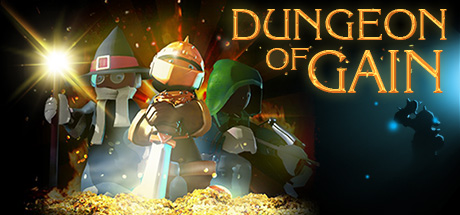
Dungeon of Gain, developed by the Defroids team and published by Volens Nolens Games, is an indie roguelike dungeon crawler that attempts to channel the spirit of classic top-down RPG adventures through procedurally generated levels, randomized loot, and permadeath-driven progression. On paper, it carries all the familiar ingredients of the genre: a lone adventurer descending into dangerous underground corridors, battling monsters, collecting treasure, and hoping to survive long enough to grow stronger. The premise evokes nostalgia for early dungeon crawlers where risk and reward defined every step forward. However, while the concept aligns with genre traditions, the execution has proven divisive among players.
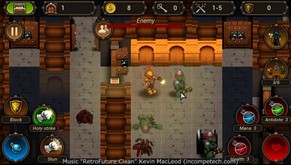
At its core, Dungeon of Gain revolves around repeated dungeon runs. Each playthrough generates new layouts filled with enemies, traps, and loot, aiming to provide unpredictability and replay value. The structure encourages players to push deeper into the dungeon with each attempt, gathering equipment and experience along the way. Combat is straightforward, focusing on simple attacks and encounters that unfold in tight, often claustrophobic environments. Success depends on managing limited resources, navigating enemy placements carefully, and surviving long enough to acquire meaningful upgrades.
The idea of procedural generation suggests variety and emergent gameplay, yet in practice, the randomness often feels more superficial than transformative. While layouts shift between runs, the fundamental mechanics and encounter types remain largely consistent. Enemy behaviors and combat interactions are relatively basic, which can make extended sessions feel repetitive rather than dynamically evolving. Without complex skill trees or layered systems to deepen decision-making, the game leans heavily on its randomization to sustain interest. For some players, this simplicity can feel accessible; for others, it may come across as underdeveloped.
Progression systems in Dungeon of Gain are modest. Loot collection serves as the primary motivator for advancement, with weapons and equipment offering incremental improvements. However, the impact of upgrades sometimes feels limited, and character growth lacks the sense of transformative power that many modern roguelikes provide. The risk-versus-reward structure is present, but the feedback loop between effort and progression does not always deliver satisfying payoff. Because runs can end abruptly and without significant carryover benefits, players may feel that repetition outweighs tangible advancement.
Visually, the game adopts a minimalist style that reflects its indie origins. Environments are functional rather than detailed, with dungeon corridors and rooms designed primarily for gameplay clarity. Character models and enemy designs are serviceable but lack distinctive personality. The presentation does not distract from the experience, yet it also does little to elevate it. Sound design and music remain understated, offering basic atmospheric accompaniment without becoming a defining feature of the game’s identity.
One of the more controversial aspects of Dungeon of Gain lies in its development trajectory. Early Access origins and a prolonged period without substantial evolution have left some players questioning the depth and completeness of the final product. Expectations for roguelike games have risen significantly over the years, with players now anticipating intricate systems, varied builds, and refined balancing. Against this backdrop, Dungeon of Gain can feel comparatively sparse. While it captures the foundational idea of descending into procedurally generated dungeons, it does not expand significantly beyond that baseline.
That said, there is a certain appeal in its stripped-down approach. For players who appreciate barebones dungeon crawlers or enjoy experimenting with smaller indie projects, the game offers a straightforward experience without overwhelming complexity. Its modest system requirements and simple mechanics make it accessible on older hardware and approachable for those new to roguelikes. When viewed as a lightweight experiment rather than a fully fleshed-out genre competitor, it can function as a short diversion.
Ultimately, Dungeon of Gain represents an attempt to recreate classic dungeon-crawling tension within a modern indie framework. Its procedural structure, loot-driven progression, and permadeath mechanics align with established roguelike conventions. However, the limited depth of its systems and the repetitive nature of its encounters prevent it from fully realizing its potential. For players seeking a highly polished or mechanically rich roguelike experience, it may fall short. For those willing to engage with a more minimalistic and experimental project, it offers a glimpse into a foundational dungeon-crawling concept executed with modest ambition.
Rating: 5/10