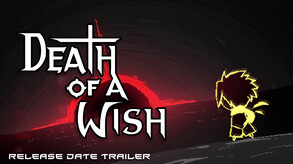
THE NEO-SANCTUM SHALL FALL. Claim retribution against the theocratic Faiths as you master vicious hack-and-slash combat in this action-RPG where style is salvation.
Modeled estimate, not a reported figure. How we estimate →
Media

About
Death of a Wish is a vicious action-RPG where style is salvation.
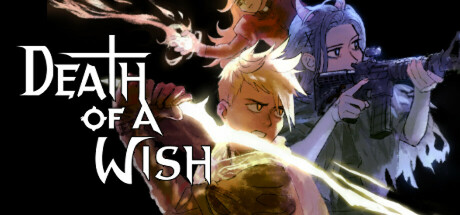
Play as Christian as he unites with new comrades to challenge the order that raised him. By taking down the four Sanctum Faiths: Father, Sister, Cardinal, and Priest, they will upend the order of the world.
Fight your way through a nightmare filled with horrifying monsters and terrifying people. Master brutal attacks and flashy combos as you struggle against the Corruption consuming you with style and grace. Shine your light in this surreal sea of darkness.

Unleash Christian’s cursed powers in a demanding and rewarding combat system. Be careful not to succumb to the ever-encroaching Corruption; achieve high ranks in combat and perform graceful combos to hold the Corruption at bay.
Rend your foes asunder with magical combos called Arias. Enhance your abilities with powerful Virtues that alter your approach to battle and the rhythm of combat. With a limitless array of ways to fight stylishly, build your character with passion to destroy your foes.
In the dreamworld of Paradiso, repressed memories and unspeakable feelings come to life as the nightmarish city of Neo-Sanctum. Delve into the secret underworld of the esoteric and abandoned to meet new comrades who will aid you on your journey.
Christian’s world is rendered with a surreal aesthetic like no other. Harsh, pulsating scratches upon a sea of darkness render a thick atmosphere brooding with emotion. Battles come to life in an animated spectacle of light and motion that remains easy to parse in play.
For audio, Nicolo Telesca’s chilling score mixes electronic sounds with live instrumentation and complements the visuals by eliciting feelings of tense anxiety and electrifying catharsis.
Game contains imagery that may be harmful to players with photosensitive epilepsy or similar conditions. See content warnings below.
Stats
All-time low is the lowest price we've recorded for this game since we started tracking it.
Languages: English, Japanese, Simplified Chinese, Spanish - Latin America
Engagement
Hours played at review time, across 40 reviews with recorded playtime.
Reviews
Themes across 40 recent reviews and how positive each mention is. A keyword signal, not full sentiment analysis.
positive critical· bar length = how often the theme comes up
Reviews
One of the best action games ever made. Utterly unmatched sense of style paired with some of the smartest combat design around and a deeply resonant and heartfelt story on top of it all (and very queer too, which is [i]always[/i] a plus). Absolutely phenomenal. Play this game
While it pains to me to say so, my experience w/ Death of a Wish so far has been incredibly luke-warm, and given the precedent it sets starting off, I don't imagine things will get better enough to change how the experience feels. Flatly put, Death of a Wish feels like a Lucah expansion, or maybe a Lucah 1.5 if that's more generous. While all of the concepts and systems in Borne of a Dream are included and expanded on here, the overall navigation and world-design has actually been dumbed down, reducing any act of 'exploration' to essentially guessing between left and right and praying you picked the 'wrong' one, then ambling through a series of identical linear rooms and side corridors until you either get to the exit or get to the item you didn't know you needed to get to the exit. There's no indicator which path is best to go first, so all a bad guess gets you is back tracking. Theoretically stripping the navigation down to a series of successive corridors or challenge rooms could be fun--the first game certainly tried near the end, though one of the reasons it failed at doing so, in my opinion, is because of how samey the rooms and enemies felt. In a game like Devil May Cry, even if you're just changing window dressing, the area to area encounters often look and feel quite different. The enemies all have distinct visual designs and functions that dictate how they're meant to be combatted, whereas in Death of a Wish, even though enemies have distinct behaviours and attacks, the visual design is so messy that telling them apart is borderline impossible. Multiple regressive system-level changes have been implemented in this sequel that I fully do not understand: making healing not only limited, but a resource you have to farm, makes no sense to me. Having a stat go up on death that requires you to repeatedly grind previous encounters to drag it back down makes no sense to me. Losing currency/experience on death makes no sense to me. The obtuseness of having to memorize where every individual vendor is, unaided by the map, which, while charming in its childish depictions, is utterly useless when it comes to actually helping with navigation. Attacks from enemies possess both audio and visual cues, but they're indistinct, and inconsistent, to the extent that attempting to parry an attack the same way every time will frequently result in different outcomes, including getting the parry, dodging instead, or missing it completely and taking damage, usually chained into more damage because you have no idea what's going on, whether you dodged or hit the parry or what, until you look at your health, because using the visual or audio elements outside of the UI to tell what is going on is painful at best. Lastly, and again, it saddens me to say this, the themes that Death of a Wish so flagrantly warns you about in its description are more baked in themes than they are literal depictions, at least for the first part of the game. This is a narrative misstep, in my opinion, because the best thing the previous game did (again in my opinion) was its literal depictions of trauma and abuse available largely in the tone poems in the new game plus mode. Even getting to these bits of art was a chore, but it was worth it becuase instead of the vague allusions carrying the first playthrough of the game, now the player gets a chance to see the actual events making up the psychedelic world we're traversing. The reason this is a misstep for me is because this game again returns to vague allusions, or at least refuses to put anything in words so concrete you can 100% be sure what's going on. The main character, Christian, for example, is alluded fairly early on to have had *something* bad happen to him with a priest, and there's even a mention of 'behind', I think... but why not be more direct? Why not just say what is actually happening here, instead of being cagey about it and making the player guess, because the topic is never discussed directly by the characters or even approached outside of the textual allusions? If it happens later that's all well and good, but part of the reason I'm bouncing so hard off this game is that I already played through all of Lucah treating it mostly as a chore on behalf of the game's novelty and themes, and I don't feel like doing the exact same thing again just to carve out tiny pieces of poetry that are still somehow worthwhile. It feels bad to give this game a negative review. I held off buying it forever because I love this studio, I love what their previous game was attempting to do, and I want their projects and endeavours to succeed wholeheartedly. But as someone who wants all of those things, I am just not enjoying the experience of playing this game. It's a nonstop series of mostly empty rooms and nearby guiderails, with rote repeated encounters and vague dialogue and themes. This makes me sad because the first game showed so much potential, but this game seems like a step backwards. Playing this game is frustrating and lonely, and not in a way I feel is worthwhile or intended. I'm really sorry.
Less than 100 reviews on here for a game of this quality? There is no justice
[h1]看似潦草,实则精致[/h1] 第一眼看见这游戏的宣传图,还以为是个给小孩玩的涂鸦作画游戏,结果介绍居然——ARPG?!一个游戏如果有一点做的潦草那是他赶工没做好,但是能全篇做的这么潦草还保持一致那他就是艺术!而且还在这种风格下游戏的动作效果做的意外的还不错这么独特的游戏我这ARPG牢玩家可得细细品一下。 [h1]画面[/h1] 这游戏的画面有够颠,全程保持了这种潦草中又带着条理的感觉,你说他乱吧,他又能把地图和每个角色、敌人都清晰的表达出来,每个元素线条杂乱但是又都有自己的颜色并且在固定范围之内,易于分辨也不会对其他元素产生干扰。可你要想仔细看,那就会发现这画的是什么玩意,角色的手脚都不知道在哪儿,人物面部也简单至极只有几个点。但作者就是用这种风格做出来了整个游戏,在最开始的震撼后竟然越看越顺眼了。 [h1]2d版合金装备崛起?[/h1] 既然他敢标为ARPG,那么动作系统肯定是重点,在我一番体验下来这动作系统的可玩性确实出奇的好。 游戏的核心机制在于格挡,敌人不管BOSS还是小怪都有着一段格挡槽,在没有消耗完的情况下攻击是无法对敌人造成伤害与硬直的,虽然每次普攻可以削减一小段,但是普攻过程中很容易被敌人攻击,格挡成功后就可以削减一大段格挡槽,这明显是官方强推格挡。 格挡的具体机制合金装备崛起玩家就熟悉的不能再熟悉了,对着敌人攻击的方向推摇杆+闪避键,别的游戏过来可能不适应,但是我玩过崛起在玩这个感觉就太爽了,和BOSS拼刀后BOSS格挡槽全空趁势痛打落水狗,和崛起的斩有异曲同工的快感。 [h1]画面潦草,系统精致[/h1] 游戏的画面虽然不拘小节,但系统却十分完善,动作系统的格挡、普攻、技能的分工明确,没有一个是没用的,地图设计也有点魂系楼暗花明又一村的感觉,走了半天也能回到原点(但是这个画风实在分辨不清地图,比仁王还离谱)。 [h1]总结[/h1] 独特的游戏,很难见到如此潦草但又成熟的游戏,其他潦草的可能是作者实力有限做不出来了,但是这款游戏明显是作者完全有实力做好,但就是玩,选择了这个潦草涂鸦的风格反而在一众游戏中显得十分突出,玩多了画面精致的游戏玩本作也是一种奇特的体验。 [quote]关注鉴赏组:[url=https://store.steampowered.com/curator/45134494]浮生评测[/url] ←"浮生若梦,一鉴倾心,邀您共赏人间烟火" 加入Steam组:[url=https://steamcommunity.com/groups/LLFLLFF]浮生评测[/url]←“一起追寻'浮生若梦'般的游戏体验” 开始“浮生若梦”鉴赏组的奇幻之旅![/quote][/h1][/h1]
Just finished the game, and while I loved my time with it, I have a couple critiques that I think held it back from being perfect. Firstly, the combo system is unclear. There's no way as far as I can tell to view what your actual movesets are. They work sort of like a hack-and-slash game, where you can string combos together and create new attacks, though attacks are mostly the same throughout and you can usually get away with button mashing or pressing randomly, so it's not as much of an issue. That being said, however, there are some specific scenarios where a moveset includes an attack that hits all around you, or where pressing Y -> X -> X -> X creates a chain of super long-range attacks. As a result, combat didn't always feel entirely in my control. Secondly, going for 100% seems like a bit of a nightmare (ha). As the story progresses, merchants move around, and their wares change as they do. You can be locked out of some achievements if you don't get all of their items before progressing the story too much, but some of the things they trade for are locked behind story progression. This is something that's usually taken care of with a simple steam guide, but with this game being a fairly niche title it doesn't seem to have any that help with this. I don't entirely know how to tackle this issue, maybe a way to reveal items in NG+. With critiques done, there's honestly nothing even remotely negative I have left to say. It was a ton of fun when it flowed, and provided a very nice challenge. Great artstyle, great music, great characters, great story. Easy recommend.
They removed the stamina bar from the first game. It's all I needed.
[i]Lucah: Born of a Dream[/i] was the first character action game I got really obsessed with. I got the true end twice, and I played all the post-release material (including the murderous gauntlet mode update). Apparently the secret to getting me into beat-em-ups was to occasionally cut the action with some really good queer text games. I was extra-jazzed for this sequel because it stars Christian, a character from the first game I wanted to spend more time with. [i]Death of a Wish[/i] is a strong follow-up that preserves much of what was special about the first game, but in a slightly tighter and more coherent package. I came away from it very pleased and satisfied. I'm focusing here on ways I think [i]Death of a Wish[/i] improves the first game's language, but I still love [i]Lucah[/i], and I definitely recommend playing both to get the full effect of the story. [b](Warning for some light structural spoilers to both games below.)[/b] --- First off: the presentation of the all-important corruption meter is cleaner here. The first game paused the meter for an important climactic boss and gave you extra room to breath for unclear reasons when you first hit 100%, little choices that served to muddle the [i]Dragon Quarter[/i] dread of the Big Scary Number On-Screen At All Times. [i]Lucah[/i] also splits the story across two playthroughs, with the full scope of how the corruption mechanic works not being introduced until the second loop. In [i]Death of a Wish[/i], the meter starts shortly after you boot up the game, and then never stops. The story is contained to one loop this time, and it generally introduces important mechanics much earlier than [i]Lucah[/i] did. The communication across the board is tighter, more up-front. If there's a new wrinkle here, it's that it technically allows for grinding down your corruption meter on easy encounters — I recommend Not doing this. I believe it's actually slower in the long run. Just trust the game and play as well as you can. Additional elegances: the one big interlude section is largely presented from Chris's perspective. The first game had more interludes with a much wider spread of POVs. [i]Lucah[/i] was a huge ambitious debut commercial game that sometimes struggled with how many ideas and stories it wanted to squeeze into its run-time. [i]Death of a Wish[/i] focuses more squarely on Chris's journey, letting the rest of the casts' stories play out around his instead of having them take center-stage. As a result, it felt more propulsive and dramatic to me to play. I'm still not a "character action" guy, so I don't have nuanced thoughts about all the different possible builds, how the action is balanced. But I really like the decision to make parries deal "guard damage" instead of instantly breaking enemies. I played [i]Lucah[/i] in a slow and reactive way — I'd park right next to the enemies, wait for their big attacks, then nail the parry and cream them with Thanatos. But parries aren't an insta-break in [i]Death of a Wish[/i], so Christian has to play more aggressively to wear them down and nail the breaks. No stamina meter this time also encourages aggressive play. Chris feels scrappier than Lucah, not in a way that makes him feel weak or unpleasant to play, but in a way that suits his character and encourages more proactive strategies. The game hit a perfect formal climax for me after six or seven hours of play. If it had ended there, I would've been happy with [i]Death of a Wish[/i] as the "super-tight concise action game follow-up to Lucah." But I'm glad it kept going for a few more hours after that. The twists, turns, and rule changes in the real climax perfectly suited the story they were going for, and they're what make [i]Death of a Wish[/i] a complete follow-up to [i]Lucah[/i]. As a story it's "tidier" than [i]Lucah[/i], which I could see putting off some of my artier games friends. But the tidiness felt earned and un-saccharine to me. I enjoyed the dark catharsis of queer solidarity in the face of unrelenting institutional evil, and finished it feeling warmly satisfied. Telling a substantive, affecting story in the context of long, mechanically robust action games is one of the hardest things in the world. And they really are robust: you could play [i]Lucah[/i] and [i]Death of a Wish[/i] for 50+ hours apiece and still pick up on new nuances. I know because I've seen friends go on that journey, and they had a great time. Having played them mostly casually, I still had a blast. I'm very excited for whatever this crew puts out next.
Its good. More of lucah.
Death of a Wish, developed by melessthanthree and published by Syndicate Atomic LLC, is a bold and emotionally charged action role-playing game that weaves together fast-paced combat and a narrative steeped in themes of trauma, vengeance, and self-discovery. As a follow-up to melessthanthree’s earlier title, Lucah: Born of a Dream, this game continues to build on a distinctive artistic vision and storytelling approach, placing players into the shoes of Christian, a character haunted by a dark past and driven by the desire to confront the corrupt cult responsible for his upbringing. The gameplay centers around a fluid and dynamic combat system that encourages both aggression and precision. Players can chain light and heavy attacks to break through enemy defenses, with additional mechanics like dodge rolls, parrying, sprinting, and teleportation adding layers of depth and strategy. This flexibility allows players to tailor their combat style according to personal preference, supported by an array of powerful perks that influence how battles unfold. The combat feels visceral and responsive, rewarding timing and careful positioning, which helps maintain tension and engagement throughout the game. Visually, Death of a Wish distinguishes itself with a unique hand-drawn, scribble-art aesthetic that sets a tone of unsettling surrealism. While initially challenging to interpret, the art style quickly becomes familiar and effectively conveys the game’s oppressive atmosphere. The environments and characters are rendered in a sketch-like fashion with harsh, pulsating strokes over dark backdrops, evoking a feeling of chaos and inner turmoil that mirrors the protagonist’s psychological state. This artistic direction complements the narrative’s themes, creating an immersive experience that blends visual storytelling with emotional impact. The story itself explores complex and mature themes rarely tackled so directly in the action RPG genre. Christian’s journey is not only a physical fight against external foes but also a personal confrontation with trauma and the search for identity beyond the control of the cult that shaped him. Along the way, players meet a cast of characters who form an unconventional found family, each with their own struggles and motivations, adding layers of emotional depth and character development. The narrative approach balances moments of quiet introspection with intense confrontations, making the story feel both intimate and epic in scope. Despite its many strengths, Death of a Wish does face some challenges. The level design, characterized by maze-like layouts and minimalistic mapping, can sometimes lead to confusion and frustration, detracting from the fluidity of exploration. Navigation issues may interrupt pacing, particularly for players less patient with trial-and-error progression. Additionally, the writing, while ambitious in its emotional scope, occasionally dips into melodrama, which might not resonate with everyone. These elements create moments where the player’s connection to the story wavers, though they do not overshadow the overall narrative ambition. Technically, the game runs smoothly, with intuitive controls and solid performance across supported systems. The sound design is minimal yet effective, using ambient noises and occasional music cues to enhance mood without overwhelming the player. The combination of audio and visual elements crafts an immersive world that feels both haunting and alive, reinforcing the game’s atmosphere and emotional weight. In conclusion, Death of a Wish is a striking indie action RPG that offers a rare blend of engaging combat mechanics, a haunting art style, and a deeply personal narrative. It challenges players not only to master its fight system but also to engage with a story about trauma, resilience, and the power of found family. While its navigation quirks and occasional tonal inconsistencies may frustrate some, these are outweighed by the game’s bold artistic choices and emotional storytelling. For those seeking an action game that delves beneath surface thrills to explore profound themes, Death of a Wish stands out as a memorable and worthwhile experience. Rating: 9/10
I was originally bought by the very interesting and rough artstyle, and I have not been disappointed what so ever. While admittedly the game is a bit hard to comprehend because of its very "sketchy" nature and the combat does become a bit button-mashy for my taste, what it has to offer is still a very good experience that has a small dose of resource management, snappy reactive-based combat and an audio design that really helps to guide your movements when you are too overwhelmed visually. My only problem with this game is that the story can be a bit confusing, specially during the first half of the game, but overall I understood the main theme and plot points of it, and I came out pretty satisfied with what I was given.
Related
Related
Trends
Modeled estimate over time, reconstructed from Steam's monthly review histogram.
Audience
Estimated from the language of this game's reviews — a proxy for where players are, not official Steam demographics.
Related
| Chroma Zero | $56.6K | 351 | 96% | $9.99 |
| Wenjia | $56.6K | 374 | 79% | $8.99 |
| Thirty Years' War | $56.6K | 53 | 66% | $29.99 |
| Forsaker:DingDing&Blade | $56.6K | 249 | 80% | $7.69 |
| Superbugs: Awaken | $56.7K | 139 | 93% | $14.99 |
| Sword and Fairy 4 | $56.7K | 248 | 77% | $12.99 |