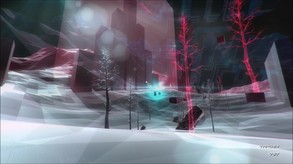
„First person platforming gameplay at its very best!“ Construct: Escape the System is a sci-fi themed first person platformer that sees you trapped in a computer system, trying to escape. Explore the system and discover the 8 empowering 'ability orbs'.
Modeled estimate, not a reported figure. How we estimate →
Discounts
Every price cut of more than 20% we have observed, in each market that quoted one, with this game's chart position on either side of it. These are episodes, not a model: a sale is one event, and one event cannot tell you what the next one will do.
Reviews, worldwide (the counter carries no country): 0/day in the week to Aug 4 → 0/day in the week after.
For scale, across Steam · Top Sellers · Brazil over the last 30 days: the 25 chart moves that followed a price cut of more than 20% went a median of 10 places towards #1, and the 2,413 moves with no price cut behind them went 2 away. One store, one chart, one country — it is the only place we have enough observations to say even that.
Prices outside the United States have been collected since 6 August 2026 and chart positions since 19 July 2026, so a cut older than that has no market to compare and a market that joined later has no history yet. Nothing here is converted between currencies.
About
Genres
Engagement
Reviews
Construct: Escape the System, developed by Oliver Boyce and published by Immanitas Entertainment, is a compact first-person sci-fi platformer built around exploration, movement, and the gradual unlocking of abilities within a mysterious digital world. The premise is minimal but effective: you awaken inside a sprawling computer system and must escape by navigating its layered structures, collecting system cores, and unlocking powers that allow deeper traversal. Rather than relying on traditional combat or narrative exposition, the game focuses on atmosphere and mechanical progression, inviting players to piece together its structure through experimentation and spatial awareness. The world itself feels abstract and intentionally artificial. Clean geometric architecture, floating platforms, luminous pathways, and surreal landscapes give the impression of wandering through the inner workings of a vast machine. The aesthetic leans toward minimalist sci-fi, with bold color contrasts and sharp lighting defining each zone. While environments can initially appear simple, their scale and verticality create a sense of openness that rewards curiosity. Ambient electronic music underscores the digital setting, adding a meditative tone that complements the game’s exploratory pacing. There is little overt storytelling, but the visual design subtly conveys the feeling of being inside a constructed, unstable system that is both beautiful and indifferent to your presence. Gameplay revolves around platforming and progression through ability acquisition. Early movement feels grounded and somewhat limited, but as players discover ability orbs scattered throughout the system, traversal evolves significantly. Powers such as gravity manipulation, teleportation, and enhanced mobility open up new paths and reinterpret previously inaccessible areas. This gradual expansion of movement options is central to the experience, transforming the world from a maze of unreachable platforms into a playground of experimentation. Returning to earlier zones with newfound abilities often reveals hidden shortcuts and alternate routes, reinforcing the interconnected design. The structure of the game encourages exploration rather than linear progression. System core power orbs are distributed across multiple zones, and players can approach objectives in a semi-open order depending on which abilities they prioritize. This design fosters a sense of autonomy but can also introduce moments of disorientation. Without heavy guidance or explicit markers, navigation depends on spatial memory and environmental recognition. For some, this freedom enhances immersion and discovery; for others, it can lead to confusion and repeated backtracking, particularly in areas where visual cues are subtle. Platforming sequences vary in intensity, ranging from wide exploratory jumps across open landscapes to tighter segments that demand precision timing. The first-person perspective adds an extra layer of challenge, as depth perception and camera control become integral to success. While movement grows more fluid with upgrades, certain sections require careful alignment and patience, occasionally leading to frustration if momentum is misjudged. The difficulty curve remains manageable overall, but its reliance on spatial precision can amplify small errors. One of the game’s strengths lies in how abilities meaningfully reshape interaction with space. Gravity shifts alter orientation and perspective, while teleportation introduces creative problem-solving opportunities. These mechanics are not overly complex individually, but their combination creates layered traversal possibilities that sustain engagement. The absence of combat ensures that focus remains on movement and environmental mastery, distinguishing it from many other sci-fi titles that prioritize action. However, the minimalistic design philosophy also has its drawbacks. The lack of narrative depth or character interaction may leave some players craving more context. The abstract environments, while visually cohesive, can sometimes blur together, reducing the sense of progression between zones. Additionally, extended periods of exploration without clear objectives may slow pacing, particularly for players who prefer structured guidance. Despite these limitations, the game offers a satisfying and atmospheric experience for fans of exploration-driven platformers. Its modest runtime ensures that it does not overextend its ideas, delivering a concise journey that emphasizes discovery and mechanical growth. It succeeds most when players embrace its contemplative rhythm and focus on mastering its evolving movement systems. Ultimately, it stands as a thoughtful indie experiment in first-person platforming. It may not possess the narrative weight or production scale of larger releases, but its commitment to ability-driven progression and spatial exploration gives it a distinct identity. For players who enjoy navigating abstract worlds, experimenting with gravity and teleportation mechanics, and uncovering hidden routes through methodical exploration, it provides a compact yet memorable digital escape. Rating: 7/10
Media

Related
Related
Price dynamics, follower growth, revenue and sales trajectories with interactive tooltips
This and every other Pro feature is free until October 20, 2026. A free account is all it takes.
Stats
All-time low is the lowest price we've recorded for this game since we started tracking it.
Languages: English, French, Italian, German, Spanish - Spain, Portuguese - Brazil, Simplified Chinese, Dutch, Russian
Hours played at review time, across 40 reviews with recorded playtime.
几元入库可以稍微推荐下。Ach need cn too. 成就也需要中文。cloud save need. 云存档必要。 202408,steam,steam掉卡抵扣,它处自定义包入的本体约5元。爱人如己,目前就这,看以后追评。
[h1] [/h1]
Great game. We absolutely need a sequel.
окейси
Вы — программа. Вас выбросили в кибер-помойку. Что делать? Конечно же — бежать, прыгать по лазерным кубам, скользить по неоновой геометрии и задаваться вопросом: что вообще происходит? Геймплей: Прыжки, паркур, платформинг в духе "а если я не попаду — я упаду и всё сначала". Камеры крутятся, уровни ломают мозг, а вы всё пытаетесь сбежать из какой-то очень злой Матрицы. Графика: Неон, кубы, светящиеся туннели. Если Tron и Portal завели ребёнка в Unity — это была бы эта игра. Красиво? Да. Удобно? Иногда. Голова кружится? Часто. Звук: Техно-биты, электронный вайб, и ощущение, что где-то рядом диджей-искусственный интеллект. Идеальный саундтрек для кибер-погони за свободой. Сюжет: Вы — сознание в системе. Или баг. Или мессия? Никто не знает. Но голос в голове говорит "беги", а вы — слушаетесь. Итог: Это как если бы Mirror’s Edge заперли в серверной. Игра не для слабонервных, но для любителей паркура, киберэстетики и философских голосов в голове — самое то. Оценка: 8/10 неоновых прыжков в никуда. 💠💠💠💠💠💠💠💠
Construct: Escape the System (2016, разработчик — Oliver Boyce, издатель — Immanitas Entertainment) — научно‑фантастический 3D‑платформер от первого лица. Суть: сбежать из виртуальной системы‑ловушки: собрать 16 золотых ядер в четырёх зонах комплекса, используя особые способности и предметы. Ключевые особенности: прокачка способностей (прыжок, пространственный рывок); вспомогательные предметы‑орбы (ускорение, смена гравитации, подсветка объектов); 4 зоны‑хаба с порталами и ядрами; финальное испытание — пройти 5 подуровней за 7 минут; минималистичная абстрактная графика в стиле киберпанка; поддержка русского языка; достижения и коллекционные карточки Steam; платформа: PC; одиночный режим. Минусы: почти нет сюжета (цель и предыстория неясны); легко заблудиться без карты и компаса; однообразная цветовая палитра; повторяющаяся музыка; ограниченная интерактивность окружения. Итог: подойдёт любителям абстрактных платформеров и головоломок с элементами паркура. Интересна из‑за механик с гравитацией, но из‑за слабой навигации и сюжета лучше брать по скидке.
4/10. 3D platformer with "puzzles". You acquire new abilities constantly, unlocking areas, much like a Metroidvania, but gameplay is incredibly slow-paced, much like a walking simulator, with great distances that have to be covered before you can use any of your newly discovered abilities. While the static screenshots do suggest an element of beauty and starkness, walking through the actual game is incredibly dull because you move at such a slow pace relative to the huge distances that have to be crossed, and there’s nothing to fill that time. Even so, it might be a decent experience if you had a good sense of whether or not a path you were going down would be accessible. Often, you find that you’ve gone a great distance only to reach an impassable challenge because you haven’t found the right upgrade yet. In the end, this almost checks so many boxes for me: I like puzzle games, platformers, and walking sims. And yet, this combination of those genres is just mediocre at best. I think this is a great example of something that could have been saved if it had been properly playtested. This is 100 percent the sort of game that deserves a "meh" option. Not bad enough for thumbs down, nor is it good enough for thumbs up. But in the end, with so many good games that could be recommended, I just don’t really feel like I would ever actually suggest that somebody should play this instead.
Selling now
See how fast this game is selling right now — estimated copies and revenue per day from recent review growth.
Players by region
Where this game's players are, estimated from review languages.
Related
| Game | Estimated lifetime revenue | Reviews | Review score | Price |
|---|---|---|---|---|
| $333.9K | 2K | 89% | $6.99 | |
| $99K | 327 | 79% | $14.99 | |
| $34.5K | 367 | 99% | $4.99 | |
| $8.8K | 59 | 83% | $6.99 | |
| $6.9K | 30 | 100% | $9.99 | |
| $2.1K | 10 | 100% | $6.99 |
Related
| Game | Estimated lifetime revenue | Reviews | Review score | Price |
|---|---|---|---|---|
| $18.5K | 102 | 92% | $5.99 | |
| $18.5K | 75 | 93% | $9.99 | |
| $18.5K | 105 | 100% | $9.99 | |
| $18.5K | 114 | 90% | $8.99 | |
| $18.5K | 227 | 76% | $4.99 | |
| $18.5K | 78 | 74% | $3.82 |