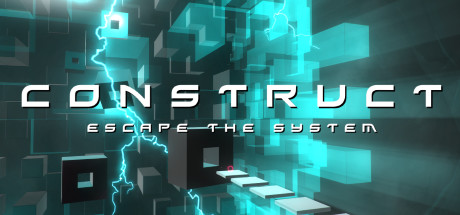
„First person platforming gameplay at its very best!“ Construct: Escape the System is a sci-fi themed first person platformer that sees you trapped in a computer system, trying to escape. Explore the system and discover the 8 empowering 'ability orbs'.
Modeled estimate, not a reported figure. How we estimate →
Media
About
Stats
All-time low is the lowest price we've recorded for this game since we started tracking it.
Languages: English, French, Italian, German, Spanish - Spain, Portuguese - Brazil, Simplified Chinese, Dutch, Russian
Engagement
Hours played at review time, across 40 reviews with recorded playtime.
Reviews
I played until I got one of the orbs. The process wasn't fun. The game is pretty, for some value of pretty, but left me feeling uninspired, bored, and a little bit lost, in the sense of "I have no idea where I've already been, or where I need to go next, or how to get from one to the other really". Got it for a buck and still refunded it.
what's the point of playing this if there's no plot
为了徽章而玩的,出乎意料的还行。 背景音乐,视觉传达,游戏设定。 那顶不错。
Decent game, I do have some complaints, but if you have any compulsion to play it, you should.
Best game to play after blunt
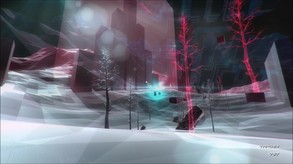
Construct: Escape the System, developed by Oliver Boyce and published by Immanitas Entertainment, is a compact first-person sci-fi platformer built around exploration, movement, and the gradual unlocking of abilities within a mysterious digital world. The premise is minimal but effective: you awaken inside a sprawling computer system and must escape by navigating its layered structures, collecting system cores, and unlocking powers that allow deeper traversal. Rather than relying on traditional combat or narrative exposition, the game focuses on atmosphere and mechanical progression, inviting players to piece together its structure through experimentation and spatial awareness. The world itself feels abstract and intentionally artificial. Clean geometric architecture, floating platforms, luminous pathways, and surreal landscapes give the impression of wandering through the inner workings of a vast machine. The aesthetic leans toward minimalist sci-fi, with bold color contrasts and sharp lighting defining each zone. While environments can initially appear simple, their scale and verticality create a sense of openness that rewards curiosity. Ambient electronic music underscores the digital setting, adding a meditative tone that complements the game’s exploratory pacing. There is little overt storytelling, but the visual design subtly conveys the feeling of being inside a constructed, unstable system that is both beautiful and indifferent to your presence. Gameplay revolves around platforming and progression through ability acquisition. Early movement feels grounded and somewhat limited, but as players discover ability orbs scattered throughout the system, traversal evolves significantly. Powers such as gravity manipulation, teleportation, and enhanced mobility open up new paths and reinterpret previously inaccessible areas. This gradual expansion of movement options is central to the experience, transforming the world from a maze of unreachable platforms into a playground of experimentation. Returning to earlier zones with newfound abilities often reveals hidden shortcuts and alternate routes, reinforcing the interconnected design. The structure of the game encourages exploration rather than linear progression. System core power orbs are distributed across multiple zones, and players can approach objectives in a semi-open order depending on which abilities they prioritize. This design fosters a sense of autonomy but can also introduce moments of disorientation. Without heavy guidance or explicit markers, navigation depends on spatial memory and environmental recognition. For some, this freedom enhances immersion and discovery; for others, it can lead to confusion and repeated backtracking, particularly in areas where visual cues are subtle. Platforming sequences vary in intensity, ranging from wide exploratory jumps across open landscapes to tighter segments that demand precision timing. The first-person perspective adds an extra layer of challenge, as depth perception and camera control become integral to success. While movement grows more fluid with upgrades, certain sections require careful alignment and patience, occasionally leading to frustration if momentum is misjudged. The difficulty curve remains manageable overall, but its reliance on spatial precision can amplify small errors. One of the game’s strengths lies in how abilities meaningfully reshape interaction with space. Gravity shifts alter orientation and perspective, while teleportation introduces creative problem-solving opportunities. These mechanics are not overly complex individually, but their combination creates layered traversal possibilities that sustain engagement. The absence of combat ensures that focus remains on movement and environmental mastery, distinguishing it from many other sci-fi titles that prioritize action. However, the minimalistic design philosophy also has its drawbacks. The lack of narrative depth or character interaction may leave some players craving more context. The abstract environments, while visually cohesive, can sometimes blur together, reducing the sense of progression between zones. Additionally, extended periods of exploration without clear objectives may slow pacing, particularly for players who prefer structured guidance. Despite these limitations, the game offers a satisfying and atmospheric experience for fans of exploration-driven platformers. Its modest runtime ensures that it does not overextend its ideas, delivering a concise journey that emphasizes discovery and mechanical growth. It succeeds most when players embrace its contemplative rhythm and focus on mastering its evolving movement systems. Ultimately, it stands as a thoughtful indie experiment in first-person platforming. It may not possess the narrative weight or production scale of larger releases, but its commitment to ability-driven progression and spatial exploration gives it a distinct identity. For players who enjoy navigating abstract worlds, experimenting with gravity and teleportation mechanics, and uncovering hidden routes through methodical exploration, it provides a compact yet memorable digital escape. Rating: 7/10
A thought-provoking puzzle game that challenges your logic and problem-solving skills. The minimalist design and clever puzzles keep you engaged, with each level offering a new way to think about solutions. It’s a great choice for players who enjoy tackling complex challenges and unraveling a system’s mysteries.
Construct: Escape the System (2016, разработчик — Oliver Boyce, издатель — Immanitas Entertainment) — научно‑фантастический 3D‑платформер от первого лица. Суть: сбежать из виртуальной системы‑ловушки: собрать 16 золотых ядер в четырёх зонах комплекса, используя особые способности и предметы. Ключевые особенности: прокачка способностей (прыжок, пространственный рывок); вспомогательные предметы‑орбы (ускорение, смена гравитации, подсветка объектов); 4 зоны‑хаба с порталами и ядрами; финальное испытание — пройти 5 подуровней за 7 минут; минималистичная абстрактная графика в стиле киберпанка; поддержка русского языка; достижения и коллекционные карточки Steam; платформа: PC; одиночный режим. Минусы: почти нет сюжета (цель и предыстория неясны); легко заблудиться без карты и компаса; однообразная цветовая палитра; повторяющаяся музыка; ограниченная интерактивность окружения. Итог: подойдёт любителям абстрактных платформеров и головоломок с элементами паркура. Интересна из‑за механик с гравитацией, но из‑за слабой навигации и сюжета лучше брать по скидке.
[h1] [/h1]
Great game. We absolutely need a sequel.
Related
Related
Trends
Concurrent players on Steam, sampled daily since tracking started.
Momentum
Pace estimated from the game's recent review growth (our daily snapshots) at its own sales-per-review ratio — a momentum signal, not booked sales.
Audience
Estimated from the language of this game's reviews — a proxy for where players are, not official Steam demographics.
Related
| The Curse Of Yendor | $19.6K | 75 | 93% | $9.99 |
| Alruna and the Necro-Industrialists | $19.6K | 121 | 86% | $9.99 |
| Haunted Investigation | $19.6K | 202 | 83% | $3.99 |
| Startup Freak | $19.6K | 53 | 70% | $11.99 |
| Up Left Out | $19.6K | 433 | 93% | $2.99 |
| My Money Grows On Trees | $19.6K | 55 | 64% | $9.99 |