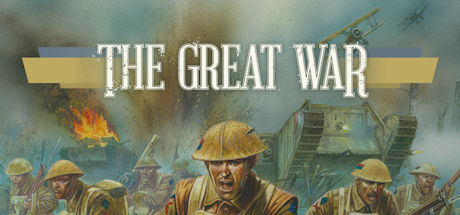
The Great War allow players to portray important engagements throughout WWI history. The battles focus on the historical deployment of forces and important terrain features of trench fighting in scale with the game system.
Modeled estimate, not a reported figure. How we estimate →
Media
About


Genres
Stats
All-time low is the lowest price we've recorded for this game since we started tracking it.
Languages: English
Engagement
Hours played at review time, across 48 reviews with recorded playtime.
Reviews
Themes across 48 recent reviews and how positive each mention is. A keyword signal, not full sentiment analysis.
positive critical· bar length = how often the theme comes up
Reviews
Many bugs in the latest version 1.9.8. The game often just pauses: the user interface works, but the AI enemy does not play a card or make a decision. The manual save does not remember the current state of the game. I often back out of a game, and then resume which forces me to replay my turn. After exiting and restarting many times, I've just given up on this implementation of the game.
The game is awesome, but there are a number of bugs and it seems this game is no loner supported. I cannot finish the second scenario because there is always a moment where the game freezes.
The AI is not running the soldiers... ?!?!!! What can I do?
The game is ok. Having a great interest in WWI helps attract my attention. However the AI sucks. Also I found that the achievements are not awarded at least for not for the games I played!!??
Commands & Colors: The Great War, developed by HexWar Games and published by Hunted Cow Games, is a faithful digital adaptation of the well-known Commands & Colors tabletop system, reimagined to portray the brutal, methodical nature of First World War combat. Rather than attempting to simulate the war at a grand strategic level, the game focuses tightly on tactical engagements, emphasizing command limitations, terrain control, and the grinding reality of trench warfare. From the outset, it positions itself as a deliberate and cerebral experience, one that values planning and restraint over spectacle or rapid-fire decision-making. The core structure revolves around a series of historically inspired scenarios drawn primarily from the Western Front, including battles that evoke the stalemate, desperation, and incremental gains characteristic of the era. Each scenario places players in command of infantry, machine gun units, mortars, and artillery, arranged across a hex-based battlefield that models trenches, wire, shell craters, woods, and open ground. Victory conditions vary, but most hinge on careful territorial control and attrition rather than sweeping maneuvers. This design reinforces the feeling that progress is hard-earned and often costly, mirroring the historical reality the game seeks to represent. Central to the experience is the card-driven command system that defines the Commands & Colors formula. Players do not have free rein over their armies; instead, command cards dictate which units or sectors can act on a given turn. This introduces a layer of uncertainty and forces players to adapt constantly, balancing immediate tactical needs against longer-term positioning. Combat cards and custom dice further inject variability into engagements, creating moments of tension where even well-laid plans can falter. While chance plays a role, success generally favors players who understand timing, terrain advantages, and unit synergy. The strategic depth emerges gradually as players learn to manage these limitations. Trench systems provide powerful defensive bonuses but can also become traps if overextended. Artillery support must be positioned thoughtfully, as its effectiveness depends heavily on line of sight and coordination with infantry advances. Aggressive assaults across open ground are often punished, encouraging a slower, more methodical approach that reflects the war’s attritional nature. This pacing can feel restrained compared to modern real-time or flashy turn-based strategy games, but it is precisely this restraint that gives the game its identity. Visually, the game adopts a clean, utilitarian presentation that prioritizes clarity over immersion. Unit counters, cards, and terrain are clearly readable, making it easy to assess the battlefield at a glance. Animations and effects are minimal, reinforcing the feeling that this is a digital board game first and foremost rather than a cinematic war simulation. While some players may find the presentation plain or dated, others will appreciate how it keeps the focus squarely on decision-making and tactical analysis without unnecessary distractions. Accessibility is one of the game’s more challenging aspects. Players unfamiliar with the Commands & Colors system or tabletop wargames in general may initially struggle with the rules, card interactions, and scenario objectives. The learning curve can feel steep, and the game often assumes a level of genre familiarity that casual strategy fans may not have. However, for those willing to invest the time to understand its systems, the payoff is a rewarding and nuanced tactical experience that offers considerable replay value through scenario variety and emergent outcomes. Reception to Commands & Colors: The Great War reflects its niche appeal. Enthusiasts of historical wargames and board game adaptations often praise its authenticity and adherence to the source material, while others criticize its rigid structure, limited presentation flair, and slower pace. It is not a game designed to win over a broad audience, but rather one that caters to players who value historical grounding, abstraction, and thoughtful constraints over accessibility and spectacle. In the end, Commands & Colors: The Great War succeeds as a disciplined and focused interpretation of World War I tactical combat. It captures the tension, uncertainty, and grinding nature of trench warfare through its card-driven mechanics and scenario design, even if its digital execution feels austere by modern standards. For fans of tabletop wargames, military history, or deliberate turn-based strategy, it offers a compelling and intellectually engaging way to explore one of history’s most challenging conflicts. For others, its pace and complexity may feel forbidding, but its commitment to its design philosophy remains clear and consistent throughout. Rating: 5/10
Great game on table against human opponent, very very bad on computer. The game hangs every time I play on turn 7 or 8 when it's time for the opponent to play. I was able to complete only scenarios with 5 or 6 turns. No patch, no new versions, no bug fixes. Terrible!
This is the most dire garbage, 14 quid I will n ever see again.
ce jeu est une grosse daube, l'IA s'arrete de jouer sans raison en mode solo, c'est moche, pas fini ! ce jeu n'est pas suivi par les concepteur. A BANNIR C'EST UNE HONTE
Estou decepcionado com o jogo em função dos bugs apresentados. Por exemplo, na fase de ação do inimigo, nada acontece, a IA fica parada e é preciso sair do jogo e voltar depois. Mesmo assim, nem sempre dá certo. Enfim, irritante... O jogo tem um total de 90 avaliações e 42 são negativas.
Multiple bugs make this game unplayable at times
Related
Related
Trends
Concurrent players on Steam, sampled daily since tracking started.
Momentum
Pace estimated from the game's recent review growth (our daily snapshots) at its own sales-per-review ratio — a momentum signal, not booked sales.
Audience
Estimated from the language of this game's reviews — a proxy for where players are, not official Steam demographics.
Related
| The Stairway 7 - Anomaly Hunt Loop Horror Game | $53.4K | 172 | 87% | $8.99 |
| Labyrinth: The War on Terror | $53.5K | 183 | 74% | $9.99 |
| Ren'ai 0 Kilometer | $53.4K | 93 | 92% | $27.99 |
| Splatter | $53.5K | 172 | 96% | $14.99 |
| Trench Face | $53.5K | 719 | 94% | $2.99 |
| 日本事故物件監視協会2 -Japan Stigmatized Property- | $53.4K | 187 | 70% | $7.99 |