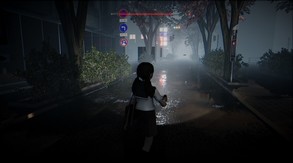
The Night Way Home is a psychological survival horror game developed and published by Chilla’s Art, the Japanese independent studio known for creating unsettling horror experiences inspired by urban legends, emotional tension, and environmental storytelling. While many of the developer’s previous titles leaned heavily into exploration and slow-building suspense, The Night Way Home introduces a stronger survival component without abandoning the atmospheric horror style that defines the studio’s work. The result is a tense and unsettling experience that combines psychological discomfort with moments of genuine danger, creating one of Chilla’s Art’s more demanding horror releases.
The story centers on Rina, a middle school student whose ordinary day begins changing after rumors spread regarding a missing student from another nearby school. Conversations among classmates create uncertainty surrounding the disappearance. Various theories circulate, but nobody knows the truth. As the day progresses and Rina begins making her way home, ordinary surroundings slowly become unfamiliar. What starts as a routine walk transforms into something deeply disturbing as reality itself begins to shift in strange and terrifying ways.
One of the game’s strongest achievements comes from how effectively it builds tension from familiar locations. Chilla’s Art has consistently shown a talent for transforming everyday environments into spaces filled with unease, and The Night Way Home continues that tradition successfully. Residential streets, transportation areas, and quiet urban spaces slowly lose their sense of safety. Familiarity gradually disappears, replaced by uncertainty and isolation. The horror becomes more effective because the environments initially feel believable and ordinary.
Unlike some horror experiences that immediately place players into danger, The Night Way Home allows discomfort to develop naturally. Unease grows steadily through pacing and atmosphere rather than relying entirely on aggressive scares. Empty streets feel strangely oppressive. Quiet moments become uncomfortable. Players spend long periods anticipating danger before immediate threats appear, and that anticipation becomes one of the game’s most effective tools.
The survival horror elements distinguish this title from several other Chilla’s Art projects. Players cannot simply observe events from a safe distance. Certain situations demand careful movement, awareness, and quick decisions. Moments involving danger create genuine pressure that forces players to stay focused under stress. The increased gameplay intensity strengthens the experience by adding urgency to situations that might otherwise rely entirely on atmosphere.
Perspective options also contribute positively to immersion. Players can choose between first-person and third-person viewpoints depending on personal preference. First-person perspective amplifies vulnerability and emotional intensity by placing players directly into frightening situations. Third-person perspective provides greater environmental awareness while still preserving tension. The flexibility allows players to approach the experience in whatever way feels most comfortable without diminishing the horror.
Environmental design remains one of the title’s strongest features. Chilla’s Art understands that horror often becomes more effective when familiar spaces slowly become distorted. Public locations no longer feel welcoming. Areas that should offer safety instead create anxiety. Small environmental details quietly reinforce discomfort throughout progression. Rather than overwhelming players with visual excess, the game relies on atmosphere and gradual changes to maintain tension.
Visual presentation complements the psychological horror effectively. Darkness becomes an important tool throughout the experience. Shadows create uncertainty. Limited visibility forces players to remain cautious and attentive. Chilla’s Art avoids relying entirely on visual spectacle, instead focusing on creating environments that encourage doubt and hesitation. The world feels unstable in subtle ways, reinforcing the larger sense that reality itself is no longer behaving normally.
Audio design plays an equally important role in maintaining immersion. Silence frequently becomes more unsettling than loud noises. Environmental sounds quietly reinforce tension without drawing immediate attention to themselves. Footsteps echo through empty spaces with uncomfortable weight. Ambient noise contributes heavily to emotional pressure throughout the game. The careful use of sound strengthens moments of tension and helps maintain unease even during slower sections.
Narrative progression unfolds gradually through exploration and environmental storytelling rather than excessive exposition. Players uncover information piece by piece while attempting to understand the increasingly disturbing circumstances surrounding Rina’s situation. Mystery remains central to the experience, encouraging players to interpret events and remain invested in uncovering answers.
The pacing deserves recognition because it balances quieter moments with more stressful encounters effectively. Horror games built around survival elements often struggle to maintain tension once players become familiar with threats, but The Night Way Home avoids that issue by regularly shifting between psychological discomfort and more immediate danger. The experience rarely becomes predictable, allowing tension to remain effective throughout much of the journey.
Some players expecting a purely atmospheric walking simulator may find portions of the experience more demanding than anticipated. Certain sections require patience and awareness, particularly when danger becomes more active. However, players looking for a horror experience that combines atmosphere with stronger gameplay pressure will likely appreciate this balance.
The runtime remains focused enough to avoid unnecessary repetition while still allowing room for environmental storytelling and exploration. Additional collectibles encourage deeper engagement for players interested in uncovering more details hidden throughout the world.
The Night Way Home succeeds because it merges psychological horror and survival gameplay without sacrificing either side of the experience. Chilla’s Art preserves its signature atmospheric strengths while introducing systems that make players feel increasingly vulnerable and exposed. The result is a horror game that feels tense not simply because frightening things happen, but because players constantly feel uncertain about what waits ahead.
For fans of Japanese psychological horror, exploration-driven tension, and survival gameplay that emphasizes vulnerability rather than combat, The Night Way Home stands as one of Chilla’s Art’s stronger releases. It captures fear through atmosphere, uncertainty, and emotional pressure while delivering a memorable horror journey that remains unsettling from beginning to end.
Rating: 7/10
![[Chilla's Art] The Night Way Home | 帰り道](https://shared.akamai.steamstatic.com/store_item_assets/steam/apps/1671550/header.jpg?t=1662351785)