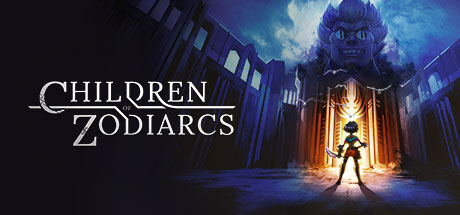
A story-driven, tactical RPG set in the fantasy realm of Lumus; a world divided by affluence and poverty. Take control of Nahmi and her fellow outcasts, utilising a brand new deck and dice based combat system to strike a blow to the noble Lords’ and Ladies’ unquenchable thirst for profit.
Modeled estimate, not a reported figure. How we estimate →
Media
About
Genres
Stats
All-time low is the lowest price we've recorded for this game since we started tracking it.
Engagement
Hours played at review time, across 40 reviews with recorded playtime.
Reviews
Themes across 40 recent reviews and how positive each mention is. A keyword signal, not full sentiment analysis.
positive critical· bar length = how often the theme comes up
Reviews
This game is the type of card/dice game I truly enjoy. The mechanics are straight forward, the cards are easy to understand, there is a nice sense of progression and it has a complete campaign. I'm a bit tired of the "rogue" aspects of most of the card based battlers you find a ton of lately. In this game, you can grind as little or as much as you want. There is an overall story line (which I wished was a little more fleshed out). The game is very forgiving with multiple saves and even has a in-battle save (just one) that can really be exploited. Save before your turn, roll, don't like the dice outcome, load the save and reroll! Rince and repeat until you get the outcome that you desire. Amazing! This alone makes the game a bit too easy but hey, I'll take any advantage. I don't really remember where I picked up this little gem but I'm glad that I was perusing through my mile long list of Steam games and decided to give it a go. About 23 hours of game time for me and I enjoyed all of it. I was never really frustrated or confused with the battles. If you like turn based (non-rogue) card battle games, this is a must have. There are very few games like this and I treasure them!
I'll start by saying I like tactics and deck building games but if you don't I can't recommend this. Its a new take on tactics by incorporating a few different elements which makes the core gameplay feel like you have to adapt a lot which can be fun sometimes and wildy dissapointing at others. The dice play a role in how effective your actions are and the deck determines said abilities. You can edit the dice a little individually but abilities are how you build your deck and the cards involved are mostly level gated in terms of effectiveness and options. This mean some early levels are a tad bit simpler but harder because there are litterally less abilites to build with and less dice custimization to work with. You never have more than 3 people in a party at a time and the units are pre determined but that doesnt meant there aren't a lot of decisions to make during actual combat. As far as the rpg element goes it pretty linear with side missions mostly to expand on the story more than add choice to the narrative. The story begins by feeling somewhat like a generic adventure tale but takes a pretty dark turn with its themes and going thru the sidequests and the dialogue moments emphasize this. Without spoiling to much, this is a pretty tragic and dark story that is mostly on rails and straightforward. Not a bad story per say but not for everyone if you are in it for the plot. I enjoyed movements was overall kinda bummed by the story but got my enjoyment from the game. It feels like it needs a little more fleshing out, it already has a lot going on mechanically but it also is just a stage select sort of gameplay loop anyway out of combat. I kinda wish the narrative had more player agency or the non combat portion had a bit more player input but in the end the game is about the tactical expierence. If you'd like to try a novel way of playing tactics with stylish look this game can entertain you.
Maybe its just that I'm bad at games, but I was playing on hard mode and the the stages just felt badly designed. For example on stage 4, for hard mode at least, you are about level 3 and all enemies are level 7. They do half your health in one attack while it takes about 4ish attacks to kill them. I think the idea is you are supposed to go past them without fighting them as you only need to reach the exit/ But the thing is, enemies spawn at the exit, where you are supposed to go and block you preventing you from passing them without killing them. So i feel like the idea is supposed to not fight due to them being hella over stated without any way of grinding for levels, but the level design forces you to fight 4-5 overstated units. Maybe its doable on normal mode, but if all hard mode is overstating enemies, then that is another gripe, overstating units and calling it hard is not hard. That's boring. New attack patterns, moves, or effects on normal mode cards that is hard mode should be. Not stats. Maybe the level design gets better later in the game. I don't know.
LO COMPRE BUSCANDO UN JUEGO SIMILAR A FINAL FANTASY TACTICS.... LA VERDAD NO ME ARREPIENTO! LO COMPRARIA INCLUSO SI NO ESTUVIERA DE OFERTA! MUY BUEN JUEGO, HORAS DE JUEGO, POSIBILIDAD DE BATALLAS LIBRES COMO FFT. COMPRALO NO TE VAS A ARREPENTIR. JUEGAZO!
A good game that mixes great classic RPG and tabletop mechanics and the story is serviceable enough. It can be very challenging at times, especially in hard mode, when grinding is not as useful as it is in the normal mode. I would totally recommend this game to those who like turn-based rpgs and enjoy a good challenge.
Children of Zodiarcs, developed by Cardboard Utopia and published by Square Enix, is a tactical role-playing game that attempts to break away from genre conventions by blending turn-based strategy with card mechanics and dice-based decision making. While many tactical RPGs focus entirely on positioning and character statistics, this title introduces controlled unpredictability into combat, creating a system where preparation and adaptability matter equally. Combined with a darker fantasy setting built around social inequality and survival, the game creates an experience that feels both familiar and experimental at the same time. The story takes place in Lumus, a fractured world where wealth and power are concentrated in the hands of a privileged elite while ordinary citizens struggle to survive under harsh conditions. The narrative follows Nahmi and a group of young thieves forced into dangerous circumstances after attempting to steal a powerful relic connected to ancient forces hidden beneath the city. What begins as a desperate act of survival quickly evolves into something much larger, pulling the group into conflicts involving corruption, oppression, and dangerous factions willing to destroy anyone standing in their way. One of the strongest aspects of Children of Zodiarcs lies in its worldbuilding. The setting feels grounded despite its fantasy foundation because social struggles remain central to the story. Wealth disparity influences daily life, creating a believable environment where desperation shapes decisions and survival often demands difficult choices. The world avoids feeling like a generic fantasy backdrop because its conflicts feel personal to the people living inside it. Nahmi serves as an effective protagonist, but much of the emotional weight comes from the party surrounding her. The supporting cast brings personality and humanity into the story through conversations and interactions that reveal fears, ambitions, and individual struggles. Relationships between characters develop naturally as the journey progresses, helping quieter moments remain engaging between larger conflicts and tactical encounters. Combat immediately separates Children of Zodiarcs from more traditional strategy games. Battles unfold on tactical grids where positioning remains critically important, but the introduction of card mechanics changes how abilities function. Instead of relying on static skill menus, characters build decks that determine available actions during encounters. Players draw combat options throughout battles, forcing adaptation and preventing strategies from becoming overly repetitive. This deck-building approach introduces flexibility while encouraging experimentation. Different characters benefit from different builds, allowing players to shape combat roles around personal preferences. Offensive specialists, defensive support units, and utility-focused characters can all evolve differently depending on deck construction choices. Progression becomes more interesting because customization extends beyond equipment and numerical upgrades. The dice system becomes the game's most unusual feature. Combat actions receive additional effects through dice rolls tied to abilities. Successful rolls can strengthen attacks, improve healing effectiveness, trigger bonuses, or create additional tactical advantages. Randomness exists, but it rarely feels completely uncontrollable because players can influence outcomes through preparation and specialized dice customization systems. That combination of strategy and uncertainty creates battles that demand flexibility rather than rigid planning. Traditional tactical RPG habits still matter, but Children of Zodiarcs constantly encourages players to adjust strategies based on changing conditions. Victories feel rewarding because success comes through balancing preparation with adaptability. Character progression supports long-term experimentation. New abilities and improved customization options gradually expand strategic possibilities without overwhelming players immediately. Building stronger combat setups becomes satisfying because growth feels tied directly to personal decisions rather than simple numerical progression. The game also benefits from maintaining a focused structure. Rather than filling large environments with unnecessary distractions, Children of Zodiarcs moves steadily between narrative development and tactical encounters. The pacing prioritizes momentum, ensuring combat systems remain central to the experience without excessive downtime interrupting progression. Visually, the game favors atmosphere and style over technical spectacle. Character models and environments may not rival larger productions, but artistic direction gives Lumus a distinct identity. Wealthy districts contrast sharply against poorer environments, reinforcing social themes through environmental storytelling rather than relying exclusively on dialogue. The soundtrack further strengthens immersion through orchestral compositions that support emotional moments and tactical battles effectively. Music contributes heavily to atmosphere, helping larger story developments land with greater impact while giving combat additional energy. Some aspects may divide players. Randomness introduced through cards and dice occasionally disrupts carefully planned strategies, particularly during more demanding encounters. Players who strongly prefer entirely predictable tactical systems may struggle with the balance between control and chance. Combat pacing can also occasionally feel slower than expected. However, those same systems become part of what makes Children of Zodiarcs memorable. Instead of copying established formulas directly, the game builds an identity around experimentation and mechanical variety. Cardboard Utopia takes risks that many strategy games avoid, and while not every idea works perfectly, the ambition remains admirable. Players who enjoy tactical role-playing games and appreciate systems that encourage creativity rather than strict optimization will likely discover something rewarding here. Children of Zodiarcs succeeds because it understands the foundations of strategy design while remaining willing to challenge familiar expectations. A distinctive tactical RPG that combines thoughtful storytelling, rewarding customization, and creative combat mechanics into a memorable strategy experience that stands apart through ambition and originality. Rating: 7/10
a
Feels like half of a game. Everything could have been easily better. Unbalanced. Forces you to farm to catch up.
Couldn't get behind the story because I found the characters annoying AF. Another thing that turned me off was the difficulty of the levels. I don't mind a challenge, but the power imbalance in the later levels just made the experience frustrating. Not eager to pick this one up again.
Cards and dice entwine Young hearts challenge cruel empires Hope redraws the stars
Related
Related
Trends
Concurrent players on Steam, sampled daily since tracking started.
Momentum
Pace estimated from the game's recent review growth (our daily snapshots) at its own sales-per-review ratio — a momentum signal, not booked sales.
Audience
Languages: English, French, Italian, German, Spanish - Spain
Estimated from the language of this game's reviews — a proxy for where players are, not official Steam demographics.
Related
| Star Command Galaxies | $250.8K | 516 | 42% | $14.99 |
| Idol Hands 2 | $251K | 781 | 89% | $10.99 |
| TY the Tasmanian Tiger 2 | $251K | 794 | 94% | $14.99 |
| Archaelund | $250.6K | 404 | 84% | $24.99 |
| Replicube | $250.6K | 702 | 98% | $9.99 |
| Dyscourse | $250.6K | 441 | 77% | $14.99 |