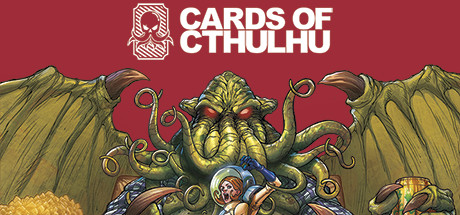
Cards of Cthulhu, developed and published by Awoker Games, is a compact indie roguelike that fuses deck-building, real-time strategy, and Lovecraft-inspired horror into a single, fast-paced experience. Rather than dwelling on the slow, cerebral dread typical of the Cthulhu mythos, it channels that dark atmosphere into an action-driven card battler where quick thinking and adaptability matter more than elaborate storytelling. The premise is simple but effective: you face off against an endless horde of cultists and monsters as you attempt to rescue your kidnapped girlfriend, using your growing arsenal of cards to unleash devastating spells and summon infernal powers. The structure leans on roguelike repetition, encouraging you to learn from failure, rebuild your deck, and push deeper with each attempt, creating a loop that rewards persistence and experimentation.
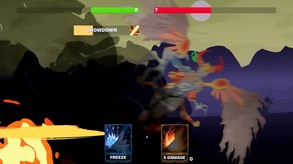
The gameplay revolves around constructing and wielding a small, focused deck. Unlike traditional deck-builders where you manage dozens of cards and intricate synergies, Cards of Cthulhu simplifies the system by limiting your hand to three cards and your deck to a handful more. This restriction forces quick decisions and makes each play feel significant. The cards represent attacks, defenses, curses, or spell effects that can turn the tide of battle if used strategically. Every round becomes a balancing act between offense and survival, as enemies adapt and retaliate in real time. The combination of deck-building and real-time action gives the game a kinetic energy uncommon in the genre—turns don’t wait for you, so hesitation can be deadly. Success depends on mastering the rhythm of your cards, predicting enemy behavior, and knowing when to conserve or unleash your strongest abilities.
Visually, the game takes a playful approach to its horror theme. Instead of oppressive gloom, it opts for exaggerated, almost comic grotesquerie—mutant creatures, cultists, and other monstrosities rendered in a style that balances between eerie and absurd. The presentation evokes a B-movie tone rather than cosmic terror, and while some purists may find this departure from Lovecraft’s suffocating dread too light-hearted, the contrast suits the game’s faster, more arcade-like pacing. The soundtrack and sound effects enhance the tension with ominous tones and the rhythmic pulse of battle, giving each encounter a frantic energy. The atmosphere is not meant to terrify so much as to entertain through its absurdity and chaos, a quality that distinguishes it from other mythos-inspired games.
Where Cards of Cthulhu succeeds is in its accessibility. It’s designed to be easy to pick up and play, allowing newcomers to the genre to dive in without memorizing endless card effects or complicated meta systems. The learning curve is gentle, but the real challenge lies in mastering the nuances of timing and synergy. The roguelike structure gives the game replay value, with each run offering new enemy combinations and random card unlocks that slightly shift your tactical approach. It captures the essence of trial and error: every defeat feels like a lesson, and every small improvement contributes to eventual victory. This simplicity works well for players looking for a quick strategic fix, especially those who enjoy card mechanics but prefer action to turn-based play.
However, that same simplicity can also be a limitation. The small deck size, limited card pool, and lack of deeper meta-progression make the game feel repetitive over time. Once you’ve discovered a few optimal combinations or mastered your favorite strategies, there’s little incentive to deviate. The roguelike randomness does add some variety, but not enough to fully mask the predictability of encounters. The connection to the Cthulhu mythos also feels superficial—while the game borrows names and imagery from Lovecraft’s world, it rarely engages with the philosophical horror or storytelling depth that define the source material. The result is a game that uses the Cthulhu brand more as a stylistic motif than as a core narrative or thematic element. This doesn’t make it less enjoyable, but it may disappoint players expecting something more immersive or lore-rich.
Technically, the game performs well for what it is. Its low system requirements and minimalist interface make it highly accessible, and its short session structure makes it suitable for quick bursts of play. Bugs and glitches are minimal, and the overall presentation, while not sophisticated, is functional and coherent. The small-scale design feels intentional, fitting the game’s focus on immediacy and simplicity. Still, at its current scope, it feels more like a tightly contained experiment than a full-fledged evolution of the genre. Players seeking a deep, complex deck-builder in the vein of Slay the Spire or Monster Train may find its mechanics too shallow to hold their attention for long.
Ultimately, Cards of Cthulhu is a modest but entertaining indie project that knows its strengths. It’s fast, accessible, and occasionally chaotic, delivering bursts of excitement wrapped in a tongue-in-cheek horror aesthetic. It doesn’t aim to redefine deck-building or to dive deep into Lovecraftian storytelling—it aims to provide a fun, immediate challenge, and in that regard, it succeeds. The real-time card battles offer a refreshing twist on familiar mechanics, and while its depth is limited, its pacing and energy make it engaging in short sessions. For players seeking a light, horror-themed card battler that favors quick reflexes over deep planning, Cards of Cthulhu is a worthwhile diversion. For those expecting a profound strategic experience or authentic cosmic dread, it remains a charming but surface-level homage to both the genre and the mythos it borrows from.
Rating: 7/10