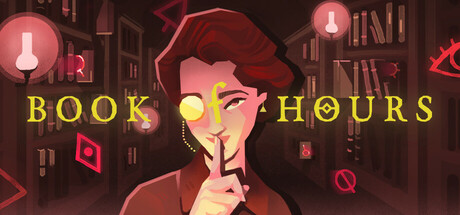
Restore a crumbling occult library by a winter sea. Build the world’s foremost collection of grimoires and arcana. Master the invisible arts. BOOK OF HOURS is a narrative crafting RPG set in a 1930s world of hidden gods and secret histories. What sort of Librarian will you choose to be?
Modeled estimate, not a reported figure. How we estimate →
Prices
The United States storefront in every case, so this compares stores and not countries.
Prices
Each in the currency that store quoted — not converted: the gap between two rows is the publisher's pricing, not an exchange rate.
Every market we collect.
Discounts
Every price cut of more than 20% we have observed, in each market that quoted one, with this game's chart position on either side of it. These are episodes, not a model: a sale is one event, and one event cannot tell you what the next one will do.
Reviews, worldwide (the counter carries no country): 56.83/day in the week to Jul 17 → 3.29/day in the week after.
For scale, across Steam · Top Sellers · Brazil over the last 30 days: the 26 chart moves that followed a price cut of more than 20% went a median of 7 places towards #1, and the 2,400 moves with no price cut behind them went 2 away. One store, one chart, one country — it is the only place we have enough observations to say even that.
Prices outside the United States have been collected since 6 August 2026 and chart positions since 19 July 2026, so a cut older than that has no market to compare and a market that joined later has no history yet. Nothing here is converted between currencies.
About


Sums Steam only; GOG publishes no volume signal, so the true total is higher by an unknown amount.
| Store | Price | Audience | Score | Chart | Est. revenue |
|---|---|---|---|---|---|
SteamYou are here | $24.99 | 4.5Kreviews | 89% | — | $4M |
| $24.99 | 72ratings | 88% | — | not modelled |
Matched by title — a reused name can pair the wrong games. * is a critic aggregate. Prices and positions are each store's United States storefront; Epic charts worldwide. Audience and Score too, except Steam's, which is worldwide.
Updates
Build ids and update times come straight from Steam's PICS — the same source SteamDB reads. Patch history grows as we record new builds.
Engagement
Reviews
Themes across 874 recent reviews and how positive each mention is. A keyword signal, not full sentiment analysis.
Reviews
Book of Hours has become my obsession over the past few weeks, and that's all there really is to it. Before I start to wax poetic about why, I'll advise this in the short preamble: this game is for puzzlers, for readers, and for people who enjoy being confused but knowing that there's a solution to uncover. It's a slow burn. Like a candle, not even at both ends. The Book of Hours is a game that is crammed-packed full of lore, and if you have played any of a similar style of game (notably Cultist Simulator) then you'll have an idea of what you're in for. It's a many-layered onion. It's a game for would-be meta scientists (and probably real scientists, alike). It's a riddle whose only answer is a question. It's a game that does not spell it all out for you, at all, but if you can gather up your mensa-like knowledge of comparing symbols and your wicked grasp of the English language to solve some min-maxing brainiac stuff, then Book of Hours is for you. If you aren't familiar with this style of game, I'll try to explain. Time is a factor in Book of Hours. Time is a key factor in gameplay. It takes time to do things, and it takes time to find out what does what. In game, and from a practical sense, this translates in to "combining cards in to slots that accept them, waiting a bit, and finding out what that does". The Book of Hours, from a self-introductory standpoint, makes it fairly clear right up front and how you're going to progress through this game. I'll not spoil anything for you when I say that the first few hours of gameplay does not truly involve "the big house" at all. The first few hours of gameplay are the figurative steps required to learn the way the game engine works and the basic logic behind it. If you're perceptive, and the game hopes you are, you'll see that every card is an "idea" in game, is catalogued in a variety of ways, and are used in unique combinations at specific points. As the player, you're challenged with increasing your knowledge of the game systems to improve your situation in-game, which translates in to eventually accessing the "big house" (hereto refered as the Hush House, which it is aptly named), exploring the items left behind the ruined house, employing passers-by from the vilage below to help you access more of Hush House's rooms, and in turn, access the true, chewy center of the game - the books. You'll slowly find wrapped-up books that need uncovering and cataloguing. You'll need to read them using in-game systems, and you'll slowly learn skills. You can use those skills to improve your ability to do all of the prementioned actions in this review. There are, I'm not entirely sure, several dozens of unique skills? Each skill is so-named as they are unique combinations of sets of knowledge, which translate in to narrative lore about the nature of Hush House and its previous occupants. I have much to go and that's great. I've learned the systems so far and I'm getting closer, ever-so-precariously, in to a world of weird powers. I'm slowly turning in to Vincent Price in Edward Scissorhands. In this game I truly feel like I'm becoming Vincent Price in Edward Scissorhands, except there's no Edward Scissorhands.. but I'm growing this looming, eerie fortress of obscene knowledge and pushing concoctions on travelling minstrals untill they've become capable-beyond-human-ability to help me clear my root cellar. Ahh, what a game. I love this game. Did you like reading all of that stuff I just wrote? Do you like reading, period? Are you someone who would be just as happy to sit down with a book of puzzles, like Sodoku or a Crossword, or something like that, and be happy being "stumped"? Yeah? Do you also like dark-and-shadowy occult themes of varying descriptions? Yeah? Then get this game. Hey, did you just TL:DR this? This game is not for you. Be Vincent Price.
Media

Related
Related
Price dynamics, follower growth, revenue and sales trajectories with interactive tooltips
This and every other Pro feature is free until October 20, 2026. A free account is all it takes.
Genres
Stats
All-time low is the lowest price we've recorded for this game since we started tracking it.
Languages: English, Russian, Simplified Chinese, Japanese
Hours played at review time, across 876 reviews with recorded playtime.
positive critical· bar length = how often the theme comes up
[h3]Confusion is a question, and the gamer's answer is always Yes.[/h3] What if I told you this game left you washed up on a beach with no instructions, forced you to read hundreds of pages of text just to try to puzzle out what is going on, and made Monopoly look fast paced by comparison? AND YET. It worms its way into your brain, my friends. There is so much lore here that re-reading books in order to jog your memory is an integral part of the game. It's so meta that I don't even know if that last sentence was literal or metaphorical. And somehow the more time I spend here the more time I want to spend. I played this game for a normal-game amount of time - say, 50ish hours - before throwing up my hands and saying "nothing makes sense, I'm out." Picked it up again a year later and the clues were seemingly everywhere. Clearly the game hadn't left my head, but had been percolating in my dreams. Took me another hundred hours to finish my first runthrough. I'm 250 hours in now and barely started on my third runthrough, with over 70% of the achievements - all hidden, of course - left to find. I'm not going to complete them all. But just contemplating what the heck they could possibly be... This is not a fast game. In fact, for a game in which the primary mechanic is time passing, it it strikingly blasé about the actual passage of time. There are very few (and clearly marked) ways in which you can fail this game, but you can [i]do nothing[/i] until the cows come home. You can feel like you're making no progress for a very, very long time - to the extent that just putting a bust of Random Person in its correct little niche feels like a cause for celebration. If you're a person who likes to read, if you're a person who at least doesn't mind that feeling of "there's something more here I'm not getting yet" tickling at your brain, if you want to immerse yourself in a world that is very clearly Not Quite The Same as our own, this game is for you. If you're a person who gets frustrated (I won't say "easily" but rather "at all"), if you're not looking for a WAY longer commitment than most games, if you will check the internet for a solution: I'd give it a miss.
I talk about this game a lot. I shouldn't, yet here I am. I'm met often with blank stares and glazed eyes as I speak of the incredible fun I have walking sleepily in my dreams through a lonely library in a fantastical This game was meant for me. And also very much not meant for me. I will never truly understand what is going on. Its so cryptic and complex. I also will never read a wiki or other source of information because somehow that will ruin the fun for me. I see people call this niche, and it is; yet anyone can learn to love it I believe. So many games and a lot of other art forms in fact have this thing where when you play it or watch it for the first time (I'm looking at you Big Lebowski!) you just don't jive with it, but given enough time it seeps into you. Play this game. If you hate it, refund it. Then come back in 6 months and play it again. Repeat this until you too understand what make this so very special. I have 300 plus hours into this game, and i'm still learning more about it every time I play. I barely know why I am here drinking tea and looking across the ocean from this massive and wondrous library/castle/museum. On a side note, if you love this game and also love literature as a whole, there is a post somewhere that talks about the developers influences by listing a number of wonderful titles. "Jonathan Strange and Mr Norrell" by Susanna Clarke was my favorite so far I wish I could write this more eloquently. What I want to say I can't put into words. And I'll never do justice to the absolutely masterful bits of writing that fill this game to the brim Buy it; do whatever you can to keep these developers working, I beg you. I have found my place in the world and it is here, amongst these strange and extraordinary games
ВАХО-ЛОРОВЕДАМ И НЕ СНИЛОСЬ! Карточная "типа-RPG" в мистической вселенной "Тайных историй" (Cultist Simulator, The Lady Afterwards, Travelling at Night) от создателя другой мистической вселенной "Fallen London" (Fallen London, Sunless Sea) - Алексиса Кеннеди. Геймплей с виду простой. У тебя есть определенные карты в руке, у игры есть места, где их можно применить. Применяешь туда нужные карты - получаешь новые карты и продвижение по игре. И так до конца катки. У игры есть внутренний таймер, к которому привязаны смена дня и ночи, времён года и каждого действия картой, которое требует времени на совершение. На самом деле сложно сказать, можно ли рекомендовать эту игру в целом, или нельзя. Потому что есть много нюансов. В том числе и в игре. Со слов обзорщиков всё просто. На дворе 1936 год. Ты - попаданец на странный остров, которого высшие силы решили сделать библиотекарем и хранителем одной ооочень таинственной (и заброшенной) библиотеки разных мистических знаний. Реставрируешь комнаты библиотеки (их там более 100) при помощи наёмной рабочей силы. Катологизируешь и читаешь книги. Помогаешь всем пришедшим за денежку. Торгуешь сплетнями и новостями. Учишь навыки. Крафтишь. И просвещаешься в разных направлениях, с целью выполнить главную задачу и пройти игру на одну из более чем 20ти концовок. 1) Игра представляет собой симулятор википедии, который после Симулятора Культиста (предыдущей игры в серии) уже и не пытается казаться ролевой игрой с отыгрышем. В нём есть возможность выбрать ориджин твоего персонажа и стартовые возможности, да и сама игра будет рандомно подкидывать разные ситуации и особенности. Да и концовок тут за 20. Но даже несмотря на это - это всё ещё симулятор википедии, страницами которой служит буквально всё, что можно будет выделить курсором. Вещи, аспекты вещей, книги, текст ситуаций, диалоги, карточки и т.д. Поэтому да, читать тут придётся много. 2) И да, это одна из игр, в которых бездумное тыкание с желанием ничего не читать - ни к чему не приведёт. В целом можно на интуитиве понять, какие вещи куда засовывать, чтобы получить нужное. Однако любой пройденный вслепую ран будет ощущаться тупо как трата времени. Ибо основная задача игры - читать лор и формировать общую картину понимания того, что тут происходит Поэтому тебе придётся создать в компудахтере папочку, в которой будет рассортирован лор каждого персонажа, каждого предмета, каждого эффекта, организации, философской концепции, исторического периода, оккультного аспекта и дисциплины, бога и т.д. И вот тут игра начинает тебе водить обрезанным по лицу. Во первых - игра уже считает, что ты прошел Симулятор Культиста и более-менее разобрался со всем, что там происходит. Во вторых - как и в предыдущей игре, каждая крупица истинного лора будет закрыта за тоннами мистификации, фольклора, демагогии и ребусов. В третьих - половина лора игры основывается на реальных событиях, которые напрямую вплетены в сеттинг. Биография Элогабала, Царь Леонид и Ксеркс, Генрих 8й "Медный Нос" и его реформация Англии, 1я и 2я мировая. И т.д. За всем этим лезть либо на вики, либо в школьные учебники истории (я не шучу). В четвёртых - часть лора находится и вовсе не в играх, а в сторонних источниках. Например настолка "Lady Afterwards", а также онлайн архив от Weather Factory. В пятых - языки. Если Культсим и эта игра ещё хоть как-то были переведены, пусть и не совсем точно, то вот остальные источники - нет. А это, на секундочку высоколитературный Английский, для которого базового "Intermediate" будет недостаточно. В шестых - одна из самых главных вещей. Автор никогда не раскрывает ничего в лоб. Всё подаётся намёками, раскиданными по разным источникам. А порой и скрытые в визуале. Многие из этих вещей и вовсе не имеют подтверждения ни в одном из источников, ибо это хвосты и чеховские ружья, что были заряжены для последующих игр. В седьмых - если вы хотите плюнуть на всё это и пойти просто читать лор в вики, или же послушать разбор от блогеров, то побрейтесь дважды - в вики информации настолько много, что вы не осилите всё. Плюс, многого там и вовсе не завезли. Даже сами создатели вики уже устали набивать её. Алексис Кеннеди буквально просрался контентом, суммарно сравнимым по объему со всем, что когда-либо писал Перумов. Это ка если бы Война и Мир была бы 40ка-томником. Зашифрованным 40ка-томником. В восьмых - именно поэтому на ютубе сейчас лишь 3.5 блогера более менее понимают за эту вселенную, и готовы рассказать про неё. Однако даже их знаний недостаточно, ибо тут нужен формат Инструктора Сережки со 100500 шортсами, описывающими каждую деталь игры. 3) Однако, если вас реально зацепил лор игры и вы хотите полностью разобраться во всём этом, то всё вышеперечисленное вас не остановит. Да, это путь поехавшего задрота, замотанного в гигантскую шапочку из фольги, но кто сказал, что в игры надо играть для кого-то, а не для себя? Взамен на превозмогание всего вышеперечисленного, игра предложит множество интересных историй с множеством персонажей, а также раскрытие того ощущения, когда ты реально докапываешься до чего-то тайного. А потом понимаешь, что это лишь часть великого паззла, остатки которого нужно искать уже за пределами игры, в том числе и в реальной истории, мифологии и даже политоте. Если же вы являетесь поклонником "того самого" Лавкрафта, и уже устали о того, что современная индустрия воспринимает его только на уровне пугалок с Ктулху, щупальцами и зеленым туманом, то эта игра - вдвойне для вас. Ибо Именно Кеннеди смог передать главную тему Говарда - страх перед неизвестностью, в которой водится нечто настолько невообразимое, что даже от попыток понять это, можно сойти с ума. Ведь так уж получилось, что все знания из игры даже в реале являются тайными. И не потому что их скрывают, а потому что всем в лом их искать. Особенно сейчас, в век, когда нас буквально заваливают петабайтами инфы со всех сторон. Возможно именно ТЫ сможешь это сделать быстрее меня и стать....ну...блогером-лороведом на ютубе. Такие дела.
小众游戏之所以小众是有其原因的,我不知道有多少和我一样的玩家,被它表面上精致的画风和有深度的背景故事所吸引而入坑,但在体验了游戏本体中的零引导开局和并不清楚的wiki前,痛苦地看着教学和谜语人Wiki摸爬滚打几小时也无法摸索清楚游戏的完整机制,在被折磨后只能绝望地退坑,然后发现甚至此时已经过了两小时退款期还不能退款。如果这游戏是demo阶段,抢鲜体验,那我不说什么,但它不是。前作密教模拟器的引导性差的缺点在本作得到了负提升,密教模拟器相比于司晨之书都变得新手友好了。开发者的写故事能力确实很强,但对于游戏制作本身的理解是否足够呢,我想这一点需要打一个问号。
I kinda fell in love with this game. It's a game about finding paths to do what you seek. There's probably 100 different ways to win (and I'm not talking about the 101 different endings). It does take a minute to understand what's going on, but once you do, then there's learning, and advancement, and deep learning and I really enjoy figuring out all the systems in the game. I read a review once that said this isn't a game you get all the achievements on. I think for most people that's probably true, for me... I have all the achievements and experienced all the endings. My biggest recommendation... you'll want to bring a spreadsheet to record info about your playthrough in. Oh yeah... one more thing... the DLC makes the game 100% better. Definitely pick it up even for your first playthrough. It adds a mechanic to recall visitors any time and that is really needed to make the game more fun.
Look I really think if you read one of the top negative reviews complaining about how the game doesn't tell you what or how to do anything, it might shy you away, and understandably so, but in my opinion, that part of the game is designed very very well. The game is much much less punishing in this regard than cultist simulator. I would say I am currently in the early midgame and once you exit the early game possibilities start opening up everywhere, there is so much more to look at and categorize and see. I have gotten through thus far without an external spreadsheet but I will start making my own probably pretty soon to start taking notes on where I see things. This game really does emulate what it is like trying to do research, to get incomplete data from multiple sources and pull them together. It is a point and click adventure game in some respects, but also not in others because it is far more non-linear than any other point and click I have played. The inventory management is not like most, where you have limited space, but about organization, and the game is very free with how you reorder and redecorate your house. I really find this game relaxing, fun, and engaging. If I find the late game annoying I will update my review, but definitely think if you think this is up your alley and liked cultist simulator to try this, or even try this if you found cultist simulator too roguelike or punishing for you.
制作人ak是在前公司性骚扰多名女性同事的incel,游戏玩法本身也很无聊,0策略性全是重复操作
There's always a chance I flip to positive after enough tries, but I've bounced off this game so often I can't in good conscience leave a positive review. To preface, I am not a stranger to somewhat obscure games with a lot of resources and esoteric sources for progression items. I have beaten a large swath of Cultist Sim. I've played a good amount of Melvor Idle and Old School Runescape (which you may find odd for me to group with these other games, but trust me). I'm at the point in Fallen London where my character is so stacked that getting equipment to improve any given stat is basically a meme - and I've even written guides for it. This game though... it feels like the monkey's paw version of those games. To compare it to the games above, the thing that makes them tick is that everything you do produces something for something else, possibly multiple things. Almost everything has a use, even if it's niche, even if it's usually bad. (E.G. In Fallen London menaces can be highly useful when doing the right stories or grinds, in Cultist Sim, restlessness acts as an influence and can generate glimmering or mystique for you, etc; hell in the DLC they find required uses for things like running out of money and losing your stats). Learning where and how to generate niche resources [b]is[/b] the game. But, critically, on top of that, the act of discovering and getting these resources enables doing things that make other grinds and item sources significantly more efficient, and creates a dependency web where you have to decide between competing avenues of efficiency, item source improvements, and "eh, I'm not feeling grinding today, let's do a story/new thing even if it's slightly suboptimal!" Book of Hours... look, I see the vision. I understand the [i]idea[/i] that what it's going for is being a librarian categorizing knowledge. However, its "difficulty" is largely not in understanding systems, nor in understanding the [i]implications[/i] of the things you study, but a rote, base-level understanding of what every individual object can produce for you. The joy of a lot of games like this is the ease in which you can learn how to get things for other things for other things, and, importantly [i]planning your route there[/i]. In Melvor, Runescape, and Fallen London (and to some degree Cultist Sim, in an accelerated way) you end up in grinds within grinds within grinds within grinds to enable what you wanted to do, to the point that often you get lost in the planning and forget the original goal. You need to improve X to do Y but wait X is more efficient if you unlock Z first, but hmm, maybe it's better to partially progress Y as far as you can to easily source something for Z after all. And oh wait, now that I can get Z I can actually complete that thing I wanted to do hours/weeks/months ago I totally forgot about! That would enable A which would... In short, they're games about [i]source loops[/i]. Book of Hours instead replaces this with a billion skills that all do nominally different things but also kind of the same thing. And are mostly differentiated by very slight stat differences and which of the 60 objects in the house allow you to slot them in there. It introduces several new lore aspects (basically a mix of a stat and a type of ingredient) on top of Cultist Sim, because, as far as I can tell, it adds more individual things you need to remember. (Though story-wise they're admittedly pretty cool) While, yes, [i]in principle[/i] you need a skill to get an ingredient, and you need to know you can only get that ingredient in summer in a certain room, and that will help you craft something to help with something else, it all ends up being very surface level. Sourcing things never really requires anything more than a higher stat. Ultimately, instead of a bunch of cool nested subgoals, there's really like... one goal on your way to the end: Pump up your skills. This lets you unlock more rooms and decipher more books. The loop is a very simple. The "complexity" comes in the fact that books produce different memories, which all decay at the end of the day (yes - i know about persistent memories, but I'm simplifying). You can use these, and crafting recipes, basically just as flat aspect boosts to read yet another book and hope that, maybe, it gives you a better memory, or open a new room. Ultimately, the flaw here is that you don't really "progress" in crafting, or book reading, or even game mechanics knowledge, or anything else really. Almost everything you do requires maxing out a single stat for that task (whether it be for you or an assistant), which means functionally you need to progress your skills and remember which object to rub on which other object for that stat when needed. Again, I see the vision. It could even be cute if the game didn't then [i]also[/i] go out of its way to confound this at every opportunity. There are like 8 desks in Hush House. So you can multitask. In theory. But wait no, each desk, for some reason, only lets you study about 4 aspects. Some aspects you can't even study until you get much farther in. But these desks are also scattered around the mansion and long-distance drag+drop behavior is kind of jank, so you either need to keep multiple tools and production items in different places or drag around a bunch. Copy+paste for crafting stations and other interactables. The wiki doesn't even really... help, because you really want it filtered down to what you have (and where), rather than every item in the game. And because for some things like the desks consulting notes is slower than just clicking on every one and peeping the aspects. The game clearly wants you to categorize your books and items so you can reach for things when you need them. But ultimately you basically need (absent the nuance in the above paragraph): 1. a book with a high mystery level to lend out, at most a couple in different languages; 2. one book for each memory. The rest you can kind of just shove in a corner somewhere (particularly because you can't have duplicate memories). Add on to that keeping track of the 6000 tools and consumables and other such "put thing in slot" items to help you with challenges. To frustrate this, the shelf and surface space you [b]do[/b] get is ridiculously sparse - and in the rooms that do give you some shelf space - very small. I'd kill to be able to buy big bookshelves and just fill one of the banquet halls or whatever with them. And on top of that, the game gives you very few tools, aside from shelf labels you have to mouse over manually to read, to actually label or categorize or find books or items. Are you earnestly telling me my librarian can't keep a card catalogue that zooms me to the item I put in it, or at least tells me room and shelf? Or at least tape an index card to the book with what memory it gives? As other reviews mention, a spreadsheet is effectively mandatory, despite the fact you'd think your librarian would be afforded the tools to... organize and label their books at a basic functional level? Don't get me wrong, the music is great. The art is pretty. Vibes are good. The lore is, as always, pretty cool (granted unless you're active in the community or taking notes you'll probably forget half of it by the time you find the next lore snippet - a problem common to games that dripfeed lore like this). But I find the act of playing this game extremely tedious, without any of the "brain go brr" planning, understanding, and strategy elements that the stronger entries in this weird pseudo-genre require of you. I don't know, I also hated Cultist Sim for like 40 hours and accidentally hate-played my way into loving it. Maybe some day this game will capture me and I'll edit this review to be a glowing one when I finally become a lantern/moth Hour of librarianship. But as-is, this game just feels like a frustrating and somewhat shallow implementation of a genre I normally love.
One of my favorite games of all time. Exceptional writing. Brilliant gameplay. A truly unique experience. Cannot recommend it more. Stay as far away as possible from wikis, tips, or anything that tells you how to play.
Active players
Estimated daily and monthly active players (DAU/MAU) modeled from peak concurrency.
Players by region
Where this game's players are, estimated from review languages.
Players also reviewed
The games this title's players most often review too — audience affinity.
Related
| Game | Estimated lifetime revenue | Reviews | Review score | Price |
|---|---|---|---|---|
| $8.4M | 14.2K | 80% | $19.99 | |
| $288.3K | 801 | 72% | $11.99 | |
| $90.1K | 216 | 74% | $18.99 | |
| $32.3K | 89 | 82% | $11.99 | |
| $1.2K | 6 | 83% | $5.00 | |
| — | 0 | — | — |
Related
| Game | Estimated lifetime revenue | Reviews | Review score | Price |
|---|---|---|---|---|
| $4M | 7.9K | 95% | $14.99 | |
| $4M | 10.8K | 89% | $14.99 | |
| $4M | 14K | 88% | $9.99 | |
| $4M | 13.5K | 88% | $14.99 | |
| $4M | 6.9K | 95% | $14.99 | |
| $4M | 3.9K | 79% | $24.99 |