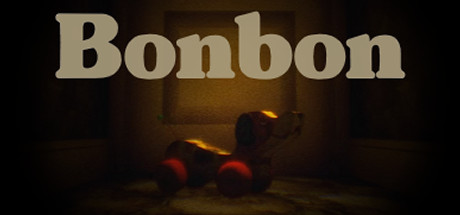
Bonbon, developed by Aetheric Games and published by Pixeljam, is a short experimental horror experience that distinguishes itself almost entirely through perspective. Instead of placing you in the role of a capable protagonist, it casts you as a toddler navigating a seemingly ordinary home that gradually reveals itself to be anything but safe or familiar. This shift in scale and agency is not just a stylistic choice—it defines how every interaction feels, turning even mundane objects into looming, uncertain presences.
Movement is deliberately clumsy and imprecise, reflecting the physical limitations of a young child. Walking feels unsteady, turning is slow, and interacting with objects lacks the confidence players typically expect from first-person games. This design creates an immediate sense of vulnerability. You’re not equipped to deal with threats in a conventional way, and even simple navigation can feel like a challenge. That vulnerability becomes the foundation for the game’s tension, as it constantly reminds you that you are small, powerless, and not entirely in control.
The gameplay itself is minimal, centered on exploration and completing simple tasks communicated through a disembodied parental voice. These objectives—collecting toys or interacting with parts of the environment—are straightforward in concept, but the lack of clear direction often makes them feel ambiguous. At times, this can lead to moments of confusion, where progress depends on trial and error rather than intuition. However, this uncertainty also reinforces the experience’s tone. The world isn’t meant to feel logical or clearly structured; it’s meant to feel disorienting, as if you’re trying to make sense of something just beyond your understanding.
What truly carries Bonbon is its atmosphere. The game takes a familiar domestic space and subtly distorts it, creating a sense that something is fundamentally wrong beneath the surface. Lighting shifts in unnatural ways, shadows stretch and conceal, and the environment seems to change just enough to make you question what you’ve seen. The horror is not built on sudden shocks, but on a gradual accumulation of unease. It’s the kind of experience where tension builds quietly, drawing you deeper into a state of discomfort rather than startling you outright.
The narrative is intentionally vague, offering fragments rather than a complete picture. There are hints of a deeper story—suggestions of neglect, fear, or something more abstract—but these ideas are never fully explained. Instead, the game relies on interpretation, allowing players to piece together meaning from environmental details and subtle cues. This approach gives the experience a certain depth, but it also means that the story may feel incomplete or elusive, especially for those who prefer clearer storytelling.
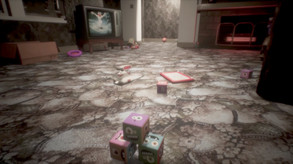
Visually, the game adopts a stylized approach that prioritizes mood over detail. The environments are simple but effective, using color, contrast, and scale to create a sense of unease. Everyday objects—furniture, toys, household items—take on a new significance when viewed from a child’s perspective, becoming obstacles or sources of tension. The sound design complements this, with ambient noise and subtle audio cues playing a key role in maintaining the atmosphere. Silence is used just as effectively as sound, allowing tension to build in the spaces between interactions.
The game’s brevity is both a strength and a limitation. It can be completed in a relatively short time, which helps maintain its intensity and prevents the core idea from becoming repetitive. At the same time, this limited length means that certain aspects—particularly the narrative—do not have room to fully develop. Once the experience is over, there is little incentive to return, as the impact comes primarily from the initial playthrough.
There are also moments where the lack of clarity in objectives can interrupt the flow of the game. While this ambiguity contributes to the atmosphere, it can also lead to frustration, especially when players are unsure how to progress. Combined with the intentionally awkward controls, this can make certain sections feel less like intentional design and more like unnecessary obstacles.
Despite these issues, Bonbon succeeds because it fully commits to its concept. It uses perspective, vulnerability, and atmosphere to create a form of horror that feels personal and disorienting. It doesn’t rely on traditional mechanics or narrative structure to engage the player, instead focusing on how it feels to exist within its world. That focus gives it a distinct identity, even if it comes at the cost of depth or polish.
In the end, Bonbon is a brief but memorable experiment that explores fear through limitation and perspective. It may not offer a fully developed experience in terms of gameplay or story, but it leaves a strong impression through its atmosphere and unique approach. For players interested in unconventional horror, it provides a short yet impactful journey that stands out for its originality.
Rating: 7/10