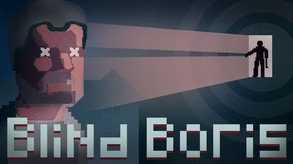
Blind Boris is a survival horror about a blind person. The character arrives to the hospice and a week later strange things begin to happen in him. Staff disappears, terrible sounds are heard outside, exit doors are tightly locked, and aggressive visitors enter the building.
Modeled estimate, not a reported figure. How we estimate →
Media

About
Blind Boris is a survival horror about a blind person. The character arrives to the hospice and 2 weeks later strange things start to happen. Staff disappears, terrible sounds are heard outside, exit doors are tightly locked but aggressive visitors enter the building.
Mechanics:
• The player sees what Boris knows, relying on smell, hearing and memory.
• Resources are limited, and they can be found by smell or specific sounds.
• The opponents are walking around the house, but the player does not know exactly where they are. Attacks are always sudden.
• Boris can defend himself, minimizing the damage.
• The game has a system for creating items from four resources.
• A player can make and use traps. Some will show the enemy for a short time, and some will stun him.
• When the enemy is trapped, he can be attacked directly.
• The main goal of the player is to get out of the house by opening five doors, so player have to explore hospice.
• Boris' memory is not stable and over time he will forget the architecture of the house, which will lead to the changes in locations.
• Boris takes meds to stabilize memory. Meds save the game.
The game shares the universe with the Line, however playing the Line is not necessary to understand the plot of Blind Boris.
Genres
Stats
All-time low is the lowest price we've recorded for this game since we started tracking it.
Languages: English
Engagement
Hours played at review time, across 27 reviews with recorded playtime.
Reviews
есть баги.
Купил игру по 90% скидке из любопытства. Присоединяюсь к жалобам предыдущих пользователей на баги.
После всех этих рецензий у меня ощущение, будто я единственный, кто прошёл игру до конца. И это прохождение было одной сплошной болью. В принципе, почти ничего не могу добавить ко мнению других людей: по атмосфере игра прекрасна. Ничего непонятно, но очень интересно, хочется узнавать и узнавать лор через другие игры в этой вселенной(хотя справедливости ради, и в этом плане игру можно было сделать гораздо лучше и продуманнее), но эта вещь настолько забагованная, что каждые несколько минут возникает момент, от которого думаешь, а должно ли всё быть именно так или всё опять поломалось. Очередь хотя бы была играбельнее, и чтобы её пройти, надо было только понять механики. Тут же остаётся только молиться, что ты либо пройдёшь игру до конца с первого раза, либо умрёшь до прохода через собаку или уже тогда, когда проходить через неё не надо будет. Механик дофига и больше, но разбираться тут надо скорее в том, как их абьюзить, потому что нормально почти ни одна не работает. В общем, рекомендовать рекомендую, но оставь надежду всяк сюда входящий
Blind Boris, developed and published by Marginal Act, is an experimental survival horror title built around a striking and unsettling concept: you control a blind man trapped inside a mysterious hospice that gradually reveals itself to be anything but safe. Rather than relying on traditional horror conventions such as jump scares supported by clear visual information, the game constructs its tension around sensory deprivation, distorted perception, and psychological instability. It is less concerned with cinematic spectacle and more focused on immersing the player in vulnerability, confusion, and dread. The core premise immediately sets Blind Boris apart. You awaken in an unfamiliar hospice with no reliable visual clarity and only fragments of environmental information to guide you. Because Boris is blind, the world is not presented in a conventional way. Instead, environments are rendered through simplified pixel art and obscured visual cues that suggest shapes and layouts rather than clearly defining them. This abstraction is intentional, forcing players to rely on sound, memory, and careful experimentation to understand their surroundings. Doors creak, footsteps echo, and subtle audio cues become essential navigational tools. Exploration forms the backbone of the experience, but it is never comfortable. The hospice is initially quiet and seemingly abandoned, yet over time it grows increasingly hostile. Creatures begin to roam the halls, and the architecture itself may shift or feel unfamiliar. The layout becomes something that must be learned through repetition and careful movement. Because the protagonist’s perception is impaired, even simple tasks—finding an item, locating a doorway, retracing steps—can become tense undertakings. The environment feels unstable, as if it is reacting to Boris’s deteriorating mental state. One of the game’s most distinctive mechanics is its handling of sanity and memory. Instead of focusing solely on physical survival, Blind Boris introduces a psychological layer where mental stability directly affects gameplay. If Boris’s sanity drops too low, he begins to forget the structure of the hospice. Rooms may shift, pathways may become unreliable, and previously memorized layouts may no longer function as expected. This mechanic cleverly reinforces the theme of cognitive decline and adds an extra layer of tension. Players must locate medication to preserve sanity, and these medications often double as save points, intertwining resource management with psychological stability. Combat is intentionally limited and risky. Boris is not a traditional action protagonist equipped to fight back confidently. Encounters with hostile entities are dangerous and unpredictable. Avoidance and preparation are often more viable than direct confrontation. Traps and environmental tools can offer temporary advantages, but the player rarely feels empowered. This design choice heightens vulnerability and ensures that every encounter carries weight. You are not conquering the horror; you are surviving it, often by the narrowest margin. Visually, the game adopts a minimalist pixel-art style that complements its themes of obscured perception. Objects and enemies are not always immediately distinguishable, contributing to a sense of unease. The simplicity of the graphics may initially seem limiting, but it serves the narrative intent. By withholding clarity, the game places players in a constant state of doubt about what they are seeing or hearing. However, this stylistic choice can also create frustration, particularly during moments requiring quick decision-making. The audio design plays a critical role in shaping the atmosphere. Sound becomes the player’s primary informational channel. Ambient noises, distant movement, and subtle cues signal potential danger or opportunity. The silence between sounds can be just as unnerving as the sounds themselves. The reliance on audio for navigation and threat detection strengthens immersion and differentiates Blind Boris from visually driven horror games. Narratively, the game adopts an ambiguous and fragmented storytelling approach. There is little overt exposition, and the story unfolds indirectly through environmental details and player experience. The focus is less on delivering a clearly defined plot and more on evoking the psychological unraveling of its protagonist. This minimalism may leave some players wanting clearer direction, but it aligns with the game’s emphasis on confusion and disorientation. Blind Boris is not a polished mainstream horror experience. It has rough edges in terms of interface clarity and mechanical accessibility. Objectives can feel unclear, and the learning curve may be steep for players expecting conventional design guidance. However, its ambition lies in its willingness to experiment. It dares to simulate sensory limitation and mental decline as gameplay mechanics rather than narrative decoration. Ultimately, Blind Boris succeeds most as a conceptual horror experience. It leverages blindness and memory loss not merely as storytelling devices but as interactive systems that shape how the player engages with the world. The result is a tense, often uncomfortable journey through uncertainty and vulnerability. While it may not appeal to players seeking smooth, action-driven horror, it offers something rarer: a psychological experience that challenges perception itself and transforms limitation into its most powerful source of fear. Rating: 5/10
Die Steuerung und das ständige Verlassen auf Geruch und Geräusche sind cool, aber machen nach ner weile keinen Spaß mehr. Nicht wirklich was für Leute, die gerne klar wissen, was abgeht.
В техническом плане - кривая. В геймплейном - тоже. Запутался в начале второго уровня сразу же. Плюнул, удалил. Посмотрим, что из себя представляет "the Line". Господа, "игру делали наши соотечественники" не равно "давайте автоматом голосовать рублём". Я уже пожалел, что потратился на этот непонятный арт-хаус.
сначала непонятно и скучно, потом понятно и интересно
Related
Related
Trends
Concurrent players on Steam, sampled daily since tracking started.
Audience
Estimated from the language of this game's reviews — a proxy for where players are, not official Steam demographics.
Related
| Love Puzzle | $5.9K | 323 | 49% | $0.77 |
| School Hero | $5.9K | 65 | 89% | $3.99 |
| Kickback Clicker | $5.9K | 65 | 85% | $3.99 |
| The Royal Marines Commando | $5.9K | 196 | 72% | $1.49 |
| Animals Memory | $5.9K | 78 | 81% | $4.99 |
| Dimensional | $5.9K | 52 | 81% | $4.99 |