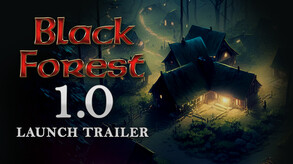
Danger, death, and despair define Black Forest. As the chief of an unlucky village, your goal is to survive. Gather resources, shore up the village, then survive the terrifying night. Maybe you'll hold out long enough for relief to arrive. Maybe not. Are you up to the challenge?
Modeled estimate, not a reported figure. How we estimate →
About

Welcome to the dark heart of the Black Forest. Your village was supposed to harvest its bounty, but managed to draw the attention of the unrelenting darkness inhabiting the woods. As the dangers descend upon it, it's your job as the village chief to help the peasants fend off the creatures and make it through the dark night, as the sinister secrets of the woods best left alone awake and focus their attention on you.
Black Forest is a city builder like no other. Where other games focus on expansion and development, Black Forest is all about defending what's yours. Strategically assign villagers, gather resources, reinforce defenses, and above all, maintain the delicate balance until the king's knights arrive.
Every decision matters, every loss is permanent, and come nightfall, the relentless horde of forest-dwellers will test your ability to govern and survive. Remember: Until the king's knights arrive, you and your villagers are completely on your own.

City Building With a Twist: Defend what's yours and survive, balancing the limited resources at your disposal. Make tough choices: Houses can be rebuilt, but people lost cannot be replaced. But maybe you need to sacrifice one of them to save the many?
Survive the Struggle, Not Tech Trees: Outlast, not conquer. You can't fight the forest and you can't win by force of arms. Your goal is to lose the least by outsmarting and outthinking the forces arrayed against you, and making hard decisions: What can you lose? What must survive? What part of the tech tree can you do without?
Sophisticated AI: Every monster uses a complex set of rules to react to the environment, observing and adapting their behavior. You choose what the villagers work on, while monsters will try to figure out weaknesses and opportunities, then mercilessly pounce on them when you're not looking.
Robust Simulation Features: Weather can dramatically alter the course of your game. Rain, snow, or drought aren't just cosmetic effects. Villagers need food, but a dry spell will mean they need to irrigate - but that takes workers away from building defenses. What you decide may very well change the course of the game.
A Greater World Beyond: Black Forest is set in the expansive world of Dragon Eye, a high fantasy roleplaying setting available for everyone. The game's campaign will tie into the complex lore and overarching storyline, including decisions and struggles of a world on the edge.
Genres
Stats
All-time low is the lowest price we've recorded for this game since we started tracking it.
Languages: English, German
Engagement
Hours played at review time, across 40 reviews with recorded playtime.
Reviews
Themes across 40 recent reviews and how positive each mention is. A keyword signal, not full sentiment analysis.
positive critical· bar length = how often the theme comes up
Reviews
☀️
En français, il n'y a aucun texte, obligé de passer en anglais, une fois en anglais il faut changer la taille des icones et textes pour enfin l'apercevoir. Après, on se rend compte qu'il est impossible de changer les touches une fois le jeu lancé, et une fois qu'on joue enfin c'est lent et les villageois n'écoutent pas.
Good one.
Black Forest, developed by Lemuria and published by indie.io, is a survival-focused city-building game that takes the familiar mechanics of the genre and reframes them around endurance rather than expansion. Instead of rewarding players for building sprawling, efficient settlements, it narrows the experience into a constant struggle against scarcity, time, and relentless external threats. The setting—a dark, folklore-inspired woodland filled with hostile creatures—reinforces this shift in design, creating a world where survival feels uncertain from the very beginning. The core gameplay revolves around managing a small village that must endure repeated cycles of preparation and defense. During the day, players assign villagers to gather resources, construct buildings, and reinforce defenses. These moments are deceptively calm, offering a brief window to organize and plan. As night approaches, however, the tone shifts dramatically. Creatures emerge from the surrounding forest and attack the settlement, forcing players to rely on the decisions made during the day. This cycle creates a clear rhythm, where each phase directly impacts the next, and mistakes can quickly escalate into larger problems. Resource management plays a central role in shaping the experience. Supplies are limited, space is constrained, and every decision carries consequences. Players must constantly weigh competing priorities—whether to focus on food production, strengthen defenses, or expand infrastructure. Villagers themselves are a finite resource, and losing them has lasting effects, adding a layer of tension to every encounter. This emphasis on scarcity gives the game a more grounded and unforgiving feel compared to traditional city builders, where recovery is often easier. As the game progresses, the complexity of managing the village increases. Coordinating multiple tasks within a limited timeframe becomes more demanding, and the pressure to optimize every decision grows stronger. The challenge comes not from a single overwhelming system, but from the accumulation of small, interconnected responsibilities. Balancing these elements creates moments of satisfaction when everything aligns, but it can also lead to frustration when one mistake disrupts the entire structure. One of the game’s more distinctive choices is its restriction on expansion. The playable area is deliberately limited, preventing players from solving problems simply by spreading outward. Instead, the focus remains on reinforcing and improving what already exists. This design encourages careful planning and efficient use of space, but it also reduces variety over time. Once players become familiar with the environment and its constraints, the experience can begin to feel repetitive, as the core loop remains largely unchanged. The atmosphere is one of the game’s strongest aspects. The setting draws from dark folklore, creating a sense of unease that persists throughout. The forest feels hostile and unpredictable, and the constant threat of attack reinforces the idea that safety is temporary. Visually, the game adopts a functional style that supports this tone, even if it does not stand out in terms of detail or polish. The presentation is effective in conveying mood, though it rarely goes beyond what is necessary to support the gameplay. Despite its compelling concept, the execution is uneven in several areas. The difficulty can feel inconsistent, sometimes overwhelming players before they have the tools or understanding needed to respond effectively. Interface and usability issues can make managing the village more cumbersome than intended, and certain mechanics are not always clearly explained. These factors contribute to a learning curve that feels harsher than it needs to be, particularly for newcomers. Even with these shortcomings, Black Forest offers a unique take on the city-building genre by focusing on survival as its primary goal. It creates moments of genuine tension, where success feels earned and failure carries weight. The experience is at its best when players manage to stabilize their village against the odds, turning fragile systems into something resilient enough to endure another cycle. In the end, Black Forest is a game driven by a strong central idea that is not fully realized. Its emphasis on scarcity and survival provides a refreshing contrast to more traditional strategy games, but technical issues, balance problems, and limited variety hold it back from reaching its full potential. For players who enjoy challenging, survival-oriented management games, it can offer a rewarding experience, though it requires patience and a willingness to work through its rough edges. Rating: 6/10
+1 有成就 没中文 最终更新 本次为游戏的最终更新,版本号 2.5。 本次更新不包含玩法改动,仅进行部分体验优化与改进: 引擎及核心代码更新 体积光、整体画面、建筑特效的视觉优化 移除 Unity 数据分析与隐私提示界面 随着本次补丁发布,我将正式停止对本作的后续支持。若出现严重漏洞,我仍会进行修复,但除此之外不会再有任何更新。 游戏内容已完整,我也没有任何想要再追加的内容。 这段旅程充满起伏,十分难忘。这款游戏曾被大量玩家体验,也曾有不少主播和视频创作者游玩过一段时间。我很高兴大家能在黑森林与它的暗夜恐惧中度过一段愉快的时光。 感谢各位。
drugacija od inace kalupa
I think like all games things can be fixed and be truly enjoyable. I'm one of those people. I really like this game but like some said it can be immensely frustrating. For the most part though I like the vibe and premise of the game, unfortunately though - you lose way more than you gain, games are supposed to be fun. I hope the game devs don't quit, they're not bad obviously they made a game that works. They just made it a little too difficult. Would I recommend? Yes!!!
[h1] [/h1]
有成就,无中文,有卡牌点数商城
I have picked this game up when it was still free and it's fun to play. And you have to build walls if you don't want destroyed buildings.
Related
Related
Trends
Concurrent players on Steam, sampled daily since tracking started.
Momentum
Pace estimated from the game's recent review growth (our daily snapshots) at its own sales-per-review ratio — a momentum signal, not booked sales.
Audience
Estimated from the language of this game's reviews — a proxy for where players are, not official Steam demographics.
Related
| KunKunNest | $37.6K | 409 | 95% | $2.67 |
| Madballs in Babo:Invasion | $37.6K | 298 | 84% | $4.99 |
| Dino Nest | $37.6K | 269 | 94% | $4.99 |
| Merchant in Dungeon | $37.6K | 120 | 81% | $8.99 |
| 2048 | $37.6K | 191 | 87% | $7.99 |
| Machines At War 3 | $37.6K | 85 | 76% | $14.99 |
Related
| House Flipper | $65.8M | 110.8K | 94% | $24.99 |
| Rhythm Doctor | $13.9M | 26.7K | 98% | $19.99 |
| Sub Rosa | $1.8M | 3.4K | 69% | $19.99 |
| Party Club | $540.8K | 3.4K | 72% | $4.99 |
| Zup! 3 | $247.2K | 5.6K | 90% | $1.99 |
| Choppy Cuts | $193.3K | 295 | 76% | $16.99 |