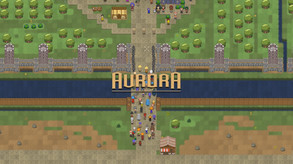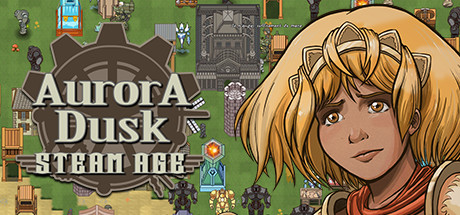
An amazing mix of RPG, strategy, simulation, sandbox and survival game. Aurora Dusk looks like many other games, but instead of being alone, you live in a community. You can play one or more villagers and evolve from the Wood Age to the Steam Age.
Modeled estimate, not a reported figure. How we estimate →
About
Genres
Stats
All-time low is the lowest price we've recorded for this game since we started tracking it.
Engagement
Reviews
Themes across 40 recent reviews and how positive each mention is. A keyword signal, not full sentiment analysis.
Reviews
It's a very strange take on the genre. The concept is, theoretically, a city-builder. The core gimmick in the game is that your allies/townspeople can, and will, autonomously do anything you can do. That includes planting, harvesting, and building- but also, placing buildings. There isn't really a base design aspect to this game, because a couple dozen AIs are running around slapping buildings down everywhere. That's somewhat counteracted by the fact that every economy building in the game, like saw benches, stonecutting tables, smelters, all have fairly low durability, cannot be repaired, and simply vanish after a certain number of operations. To the extent that you build a city, you're really just re-building those work stations to help the AI along. You cannot give orders or priorities to your townspeople- they are well and truly autonomous, and they don't share their inventory. You, and each of them, are on your own individual quest to gather food, build weapons, train your skills, and fight enemies, only incidentally assisting each other by proximity and shared buildings. (Get used to them "using up" the building you're working at, forcing you to build/switch to a new one.) All resources, including metal and stone, are "planted" in the ground by placing mana, and a few moments later they spawn. This is kinda neat. The AI is fully capable of this, too, and so they will plant everything, everywhere. They harvest quick though, so again, the clutter never gets wildly out of control. There's a practice based skills system in this game, which is maybe its biggest strength, as literally every activity you do will level your stats and skills. That feels fun, and like there's progress to be made, but.. it never quite pans out. The truth is, you're just one guy out of 20+. The campaign pretty much plays itself- having completed it, I'm not convinced that I was ever crucial to the map completing at any point (except one map that had some non-combat objectives on the map that the AI ignored). Several maps I "won" while I was busily sitting at home farming and leveling skills, the enemy waves crashing on the walls and being slaughtered by my dutiful townspeople, and the defensive towers and golems they built, and the mercenary units they recruited, without any interaction from me. The game is a cool CRPG stapled to a cool simulation toy, and unfortunately, the ill-fitting combo makes both sides lesser. I can't recommend the game unless you're maybe a game designer interested in seeing a game with interesting mechanics, executed decently, that doesn't come together into something coherent at the end. I'd really like to see what the developer makes next though.
Media

Related
Related
Price dynamics, follower growth, revenue and sales trajectories with interactive tooltips
This and every other Pro feature is free until October 20, 2026. A free account is all it takes.
Languages: English, French
Hours played at review time, across 40 reviews with recorded playtime.
positive critical· bar length = how often the theme comes up
Aurora Dusk: Steam Age is an ambitious indie strategy and role-playing hybrid developed and published by Sylvain Harlaut. Rather than concentrating solely on exploration or city management, it combines colony simulation, survival, crafting, real-time strategy, and character progression into a single experience. Players oversee a growing settlement while directly controlling individual villagers, creating a game that feels more personal than a traditional city builder. This blend of mechanics gives the title a distinctive identity, offering a refreshing alternative for players who enjoy managing both people and infrastructure instead of focusing on one gameplay style alone. The game's progression revolves around transforming a humble settlement into a thriving industrial civilization. Starting with basic tools and primitive construction, players steadily unlock more advanced technologies that eventually lead to the Steam Age. Every technological breakthrough expands the village's possibilities, introducing improved equipment, more efficient production methods, stronger defenses, and increasingly sophisticated buildings. This constant sense of advancement keeps the gameplay engaging, as each milestone noticeably changes how the settlement operates and grows. Village management is one of the game's greatest strengths. Every resident has an important role, whether gathering resources, constructing buildings, producing equipment, farming crops, researching new technologies, or defending the settlement. Characters naturally become more skilled through repeated tasks, allowing players to develop specialists who contribute efficiently to the community. Instead of relying on a single powerful protagonist, success depends on creating a balanced society where every villager supports the survival and prosperity of the entire colony. This design encourages careful planning and gives the settlement a genuine feeling of life and cooperation. Resource management is equally important throughout the adventure. Players must constantly balance food production, construction materials, crafting supplies, and population growth while preparing for future expansion. Poor planning can quickly create shortages that slow development or leave villagers vulnerable. At the same time, investing too heavily in one area may delay technological progress or weaken defenses. The game rewards players who carefully organize production chains and anticipate future needs instead of reacting only when problems arise. Combat adds another meaningful layer to the experience. Hostile creatures periodically threaten the settlement, forcing players to build walls, establish defensive positions, equip their villagers, and train capable fighters. These attacks prevent the game from becoming a simple building simulator by introducing moments of urgency that test the strength of the player's preparations. Maintaining a capable defense becomes just as important as expanding the economy, encouraging thoughtful decisions about where to invest resources and manpower. The sandbox structure offers considerable freedom, allowing players to shape their settlements according to their own strategies. Some may prioritize rapid technological advancement, while others focus on building a secure fortress before expanding further. Multiple game modes and flexible objectives enhance replay value, making each playthrough feel different depending on how players approach resource management, exploration, and village development. The combination of RPG progression with open-ended settlement building creates a satisfying gameplay loop that encourages experimentation. Visually, Aurora Dusk: Steam Age adopts a simple but colorful presentation that emphasizes clarity over graphical realism. The stylized environments and easily recognizable units make it straightforward to monitor village activity even as settlements become larger and more complex. The soundtrack complements both peaceful construction phases and tense defensive encounters without becoming distracting. While the visuals are modest compared to larger commercial productions, they effectively support the game's mechanics and overall atmosphere. Its greatest weakness stems from the sheer ambition of its design. Combining so many gameplay systems results in a noticeable learning curve, particularly for newcomers unfamiliar with colony simulations or management-heavy strategy games. Some interface elements can feel cumbersome when managing a large population, and certain mechanics lack the refinement found in more specialized titles. Technical issues reported by players, including occasional stability problems, also prevent the experience from reaching its full potential. Even so, these shortcomings do little to diminish the originality of the overall concept. Aurora Dusk: Steam Age succeeds because it delivers an experience rarely found elsewhere. It merges settlement management, survival, role-playing progression, crafting, and technological advancement into a cohesive package that rewards patience, planning, and creativity. Although it may not offer the polish of bigger-budget strategy games, its innovative ideas and satisfying sense of progression make it a worthwhile experience for players who appreciate deep management systems and evolving civilizations. Those willing to invest time in learning its mechanics will discover a rewarding indie title that stands out through its creativity and unique blend of genres. Rating: 8/10
感觉其实是很有前途的玩法,可能是因为电脑AI水平还没这么高,很少有这类游戏
I cant recommend this game. It only runs on 30fps and feels laggy, it has done since 2016 apparently. Im all for indie devs, but no 60fps for 8 years?
Scénario perfectible, mais le gameplay est fun. Ca vaut ses 10 balles.
Ich mag das Spiel wirklich sehr, aber diese ständigen Abstürze nerven und sind beim Adventure zb. immer an der gleichen Stelle. Ich komme im Spiel nicht über Kapitel 10 hinaus. Schade, es hätte wirklich gut sein können, aber wenn ich lese, dass diese freeze Probleme seit 2018 auf Steam Thema sind, ärgere ich mich jetzt nur, nicht vorher richtig geschaut zu haben.
Underdeveloped game with huge ideas. Unfortunately backed during the early days and now this is unpolished and rushed out the door.
Cute game. Very interesting. Novel idea. Has some slow parts, but was enjoyable.
Stopped working and tried all the solutions.
Definitely one of a kind game. I might be bias o this because this is really close to a style game that I have wanted to make. I like it quite a bit and with a few easy tweaks this game could have massive replay ability.
Selling now
See how fast this game is selling right now — estimated copies and revenue per day from recent review growth.
Players by region
Where this game's players are, estimated from review languages.
Related
| Game | Estimated lifetime revenue | Reviews | Review score | Price |
|---|---|---|---|---|
| $69.9K | 2.4K | 56% | $1.99 | |
| $69.9K | 226 | 93% | $12.99 | |
| $69.9K | 527 | 43% | $5.99 | |
| $70K | 391 | 94% | $9.99 | |
| $70K | 474 | 96% | $6.99 | |
| $70K | 316 | 80% | $6.99 |
Related
| Game | Estimated lifetime revenue | Reviews | Review score | Price |
|---|---|---|---|---|
| $1.6M | 3.5K | 95% | $14.99 | |
| $31.1K | 98 | 72% | $9.99 | |
| $4.5M | 17.2K | 97% | $9.99 | |
| $38.5K | 93 | 98% | $6.49 | |
| $10.6K | 69 | 46% | $5.99 | |
| $668 | 14 | 79% | $1.99 |