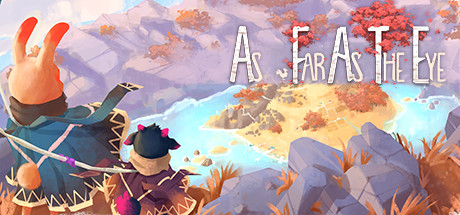
As Far As The Eye is a nomadic city-builder that reimagines the genre by abandoning permanence and embracing movement, fragility, and cyclical survival. Developed by Unexpected and published by Goblinz Publishing, Maple Whispering Limited, and Unexpected themselves, the game casts you as the guiding spirit of a wandering tribe known as the Pupils. Rather than expanding outward, fortifying settlements, or constructing empires, you guide your tribe across a vast, myth-tinged landscape toward a final destination called The Eye. Every step of the journey is defined by scarcity, transience, and the looming threat of an encroaching flood, which steadily consumes the world behind you. This reversal of city-building norms is the foundation of the game’s personality: success is not measured in territorial conquest or architectural grandeur, but in how well you manage time, resources, and your tribe’s survival as you drift from one temporary stop to the next.
Gameplay revolves around discrete “halts”—temporary campsites where you perform all your tribe’s essential work. Each halt demands that you assess the land, assign Pupils to gather specific resources, craft vital items, research knowledge, and upgrade your caravan. Because every halt is temporary, each decision carries urgency. Do you spend precious days constructing a workshop that will speed up crafting, or do you rush to gather food and wood before the flood arrives? Should your Pupils explore for rare materials, or should they focus on farming enough supplies for the road ahead? The tension between preparation and risk defines the game’s pacing. Time is the true enemy: linger too long, and the flood will consume your efforts; depart too quickly, and you may enter the next area unprepared. This create-and-evacuate rhythm gives the game its distinctive flavor—an ever-shifting cycle of productivity, evaluation, and movement.
What stands out immediately is the game’s atmosphere. The world of As Far As The Eye is presented through soft watercolor tones, gentle shapes, and calming animations that evoke a sense of dreamlike wanderlust. The art direction blends expressiveness and simplicity, creating landscapes that feel mystical without overwhelming the senses. This peaceful aesthetic is reinforced by an ambient, soothing soundtrack that accompanies your progress. It creates a deceptive serenity that contrasts sharply with the underlying pressure of survival. Even when your tribe is in danger or the flood is only a few turns away, there is a meditative quality to everything you do. This duality—the gentle look and sound paired with a demanding system—produces a unique emotional tone rarely found in resource management games.
Under the surface, the game’s mechanics are surprisingly complex. Pupils can specialize in various professions such as farming, foraging, crafting, or exploration, and their skills develop as they perform tasks. This allows you to shape them into experts tailored to your preferred strategies. The caravan and building systems offer further strategic depth, letting you increase storage, improve efficiency, or unlock new production chains. A knowledge tree introduces long-term upgrades that persist across runs, encouraging experimentation and incremental mastery. These layered systems give the game a strong learning curve, but also reward players who enjoy optimizing workflows and refining strategies over multiple playthroughs.
However, As Far As The Eye is not without its frustrations, and many of them stem from the same systems that make the game compelling. The difficulty is surprisingly high for a game with such tranquil presentation. Resources are limited, time pressure is intense, and random events can severely disrupt plans. One poor halt, a mismanaged task sequence, or bad terrain placement can derail a run. Because the game incorporates rogue-lite elements—unpredictable terrain layouts, randomized opportunities, variable event triggers—each attempt relies partially on luck. This unpredictability keeps the game fresh but can also feel punishing when outcomes hinge on factors beyond strategic control. Players expecting a calm, low-stress builder often find the difficulty jarring.
Another challenge is the lack of strong narrative framing. While the Pupils are charming in appearance, they are not individual characters with personalities or story arcs. They function more as units than as people, which limits emotional investment. The overarching lore is atmospheric but sparse, and players seeking character-driven storytelling may feel detached from the tribe they’re guiding. Combined with the repetitive nature of halts, this can make longer sessions feel mechanical despite the game’s rich aesthetic appeal.
Despite these shortcomings, As Far As The Eye excels as a thoughtful reimagining of nomadic resource management. It is a game about movement, impermanence, and adaptation—one that challenges players to think not about building empires, but about enduring hardship through planning, intuition, and flexibility. Its mix of elegance and tension, of beauty and constraint, creates a memorable experience that stands apart from traditional city-builders. For players who appreciate strategy titles that reward careful planning and enjoy the meditative pleasure of managing resources against a ticking clock, it offers a deeply engaging journey. But those seeking relaxed play, forgiving systems, or rich narrative characterization may find its survival demands too harsh. In the end, As Far As The Eye is a distinctive, atmospheric, and challenging game—an ode to nomadic existence wrapped in watercolor dreams and relentless urgency.
Rating: 7/10