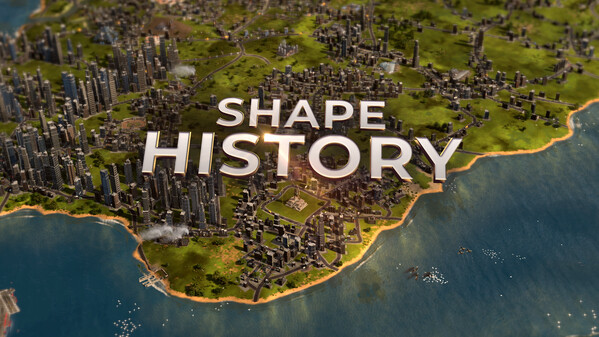
Build a nation starting at any point in human history and compete for supremacy in this epic turn-based strategy game. Engage in diplomacy, fight wars, and go head-to-head with other leaders from history.
Modeled estimate, not a reported figure. How we estimate →
Prices
Each in the currency that store quoted — not converted: the gap between two rows is the publisher's pricing, not an exchange rate.
14 of 15 markets; the rest we haven't asked for this title, not markets where it is unavailable.
Availability
We put this game to every storefront we collect. A market that answered not sold has told us something about the game; a market we never asked has not, and the two are never drawn the same.
About
Ara: History Untold is an evolution in historical grand strategy, featuring beloved classic PC strategy mechanics alongside innovative gameplay like a national crafting economy, true simultaneous turn resolution, a non-linear technology tree, and cloud-backed synchronous/asynchronous multiplayer - all with an expansive and vibrant presentation where you can zoom out from surveying the very edges of your empire all the way down to your citizens living their daily lives. In Ara, there are no pre-set paths to victory, leading to endless possibilities. Your choices will define the world you create, your experience, and your legacy.
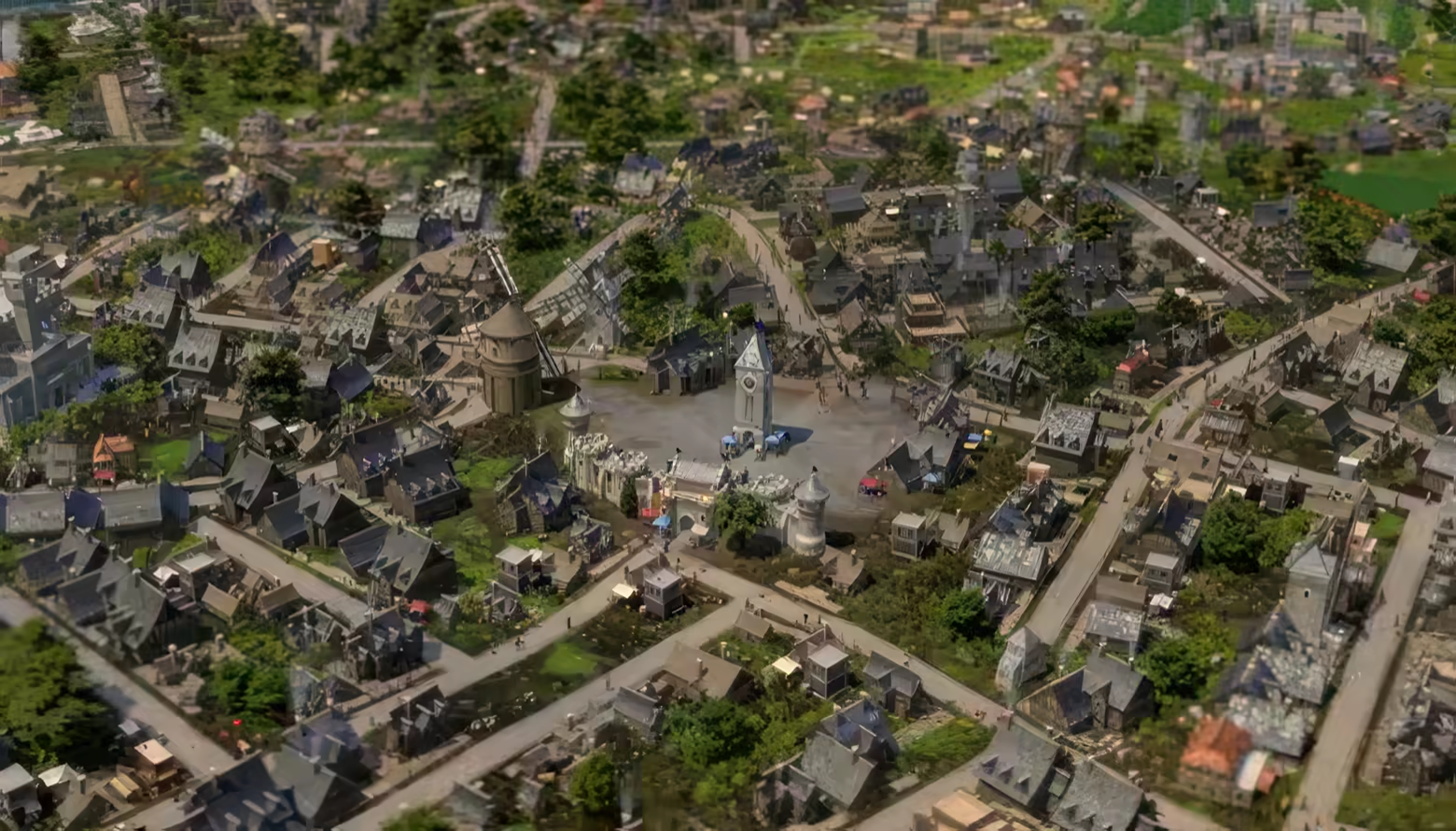
Explore an Immersive Living World:
Explore a dynamic living world filled with life and charm across sweeping landscapes ranging from tropical jungles to sand-swept deserts as you discover the resources you need to develop your nation. Witness the world come to life in vivid, realistic detail as citizens move throughout the world and react dynamically to times of health and sickness, war and peace, wealth and despair with unique biomes, cultures, and eras representing the diversity of human experience.
Build Your Nation:
Serve your people and grow your prestige with numerous Improvements, from forges to libraries, citadels to cathedrals, public parks to industrial factories - as well as a global variety of the greatest architectural Triumphs ever conceived and built by human hands.
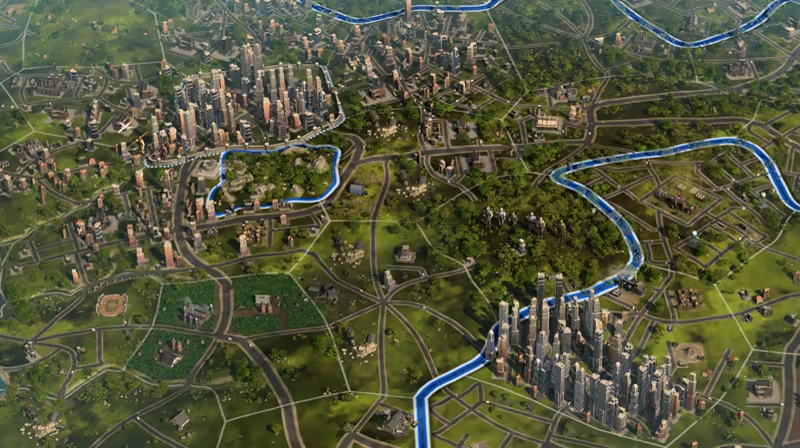
Guide your people through the eras of human discovery:
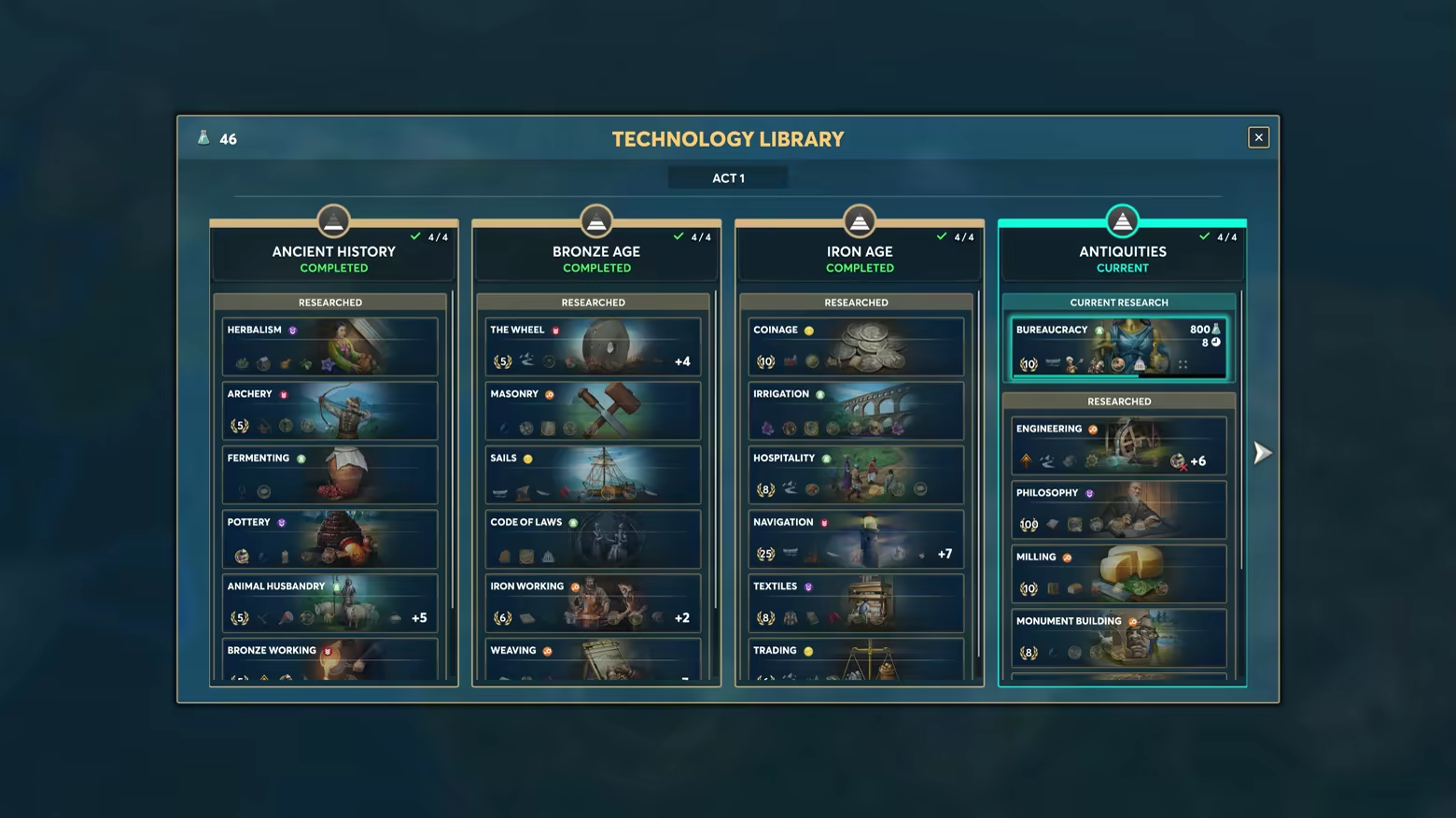
Nurture your people’s brilliance and invention as you progress your Nation through twelve unique Technology Eras, making the hard choices about where to focus your Nation’s greatest minds. As you near the end of each Era, you’ll have to decide how fast to push your scientists along the path to the future - at the risk of the present.
Oversee a rich and detailed national economy:
Harvest the bounty of the natural world and deploy the labor of your people with a depth-filled National Crafting system. Will you manufacture Amenities - like lavish feasts - to provide your cities and citizens with powerful benefits, or invest in the creation of Equipment - the weapons of war - to prepare your Armies to defend your nation or conquer your rivals? Whatever paths you choose you’ll need to carefully optimize your resources and production to achieve the most efficient systems if you want to outpace your rivals to fortune and lasting glory.
Rule Your Way:
Choose from dozens of history's most influential figures to embody as you reshape the world through your choices. The unique and varied global Leaders and Nations in Ara emphasize a wide variety of different playstyles. Experiment with gameplay-impacting Traits and powerful Leader Abilities drawn from the effect they had on world history. Whether friend or foe, each Leader has a distinct personality based on their historical background that informs their AI behaviors.
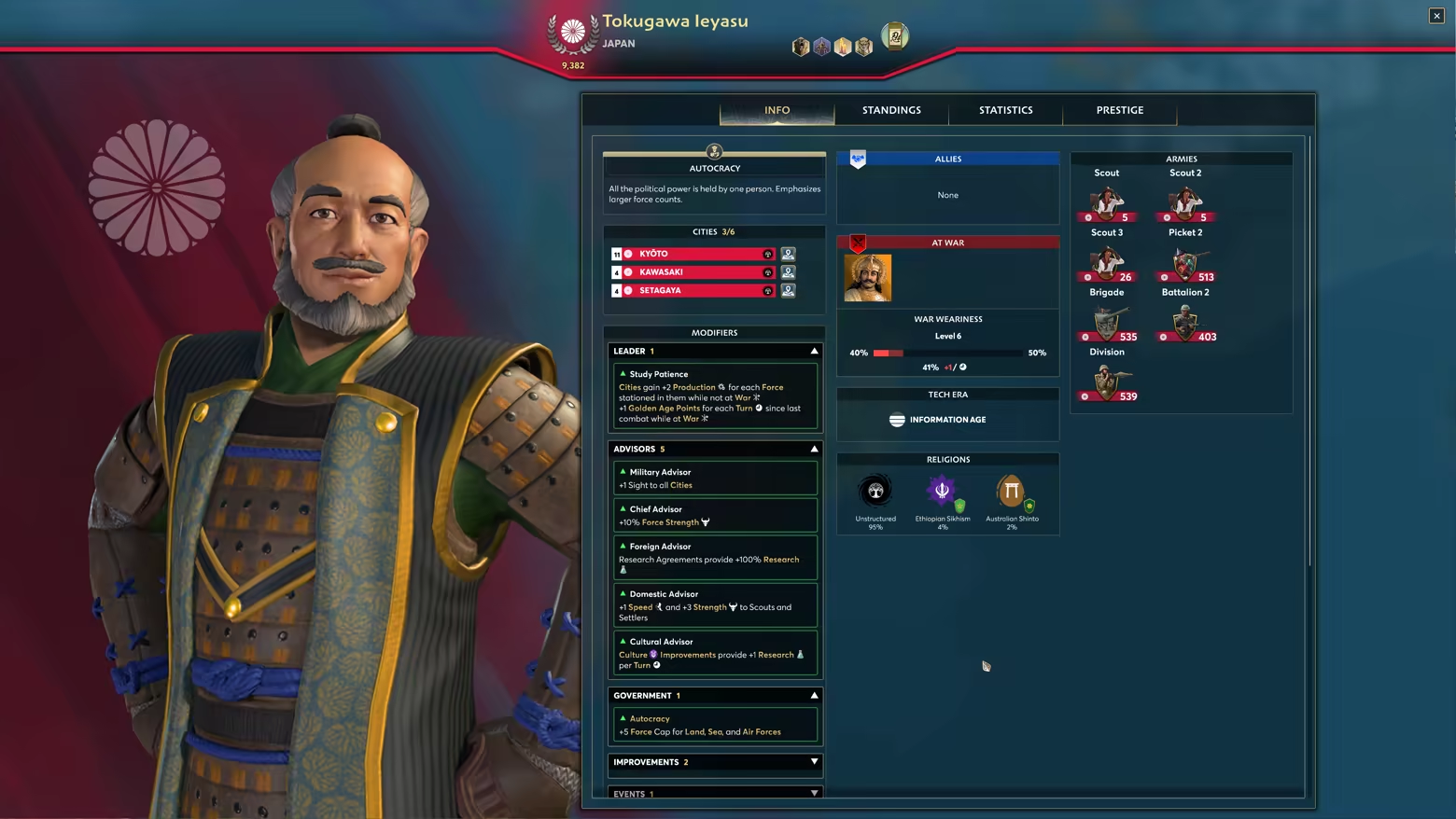
Grow your Nation:
Extend your reach and expand your Nation’s borders through claiming new territory, conquering cities, spreading your Religion, or by expending Influence. How your Nation grows and defines new borders is up to you.
Experience True Simultaneous Turns:
Every turn each nation's actions and choices resolve simultaneously, leading to suspense, anticipation, unique outcomes, and surprising twists on the classic turn-based formula. The fate of your people will be determined by your decisions and your ability to predict your opponent’s next move, putting your skill as a leader to the ultimate test.
Defend your people by land, sea, and air:
Warfare in Ara is presented in the Living World, as thousands of years of military conflict reflect the progress and martial prowess of your people. Develop technologies to advance your weaponry against your rivals, hone your wartime economy and industry to gain the edge, and outthink your opponent’s strategies as maneuvers resolve authentically at once thanks to the power of True Simultaneous Turns.
Prove Your Worth in Online Multiplayer:
Combining the speed and surprise of True Simultaneous Turns with the power of the cloud - multiplayer in Ara is fast, seamless, and able to be enjoyed asynchronously with a wide range of options to tailor you and your friend’s experience to the way you want to play together.
A Microsoft Account is required to play online multiplayer.
Updates
Build ids and update times come straight from Steam's PICS — the same source SteamDB reads. Patch history grows as we record new builds.
Engagement
Reviews
Themes across 821 recent reviews and how positive each mention is. A keyword signal, not full sentiment analysis.
Reviews
I started Ara on Gamepass, playing well over 100 hours there. Then bought it here on Steam. So my playtime is longer that whatever it says here. :) Anyway, I've loved Ara since it came out. When I found Civ 7's reveal (and later release) to be so disappointing, Ara gave me pretty much what I wanted. It's like Civ in many respects. It goes from ancient times all the way to the future. But it does also change the formula in ways I enjoy. A few of them are: 1. Simultaneous turns. Unlike Civ, where you move a warrior to a tile on your turn, then another player can't move to that tile, your orders represent your *intent* to do something next turn. Moving a unit to the next tile will happen next turn. Crafting a building (and using the required materials) will start next turn. Response to diplomacy occurs next turn. On the face that may seem odd, but it works in a way I quite like; it removes the advantage the player typically has in Civ, where s/he always has military move priority. In Ara, if you and an enemy player both move into the same tile, they battle. It just seems fairer. The only time this gets a little cumbersome is when you find yourself trying to track an enemy unit around the map. But this has been rare for me. 2. Territories and zones. I love the whole 'living world' thing. Very vibrant and fun. Instead of Civ's hexes, the maps generate territories. These are made up of between 2 and 5 or so smaller zones. These zones are where you build stuff like workshops, farms, etc. In warfare you can pillage enemy zones specifically, giving different resources. Building certain buildings in the same region will sometimes yield benefits (sort of like district adjacency bonuses in Civ 6). There's also some strategy in determining which territories to select as you expand in influence. A triumph (wonder) takes up all regions in a territory. So it's best to build those in territories with few zones. 3. Crafting goods. You spend a good deal of time producing goods for all manner of uses including improvement on your cities' various stats (health, happiness, etc), building units, trade, and increasing productivity of other buildings. As other reviews mentioned, when the game came out, these could get pretty micro. But the devs have done a great job of allowing you to get as granular or macro as you'd like. You can now manage crafting on a national basis. You can use policies that will auto-apply. So you no longer have to tell all 20 of your workshops what to do unless you want to. There are also a ton of strategic and luxury resources to give each player some sort of edge. 4. The Prestige system. Instead of winning a science victory, economic victory, etc., all victories are essentially a score victory. This is kept track of with Prestige. It's an amalgam of all sorts of things, from standing armies to cultural influence to religious prevalence and so on. It's nice to play the game fully designed this way, and not around specific victory conditions. Basically just play the best game you can in whatever area you can. At the end of each of three acts, a player (or I think more if you set it that way) is removed from the game (you can set this to exempt humans). This opens the map to settle their former lands as they disintegrate into barbarian clans. Since release, the devs have done a lot of work. They've added cultural policies (like perks you can 'buy' with influence), vastly improved AI behavior, better trade and diplomacy, huge improvements in performance (especially late game), aforementioned tweaks to the crafting system, nukes (!), and even unique units for all nations. I wish there was a minimap, and I wish the maps could be larger. Would be nice to have true start Earth (currently it's not true start location). I'm hoping to see a major DLC that maybe adds more unique units, buildings, terrain types, maps, and triumphs, an espionage system, world congress of some sort, maybe some natural disasters. But all in all I really enjoy Ara and would recommend it.
Media

Related
Related
Price dynamics, follower growth, revenue and sales trajectories with interactive tooltips
This and every other Pro feature is free until October 20, 2026. A free account is all it takes.
14 on sale1 answered “not sold”0 we did not ask
The 1 “not sold” market is read from the Steam price pass of Aug 31: that day the store answered for this game elsewhere and gave no price there. The 14 priced markets are the same rows as the table above — each the latest price we hold, dated here when it is older than that pass. The 0 marked “not asked” were not put to this store at all — either it has no storefront there or we do not collect it yet, and neither is a statement about the game. A refusal is a refusal on one day; a store can list a title again tomorrow.
Genres
Stats
All-time low is the lowest price we've recorded for this game since we started tracking it.
Languages: English*, French*, Italian*, German*, Spanish - Spain*, Czech, Danish, Dutch, Finnish, Greek, Hungarian, Japanese* +14 more
Hours played at review time, across 822 reviews with recorded playtime.
positive critical· bar length = how often the theme comes up
I really like this game. It's fun. It isn't Civilization, to be sure. But I like the unique concept the cities commanding a "region" that's a bit different from Civ. And like Millennia, it's economy is is a whole lot more complex with an entire world of different goods and resources to handle. The only real downside, is the loading screen. The loading screen takes F.O.R.E.V.E.R! But when it does finally load, it runs smooth as butter. Definitely a thumbs-up.
I initially ignored the reviews mentioning this game being 'woke,' but I now realize that was a mistake. While playing as Greece with Greek Hellenism as the religion, I noticed that all the recruited missionaries are depicted as Black characters, and even the missionary icon features a Black man. This feels out of place and detracts from the immersion for me. I plan to request a refund and hope it goes through, as this aspect of the game doesn’t align with my expectations.
Short Version: Game is mid rn, but the devs seem like they care to make it better, keep an eye on it and do not un-wishlist. I am only rating it negative because I do not feel it deserves a positive for its pros by comparison to its cons. Long Version: The main appeal to this game is actually the economy balancing and trade. Learning the "Production Train" system is obtuse at first, but actually pretty interesting when it finally clicks for you. This allows you to have a fine tuned economy and your cities stats in interesting ways to attain any short or long term goal you set. This system also makes trade between other players far more interesting in terms of if you straight up cannot make a resource but your friendlier neighbors can. Not only can you access new resources this way, you can actually make more money too in a way that feels far more satisfying. I bet it makes multiplayer diplomacy much more complex too. The religious and cultural trait bonuses are well done and not overly limiting or minor boons at best like they are in other 4x games. I wish you could continue to pick new ones the whole game though. I will say, the luck of the draw aspect of what you get is pretty bad, with some literally just being worse versions of others. Military aspects are basic and under developed with no standout features in terms of strategy. Apparently they are working on this, but as of now they have an interesting concept of "Formations" to apply to small battalions (similar to Sega's Humankind army system) but this is completely undercut because in this you can doom stack all your battalions onto a single tile anyway. I am sure it makes some kinda difference, but it ultimately is a battle of "My number is bigger than your number" and there are no real tactics after it hits that point. It is also crazy easy to lock their units in a throw away army battle while your real forces swivel beside it or even just spam 1 unit armies to raid everything to oblivion. The formation system should stay, with more units per army, and the stacking of armies needs to go. Lastly, unique units have no unique traits or abilities, just slightly higher combat strength. That being said, they do have the options for multiple leaders of a culture/nation, but only 4 cultures have this option. It may be a long term idea or maybe even access for modders to have the infrastructure to do this as well, but it is very odd. The leaders come with different abilities though, but there are large issues with some of them. The main abilities of each one seems well balanced enough (mind you, I just got the game) except for Alexander the Great's who is insanely strong... and actually should be swapped with Rome's ability when you think about them. As for their four other minor ability bonuses, they are neat but wildly different levels of usefulness. For example, there is one that gives +50% Combat Strength for the first 5 turns after declaring a war. Interesting opportunity for a rapid invasion. Then there is one that also does this if you're the defender. So... they cancel out and there is no real point in that situation. Why does the defense one be equally as strong and last the same amount of turns? Most wars last 20+ turns anyway, and from my experience it usually takes 2-3 turns for heavy fighting to really start. It also takes 4 turns to deploy forces so you really only get 1 turn of this bonus if you have a larger empire and are unsure where they will strike first. Meanwhile, they could wreak havoc from turn 1 theoretically. Or another one: Independent giving +3 housing in non-capitol cities. That saves you exactly 1 building slot. Yay... Lastly, the production chain system is great, but the raw resource system is pretty limiting and weak. You have Food, Wood, Materials, and Gold. Food and Materials are everywhere, and very, very early into the game, become completely inconsequential. Gold? Obvious how it is useful. Deserts produce the most gold, which is cool in that it makes desert tiles not pointless, but when you combine that with the fact that you straight up cannot make more wood without access to forest(s) in the first place? Sucks to be you, your economy is now crutched. Aside from access to an important tile resource, Desert and Woodlands are by far the most valuable lands to get and fertile plains are actually the least important. Other than that, they got some QoL issues that need to be worked on to make things a little easier to read/understand quickly or select units better. A multiselect function would go so, so far. All in all; seeing how they remade the game with its 2.0 and seem very open to criticism and actually doing something about it, keep an eye on this game. It feels like they tried too many things at once and have not refined this high potential concept, but they are trying so do not let it fly off your radar.
This game has potential to be so good. The main thing that holds it back, in my opinion, is the midgame tedium of the crafting system. I've only played post 2.0, which supposedly addressed a lot of UI issues, but I still found it utterly unenjoyable to engage with the production UI. The combat is also a bit vague but not in a way that took too much from the game for me personally. If the production UI was better this has potential to be one of my favourite 4x games.
[h2]Гідний конкурент Civilization чи чергова невдача?[/h2] [i]Нестримний ритм сучасного світу змушує гравців шукати швидкий дофамін у динамічних іграх. Виділяти декілька днів на проходження стратегії стає розкішшю. Та попри регулярні заяви про "смерть жанру", ми бачимо зворотнє — стратегій більше, ніж вільного часу на них. Тепер свою "Цивілізацію" захотіла зробити й Microsoft.[/i] [h2]У пошуках підводних каменів[/h2] [b]Ara: History Untold[/b] — це нова покрокова стратегія від Oxide Games з неочікувано захопливим ігроладом. Ваша ціль — розвинути свою цивілізацію, пройти через ери розвитку й перемогти суперників, здобувши якомога більше очок престижу. Та попри спільний ігроладний фундамент із Civilization, графічно Ara є більш деталізованою на рівні міст. Життя в районах вирує, і ви можете спостерігати, як працюють виробництва, ферми, та як живуть мешканці у спальних забудовах. [h3]40 цивілізацій на вибір[/h3] Я був вражений кількістю доступних цивілізацій на старті — аж [b]40![/b] Це удвічі більше за конкурентів (без урахування DLC). До типових Німеччини, Риму, Японії та США додалися Черокі, Зулуси, Візантія й ацтеки. Кожен лідер має унікальні бонуси, що впливають на розвиток. [i]На жаль, України тут немає, як і української локалізації.[/i] [h3]Живий світ та процедурно згенеровані карти[/h3] Ігрова карта виглядає гармонійно: ліси, річки, гори, пустелі — усе створено процедурно. Жива природа додає атмосферності: тварини блукають територією, а племена ведуть власне життя. На початку ви отримуєте місто, а прилеглі землі розбито на сектори для ферм, виробництв і майстерень. Важливу роль відіграють бонусні ресурси. Наприклад, якщо поруч росте виноград, ферма може виробляти або більше їжі, або ще й виноград. Відкривши виноробство, можна виготовляти вино — торгувати ним чи роздавати мешканцям для покращення їхнього рівня життя. [h3]Швидке дослідження та взаємодія з племенами[/h3] Розвідка тут [i]дуже[/i] швидка, інколи аж надто. За кілька ходів ви відкриєте велику територію, знайдете племена, ресурси й хижаків. З племенами можна торгувати, виконувати їхні завдання або ж просто стерти їх із мапи. [h3]Економіка - топ, бойова система — ну таке собі[/h3] Управління економікою та розвиток міст реалізовані добре. якщо не зважати на зростаючу складність із часом. Проте бойова система — [i]одне зі слабких місць гри[/i]. Ви просто формуєте армію, відправляєте її в потрібну локацію й дивитеся, як відбувається автоматичний бій. Єдиний плюс — сцени битв показують сотні воїнів замість звичних анімацій на три модельки. [h3]Від античності до майбутнього[/h3] Проходження [b]Ara: History Untold[/b] поділено на три акти, кожен відповідає різним епохам: [u]Акт 1[/u]: Древня ера, Бронзова доба, Античність [u]Акт 2[/u]: Середньовіччя, Ренесанс, Просвітництво [u]Акт 3[/u]: Промислова революція, Атомна доба, Інформаційна ера, Майбутнє Перехід між ерами залежить від досліджених технологій. Для переходу між актами треба набрати достатньо [b]престижу[/b], який дається за культуру, війни, науку та економіку. Ara затягує на десятки годин, і я однозначно рекомендуватиму її доcвідченим циволюбам, які шукають чогось нового у жанрі покрокових стратегій. А щодо новачків, то все залежить від того, наскільки ви терплячі, щоб пройти туторіал, і чи маєте бажання вчитуватись в ігрову енциклопедію. Технічний стан тішить, і навіть на пізніх стадіях прорахунок ходів ШІ не займає багато часу. [h3]Вердикт[/h3] Ми звикли, що глобальні стратегії виходять як "платформи", які потім добивають десятками DLC. Але навіть без доповнень [b]Ara: History Untold[/b] вже зараз виглядає дуже об'ємною: купа ресурсів, виробництв, релігія, дипломатія, відомі історичні постаті. Проте гра не без недоліків: бойова система слабка, складність управління на пізніх етапах, а відсутність України та локалізації — розчаровує. Ara могла б стати беззаперечним хітом із великим запасом ходу, доклади до неїй ще трохи часу прибравши явні недоліки пізньої стадії гри. Тепер же все в руках спільноти, яка може не просто казати, що хоче чогось нового, а й дійсно підтримати круту стратегію й дати початок новій успішній серії.
TL;DR just go play Civ 5 Is it impossible to make a good 4X grand strategy game in the modern day? First Civ 6, then Millenia, Humankind, and now Ara: History Untold (and also Civ 7 as well lmao) all fail to hit the mark in being a true successor of the 4X grand strategy genre. Ara: History Untold (or A:HU) advertises itself as an evolution of 4X grand strategy with its biggest feature being a fully detailed economy management system. The management that is required of the player to make anything of this system is so bafflingly tedious it makes Victoria 3 look incredible in comparison, and that game sucks too. You will need to manually control production chains across dozens of different workshops for over 100 different resources, all used for different crafting recipes or accelerators. This is not an optional part of the game, you NEED to choose which resources you want to produce, while balancing production and consumption for all of the other resources in the production chain so your workshops stay efficient. If this doesn't sound interesting you should not buy as this is what you will be spending most of your turns past the early game. While the economy system is disappointing, my biggest disappointment is the warfare system. The warfare only really functions as a way to disable your rival's economy, as conquest will just mean inheriting a giant mess that you'll have to untangle to make the city profitable. That is assuming you can even capture another city since the city cap in this game is incredibly limiting. World conquest or "map painting" is by far the biggest reason why I play grand strategy games. Building a rich and powerful economy in a grand strategy game is just a tool to build an even bigger army to roll over your rivals. This game actively discourages this play style through its tedious economy management and low city limit. This is incredibly sad too, since, even if you are playing on a smaller map, large amounts of the map will be completely empty, even in endgame. The players with the lowest points will be removed at the end of an age, cities and all, making the map feel even more empty. I played this game on release and did another quick play through recently, the devs will respond to a lot of negative reviews to check out the patches they have made. From what I could tell, the only noticeable fixes were game performance and some UI improvements. The fundamental gameplay is unchanged and remains boring, and I don't think the devs have any plans on revamping the core game design, so I cannot recommend playing Ara: History Untold.
After almost 50 hours of play, I feel I won’t open this game again for a long time unless there is a huge update. In general, I will give a negative review. The game has some really good designs, but the problems stand out much more seriously. ---------------------------------------------------------------------------------------------------------------- Good: (1) Really cool production chain design Unlike traditional “void” production, this game gives you a real sense of production. For example, you need crops to produce bread, and you can use salt to improve efficiency. You can even substitute crops with money-food, etc., based on your storage, which provides deep strategy. (2) Brand-new troop resource control Combined with the production chain, how you build, maintain, and manage troops is very different. Of course, you need to produce “internal combustion engines” to build a tank. But once a tank is built, you still need fuel to maintain it. This game solves a critical issue with strategic resources in other 4X games (Stellaris, Civ, Humankind, etc.), which is super cool and fun to play. I got a great sense of achievement when I built my first tank. (3) Better economic concept In other 4X games, production is everything, but in this game consumption is the key. Clothes provide bonuses when used rather than sitting in storage. This is a very different view of a 4X economic system, and I personally love it. But note that it’s not as deep as Victoria 3 since this is not an economic simulator. If you like the points I mentioned and think the price is fair, go get it. If not, or if you still have doubts, you better read the problem list below. ---------------------------------------------------------------------------------------------------------------- Problems: (1) Super cheap leader and culture design I’m not joking when I say “cheap”: the leaders and cultures are just compositions of different fixed traits. For example, if a leader is “warlike,” then all warlike leaders get the same bonus like +3 Force. There is no unique model for each culture; everyone looks the same. Every culture only has one special unit. If you’re a culture-enjoyer or someone who loves playing certain countries, this is definitely not a good game for you. (2) Boring endgame The endgame is extremely boring — you just compare score, and there is no other victory condition. Your buildings, wars, masterpieces, and science give you points, and at the end you simply wait hundreds of turns and compare your score with the AI. Even worse, there isn’t even a second way to end the game. In Humankind, you compete for stars but can choose different victory paths like science, cultural, etc. In THIS game, none of that exists. Whoever enters the final era first triggers a 25-turn countdown and the game ends. It lacks any meaningful endgame design, and because of how score is calculated, it’s hard to beat the AI since they get huge bonuses rather than improving strategies. You will get bored quickly. (3) Weak map design I still don’t understand the meaning of each map type. The map is so crowded that 3–4 AIs will just start right next to you. The map and resource distribution are also not good — sometimes you find pigs in the South Pole and sugar in the desert, which makes no sense. The irregular-shaped map doesn’t seem to have any advantage. It feels no different from hex tiles; you still explore adjacent tiles first. Distance calculation might be different, but it doesn’t matter much in this game. (4) Building interaction is unclear The game has a very strange way of calculating production and bonuses. There are too many different concepts: city production, building production, craft production, harvest production… and the calculations are not clear at first glance. It takes forever to understand that “tractor improves farms by +300%” does NOT mean ×300%, but instead is based on your city production. The game fails to teach players how the numbers work, and some designs are just terrible. For example, the bakery gives +3 food to economic buildings — so the guy working in a hotel near the bakery becomes less hungry? (5) Fails to let you manage your region properly This game has a destroy button but does not have a move button. New buildings with good combos often appear later, but you are forced to fill your tiles in the early game with “trash” buildings, and it becomes really hard to fix the layout afterward. For example: blacksmith + gunpowder factory is a great combo. The blacksmith gets huge bonuses from the gunpowder factory because it is a military building and can use city production. But in the early game, the blacksmith appears first, while the gunpowder factory shows up 1–2 eras later. So you either leave the tile empty (which hurts your early game) or fill it with useless military buildings like a castle or barracks. And later on, it’s very hard to change your layout. ---------------------------------------------------------------------------------------------------------------- Conclusion: Some ideas are good, but they remain just ideas. The game currently feels like a good concept demo, but not something that brings long-lasting joy to play. If you love the brand-new designs and want to try them, it’s okay. But as a player, I cannot recommend it at this stage.
The devs can't fix the issue with shaders on NVIDIA hardware for several months now, despite repeated calls from the players. The issue seems to be exlusive to ARA, yet the game updates ignore the issue, with devs blaming nvidia.
It's not perfect, but I really like a lot about this game. It is very micromanagy at times, however the updates have made it a lot smoother of an experience to learn and manage. I'm a fan of the forgotten cilivilization feature and I love how you acquire territory. The small details from the aesthetics down to the xylophone melody that plays when you over over clickable options in the game menus make it a work of art in a lot of ways. Being a fan of the Civ5/6 chessboard-like unit placement, I thought I'd hate going back to stacked units, but I actually don't mind how armies are managed in this game. As some have mentioned, it does have a Total War feel to the combat system. All in all, I'd love to see where they take this franchise moving forward. I can see a sequel smoothing out some of the gameplay pitfalls to create a really compelling game. Hey, at least it beats Civ 7 and Humankind. Nothing like constantly rotating cultures to make civilizations feel nice and meaningless! Mayans changing into Germans... yay.
Active players
Estimated daily and monthly active players (DAU/MAU) modeled from peak concurrency.
Players by region
Where this game's players are, estimated from review languages.
Players also reviewed
The games this title's players most often review too — audience affinity.
Related
| Game | Estimated lifetime revenue | Reviews | Review score | Price |
|---|---|---|---|---|
| — | 0 | — | — | |
| $121.8M | 62K | 47% | $69.99 | |
| $22.6M | 16.2K | 63% | $59.99 | |
| $7.4M | 6K | 83% | $39.99 | |
| $4.8M | 3.8K | 67% | $39.99 | |
| $941.7K | 7.8K | 89% | $4.99 |
Related
| Game | Estimated lifetime revenue | Reviews | Review score | Price |
|---|---|---|---|---|
| $3.9M | 7.9K | 92% | $24.99 | |
| $3.9M | 6.9K | 87% | $29.99 | |
| $3.9M | 4.2K | 78% | $24.99 | |
| $3.9M | 3.8K | 78% | $29.99 | |
| $3.9M | 2.7K | 74% | $38.99 | |
| $3.9M | 9.3K | 90% | $19.99 |