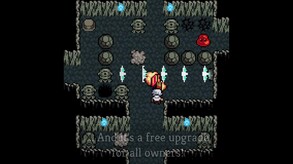
A 2D action-adventure through a surreal, subconscious world. Explore moody dungeons, buildings, and atmospheric lands, evoked by dreamy music and visuals. Help the human Young awaken from their dream!
Modeled estimate, not a reported figure. How we estimate →
About
A 2D action-adventure through the surreal subconscious world of the human Young. Explore dungeons set in apartments and hotels, and atmospheric lands, all evoked by a dream-like music and visuals. Talk to bizarre characters and navigate puzzle-and-combat-filled dungeons. Can you help Young wake up?
Explore the world's fields, caves and dungeons in order to open up portals in the Nexus, connecting you to other lands. You'll have to solve puzzles and defeat enemies along the way.
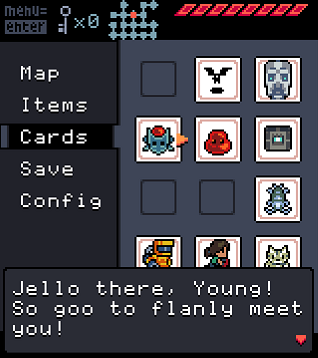
Search for mysterious cards to help you dive deeper into Young's mind! Health upgrades will help you survive deeper reaches of the dream.
Check out the sequel, Anodyne 2, too!
In a surreal dream world, a nonlinearly connected land of natural locations (forests, cliffs), abstract places (space), urban locations (hotels, temples), and more.
Use your broom to defeat enemies, and solve puzzles in multiple large dungeons and mazes.
Talk to strange NPCs, and gain insight into the psyche of the silent protagonist, Young.
Find mysterious Cards scattered throughout the game in order to unlock deeper reaches of the world.
A 6-8+ hour action-adventure, with plenty of surprises after the credits roll...
The 2013 game that started it all for indie studio Analgesic Productions!
Some players say this reminds them of Link's Awakening or Yume Nikki.
Note on pricing difference vs consoles: the Steam version grants access to both the Anodyne Remastered and Classic Anodyne. Thus, the price of the Steam version was updated to reflect inflation and current pricing standards. The console version currently does not (as of 2025) have Anodyne Remastered.
Content Warnings (Light spoilers)
Low-res pixel art (like in the style of the screenshots of): Suicide by hanging, mild horror, murder by blunt objects, dead bodies, stabbing, blood stains, mentions of sex, unexpected killing of an NPC. Rare strong language. Note this isn't representative of the majority of the game, but it is unavoidable.
Genres
Stats
All-time low is the lowest price we've recorded for this game since we started tracking it.
Languages: English, Japanese, Korean, Spanish - Spain, Portuguese - Brazil, Simplified Chinese, Italian, Basque
Engagement
Hours played at review time, across 40 reviews with recorded playtime.
Reviews
Themes across 40 recent reviews and how positive each mention is. A keyword signal, not full sentiment analysis.
positive critical· bar length = how often the theme comes up
Reviews
i just cannot stop coming back to this game. i kept playing the original version from itch.io over and over. i kept playing the switch version over, and over. and now i've got it on my steam, to play over and over until the end of time. Anodyne strikes every last chord with me. the irreverent humor poking fun at classic zelda tropes, over a winding, ethereal Land that often makes you feel uneasy. the soothingly haunting soundtrack lulling you into a trance, as an inexplicable narrative of aimlessness, perseverance and futility is subtly woven. i can't get over it. you can push this game hard, and it always finds a way to push back, yet at the same time it's perfectly content with just existing alongside you. it feels like every question has an answer, but any answer is as likely to be denied as they are given. it can all be frustrating at first, but you eventually find a way to simply drift along for the ride. Anodyne is still as beautiful as the first time i laid eyes on it.
This is a review I probably should have written over 10 years ago when the game was first released and I played it for the first time. I cannot recommend this game enough. In fact, it's pretty much the one game I do recommend to all of my friends, and I've gotten a lot of my friends to play it! It is without a doubt my favourite indie game, full stop. It's even marked as my favourite game on my Steam profile for the last decade. I own a copy on pretty much every platform it's available on! This is definitely a spiritual successor to [i] Link's Awakening [/i] (and the GBC [i] Zelda [/i] games), and even throws out some references to LA in the game! If you're a fan of [i] Link's Awakening, [/i] or really any of the 2D [i] Zelda [/i] games, [i] Anodyne [/i] is absolutely for you. I personally don't think it could have been done any better in capturing that original Zelda-style adventure with puzzles, dungeons, items, combat, and story. It's a fairly short adventure, but that doesn't take away from the fun you get out of it! For some reason, I never see this game recommended when others ask for game recommendations, and that makes me sad. This is the game I always have and always recommend to everyone looking to play something new. If you're reading this, and you haven't played Anodyne yet, let this be your sign! I really hope you enjoy it as much as I have over the years! TL;DR: [b] Play Anodyne! [/b] Especially if you like classic Zelda games! (Side note: All of Analgesic Productions games have been excellent!)
[b]A weird dream adventure with Yume Nikki feel, in pocket Zelda format . . . and probably some metaphors too[/b] While I'm not the most ardent fan of bluntly metaphoric storytelling, oneiric weirdness and cucumber-cool atmosphere [i]get me[/i] with some frequency. So it is here! Instead of a sword, Young early on equips a broom for his [i]subconsciousness quest[/i] -- he can load it up with clots of dust he can deposit to block projectiles or even power machines, which is not something I've seen in [i]any[/i] game, quite. Also, it functions as an ordinary stabby [i]Zelda[/i] sword (because it would be kind of inconvenient to kill everything with some roundabout sweeping mechanic). The overworld is a smorgasboard of gently odd discovery and funny, silly characters. The dungeons are short, sweet, and plentiful -- built simply enough to solve quickly, but open-ended enough that you have some active pleasure in their completion. They're nicely addictive! Once I started on one, I had to whip right through and get everything inside. I whistled all the dungeon themes and most of the music constantly [i]while[/i] I was playing the game -- all the neat little ghost tunes of the digital ghost world -- and though I don't remember any of them [i]now[/i], they must have been pretty invasive at the time. (It's like you remember the ghost, but not the ghost's face.) The general roving is pleasant, but the small, square, GBA-style "screen" is a bit cramped for the design of the bosses -- for the frantic bloody [b]goop[/b] monster, for the nightmare hobo of the hotel-top, especially -- which means that trying to move around [i]strategically[/i] will just get you flustered and killed, so it's better to wail on them in a few select spots till they're dead. The last two encounters, with lots of hopping to avoid things, are the exceptions. A concentration on that third pseudo-dimension makes the difference! So what does it all mean? What [i]is[/i] the metaphor matrix, here? That Young spends too much time in worlds of cultural creation, tapping at vidya, hoarding cards? Some indications point to this, while others seem to poke fun [i]at[/i] this very criticism: the boss called the Wall, for instance, who mispronounces Young's name [i]on purpose[/i], and denigrates his love of "Nintandos" and card collection. (I love this encounter!) Or maybe not, after all. There are a bunch of things in there about "waking up" and "dealing with people." Whatever the case, it's just a fact that human beings tend to get "trapped" in sub-worlds anyway, and it's [i]not[/i] something to get torn up about -- not unless hallucinations are involved. All around us, people are completely and [i]willingly[/i] hypnotized, for instance, by the news media of their choice. Whose fault is it when the missiles fly and things come apart? Probably the "demonrats" or "cuckservatives," or even the people getting bombed -- never the obvious culprits they'd rather not consider. Sports fans live with one foot (at least) in [b]Ball World[/b] until the day they die. Movie fans traverse the [b]Cinemascape[/b] for untold kalpas of subjective time. (Don't I know it! Don't I love it!) Have you considered how much [i]in-gazing[/i] it takes to just read a novel, much less write one? (And it doesn't even have to be a very good one!) Ever fold an origami figure? While you do it, you are [i]out[/i] of it, brother. I guess we humans just don't find bare, Rex Mundi reality very satisfying. So pick yer poison, matey! Pick your [i]haze[/i]! You're gonna have one, regardless! (That thing the Wall does to Young I always call [b]DVPM[/b]: Dismissal Via Purposeful Mispronunciation. As in, "That ol' [i]sashi[/i], that raw fish or somethin'? Not for me, no sir!" You know [b]damned well[/b] how to say it, you [i]salt of the earth[/i] idiot!)
Anodyne is perhaps the best title to give this game because that's how I felt playing this. It almost lands in terms of gameplay. The main issue is that enemies rarely pose much threat to you on virtue that none of them can hurt you more than one health piece, including the bosses. The only exceptions are two enemy types that you can't hurt and are designed for the purpose of avoiding. The ghosts are placed in wide open spaces so avoiding them is trivial. Some of the houses cluster them a bit, but it's too easy to escape the house entirely and reset their ai if they're becoming too dangerous. The other is a mummy in the 8-bit level and considering that level is designed to waste your time 75% of the encounters with these enemies don't serve as a barrier and are usually ignored. The scenarios you do have to avoid them in are a very obvious "hide in a corner and wait for them to walk past you" setpiece that's so rudimentary that these sections are boring. Since enemies do low damage, it's way too easy to mindlessly brute force everything. Often times I'd be ramming myself into enemies since their layouts rarely cover for each others space nor do nearby hazards threaten you enough to care. Hell, you don't even get damaged if you fall down a pit. This wouldn't be so bad if health pickups weren't so generous and there weren't so many savepoints that healed your entire life bar. Or that your lifebar wasn't so big. Or the enemies didn't die so quickly. I wager the intent of this design is to make the every room its own compact challenge without leaning too much on the overall attrition of dungeon crawling, especially since the screen resets upon leaving and reentering, but I think that just makes the game boring when the moment to moment is so rudimentary. It's a shame because I do think there are some creative ideas in the enemy design. I like the enemy that sprays gas to mess up your controls which could have been cool if hazards and other enemies posed more of a threat since stuff that can mess with your flow is neat. I like the big lion enemies that shoot fire, those could control space in cool ways but they just put them alone in a room and usually you can just walk past them unless the game forces you to fight them. Hell, I think the template for most of the bosses is solid but they all run into the issue of not hurting you hard enough and dying too quickly. I felt like I was being blue balled in every boss fight given how quickly all of them end up dying so quickly, especially since some like the circus fight have a strong setpiece but I ended up being able to brute force it too easily because they barely did damage to me. Aside from combat, a lot of the level design is puzzle based but I think the issue with them is that they're too easily solved. In virtually every case, the first solution you come up with is going to solve it. The only time it gets a bit creative is with the centipede enemies but I feel they put the scope of them too low to be interesting. Any time you encounter them, there are only 1-3 of them in the room at most and they typically section them off to a small section of the room, which makes the scope of their puzzles too simple to be interesting. Mechanically, it's intentionally limited. The main weapon has an arc like NES Zelda but movement is more akin to the GBC games. Nothing wrong with this, but it feels kinda meaningless when enemies don't take advantage of your vertical range and come at you at differing angles to force you to reposition properly. You also get a jump which is fine when you're using it for the intended purpose but it's very funny how many cases there are where you use the jump to skip sections of the gameplay. The dust mechanic is novel but you're not able to take it with you beyond the screen you're in and that limits its utility drastically, and it's only used for two things: blocking wall projectiles and as a raft. The former is always conveniently laid out to you making it trivial whereas the latter is mostly just gating, since nothing really changes mechanically while you're on the dust raft other than there being occasional currents that affect movement speed. These *could* be cool but the only thing these currents affect is pacing since they're never used for any setpiece to challenge you or provide obstacles in fighting enemies. Narratively It's a subtext heavy game that inspires a lot of different interpretations. But I think the main conceit is about social anxiety and isolation with the pains the come with that. Everyone is looking to find ways to escape pain or danger, and the abstractions point to the difficulties of social acceptance. But the issue with this is that any interpretation of this is superficial about how social interactions are played into and its shock value doesn't exactly make it more biting when the direction it's taking is simply pointing to the existence of social anxiety and how this can exist. Okay, what are the ideals your family embrace that put you at odds with them? What's the social environment and how does your identity tie into this? What does the social anxiety turn you into? What exactly is the "dark side" that represents your negatives? What makes you, YOU? The symbolism seems to only want to address the existence of anxiety and social isolation without any real context that these things exist in. The "just accept yourself :D" conclusion it reaches with all this is also painfully bland in a way I find eyerolling. But to give it credit; for as superficial as it is, the way these ideas are communicated are very cool. The normal people being harmless obstacles that seem threatening at first but easy to run past is a really cool way to represent generic social interactions and how self-imposed these fears are. The "Youngtown" segment is a great way of communicating complacency in the face of catastrophe underlaying in society. I take little issue with the way its symbolism is represented. But I feel what doesn't deliver to me is that as a game that comes from the heart and from someone's personal experiences, I feel like I have no idea who this person is. It asserts high value in human connections but doesn't feel it wants us to connect to anyone beyond a superficial representation of what they are. It's overly broad to the point of feeling indistinct and there's thousands of stories that more directly deal with the same superficial themes, it's just this one coats this in heavier symbolism than most. I can get the reasons people resonate with this because such broad framing is easy to self-insert relatability into but I find surface level relatability boring and shallow. I want something more meaty if you're going to do an abstract representation of your life experiences and the only meat here is abstraction. It's far less biting about social interactions than it thinks it is, and honestly if I can find similar conclusions and themes in something like Legally Blonde and Little Miss Sunshine then I don't think what Anodyne boasts is all that impressive in actuality. At least those films had people in them that are more tangibly defined.
Apart from Look Outside, Anodyne is the closest I've come as an adult to wiping EarthBound from my memory and experiencing it again. So there's that.
[h1] 8-bit Zelda clone. Not that interesting unless you like those tiny bitsy games like Pokemon and such then you might like it. For me it's a bit waste of time. Navigating through map to solve simple sokoban like puzzles or pushing some switches to unlock passages. Most of time you gonna explore map and search for new opening. Overall bongos. [/h1]
Admittedly, I didn't beaten the final boss and watched the ending on YouTube. I am recommending it because I think a lot of games should be this surreal.
+1
There's something uniquely intriguing about seeing games made by bold creative voices that heavily lean on pastiches of existing properties. A designer's sensibilities become especially clear when you can see what bits and pieces were especially emphasised, comparing them to pre-existing titles to reveal all the ways that the game is able to extend beyond the idea of "being just a clone". Anodyne is inspired by the 2D Legend of Zelda games, this is undeniable, and yet, there's sooooo much here that sets it apart from that series, both in terms of its priorities and how it presents itself. The biggest way this shines through immediately is in the game's total lack of interest in item progression, only really having a couple of very specific moments that directly add onto the verbs that you're utilising in your playthrough, After having Angeline Era is seems that this might just be a common trait amongst Analgesic games, focused more on a very small number of tight mechanics at the player's disposal with the escalation coming far more from the outside elements forcing you to use those limited capabilities in completely novel ways. Despite the lack of tangible escalation in terms of what the player can do for the most part, there's this constant feeling of progression through the complexity of the dungeons themselves, never interested with making you do the same thing more than in that one location, always finding new mechanics for you to interact with. This ultimately lends itself to a powerful feeling of individuality from each location, each instilled with their own ways of disturbing the formula to make it never feel like you're retreading concepts you're already intimately familiar with. The atmospheric focus of Anodyne also serves to strengthen this a lot, with it seeming less like it's ever trying to be much of a single, linear plot and more an abstract exploration of the mind of protagonist Young. The way which it's all presented feels downright cryptic more often than not, but with enough grounding to get the general idea across, with each action and piece of imagery further reinforcing itself and bolstering certain themes and ideas. Constant violent streaks, the sense of isolation that pervades everything, in part due to the fact that those moments of violence shine through and push away, the entire suburbs portion of the game being so thoroughly offputting both from the perspectives of those that surround you, and the actions that you yourself have to take within the zone. The NPCs you largely come across feeling so basic in embodying little more than a singular trait further add to this, with that somewhat surreal, deadpan humour that pervades the dialogue further putting you off from any real connection from most of these denizens of the fields, making those genuine moments of heart feel all the more profound as a result. One of the most specifically interesting things I also take away from Anodyne is that it's one of the only times I'd describe as agoraphobic. Sure, many games have this sense of openness and grandiosity to them, especially those that have an exploratory focus, but the way this game uses its wider spaces and labyrinthine design to instil this constant sense of discomfort is really, really impressive. This especially shines through in the sections that ground themselves in the aesthetics of the interiors of buildings, both apartments and hotels. Despite being in what ought to be such an enclosed space, it feels genuinely unnerving to see these dungeons sprawl so wide, getting you lost in places that ought to have a little more of a grasp on, and yet, it feels impossible. At the same time, the game has no shortage of gorgeous spectacle to also cement the fact that there is beauty in the world, there is so much out there that's wonderful, moments of comfort even amongst the unending anxieties. And despite all this, the game still has the audacity to hit you with one of the most insane late game mechanical switchups I've seen, and doing it so flagrantly as well!!! I'm in awe about the boldness of the swap mechanic, not just for how it entirely recontextualises how you look at the world design, but for how it's completely unafraid to softlock you and force you to hit the return to nexus button constantly. This shaky foundation does wonders for the vibe of the game, as if you're breaking apart the very fabric of the carefully constructed experience up to this point only to find that even doing so just leads to a set of entirely new challenges, ones often buried amongst layers of increasingly lateral and esoteric problem solving that can feel downright impenetrable at times. The game has it all! Such compelling atmosphere combined with a wonderful lateral move on one's preconceived notions of what a Zelda game could be. Sure, it's simplistic in a lot of regards, but it ends up contributing to those profound moments as a result, and mixing this in with some of the most fascinating mechanical decisions towards the end of the game really cements the entire experience in my mind as something that's truly one of a kind, despite what surface level observations might lead you to expecting. 9/10
Local janitor sweeps the nation
Related
Related
Trends
Modeled estimate over time, reconstructed from Steam's monthly review histogram.
Momentum
Pace estimated from the game's recent review growth (our daily snapshots) at its own sales-per-review ratio — a momentum signal, not booked sales.
Audience
Estimated from the language of this game's reviews — a proxy for where players are, not official Steam demographics.
Related
| Iron Marines | $630.6K | 1.9K | 78% | $14.99 |
| Crown Wars: The Black Prince | $630.5K | 624 | 60% | $39.99 |
| Dread Dawn | $631K | 2.2K | 72% | $12.99 |
| Manual Samuel - Last Tuesday Edition | $631.3K | 3.5K | 83% | $9.99 |
| Frontier Pilot Simulator | $629.9K | 955 | 70% | $24.99 |
| Blades of Fire | $631.5K | 615 | 77% | $39.99 |