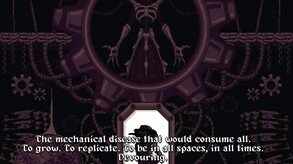
Angel's Gear is a challenging horror-flavored Metroidvania set in a world tainted by a mechanical disease.
Modeled estimate, not a reported figure. How we estimate →
Media

About


Stats
All-time low is the lowest price we've recorded for this game since we started tracking it.
Languages: English
Engagement
Reviews
Themes across 40 recent reviews and how positive each mention is. A keyword signal, not full sentiment analysis.
Reviews
Just like other Scumhead games, really cool world and designs, and even if it feels a bit janky, as a metroidvania is pretty decent with it's own mechanics and way to play. It's short but it does require a bit of patience with the bosses, and it has surprises on the exploration. Really fun and the characters are just the best of all, very recommended. Esp: Al igual que otros juegos de Scumhead, un mundo y diseños increíbles, y aunque puede ser un poco tosco, como metroidvania es bastante decente, con sus propia mecánica y forma de jugar. Es corto, pero requiere un poco de paciencia con los bosses, y tiene sorpresas en la exploración. Muy divertido y los personajes son lo mejor de todo, muy recomendado.
[h1]Decent Bytesize Metroidvania, With Some Glaring Issues.[/h1] [h2]Things I Like About Angel's Gear:[/h2] [b]Some Compliments[/b] [list] [*]I assume this is a solo-developer project. It's quite short, but the game captures the essence of the sub-genre quite well, mainly the Metroid part. [*]A nice retro, pixelated metroidvania with some visible inspiration: Dead Space-inspired protagonist, checkpoint design and the stomp mechanic, very Metroid-like, shooting-while-standing-still combat and upgrade systems, H.R. Giger influenced style with a touch of the developer's signature artistic approach. [*]The gating abilities are few but sufficient. Other than the super jump, all of them fall into the "keys but in different shapes" category but I appreciate the dev give them other usages in combat. [*]You can melee while sprinting without interruption. It's a very solid hit'n'run tactic when you run out of ammo. Curiously, sprinting melee and stomp always count as two hits, making it very easy to knock down normal enemies for extra ammo. [*]The story is quite interesting. The NPCs are likable in their own ways. [/list] [h2]Things I Dislike About Angel's Gear:[/h2] [b]Some Complaints[/b] It's very unlikely that the game will be updated since the developer has moved on to other projects. [list] [*](Bug)The game only shows half of the death screen. [*](Bug)"Exit The Game" button doesn't work. You have to close it from the Steam page or else the game won't actually save your progress. [*]Archaic save system that simply reverts your death to the previously saved state. I suggest you save often when making any progress. [*]NPCs will only talk to you when there are new dialogue options. There is no prompt for you to interact. The dialogue just plays out automatically. [*]Too many instant-kill traps and move sets to the point of frustration. [*]I wish the areas were color-coded differently. [/list] 中文小簡評 →略短的復古像素風類銀河系惡魔城,體感不錯,雖然單人製作bugs和設計疏失難免多,但還是值得一玩。 →各方面都能看出許多致敬的要素:類絕命異次元的主角設計、存檔點與踐踏系統;效仿銀河戰士的站樁射擊與技能取得;畫風類似H.R. Giger那種機械血肉的冷峻,混雜了作者自己的詮釋。 →關鍵技能雖然都只是變相的鑰匙,但作者還是盡力讓這些技能在戰鬥中有其他表現之處。 →傳統的站樁射擊考驗拉距離與跳躍迴避的精準度。子彈打玩需要靠近戰擊倒敵人後踩死他們才會掉,有趣的是你可以邊跑邊近戰,而且這招一定會有兩次攻擊判定,讓你能輕鬆打倒敵人回收子彈。 →故事意外的很有趣,NPC也很討喜。 →一些比較惱人的bug依然存在,看最後一次更新已經是兩年前的事,再加上作者已經將注意力轉到其他企畫上,這些bug極大機率不會修復了:死亡畫面只秀一半、離開遊戲的按鍵無法選擇,你只能從Steam頁面關掉不然遊戲不會存取你的進度。 →非常過時的存檔系統。 →遊戲內有太多秒殺你的陷阱與敵人招式。 →NPC沒有互動按鍵,新的對話會在你接近時自動撥出。 →地圖沒用不同顏色區分。 [quote=author]If you like what I write, please consider a follow to [url=https://store.steampowered.com/curator/45738167/]my curator[/url] page, thanks! 如果你喜歡我寫的東西,可以追蹤[url=https://store.steampowered.com/curator/45738167/]我的鑑賞家[/url]喔![/quote]
Related
Related
Trends
Modeled estimate over time, reconstructed from Steam's monthly review histogram.
Hours played at review time, across 40 reviews with recorded playtime.
positive critical· bar length = how often the theme comes up
Gear Engine is awful, killed the whole game for me The location filled with insta-kill enemies and spikes, where sometimes you can't even see the spikes before you die to them, WITHOUT any save point near the entrance, so you have to spend more time going through all the obstacles again, just to die randomly in some other place. What was the idea? To memorize the whole location? No thank you
I highly recommend this game for it's unique Metroidvanian experience but I MUST stress two things: 1) Do NOT make this your entry into the Metroidvania experience, there are too many technical bugs for me to ignore and the control schemes not kind to beginners. You'd have to be seasoned in gaming to enjoy the game but the storys intriguining enough to keep the curious engaged. 2) Do NOT buy this game unless it's on sale, if the developer won't take the time to fix the bugs and maybe moved on to other projects then I can't recommend the game in good conscience unless I advise buying the game on sale or don't buy it at all. Players deserve a functional game and I've played games under $5 that treat it's buyers with more respect. For example: There's a bug that affects game saves, for some reason when I load the one save I thought the game allows from the title screen I would myself in a previous save. I would then close the game and open it in different ways to see if that helps and it seems as if launching the game in one of 3 different ways does...something to it. 1) Double click from the desktop shortcut 2)Double click within the steam library/list of games 3)Press the green "Play" button 4) Right click on the game from the library and when prompted chose "run or play" or w/e I wondered if maybe each separate launch or exit needed to happen the same way in reverse but that theory was wrong. The save file IS there, you just have to cycle through these random saves to get to the most recent one and at times you get the correct save on the first try. But what happens if you load the wrong save and instead of exiting immediately you accidentally overwrite the most recent file? Do you lose your progress? etc. I've played free dlcs and entire games that have no bugs you should at least have a functional save system if you want money for your hard work and this bug will turn folk away from a pretty refreshing gaming experience. With that said, you could do far worse than Angel's Gear for your buck, it's brutal if you don't have the patience but you will LOVE the breath of fresh air in the atmosphere and there's a pretty interesting and coherent story here. It's weird in the right ways and I didn't expect the characters to have the personalities I encountered. For a Lovecraftian H.R. Giger inspired game I was impressed. And the games FUN and its a CAKEWALK once you get the controls sorted out, from there it's moment to moment gameplay is great. I recommend the game but I don't think the price of entry for the unaware is fair. If the developer never fixes the glaring issues then I hope they will at least to a far better job with new releases, Angels Gear feels like a playtest you're doing for a friend as a favor and the friend asks for a few dollars before you leave and you give it to them freely because you see how much potential they have, they deserve another shot at greatness and you believe in them enough to sow into that. P.S. To the Dev: a) PLEASE fix the Save file issue, I have no way of explaining how it works because I use a Russian Roulette approach and hope for the best, I'm a sadist/glutton for punishment but not everyone else is. b) PLEASE do something about the control scheme, I know steam helps with remapping if controllers aren't supported but it will turn alot of people away and this is a pretty good game and universe. c) The Game Over screen issue, its a nitpick for me and a deal breaker for the petty, you deserve better reviews but some persons aren't as forgiving as I am. I judge honestly but not unfairly.
This looks great on paper, a disturbing world that's graphically awesome, the art style is amazing (Scumhead, duuh), and the gameplay is competent, but sadly, it is completely broken. The controller layout is awful, and there is no mapping (L3 to run wtf), the game over screen is cut in half, when pressing ESC the game goes into windowed mode, and it's probably 320x240, so it is impossible to see the pause menu without having an aneurysm. Also, I killed the first boss with a lot of effort (due to having to play it in M/KB), tried once again to make the controllers work due to all the hassle, and when I booted the game again my save vanished completely, started from first save, almost a whole hour lost. Yea, no. Fix this PLEASE, I really want to play it.
Angel’s Gear, developed and published by Scumhead, is an unsettling and captivating descent into a biomechanical nightmare, blending the structure of a Metroidvania with the mood and intensity of psychological horror. Set in a world ravaged by a self-replicating mechanical disease known as the Gear, the game unfolds within a landscape where flesh and metal are inseparable, where humanity’s creations have turned parasitic and divine forces are little more than corrupted ghosts of machinery. The story revolves around the legacy of two brothers, Heathcliff and Locke, who inadvertently unleashed this infection upon reality itself. What begins as a desperate journey to undo the Gear’s devastation becomes a haunting exploration of guilt, decay, and transcendence. From its first moments, Angel’s Gear establishes a tone of hopelessness and awe, enveloping the player in a world that feels both ancient and alien—a collapsing ecosystem where organic life fights in vain against mechanical inevitability. Scumhead’s work is defined by its tactile sense of world-building and the density of its visual storytelling. Every room in Angel’s Gear seems to breathe disease and purpose. The environments are constructed from a fusion of corroded metal, decaying tissue, and cold religious architecture. Machinery hums beneath organic surfaces, while remnants of humanity cling to crumbling sanctuaries and industrial ruins. The visual design draws heavily from biomechanical surrealism, invoking comparisons to Giger and Tsutomu Nihei, but it maintains its own voice through the way horror and beauty intertwine. There is an otherworldly rhythm to the visuals—the constant flicker of lights, the mechanical groan of living walls, the way enemies pulse and convulse as if caught between being alive and dead. The effect is hypnotic. Every area feels alive, hostile, and narratively charged, creating an unshakable sense that this world remembers what it once was, even as it consumes itself. The gameplay in Angel’s Gear mirrors its grim aesthetic through systems that demand precision and restraint. It is not a power fantasy but a game of tension and survival. Ammunition is scarce, and the player must harvest it from fallen enemies by stomping on their bodies, forcing an almost ritualistic pattern of combat. The act of killing becomes cyclical—an expression of control and desperation—mirroring the game’s central theme of mechanical consumption. Firing weapons recklessly will quickly deplete resources, and the game encourages a rhythm of striking, conserving, and scavenging that keeps every encounter dangerous. Combat is intimate and deliberate, with every bullet, swing, or dodge carrying tangible weight. The protagonist can shift between Angel and Demon forms, each offering unique abilities that alter how you approach battles and exploration. Switching between these forms creates dynamic gameplay possibilities, though the mechanic feels more symbolic than deeply integrated—a reflection of the protagonist’s divided nature as much as a combat tool. Exploration follows the structure of a classic Metroidvania but with a sense of oppressive density rather than openness. The world is interconnected through corridors, tunnels, and hidden passageways that invite cautious backtracking. There are no endlessly respawning enemies to grind; every fight is finite, and each encounter feels like a statement. This design decision enhances the sense of fragility and consequence. Progression depends on mastering movement, learning enemy patterns, and paying close attention to environmental clues. While the map layout is intriguing, it is also intentionally disorienting—navigation can feel like wandering through the innards of a living organism, with each chamber blending into the next. This contributes to the game’s atmosphere but can frustrate when clarity is needed, as the map system itself is barebones and lacks detailed guidance. The lack of conventional direction amplifies the feeling of isolation and unease, demanding that the player navigate intuitively rather than rely on modern convenience. Angel’s Gear’s sound design is integral to its identity. The ambient noises of grinding metal, dripping fluids, and distant machinery create a symphony of dread that rarely lets up. The music shifts between industrial distortion and mournful melodies, underlining the contrast between creation and ruin. Scumhead uses silence as effectively as sound—moments without music feel raw and threatening, allowing players to hear the faint echoes of their surroundings and anticipate unseen horrors. The combat effects, too, are sharp and satisfying, making every gunshot, stomp, and explosion resonate with impact. The audio design contributes significantly to the sense that the player is trapped inside a malfunctioning world, where everything from the architecture to the wind feels conscious of their presence. The storytelling in Angel’s Gear is elliptical and fragmented, communicated more through implication than exposition. The few NPCs that appear are as much symbols as people—echoes of lost humanity, speaking in cryptic tones that hint at divine punishment, guilt, and mechanical transcendence. The player’s understanding of the Gear and its creators builds gradually through environmental storytelling and scattered notes, reinforcing the game’s sense of mystery. Scumhead’s writing evokes the feeling of religious texts rewritten by machines—dense, poetic, and unsettlingly intimate. This approach makes the narrative feel organic to the world rather than imposed upon it. By the time the player begins to grasp the scope of the Gear’s infection, the story has already evolved into an allegory for creation and self-destruction, suggesting that humanity’s attempt to surpass its limits inevitably breeds its downfall. While Angel’s Gear excels in atmosphere and thematic cohesion, it also bears the marks of its independent production. The controls, though serviceable, can feel stiff and occasionally unresponsive, especially when switching between forms or performing precise movements under pressure. Keyboard input is less intuitive than controller play, and some players may find remapping necessary for comfort. The map’s simplicity, while thematically fitting, can hinder exploration when backtracking through complex zones. The game’s difficulty curve also fluctuates—early sections are punishingly tense, but later encounters sometimes lose their edge once the player acquires stronger upgrades or stockpiles resources. Despite these rough edges, the short playtime—roughly three to four hours—prevents frustration from overstaying its welcome. The experience is condensed, deliberate, and impactful, leaving little room for filler. Angel’s Gear succeeds because it knows exactly what it wants to be. It is a concentrated vision of decay, faith, and survival, crafted with a distinct artistic identity that feels both modern and timeless. Its imperfections contribute to its texture, enhancing the sense that this is a world on the verge of collapse—a handmade artifact from the ruins it depicts. For players who appreciate grim world-building, deliberate combat, and experimental design, it is a remarkable example of how atmosphere and concept can outweigh technical polish. Scumhead’s creation stands as a rare kind of indie horror experience: haunting, demanding, and unforgettable, a mechanical elegy for the end of flesh and the birth of something colder and divine. Rating: 7/10
Короткая метроидвания с фокусом на повествовании(таком же коротком, впрочем) и, что называется в английском, clunky управлении. Имеет крайне простые квесты(в основном открывающиеся сами собой если полностью локации зачищать), довольно низкую но все же вариативность(в основном она заключается в выборе того, в какую из трех локаций после победы над одним из боссов идти сначала). Многие говорят про баги и сложность, может это было правдой на релизе, но на данный момент я вообще подобного не встречал. Играть стоит ради визуала и музыки(они крайне приятные), интересного хоть и не сверхпроработанного сеттинга и геймплея, который по сути представляет собой больше своеобразные головоломки и раскрытие гиммиков противников чем что-то другое. Ну и персонажи, в стиле автора, простые и театральные но милые.
Nice art style meets poor game design. It’s a side-scroller with occasional Metroidvania elements and controls that feel like they’re from the era of button phones. You can play it, but never touch the settings - they’re broken. The same goes for the “Load Game” option; it only works occasionally. Fortunately, the game is short, so you can finish it in one session.
Стильно. Плохо.
I found Angel's Gear to be a very enjoyable experience. Smooth gameplay, stunning pixel art and biomes, and striking sound effects. Short and sweet as far as length goes (I'd say beatable in roughly 3-4 hours of casual play). And in that short time I was endeared to the cast and caught up in the story. Definitely worth the play.
Momentum
Pace estimated from the game's recent review growth (our daily snapshots) at its own sales-per-review ratio — a momentum signal, not booked sales.
Audience
Estimated from the language of this game's reviews — a proxy for where players are, not official Steam demographics.
Related
| Teslagrad Remastered | $51.8K | 266 | 78% | $9.99 |
| Dead Engine | $51.8K | 216 | 71% | $7.99 |
| Megacopter: Blades of the Goddess | $51.8K | 225 | 91% | $9.99 |
| Spire Horizon | $51.8K | 225 | 75% | $9.99 |
| Disc Golf Valley VR | $51.8K | 74 | 72% | $19.99 |
| Theme Park Architect | $51.8K | 75 | 72% | $19.99 |