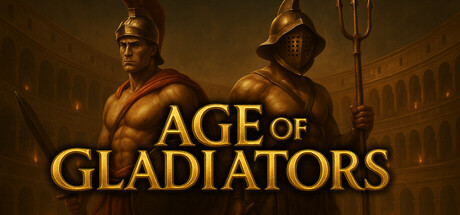
Age of Gladiators is a demanding and thoughtfully constructed management simulation that places the player in the role of a lanista navigating the brutal, political, and financial realities of ancient Rome’s gladiatorial circuit. Developed by Creative Storm Entertainment and published by Creative Storm Entertainment alongside Vincennes Group, the game shifts the focus away from cinematic spectacle and instead embraces a methodical, systems-driven approach. Rather than glorifying combat through flashy visuals, it emphasizes preparation, logistics, and long-term planning, asking players to build a lasting legacy through careful management rather than momentary glory.
At the heart of the experience is the management of a gladiator school, where every fighter is a resource, a liability, and a potential legend. Gladiators are procedurally generated with unique attributes, combat styles, strengths, weaknesses, and personalities, making recruitment a calculated risk rather than a straightforward upgrade path. Training decisions directly shape performance in the arena, but pushing a gladiator too hard can lead to exhaustion, injury, or even death, creating a constant tension between ambition and sustainability. Victories bring fame, income, and momentum, while losses can cripple finances and morale, reinforcing the sense that every decision carries lasting consequences.
Beyond individual fighters, the game places heavy emphasis on the operational side of running a ludus. Facilities must be upgraded, staff such as trainers and medics hired, and finances carefully balanced to ensure steady growth. Money is always tight, especially in the early stages, and poor financial planning can spiral quickly into debt. The economic simulation is unforgiving, forcing players to think like business owners rather than heroic overseers. Wages, upkeep, investments, and risk-taking through betting all factor into survival, creating a loop where success in the arena must be matched by competence behind the scenes.
Combat itself is handled through a turn-based, statistics-driven system that prioritizes preparation over player reflexes. Matches unfold as calculated exchanges influenced by equipment loadouts, stamina management, and gladiator attributes rather than direct control. While this approach lacks visual drama, it reinforces the game’s identity as a management simulation first and foremost. Watching a carefully trained fighter outperform expectations or narrowly survive a brutal bout carries weight precisely because the outcome feels earned through planning rather than execution alone.
Progression follows a structured climb through increasingly prestigious arenas, gradually building toward Rome itself. As opponents become more dangerous, the margin for error shrinks, demanding tighter optimization and smarter roster management. This upward trajectory provides a clear sense of advancement, though it can also feel relentless, as setbacks are frequent and recovery can be slow. The game rarely offers mercy, and learning often comes through failure, making patience and persistence essential traits for players who wish to see their dynasty thrive.
Visually, Age of Gladiators is functional and restrained, reflecting its indie origins. Interfaces are dense and information-heavy, prioritizing clarity and data access over aesthetic flair. While this can feel intimidating at first, it suits the game’s spreadsheet-like depth, allowing players to track every variable affecting their fighters and finances. The presentation may not capture the visceral spectacle of the Roman arena, but it succeeds in conveying the cold, calculated reality behind the bloodshed.
The game’s greatest strength is also its most significant barrier to entry. Its complexity, limited tutorials, and unforgiving systems make it challenging for newcomers, especially those expecting an action-oriented gladiator experience. However, for players who enjoy deep simulations and long-term strategy, this complexity becomes its defining appeal. Each campaign unfolds differently based on recruitment choices, training philosophies, and financial decisions, giving the game strong replay value despite its structured progression.
In the end, Age of Gladiators stands as a niche but compelling management title that rewards careful thought, restraint, and strategic foresight. It does not seek to dazzle with spectacle or accessibility, but instead offers a rigorous simulation of power, risk, and survival within the Roman gladiatorial economy. For players drawn to deep management systems, historical themes, and the satisfaction of building success through discipline rather than spectacle, it delivers a challenging and memorable experience forged in blood, gold, and hard-earned reputation.
Rating: 7/10