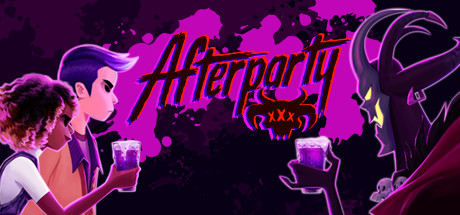
In Afterparty, you are Milo and Lola, recently deceased best buds who suddenly find themselves staring down an eternity in Hell. But there's a loophole: outdrink Satan and he'll grant you re-entry to Earth.
Modeled estimate, not a reported figure. How we estimate →
About
Genres
Stats
All-time low is the lowest price we've recorded for this game since we started tracking it.
Languages: English*, French, Italian, German, Russian, Spanish - Spain, Japanese, Korean, Polish, Portuguese - Brazil, Spanish - Latin America, Traditional Chinese +1 more
Engagement
Hours played at review time, across 40 reviews with recorded playtime.
Reviews
Themes across 40 recent reviews and how positive each mention is. A keyword signal, not full sentiment analysis.
positive critical· bar length = how often the theme comes up
Reviews
Loved playing this game, need more games like this in my life.
its a simple- short story about 2 best friends that are outcasts. the gameplay is tedious for a bit but the jokes are funny- dialogue can change, and the game has different endings. its a pretty good steal for the price and its just a sweet game
Boring and unfun
Прикольная игра. Очень нравится стиль графики.
Afterparty is a vibrant, irreverent, and surprisingly heartfelt narrative adventure that reimagines Hell not as a realm of eternal agony but as an after-hours metropolis filled with bars, neon alleyways, bizarre demons, and endless nightlife. Developed and published by Night School Studio, the game follows two newly deceased best friends—Milo and Lola—whose arrival in the underworld comes with a shocking twist: the only way to escape damnation and return to the land of the living is to outdrink Satan himself. What begins as a comedic premise quickly unfolds into a journey through friendship, regret, insecurity, and the social dynamics of a place where damnation and revelry coexist. The tonal blend of dark humor and emotional honesty gives the adventure its unique identity, making Hell feel like a twisted reflection of the real world’s clubs and social pressures. The core of the experience lies in its walk-and-talk structure, a style Night School Studio is known for, but here enriched with a clever drinking mechanic that shapes the narrative. Milo and Lola spend most of the game navigating Hell’s chain of bars and clubs, each locale more absurd and elaborate than the last. Drinks are not just for atmosphere: every concoction alters the protagonist’s mood or persona, unlocking new dialogue options that shift how conversations play out. A bold drink makes you aggressive, a pirate-themed one turns your speech theatrical, another might nudge you toward uninhibited sincerity. These mood-driven dialogue choices create a sense of fluidity in how scenes unfold, letting you subtly push the story through attitude rather than simple binary decisions. It’s a system that mirrors real-life social navigation—emboldening yourself, deflecting tension, or leaning into awkwardness depending on the moment. As Milo and Lola explore the many districts of Hell, the game gradually reveals more about who they were in life, why their friendship matters, and what insecurities they carried with them into death. Conversations with demons and the souls of the damned bring out layers of personality that the protagonists themselves aren’t fully aware of. Side characters—ranging from underworld bureaucrats to washed-up celebrities doomed to party for eternity—add color and rhythm to the narrative, often offering comedic relief but occasionally providing insight into themes of responsibility, purpose, and the way people hide behind façades. Despite the constant jokes and surreal tone, the story has moments of genuine vulnerability that help ground the absurdity in emotional truth. Visually, the game’s bold, stylized aesthetic turns Hell into a sprawling nightlife district pulsing with energy. Clubs glow with bold colors, demons strut around with strangely relatable confidence, and every street corner feels like a set piece from a supernatural cartoon. The art direction is both playful and atmospheric, giving the impression of a place that’s less about fiery torment and more about a never-ending, chaotic party where everyone is trying to forget the reasons they wound up there. This approach makes exploration enjoyable on its own, and the soundtrack—full of electronic beats, moody ambience, and barroom energy—enhances the sense of wandering through a fever dream. However, the game isn’t without its limitations. Although the drinking mechanic offers fun variations in dialogue, it is sometimes more stylistic than transformative, providing flavor rather than deeply affecting the story’s direction. The branching narrative paths exist and can lead to different outcomes, but much of the journey still follows a clear trajectory that centers on Milo and Lola’s emotional growth. Players looking for extensive gameplay variety may also find the structure repetitive: most of your time is spent walking through environments, engaging in lengthy dialogue sequences, and participating in small, lightly interactive minigames. While the writing is sharp and cleverly paced most of the time, the density of dialogue can occasionally make sections feel slower than intended. Even with these shortcomings, Afterparty is a memorable and distinctive adventure. It offers humor without cruelty, darkness without bleakness, and a depiction of Hell that feels unexpectedly lively and relatable. Its portrayal of friendship—messy, imperfect, sometimes strained but ultimately meaningful—anchors the story in something emotionally resonant. The absurd drinking challenge against Satan becomes less a comedic stunt and more a backdrop to exploring who Milo and Lola really are and what they fear most about themselves. By the end, the game leaves you with a mixture of laughter, reflection, and a genuine connection to its cast. For players drawn to narrative-driven titles with style, personality, and a taste for the surreal, Afterparty offers an unforgettable night in the afterlife. Rating: 6/10
Every character is annoying asf, quip filled awkward silence humour, no thanks
Я потратил на бухло слишком много времени! Хорошо что мы в аду и спешить некуда...
I really enjoyed Afterparty as much as I enjoyed OXENFREE. I may do a second play through of it eventually. It's not really worth the price, but on a deep discount it's a pretty entertaining adventure.
great game
Absolutely love this game, played through it several times and probably will again <3
Related
Related
Trends
Modeled estimate over time, reconstructed from Steam's monthly review histogram.
Momentum
Pace estimated from the game's recent review growth (our daily snapshots) at its own sales-per-review ratio — a momentum signal, not booked sales.
Audience
Estimated from the language of this game's reviews — a proxy for where players are, not official Steam demographics.
Related
| Bud Spencer & Terence Hill - Slaps And Beans | $251.5K | 2K | 92% | $14.99 |
| Matchpoint - Tennis Championships | $251.4K | 215 | 68% | $39.99 |
| Cthulhu: The Cosmic Abyss | $251.5K | 329 | 58% | $34.99 |
| Bloodshore | $251.4K | 953 | 69% | $14.99 |
| Military Incremental Complex | $251.3K | 705 | 83% | $9.99 |
| Spark the Electric Jester | $251.6K | 1.5K | 92% | $7.99 |