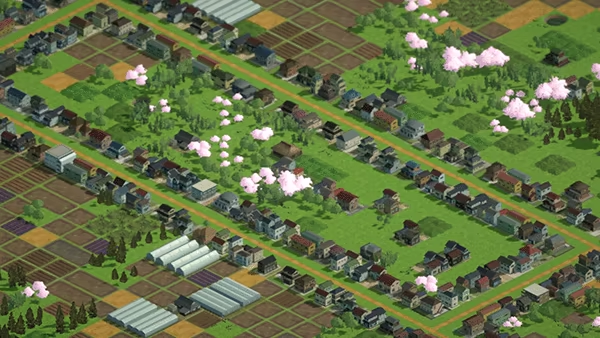
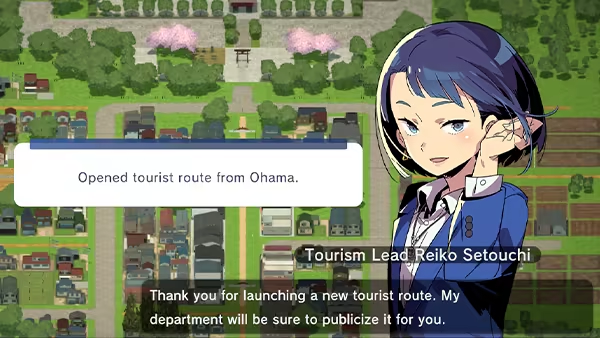
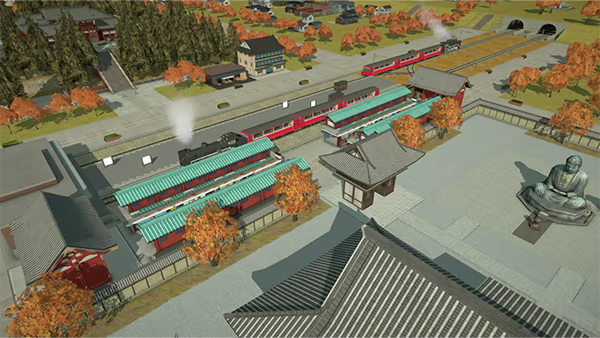
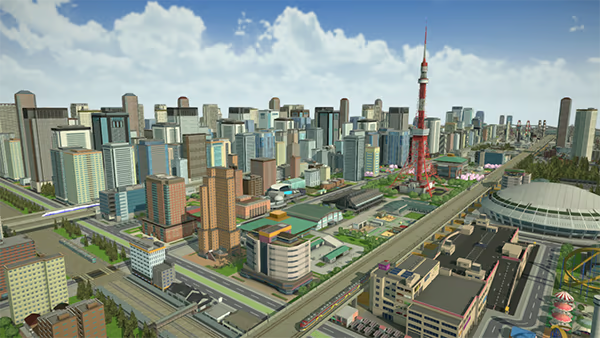
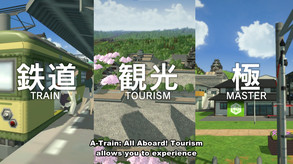
In the world of A-Train, people gather around stations, gradually developing the surrounding town. What kind of railroad will you create? How will you develop the town? All these choices and more are yours to make.
Modeled estimate, not a reported figure. How we estimate →
Media

About


Genres
Stats
All-time low is the lowest price we've recorded for this game since we started tracking it.
Languages: English, German, Simplified Chinese, Traditional Chinese, Japanese, Korean
Engagement
Hours played at review time, across 40 reviews with recorded playtime.
Reviews
Themes across 40 recent reviews and how positive each mention is. A keyword signal, not full sentiment analysis.
positive critical· bar length = how often the theme comes up
Reviews
「A列車で行こう はじまる観光計画 Nintendo Switch 2 Edition」が2025年12月18日 に 「A列車で行こう9 Evolution(switch2)」が2026年6月4日 に それぞれ発売されました。 2026年6月24日現在、steam版にはDLCすらろくに来ないので、switch2版を強くお勧めします。 はじまる観光計画の場合、2023年のシナリオコンテスト作品すら存在しないのでswitch版でも良いかもしれません。 このレビューを書き換えられる日が来ることを切に願っています。
A-Train: All Aboard! Tourism is a management simulator that delivers far more depth and complexity than its colorful presentation initially suggests. Developed by ARTDINK and published by KOMODO, the game places players in charge of a transportation company responsible for building railway systems, expanding cities, developing tourism, and managing large-scale economic growth. While many city-building games treat trains as a supporting feature, A-Train makes railways the heart of the entire experience. Every station, rail line, and scheduling decision directly influences how towns grow and how economies evolve over time. It is a game built around patience, planning, and long-term strategy, rewarding players who enjoy carefully constructing interconnected systems rather than chasing fast-paced progression. The core gameplay focuses on designing railway networks that serve as the backbone of urban expansion. Players begin with relatively small areas and gradually transform them into thriving economic regions by connecting communities through efficient transportation routes. Trains move passengers, encourage tourism, and stimulate business development around stations, creating a realistic sense that infrastructure drives the growth of entire cities. Every rail line feels important because poorly planned systems can quickly lead to financial disaster, while successful transportation routes naturally attract residents, businesses, and tourists. Watching empty landscapes slowly develop into bustling districts because of carefully placed stations and routes becomes one of the game’s most rewarding aspects. What separates A-Train from simpler transport simulators is the incredible amount of management layered on top of the railway mechanics. Players are not only responsible for trains but also for bus systems, commercial development, tourism attractions, subsidiaries, and investments that all interact with one another. Apartment buildings, shopping centers, hotels, offices, and entertainment facilities can be strategically placed around stations to maximize profit and encourage population growth. Tourism also plays a major role in the economic simulation, with scenic locations and famous attractions becoming valuable destinations once transportation access improves. The game constantly encourages players to think beyond simple rail placement and instead approach city development as part of a much larger economic ecosystem. The scheduling systems are especially impressive for players who enjoy detailed transportation management. Trains can be assigned specific routes, timing intervals, and track priorities with remarkable precision. Local trains, express services, and freight systems can all operate simultaneously across shared infrastructure, requiring careful planning to avoid congestion and inefficiency. There is a genuine sense of satisfaction when complicated rail systems finally begin functioning smoothly after hours of experimentation and adjustment. Enthusiasts who enjoy optimization and infrastructure design will likely spend enormous amounts of time perfecting their networks. One of the game’s strongest qualities is how organic city growth feels. Towns do not simply expand automatically through scripted progression. Instead, development happens naturally depending on how well transportation and economic systems function together. Areas surrounding successful stations gradually evolve into dense commercial hubs, while neglected districts stagnate or decline. This creates a strong sense that player decisions genuinely shape the world over time. Watching skyscrapers rise near busy stations or tourist districts flourish because of well-designed train routes creates an impressive feeling of ownership over the region’s growth. Visually, A-Train: All Aboard! Tourism is functional rather than groundbreaking. The environments and city models have a somewhat dated appearance compared to newer city-building games, but the clean presentation helps maintain readability even when transportation systems become extremely complicated. Trains themselves are detailed and enjoyable to watch, especially for railway enthusiasts who appreciate seeing complex networks operate efficiently. The ability to ride inside trains and observe cities from a passenger perspective also adds immersion, making the world feel more alive despite the relatively modest graphical quality. The soundtrack and overall atmosphere create a surprisingly relaxing experience despite the game’s complexity. There is something calming about watching trains move across landscapes while cities slowly evolve around them. Even during financially stressful moments, the game maintains a steady and methodical pace that encourages careful thinking rather than panic. This slower structure may not appeal to players seeking constant excitement, but it works perfectly for the type of detailed management experience the game aims to deliver. However, the game’s depth comes with a significant downside. A-Train has one of the steepest learning curves in the simulation genre, and newcomers may initially feel overwhelmed by the enormous number of systems, menus, and management options available. Tutorials explain the basics but often fail to fully prepare players for the game’s deeper mechanics. Understanding how transportation, economics, tourism, and city development interact takes considerable time and patience. Mistakes can also become extremely expensive, especially during the early hours when resources are limited and inefficient planning can easily lead to bankruptcy. The interface can occasionally feel cluttered and outdated as well. Navigating through menus and advanced management tools is not always intuitive, particularly for players unfamiliar with detailed railway simulators. Some quality-of-life improvements would have helped make the experience more accessible without reducing its complexity. The slower pacing may also frustrate players who prefer faster city-building games with more immediate rewards and simpler systems. Despite these flaws, A-Train: All Aboard! Tourism remains one of the most satisfying transportation management games available for players willing to invest the necessary time. Its incredible depth, interconnected systems, and realistic approach to urban growth create an experience that feels genuinely rewarding once the mechanics finally click together. Few games capture the feeling of building a living transportation network as effectively as A-Train does. Every successful route, thriving district, and expanding skyline feels earned through careful planning and long-term strategy. A-Train is not designed for casual audiences looking for a simple city builder. It is a demanding and highly detailed simulation that expects players to learn complicated systems and think carefully about infrastructure, economics, and urban development. For some players, that complexity will feel intimidating. For others, it will become the game’s greatest strength. Railway enthusiasts and dedicated management simulation fans will likely find hundreds of hours of rewarding gameplay hidden within its dense mechanics and gradual progression. Rating: 8/10
都市開発シミュレーションは、A列車以外にもシティーズスカイラインやシムシティなど沢山ありますが、このゲームは特に鉄道に特化したものです。私は鉄道が好きなので、細部までしっかりと作られているのが面白いポイントでもあります。ただ、建物の種類が少ないので、そこは次回作では改善して頂きたいところです。
[h1]Switch版のプレイ経験あります 普通に鉄道を敷きまくれるのが面白いです ビルを乱立させるのもまた楽しいです[/h1]
Controls are a mess…
「はじまる観光計画」は、本当に解らない人にとって大分優しくなった内容になっていました。「ひろがる観光ライン」を買ってみましたら、色んな鉄道企業の車両のライセンスを取得してみると、電車や列車の再現が出来ているので実在すデザインが3ドアタイプでも実際の比率と比べてみると差分がドアだけでもそこまでの違和感はなかったので素晴らしいCGデザインでした。 でも、個人的に残念なところは、駅をはじめとする自由に名前を入力して遊ぶシリーズを好んで遊んでいた人でした。長時間やって分かったのは、本当に色々な駅と停留所と等に自由に名前を入力出来ないのは、本当に残念な部分でした。 初心者には優しい部分でも覚え方によっては、十人十色なところがありますので、自分好みのネーミングセンスが欲しい駅名が好きなところがあれば良いなとこの様に思いました。
もうみんながレビュー書いてる通りの不満点もあってアレです(なんとかしていただきたい)が、とりあえずここはよかったリストと、これだけはなんとかしたほうがいいリストを書きます: [h2]ここが良かった[/h2] [list] [*]平行投影視点とパースビューを行き来できるのはたのしい [*]資材が無くても最低限の発展はしてくれる [*]子会社の相互影響が目に見えてわかる [*]日向悠二せんせえのキャラ絵は良い [*]線路等に装飾パーツを置ける [*](スペックに余裕があれば)Switch版を遥かに超える画質と高速処理で遊べる [/list] [h2]ここをなんとかしてくれ[/h2] [list] [*]バス・トラック経路の設定が意味不明すぎる [*]営業時間外の運行設定に自由度がなさすぎ [*]UIパーツの挙動がタッチ操作のことしか考えてないまま。時間ほか数字の設定がスライダー式で一々煩雑、スライダー式の項目が、「ハンドルをドラッグ」以外受け入れないなど。 [*]なんでもかんでも拡張機能メニューに隠しすぎ、拡張機能メニューの開放遅すぎ [*]資材取引の設定が一々めんどくさすぎる。ダイヤ設定も触らないといかんので余計に。 [*]右クリックの意味が一貫してない(「決定して戻る」と「今の操作の取り消し」が混在) [*]ほか、Switchでの操作を優先しすぎてマウス操作が面倒くさくなってる部分多々 [*]マップコンストラクションでの地上編集機能がしょっぱい、一度建物置いた後の地形操作に制約多過ぎて地形の微調整をやる気がなくなる [*][b]割と頻繁に起動時ロードが終わらなくなって進行不能になる[/b] [/list] おすすめする:しない=6:4でおすすめ、みたいな現状です。Switch版ではたまにダイヤ通りに運行してない疑惑もありましたがそこまで酷くはないのは救い……か?
難しいが面白い 昔のガラホに入っていたA列車で行こうが忘れられず購入 ゲーム感覚はだいぶ違うが面白かった 難易度が最低でも難しく、キュートなキャラに対してかなり人を選ぶゲームだと思う 税金に借金に配当金と資金はシビアな管理が求められ 苦労して引いた路線は赤字、資源の流通は滞って採算が合わず 資金があっという間にショートするなんてことも当たり前 タイムリミットもあっという間で焦って借金するとあっさり倒産できる硬派なシュミレーション もう少し丁寧に導線が引いてあっても良いと感じた 操作性は指摘がある通りやや悪い、こっちも慣れが必要
진짜 너무 재미있어보여서 했는데. 영상도 보고.. 막상 내걸 하려고 하고... 미완성 게임이라는 생각이 너무 많이든다... 그냥 트랜스피퍼2 하시는게 낫습니다.
시골땅에 역 개통시켜서 부동산가격 뻥튀기로 돈버는 게임
Related
Related
Trends
Modeled estimate over time, reconstructed from Steam's monthly review histogram.
Momentum
Pace estimated from the game's recent review growth (our daily snapshots) at its own sales-per-review ratio — a momentum signal, not booked sales.
Audience
Estimated from the language of this game's reviews — a proxy for where players are, not official Steam demographics.
Related
| Zefyr: A Thief's Melody | $194.8K | 409 | 97% | $19.99 |
| Heart&Slash | $194.7K | 514 | 81% | $14.99 |
| Arcade Spirits | $194.8K | 631 | 91% | $19.99 |
| Ultratron | $194.7K | 694 | 88% | $9.99 |
| REAVER | $194.6K | 528 | 87% | $13.99 |
| KickBeat Steam Edition | $194.9K | 772 | 67% | $9.99 |