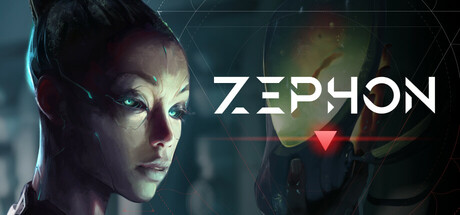
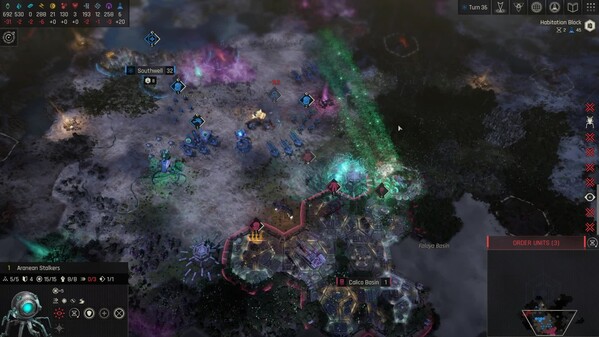
From the developers of Warhammer 40,000: Gladius, ZEPHON is a post-apocalyptic 4X strategy game built on Proxy’s unique tactical combat system. Guide survivors through a turbulent future, navigating unexpected disasters, eldritch horror and cyberpunk monstrosities. What will you do to survive?
Modeled estimate, not a reported figure. How we estimate →
Media
About
Genres
Stats
All-time low is the lowest price we've recorded for this game since we started tracking it.
Languages: English*, French, German, Korean, Russian, Polish, Simplified Chinese, Spanish - Spain*languages with full audio support
Engagement
Hours played at review time, across 50 reviews with recorded playtime.
Reviews
Themes across 50 recent reviews and how positive each mention is. A keyword signal, not full sentiment analysis.
positive critical· bar length = how often the theme comes up
Reviews
Love this game, it's a lot of fun. Just a warning to anyone with 13th or 14th Gen CPU Intel processor. The game constantly crashes. They said make sure your bios is up to date. It is. The devs have stated it it unfixable. Over 600 steam games and this is the only game that crashes ALL THE TIME. Unfortunately will not buy anymore of their products.
ZEPHON is a very strong entry into the 4X genre. It is a clear improvement over Warhammer 40,000: Gladius - Relics of War even if the loss of the 40K setting may be a blow to its more passionate fans. However, the ZEPHON setting softens it substantially as it combines well-worn and beloved tropes with new ideas. I particularly enjoyed the dark atmosphere that was crafted for it, including the horror-inspired unit roster that was prevalent across the factions. Mechanically, many of ZEPHON’s features are familiar, though together they create a whole that feels different and has a soul of its own. City management isn’t particularly exciting, but that isn’t out of the ordinary or game-breaking for the genre. Combat, at its simplest level, is fairly standard, though the variety of units and their individual capabilities keeps it exciting and offers a number of strategies at any time to overcome your foes. Diplomacy is functional and works well with a military and conquest-focused game. It’s the layering of the setting with its leaders, affinities, and descriptive, lore-immersing text on nearly every element of the game that really kicks it up from good to great. At this point, I’ve played three full single-player games at progressively harder difficulties and two multiplayer runs. Every one of these felt distinct and I wasn’t able to identify any technical issues along the way, even while playing with freshly released DLC. ZEPHON doesn’t reinvent the 4X genre, but it has an identity all its own. By combining recognizable mechanics with an exceptional setting, interesting factions, and a constant sense of military pressure, it manages to feel unique even when competing with the heavy hitters that surround it. Few of its individual systems are revolutionary, yet the way they work together creates an experience that remained engaging across multiple campaigns and multiplayer sessions. ZEPHON is an easy recommendation for fans of combat-focused strategy games and stands as a worthy successor to the foundation that Proxy Studios established with Gladius. You might like ZEPHON if: - You enjoy combat-focused 4X games. - You like having steady military pressure throughout an entire playthrough. - You loved Warhammer 40,000: Gladius and don’t mind having those mechanics transferred to an original setting. - You enjoy dark post-apocalyptic, cyberpunk, and cosmic horror settings. - You like immersion and lore, worldbuilding, and flavor text are important to you. You might not like ZEPHON if: - You prefer peaceful, economy-focused, or diplomatic 4X experiences. - You want deep city-building and empire management systems that could stand entirely on their own. - You are looking for a game that radically reinvents the 4X genre. - You prefer traditional and/or familiar science-fiction settings. - You want to be able to move toward multiple victory paths, not just conquest. [This is a significantly condensed, bite-sized piece of the original review, due to Steam's character limit restrictions. If you'd like to read more, check it out at: https://explorminate.org/lets-examine-zephon/]
Everything about this game is incredibly interesting, except for the part where you play it. There is only one path to victory, and that's the manly way: with guns and drones and mind-flaying monsters. This would be acceptable if the "unique tactical combat system" wasn't such a tedious slog. Since I doubt that Proxy Studios will reconsider using this "unique" system, I hope that they develop this rich IP further with a sequel or an expansion that at the very least translates their intention into something more enjoyable.
I am a veteran player of Gladius. In my opinion Zephon is a great improvement and it's very nice to play. I really enjoyed the "end of the world" event, that makes the matches not too long. If you enjoyed Gladius I strongly believe you will have a lot of fun with Zephon.
Seems very unpolished. Some examples: All diplomacy starts by asking if you want to listen to the offer instead of just showing the offer. A completely pointless extra click Many units have action they can perform after ended move. However the game will move on to the next unit unless there is an attack avaible, forcing you to constantly go back and find your previous unit on the map to execture the necessary order. There is sort of lack of direction in the game. First playthough I had no idea what I was supposed to be doing, but won anyway. Diplomacy is seemingly random. Had close allies suddenly declare war, but still claim to be close friends.
A more refined and original Gladius, a Civ BE that embraces its own true premise rather than running from it, a surprisingly effective successor Alpha Centauri's character-driven philosophy. If none of that rang a bell, here's what the game is: a "military focused" 4X or something like a turn-based Dawn of War RTS depending on how you look at it. I shouldn't even have to designate a 4X as "military focused" at heart, but it's worth saying that if your idea of 4X play is turtling in a corner while slowly accruing compounding buffs and victory conditions then ZEPHON may disappoint by expecting you to actually eXplore, eXpand, eXploit, and eXterminate. Your economy services itself and your army first and foremost. Your army secures resources and victory conditions. There is no science victory at the end of your tech trees; there's "merely" several super-units that will greatly help you achieve victory if your industry is prepared to field them. Diplomacy is a new feature relative to Gladius and primarily serves to limit the number of enemies you fight at a given time rather than scoring you a unity victory almost by accident. Some people (and very-much-not-people) just won't get along no matter what and that tension [u]will[/u] come to a head whether you're ready or not. After that comes the last thing I expected from this genre: [spoiler]a metagame. At the end of each game, you will find that the main thing that mattered was whether you followed through on your chosen character's arc and/or tried something new this run.[/spoiler] For me the character quests represent a clear improvement over Gladius's version. They don't drag on too long and they don't fill every stage with "lmao here's another wave defense XDDDDD". Fulfilment also doesn't lead to its own guaranteed victory in the moment [spoiler](though see the metagame) but much like tech you will find some helpful boons at the end. A character like the Tribunal might not seem all that impressive on the selection screen but does benefit more from their questline than others if you make the right calls.[/spoiler] I do have some complaints/warnings worth noting: - The game does frontload some surprises. The terrain is so alien (a well-executed theme here) that even coming from a couple hundred Gladius hours it took me some blinking to realize what I was looking at. Unit movement is notably on an all-or-nothing basis rather than letting you creep forward a tile at a time until you reach your maximum allotment. Yeeting out into the unknown can get you into some really sticky situations. Travel in groups and pick your targets carefully (i.e. turn off automatic overwatch until you know what you're dealing with). This is a hostile environment. You will learn to hate Sentries. - All units are voiced. Whether or not you like this level of polish to begin with, the lines do get repetitive quickly. Personally [i]I really could have lived without them[/i] in my turn-based game (especially compared to the hovering captions units would occasionally put up in Gladius to the same effect) but they are at least well-done and can be turned off (response volume). - The Voice affinity is distinctly less appealing than Human and Cyber IMO unless you're the kind of person that gets really into [i]cheese[/i]. Most units heavily overspecialize into anti-ground and anti-infantry with the extreme exception of Cr'la Disciples. This leaves several units redundant and provides limited-to-no answers to things like flying enemies and enemy cities in the early game [i][b]unless you buy DLC[/b][/i]. Disciples on the other hand concentrate everything you otherwise lack into a single unit and then give that unit the most powerful single-target damage buff in the game and the ability to teleport entire armies across the map at a modest resource expenditure. If this combination sounds to an RTS player like an easy base snipe, [i]that's because it is[/i]. The catch is that the mix-and-match tech tree system means that this singular lynchpin unit is not exclusive to Voice players and thus does not excuse the weakness of the rest of the lineup; you don't need [i]the rest[/i] to get [i]the best[/i], you just need a couple tech picks and an economy capable of producing algae. The fact that the Voice has the fewest leaders available in vanilla--literally [i]two[/i]--and half of its leaders overall have some of the most crippling long-term weaknesses in the game (Cyber comes second but you get better buffs to compensate and three leaders give more to pick your poison from) makes it all the more unapproachable.
Zephon is an outstanding gem of a game. It combines aspects of games like Civilization and XCOM. It has an engaging and fun tech system, which doesn't require you to explore all tech paths, so it seems like each game is very different. The real best part of this game though is that it has an engaging story, good writing, and original music. These parts are not "afterthoughts", and its genuinely like reading a good book. I am glad I bought it.
Moving a unit consumes all movement points regardless of the distance actually traveled. This is an "intentional design choice" meant to "increase tension by-" blah blah blah One of the biggest problems with random things in games is that ninety nine times out of a hundred its a pass/fail thing that opens no new play opportunities when you fail. You either get the thing or you don't. You find the thing or you don't. You convince the person or you don't. In TTRPGs this can be interesting because you have a DM that can dynamically alter the entire plot on the fly. In video games it just means less content, so its just the devs doing a bunch of work to make the game less fun- not that most people have realized this yet. That doesn't mean randomness has no place in a game. You just have to treat it as a mechanic to be engaged with instead of this weird check thing where you have to know all the numbers to hit before you reach X or Y part. Of course, making a series of gambles is only interesting when you can employ strategy to mitigate risk, which modern devs still haven't figured this out on a conceptual level, so your ability to do so is often incredibly basic and unengaging. They generally have to work really hard to make the game *around* the mechanics more fun to counteract how unfun the mechanic is. Think lootershooters or diablo clones and grinding. Now exploration in 4x games is gambling. Worse, its *mandatory* gambling. Punishing players for doing something they *have* to do is bad game design, and 4x games are snowbally, so mitigating swing is even harder. Its why no one really likes Civilization-likes anymore and are moving towards Grand Strategy type games like Stellaris, because they mitigate the issues inherent to 4x strategy games a whole lot better by shrugging and saying "yeah ♥♥♥♥♥ unequal, lets make it fun anyway or just make it not matter" instead of competing over who can miss the point the hardest. You can't have such a bad spawn in Stellaris that you effectively brick outside of extremely specific starting scenarios like starting right next to a genocidal faction as a pacifist. It's already a risk in a 4x title to move units into territory where you don't have vision for obvious reasons. There's also opportunity cost because you never know when you're bolting towards more empty desert and away from important things like strategic control points or resources that you don't know exist. It's actually one of the biggest *flaws* of 4x titles because so much of your ability to compete is down to your spawn and whether or not you get lucky with exploration. Nerfing movement is nerfing risk mitigation in a game genre that is only fun when you can mitigate risk. Upon further review, its clear the game is missing other basic QoL features for things like unit and city management. I'm sure that's also an 'intentional' and 'deliberate' choice as well. It's doubling down on what makes a 4x bad instead of trying to figure out how to shore up the weaknesses. Worse still, they're *smug* about it too. Notice no one is praising the actual mechanics in the reviews, that's because the only thing good about the game is the atmosphere/lore/storytelling. Well I guess the art and sound are pretty good too. The point I'm getting at, is you should not play this game if you want a good 4x game. It's a terrible 4x game. That's why I'm giving it a negative review. This game should not have been a 4x game. It should have been a narrative driven strategy/tactics hybrid with a simplified strategic layer, a tactical layer, and a 'send these dudes out to a location and then make decisions about what they do when they're there' mechanic. Would have been much simpler. But then again, these are the devs for Gladius and I'm certain this game was made because they had the infrastructure and desire to build another grimdark 4x game.
Ive tried to find a good 4X strategy game to get into. Stellaris, Total War, CIV, Age of Empires. None had the same approachability as this. The mechanics are very new user friendly, play time doesnt require an insane amount of time, and overall,. it was fun and a great stepping stone to getting into strategy games.
ZEPHON has interesting hex combat with low micromanagement and high tactics, no infinite city sprawl. What's really nice about ZEPHON is it concentrates the decision space on shooting and exploration and allows flexibility in building out tech trees and customizing heroes so the different leaders can go different paths on subsequent runs. It has a metaplot that goes between rounds and personalized story quests for each leader that shake up the flow of the run. The quests branch and some are random so each run has variety. There are dedicated NPC factions separate from the player leaders that structure the run and give a timer based on story progress. The DLCs are really great because they add vertical slices of the game with more of everything - more units, more music, more leaders. Active patching helps focus the conflicts on outposts and points of interest too. It's possible to recover a run that started shaky by hanging on and using higher tech units to punch back opponents. A full run goes about 8 hours and is easy to set down if you need a break. Expanded edition is a great way to jump in.
Related
Related
Trends
Concurrent players on Steam, sampled daily since tracking started.
Momentum
Pace estimated from the game's recent review growth (our daily snapshots) at its own sales-per-review ratio — a momentum signal, not booked sales.
Engagement
DAU/MAU are modeled from peak concurrent players (≈×8 and ×28) — Steam publishes no active-user counts, so treat these as rough estimates, not reported figures.
Audience
Estimated from the language of this game's reviews — a proxy for where players are, not official Steam demographics.
Related
| Warhammer 40,000: Gladius - Relics of War | $15.8M | 18.4K | 82% | $39.99 |
| I am not a Monster: First Contact | $372.7K | 1.3K | 76% | $10.99 |
| Bionic Dues | $305.8K | 994 | 75% | $9.99 |
| ENDLESS Space™ 2 | $21.2M | 23K | 83% | $39.99 |
| ENDLESS Legend™ | $14.8M | 19K | 83% | $29.99 |
| Galactic Civilizations III | $8.1M | 10.4K | 77% | $29.99 |
Related
| Syberia | $1.7M | 6.8K | 88% | $12.99 |
| Airborne Kingdom | $1.7M | 2.4K | 87% | $24.99 |
| Dead Estate | $1.7M | 6.6K | 95% | $14.99 |
| Tomb Raider: Anniversary | $1.7M | 7.4K | 82% | $8.99 |
| StarDrive 2 | $1.7M | 2.1K | 55% | $29.99 |
| Moonlighter | $1.7M | 21.9K | 82% | $2.99 |