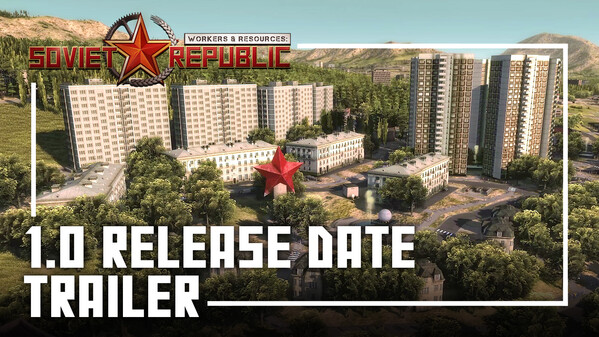
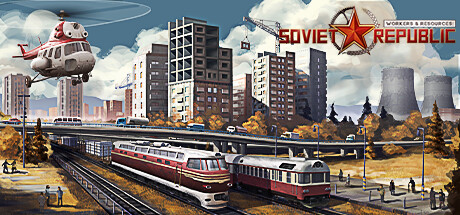
Build a soviet republic from an impoverished country into a rich industrial superpower in a city builder with intricate production chains and a fully simulated global economy. Manage the lives of your citizens from education to work and party loyalty to criminal activity.
Modeled estimate, not a reported figure. How we estimate →
Prices
Each in the currency that store quoted — not converted: the gap between two rows is the publisher's pricing, not an exchange rate.
Charts
Each storefront's own chart, in its own country — the closest public signal to sales where none is published. A country missing from a list is one we don't collect there, not one where the game doesn't chart.
No United States chart position — it charts only in the markets below.
Same day: best RU #84, worst PL #89 · 2 markets collected
Discounts
Every price cut of more than 20% we have observed, in each market that quoted one, with this game's chart position on either side of it. These are episodes, not a model: a sale is one event, and one event cannot tell you what the next one will do.
Reviews, worldwide (the counter carries no country): 11.14/day in the week to Aug 22 → 17/day in the week after.
For scale, across Steam · Top Sellers · Brazil over the last 30 days: the 25 chart moves that followed a price cut of more than 20% went a median of 10 places towards #1, and the 2,413 moves with no price cut behind them went 2 away. One store, one chart, one country — it is the only place we have enough observations to say even that.
Prices outside the United States have been collected since 6 August 2026 and chart positions since 19 July 2026, so a cut older than that has no market to compare and a market that joined later has no history yet. Nothing here is converted between currencies.
About
Manage all aspects of your republic in this soviet-themed city builder game. A planned economy puts you in control of everything from mining resources to manufacturing goods and providing services – use this power to make decisions that impact your citizens’ day-to-day lives and their ultimate loyalty to the nation. Whether it’s construction, transportation, trade, healthcare, education, entertainment, tourism, or any of the countless other facets of a full-fledged city, it’s up to you to determine availability, accessibility, and quality. Contend with a deep simulation of global supply chains as you seek fertile soils, ore veins, and viable lands upon which to build your nation – let the radio stations sing your praises and the citizens rejoice in their glorious soviet republic.

Multiple complex simulations work together to bring your cities to life in Workers & Resources: Soviet Republic – whether it’s the price of goods in the global market, the proper distribution of electricity and water, or the increased supply of heat during the winter months, everything can be manipulated with the right actions. Adjust your game settings based on your appetite for complexity in particular areas – civil engineers, urban planners, economists, and simulation enthusiasts will all be able to experience the mechanics they love.
Run your nation with both rubles and dollars as you strike a balance between eastern and western markets, trading with nations from either side of the Iron Curtain to gain access to valuable currency, resources, and technology. Despite following a soviet-styled planned economy, you are a fledgling non-aligned nation – this sets you free to engage in trade with both the Western Bloc and the Soviet Bloc to your benefit. Loyalty to one side is always an option, but flooding one market with your goods might result in diminishing returns, and shunning the other side might see you cut off from useful technological advances.
Familiarize yourself with the intricacies of realistic supply-chain management with over 30 commodities to acquire, manufacture, and transport. Raw materials, processed goods, and waste material all have specific places where they can be stored, with specific vehicles needed for their transportation, and specific structures needed for loading and unloading. Liquids are stored in tanks and moved with the help of pipes and pumps, or loaded onto vehicles with tanks. Mined ores are stored in aggregate storage facilities, and moved with conveyor belts and flatbed trucks and train cars. Processed goods, meanwhile, are shipped around in covered trucks and train cars, and stored in warehouses. Organize forklifts for short distance hauling, build intricate conveyor belt networks to minimize your reliance on vehicles, or use trains to haul goods from one city to another – supply-chain management is an integral part of operating a nation, and you’ll use everything from cargo planes to freight trains to cargo helicopters to make sure everything is operating smoothly.
Every road, bridge, residential building, and factory is built from the ground up with resource costs reflecting the size of the project. Pay market rates for raw materials to execute quick builds with the help of foreign labor, or establish construction offices and provide employment to your population as they head to construction sites to build everything using locally acquired resources. Buildings can require anything from prefab panels, to steel beams, gravel, concrete, and more – produce and supply them locally, or import them to simplify the process. Will you be a self-reliant republic, or will you exploit the international market for rapid expansion?

A nation is nothing without its people – they work the fields, bake the bread, and operate the heavy machinery that keeps the wheels of industry turning. Ensuring the people remain happy and loyal is essential to your success.
Follow your citizens from childhood to the end of their lives, providing them with essential goods such as food and clothes (and alcohol) while simultaneously ensuring they have access to opportunities in the form of education and employment. Be wary of those that lack loyalty to the republic – they are prone to a life of crime, and their reduced efficiency can hurt throughput. Oftentimes, they are best left without access to opportunities where they can do more harm than good. Monitor your nation’s overall happiness and loyalty to ensure few are choosing to leave – provide them with better lives, or rely on propaganda to get the most out of your citizens.
Your peoples’ needs can be imported from neighboring countries, or they can be manufactured locally through complex production chains. Massive fields will harvest grains that can be turned into bread and booze at food factories and distilleries. Clothes factories will produce clothes as long as they have fabric, which in turn is produced at fabric factories with the help of crops, chemicals, and water. Manufacture or otherwise acquire all manner of goods, from the aforementioned necessities to the luxuries of radios and TVs, and transport them from factories to warehouses to local stores where your citizens can obtain them to fulfill their needs.
There are many essential services your citizens will want access to as well – electricity, water, and heat are necessary for survival, each with their own supply chains to maintain. Watch for demand to ebb and flow with the seasons, and prepare for harsh winters lest your population suffers a sudden tragic drop. Education is provided through schools and universities, with higher levels of education opening up additional employment opportunities for your people, unlocking access to new technologies and production capabilities in your nation. Entertainment comes from local parks and theaters as well as radio and TV stations, while physical fitness is provided by local pools and sports fields. Ensuring these services are available and within reach through an efficient transit system is essential for a healthy, prosperous populace.

From roads to railways, and from sea to sky, managing the transportation of goods and people is vital to the health of your republic. As your nation spreads and cities develop around resource hubs littered across massive maps, you’ll find yourself constantly expanding your transportation network to meet ever-growing needs.
Buses, trams, trains, subways, ships, and planes provide public transportation for people to move greater and greater distances, fulfilling needs at distant shops, or providing their expertise at far-flung factories and mines. Operate interconnected systems to facilitate the movement of people across these massive expanses, even using cable cars and winding dirt roads to provide access to the more remote parts of your republic.
Trucks, trains, cargo planes, and cargo ships are essential for moving resources long distances, with different subcategories of each vehicle determining exactly what type of goods it can move. Limited access to certain vehicles might force you to explore transit methods you would otherwise have left behind – or perhaps you’ll build connections at customs offices along your border to enable trade with foreign powers instead?
Build custom airports, plan the placement of train signals, and design intricate interchanges to truly customize your transit networks. Road signs will influence speed limits and vehicle access, runway length will determine accessibility for various kinds of airplanes, and train stations can be built for passengers or cargo, with access points for pumps, conveyor belts, and forklifts to integrate smoothly into your existing supply chains.
Allow your people to purchase cars for private transit, but consider limiting access to such vehicles based on education levels or party loyalty to prevent the plague of freedom of movement and congestion – with well planned infrastructure and transit networks, you can fully control the flow of workers and resources alike.

Workers & Resources: Soviet Republic has dedicated modding tools and a plethora of extensive player-created mods available in the Steam Workshop. Customize your experience with new buildings and vehicles to build the soviet republic of your dreams.
Add-ons
Each DLC is estimated with the same model as a game, then summed — a modeled figure, not reported DLC sales.
Sums Steam only; GOG, Epic publish no volume signal, so the true total is higher by an unknown amount.
| Store | Price | Audience | Score | Chart | Est. revenue |
|---|---|---|---|---|---|
SteamYou are here | $39.99 | 27.3Kreviews | 91% | — | $34.2M |
| $9.99−75% | 120ratings | 82% | — | not modelled | |
Updates
Build ids and update times come straight from Steam's PICS — the same source SteamDB reads. Patch history grows as we record new builds.
Engagement
Reviews
Themes across 1262 recent reviews and how positive each mention is. A keyword signal, not full sentiment analysis.
Reviews
600 saatten fazla oynayıp 40.000 nüfusluk bir cumhuriyet yönettim. Bana göre oyunun bazı ufak eksikleri olsa da türündeki diğer oyunlarla karşılaştırıldığında hâlâ açık ara en başarılı şehir kurma ve ekonomi simülasyonlarından biri. Geliştirilmesini istediğim bazı noktalar şunlar: 1. Kaynak ve tüketim ürünleri çeşitlendirilmeli. Özellikle tarım ve halkın tükettiği ürünlerde daha fazla çeşitlilik olmalı. Yağ, şeker, tuz, meyve, yumurta gibi temel ürünlerin eklenmesi ekonomiyi daha derin hâle getirecektir. 2. Hayvancılık genişletilmeli. Şu an hayvanlardan yalnızca et üretilebiliyor. Gerçekçilik açısından koyunlardan yün elde edilebilmeli, yün ve kimyasallar kullanılarak kumaş üretimi yapılabilmeli. 3. Pamuk ve tekstil sektörü eklenmeli. Pamuk gibi sanayide kullanılabilecek tarım ürünleri oyuna dahil edilebilir. Pamuktan üretilen kıyafetler daha değerli olabilir, ihracatta daha yüksek gelir sağlayabilir ve vatandaş mutluluğunu artırabilir. 4. Yol sistemi geliştirilmeli. Hazır otoyol kavşakları, köprülü kavşaklar ve gelişmiş yol bağlantıları eklenmeli. Ayrıca yoğun trafikte zaman zaman görülen araç davranışlarındaki hatalar düzeltilmeli. 5. Demiryolu sinyalizasyonu iyileştirilmeli. Bazı durumlarda trenler sinyal uygun olmasına rağmen gereksiz yere bekliyor ve tüm hattın tıkanmasına neden oluyor. Bu sistemin daha güvenilir çalışması oyunun akıcılığını artıracaktır. 6. Uluslararası ekonomi daha derin olmalı. Batılı ve Sovyet ülkelerinin ekonomik gelişimleri, ithalat-ihracat verileri ve büyüme istatistikleri oyuncuya gösterilebilir. GSYİH, büyüme oranı ve ekonomik sıralama gibi veriler eklenebilir. Ayrıca ülkelerle ticaret anlaşmaları yapılarak vergi veya fiyat avantajları sağlanabilir. Manuel gümrük kapıları ve sınır geçişleri de oyuna stratejik bir derinlik kazandıracaktır. 7. Tarihsel olaylar ekonomiyi etkilemeli. Fiyatlar dönemsel olarak değişiyor ancak bunun nedeni oyuncuya açıklanmıyor. Petrol krizi, küresel durgunluk, hasat kayıpları veya uluslararası ambargolar gibi tarihsel olaylar etkinlik (event) olarak sunulabilir ve bunların ekonomik etkileri oyuncuya gösterilebilir. 8. İç güvenlik ve askerî mekanikler eklenebilir. Askerî birlikler ve kışlalar inşa edilebilir. Salgın durumlarında sıkıyönetim ilan edilerek sokağa çıkma yasağı uygulanabilir. Memnuniyetsizlik arttığında işçiler grev yapabilir ve polis veya asker kullanılarak olaylara müdahale edilebilir. Ayrıca hava savunma sistemleri kurulabilir, ülkeler arasında diplomatik krizler yaşanabilir ve bunlar ticaret ile fiyatlar üzerinde etkili olabilir. 9. Deniz ve hava kuvvetleri eklenebilir. Savaş gemileri ve savaş uçakları oyuna dahil edilebilir. Ticaret konvoyları korunabilir veya saldırıya uğrayabilir. Böylece lojistik ve uluslararası ticaret daha stratejik ve dinamik hâle gelir. Genel olarak Workers & Resources: Soviet Republic, ekonomi ve lojistik açısından rakipsiz bir oyun. Bu önerilerin büyük kısmı oyunun temel yapısını değiştirmek yerine mevcut sistemi daha derin, gerçekçi ve uzun ömürlü hâle getirecektir. I have played this game for over 600 hours and managed a republic with more than 40,000 citizens. In my opinion, the game has a few minor issues, but it is still far ahead of any other game in its genre. Here are my suggestions: 1. More resource and consumer goods variety. There should be a wider variety of agricultural products and everyday consumer goods. Items such as cooking oil, sugar, salt, fruit, and eggs would make the economy much deeper and more realistic. 2. Expand livestock production. At the moment, livestock only produces meat. For greater realism, sheep should also produce wool, which could then be combined with chemicals to manufacture fabric. 3. Add cotton and a textile industry. Agricultural resources such as cotton could be introduced as industrial raw materials. Cotton could be processed into clothing, which would be more profitable to export and could also increase citizens’ happiness. 4. Improve the road system. The game would benefit from pre-built highway interchanges, cloverleaf junctions, and more advanced road connection tools. Traffic AI should also be improved, as heavy traffic sometimes causes unrealistic behavior and congestion. 5. Improve railway signaling. Trains occasionally stop and wait even when the signals should allow them to proceed, creating unnecessary traffic jams across the rail network. This behavior should be improved. 6. Expand the international economy. The economic development of both Western and Soviet countries should be visible to the player. Statistics such as GDP, economic growth, imports, and exports would make the world feel much more alive. It would also be great to sign trade agreements with other countries to receive pricing or tariff advantages. Manual customs checkpoints and border crossings could add another strategic layer to international trade. 7. Add historical events that affect the economy. Prices change over time, but the game rarely explains why. Historical events such as the oil crisis, economic recessions, crop failures, or international embargoes could appear as events and clearly explain their impact on market prices. 8. Introduce military and internal security mechanics. Military bases and barracks could be built. During disease outbreaks, martial law and curfews could be declared to help contain the spread of infection. Unhappy workers could organize strikes, requiring police or military intervention if the player chooses. Air defense systems could protect the republic from attacks, while military conflicts or missile launches could affect trade relations and market prices. 9. Add naval and air forces. Warships and military aircraft could be introduced. Trade convoys could be protected or attacked, making maritime trade and logistics more strategic and dynamic. Overall, Workers & Resources: Soviet Republic is, in my opinion, the best economic and logistics city-building game currently available. Most of these suggestions are not intended to change the core gameplay but to deepen the existing mechanics, improve realism, and make long-term campaigns even more engaging.
Media

Related
Related
Price dynamics, follower growth, revenue and sales trajectories with interactive tooltips
This and every other Pro feature is free until October 20, 2026. A free account is all it takes.
Every market we collect.
Genres
Stats
All-time low is the lowest price we've recorded for this game since we started tracking it.
Languages: English, French, German, Polish, Russian, Simplified Chinese, Spanish - Spain, Italian, Japanese, Portuguese - Brazil, Hungarian, Korean +6 more
| $39.99 |
| — |
| — |
| — |
| $0 |
Matched by title — a reused name can pair the wrong games. * is a critic aggregate. Prices and positions are each store's United States storefront; Epic charts worldwide. Audience and Score too, except Steam's, which is worldwide.
Hours played at review time, across 1.3K reviews with recorded playtime.
positive critical· bar length = how often the theme comes up
Me sinto em uma real república socialista. Passei 8 horas em um único save e ainda só tem mato, cavalo e trabalhadores mal pagos mascando cascalho. 10/10 (descobri um novo sabor de autismo)
Раньше я часто бродил по улицам и думал о том, как же все вокруг плохо. везде какие-то долгострои, кривая инфраструктура, постоянно перекрытые дороги, перекапываемые трубы. думал про себя "емае, неужели так трудно просто один раз сделать нормально". купил эту игру чисто попробовать. включил реалистичный режим... теперь не задаюсь вопросом, почему в городах все сделано настолько отвратительно. это невозможно. 11 вымерших от дефицита еды поселков из 10 порадовал сеттинг. интересная передача советского вайба. 10 статуй Ленина посреди жилого двора из 10. очень душный, но действительно комплексный и проработанный градострой. 6 отравленных сточными водами рек из 10. горячо рекомендую всем тем, кто тоже недоволен тем, как у него в городе работают коммунальщики и проектировщики улиц. 10 стоящих в пробках снегоочистителей из 10!
Hello, First of all, I truly want to express my heartfelt thanks and deepest gratitude to the courageous developers at 3Division for creating this gaming masterpiece, which can claim to be the ultimate in its genre. On its own, it proves that when you have passion and ambition, it’s possible to create something that offers so much more than most of what’s available on the market and that stands out wonderfully thanks to its original and well-thought-out theme, its design, and its incredibly comprehensive and satisfying mechanics—even for the most demanding players like myself. So, when it comes to the art and gameplay. There’s no denying it—it’s all about attention to detail. Everything is absolutely well-crafted and integrated; almost nothing is missing. It’s a stroke of genius, as well as a testament to hard work, for which we can only feel deep admiration. Especially since this is a small studio trying to do everything on its own—it’s remarkable! Now, let’s talk about the technical aspects. Graphically, it’s true that the visuals aren’t the most advanced, but once I was in the game, I didn’t find them that outdated; I was even pleasantly surprised, since there are quite a few well-crafted elements—such as the textures (especially on the vehicles)—as well as sufficient animations. As a result, the overall experience remains solid and cohesive. Now, as for the soundtrack, the music is superbly composed, as it truly captures and complements the theme of Soviet socialism through its military choir-style sounds and retro 1980s electronic music. As for the ambient sounds, they’re pretty good, though it would be nice if they were a bit more dynamic and varied, especially regarding vehicles and, above all, the various production buildings when you approach them. Finally, as for the game’s mechanics, I find them to be meticulously designed, since it’s worth noting that, given the modest graphics engine, the developers have still managed to pull off some feats that even larger studios struggle to implement properly. I’m thinking in particular of the AI governing vehicle behavior; here, it can assess the different speeds of each vehicle on the road and thus perform intelligent passing maneuvers when necessary. Still on the topic of vehicles, the game even simulates engine RPMs based on the selected gear. One last example for good measure: currently, most games in this genre feature a building wear-and-tear mechanic, but this one doesn’t stop there, it also incorporates a wear-and-tear factor for the machinery inside those buildings. I admit I was very impressed, and I wanted to highlight just these three elements to show you everything that awaits you if you decide to embark on this fabulous adventure that is Workers & Resources: Soviet Republic. The game offers many items to manufacture; however, it is missing a few that are clearly obvious—whether through new production lines or by being too generic regarding existing ones, such as in the chemical industry, which does not include the production of medications as a separate product, which creates an inconsistency with healthcare facilities such as hospitals and clinics that miraculously treat citizens without any medication—a scenario that is hardly relevant or logical for a game aimed at realism. As a result, I’ve given this some careful thought and would like to politely offer my suggestions for making this incredible game even better. Here they are: 1. Add more crucial resources that are currently missing, such as: copper, titanium, gold, sand, vegetable oils, rubber, and fish. These additional resources would not only help correct these inconsistencies but also further diversify the production chains I’ll list below. 2. Add the glass industry, which will require sand and will produce window glass and optical glass for both domestic use and export. - The furniture manufacturing industry, which will require wooden planks and will produce furniture for citizens as well as for export. - Paper, which will be produced from wood and will be needed for purposes such as mail delivery, administration, party headquarters, etc. - The manufacture of electrical cables, electric motors, and pipes, which can be used in construction as well as in automotive production facilities, etc., and for export. These cables and pipes will need to be manufactured using resources such as copper, aluminum, and rubber. - The manufacture of internal combustion engines, which will enable the production of various types of piston engines (small, medium, and large), turbo engines, as well as transmissions; all these components will contribute to the manufacture of various vehicles and may also be exported. This manufacturing facility will require the following resources to operate: steel, aluminum, and mechanical components. - The manufacturing of advanced electronic components: This facility will require resources such as electronic components and aluminum to manufacture microcontrollers, sensors, industrial robots, and satellites; these components can be exported. - The manufacturing of household appliances: these items will be produced using resources such as steel, copper, and electrical and electronic components, and may be used by citizens as well as exported. 3. There should be the possibility that some production buildings can produce two or three types of goods simultaneously; for example, an internal combustion engine factory (40% large piston engines, 20% turbo engines, and 40% small piston engines). 4. The technology tree should include the addition of mail technology, which then leads to telephony. This would unlock the following buildings: the National Telephone Exchange, which would connect several smaller exchanges, each with a specific coverage area; these smaller exchanges must be connected via dedicated cables. All of this will serve to meet a need among citizens. Inside the “National Switchboard” building, there will be a menu offering various actions related to this technology, such as issuing directives to a specific area of effect. Here are a few examples: - Productivity: Temporarily speed up or slow down production, with a risk of accidents if the duration is too long. - Transportation: Temporarily speed up or slow down vehicles within a specific area of effect. - Energy: Request a reduction in electricity consumption by a predetermined percentage; this may affect the happiness of the citizens concerned if it lasts too long. - Social: Request a 10% increase in research speed within the area of effect where a university is located, for a limited time. - Foreign Trade: Request price negotiations for a specific commodity over a predetermined period, or place a one-time order for imports or exports. - Organizing international events such as state visits, and the opportunity to undertake scientific projects like space exploration or the construction of a supercomputer, which will enable the creation of services such as launching satellites and performing mathematical calculations at the request of a neighboring country. 5. Add a bit more variety in animations, as well as effects for production buildings—for example: gantry cranes at the shipyard lifting sections of ships during construction—and, if possible, add a button at the top of the interface for a selected production building that would allow players to see the animated elements inside, such as a steel mill, etc. That would be absolutely awesome! 6. Add a bit more variety to the sound effects for production buildings when the camera zooms in. 7. Add one or two animations of birds in flight to make the environment more lively. In closing, I would like to thank you very warmly for taking the time to read this, and I highly recommend this unique and truly wonderful gem that I will never forget.
好玩,打通了。但能不能整个国民经济核算,手动算GDP太累了
Workers & Resources: Soviet Republic is what happens when someone looks at traditional city builders and decides they simply aren't complicated enough. If you've ever played Cities: Skylines and wished it had far more production chains, logistics, and economic simulation, this is probably the game you've been looking for. The sheer amount of mechanics is staggering. Instead of simply zoning areas and watching your city grow, you're responsible for nearly every aspect of your republic. Production chains, public transportation, electricity, waste management, education, construction materials, fuel, imports, exports, and much more all need to work together to keep your economy running. It can be overwhelming at first, and the learning curve is definitely steeper than most city builders. The important thing is that once everything starts to click, the game becomes incredibly rewarding. Watching a fully self-sufficient republic operate because of systems you designed yourself is immensely satisfying. Every successful production chain feels earned, and solving logistical problems often becomes just as enjoyable as expanding your cities. Another major strength is the Workshop support. The community has created an enormous collection of buildings, vehicles, maps, and quality-of-life additions that add even more variety to an already massive game. Whether you want historical accuracy or simply more creative options, there's plenty of content to explore. Visually, the game may not be the most impressive city builder on the market, but it certainly gets the job done. The graphics are more than good enough to support the incredibly detailed simulation taking place underneath, and after a while you'll find yourself paying more attention to your railway network or production statistics than graphical fidelity anyway. This definitely isn't a game for everyone. If you're looking for a casual city builder, you'll probably find the number of mechanics exhausting. But if you enjoy mastering deep management systems, optimizing complex production chains, and solving logistical puzzles, Workers & Resources: Soviet Republic offers one of the most satisfying city-building experiences available. It's essentially Cities: Skylines on Soviet steroids, and I mean that as the highest compliment.
This is a deep game with a lot of details. If a city builder is your time of game, try this out. Also, it runs perfectly on Linux!
共产主义果然要配合AI才有搞头,这个建筑造哪里,那个居民住哪里,这都不是人脑应该做的事情,交给AI设计最优解吧!
好游戏,但是我拉不出直线,建筑也不会吸附到网格上,整得人强迫症犯了
S+ Tier autism simulator get ready to feel like you're brutally mentally challenged for not understanding why your entire town died again (a heat pumping station didn't have power), all your buildings are on fire and the industry you just set up to export just sank on the market so you cut your meat budget to your gulag workers. 10/10 have wasted hundreds of hours play on realistic mode with full simulation to bus migrant workers to your construction sites like god intended.
Active players
Estimated daily and monthly active players (DAU/MAU) modeled from peak concurrency.
Players by region
Where this game's players are, estimated from review languages.
Players also reviewed
The games this title's players most often review too — audience affinity.
Related
| Game | Estimated lifetime revenue | Reviews | Review score | Price |
|---|---|---|---|---|
| $18.8M | 17.5K | 94% | $29.99 | |
| $2.5M | 2K | 91% | $29.99 | |
| — | 0 | — | — | |
| $7.5M | 3.4K | 86% | $39.99 | |
| $3.5M | 3.6K | 92% | $29.99 | |
| $2.5M | 2.3K | 93% | $29.99 |
Related
| Game | Estimated lifetime revenue | Reviews | Review score | Price |
|---|---|---|---|---|
| $34.3M | 30.2K | 93% | $48.99 | |
| $34.3M | 12.8K | 69% | $59.99 | |
| $34.3M | 24.2K | 87% | $34.99 | |
| $34.3M | 70.2K | 65% | $29.99 | |
| $34.1M | 88.7K | 97% | $19.99 | |
| $34.1M | 22.9K | 47% | $69.99 |