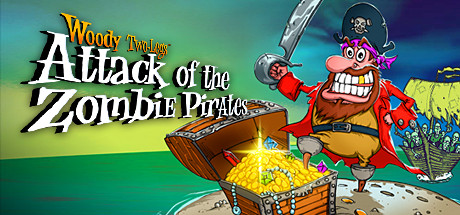
Meet Woody Two-Legs, the least infamous pirate of Seven Seas. Things have never gone quite right for Woody. That is, until he scored big time and got his hands on huge treasure. Sailing to remote island, Woody was about to bury his treasure, just as any good pirate would do.
Modeled estimate, not a reported figure. How we estimate →
Media

About
Genres
Stats
All-time low is the lowest price we've recorded for this game since we started tracking it.
Languages: English, French, German
Engagement
Hours played at review time, across 45 reviews with recorded playtime.
Reviews
Themes across 45 recent reviews and how positive each mention is. A keyword signal, not full sentiment analysis.
positive critical· bar length = how often the theme comes up
Reviews
Хватило на 19 минут, игра не очень!
It just wasn't fun. I ended up removing it from my account.
You remember that part in Sid Meier's Pirates where you get in a boat and start ♥♥♥♥♥♥♥ ♥♥♥♥ up, and it was a lot of fun? This game tries to emulate that experience and makes it the worst gaming experience period. The controls are terrible, the game play is not fun, and you are stuck with the lamest boat possible. It's essentially a tower defense. You dfend your gold on some island, and you try to recover your resources, but it's almost impossible when YOUR RESOURCES SINK TO THE ♥♥♥♥♥♥♥ BOTTOM OF THE OCEAN. You can also beat the game without beating the final boss, I'm pretty sure it's unintended, but who cares, any more time playing this game is better spent jerking off.
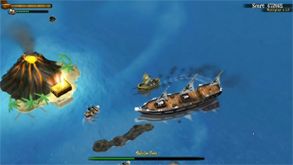
Woody Two-Legs: Attack of the Zombie Pirates is a small-scale, arcade-inspired top-down shooter that embraces a deliberately silly premise and old-school design sensibilities. Developed and published by Nitro Games, the title revolves around a mischievous pirate, Woody Two-Legs, whose ill-advised theft of cursed treasure draws the wrath of an undead pirate fleet led by the infamous Davy Jones. Rather than attempting a cinematic narrative or complex progression system, the game focuses squarely on frantic survival, score chasing, and wave-based chaos, positioning itself as a light, pick-up-and-play experience rooted in classic arcade traditions. The core gameplay loop is centered on defending a treasure island from relentless waves of zombie pirate ships. Players pilot Woody’s vessel around the island, firing cannons from either side while trying to prevent enemies from reaching the shore or overwhelming the ship. Enemies arrive from multiple directions simultaneously, creating constant pressure and forcing players to manage positioning just as carefully as raw firepower. The emphasis is on endurance and situational awareness, as the battlefield becomes increasingly crowded with hostile ships, projectiles, and environmental hazards the longer a session lasts. Control design is one of the game’s most distinctive and divisive aspects. Instead of modern twin-stick shooting, Woody Two-Legs relies on a ship-oriented control scheme where movement, turning, and firing direction are tightly linked to the vessel’s orientation. Cannons fire from the sides rather than directly forward, meaning players must constantly rotate and reposition to line up shots effectively. While this adds a nautical flavor that fits the pirate theme, it also introduces a layer of awkwardness that can feel unintuitive, particularly during hectic moments when enemies swarm from all angles. Mastery comes less from precision aiming and more from learning how to maneuver efficiently under pressure. Progression is largely score-driven rather than persistent. Destroyed enemies drop collectibles that boost score multipliers or temporarily enhance the ship’s capabilities, encouraging aggressive play and risk-taking to maintain high scores. This system reinforces the arcade mindset, where improvement is measured by how long you survive and how efficiently you dispatch enemies rather than by unlocking new abilities or content. Boss encounters punctuate the action, offering brief shifts in pacing, but they largely follow the same mechanical principles as standard enemies, emphasizing pattern recognition over tactical variety. Visually, the game adopts a colorful, slightly cartoonish art style that blends pirate imagery with undead motifs. Ghostly ships, cursed waters, and exaggerated enemy designs give the game a playful Halloween-like atmosphere rather than a genuinely threatening tone. While the visuals are serviceable and readable, they remain simple and repetitive, with limited environmental variety between levels. The presentation supports the gameplay but does little to evolve or surprise over extended play sessions. Sound design and music lean heavily into looping arcade rhythms and thematic effects. Cannon blasts, enemy destruction sounds, and nautical audio cues provide clear feedback during combat, while the soundtrack maintains a lively, swashbuckling tone. However, the limited number of tracks and effects can become repetitive fairly quickly, mirroring the overall structure of the game itself. Audio contributes to the energy of the moment but lacks the depth or variety to sustain long-term immersion. One of the game’s defining characteristics is its repetition. The wave-based structure, limited enemy behaviors, and minimal mechanical evolution mean that players experience most of what Woody Two-Legs has to offer within a relatively short time. For some, this repetition is part of the appeal, aligning perfectly with classic arcade games designed for short, intense sessions. For others, the lack of meaningful progression or variety causes the experience to lose momentum quickly, especially when compared to more modern top-down shooters with deeper systems. Community reception reflects this split clearly. Players who enjoy simple, retro-styled arcade shooters often appreciate the game’s straightforward challenge and quirky theme, finding it entertaining in brief bursts. Others criticize it for clunky controls, shallow gameplay, and limited replay value beyond chasing higher scores. The mixed reception underscores that Woody Two-Legs is a niche title, best suited to players with specific expectations rather than a broad audience. Ultimately, Woody Two-Legs: Attack of the Zombie Pirates is a deliberately modest arcade shooter that succeeds within its narrow ambitions but struggles to offer lasting depth. Its charm lies in its absurd pirate-versus-zombie premise and its commitment to old-school design, while its weaknesses stem from repetitive structure and awkward controls. For players seeking a light, humorous arcade diversion that doesn’t demand long-term investment, it can provide some chaotic fun. For those looking for mechanical depth, variety, or modern refinements, it is likely to feel dated and limited, serving more as a curiosity from an earlier era of indie game design than a standout experience. Rating: 5/10
So this is a good game right here. You play as Woody Two-♥♥♥♥♥ the zombie pirate and you ride your little ♥♥♥♥ boat around the island of africa. You don't even have fun. I thought this game was gonna be about toy story cause it had Woody in it, but I got ♥♥♥♥♥♥ out of 2.49! This game is like watching an episode of the sopranos while sticking your hand down a clowns pants.
Related
Related
Trends
Modeled estimate over time, reconstructed from Steam's monthly review histogram.
Audience
Estimated from the language of this game's reviews — a proxy for where players are, not official Steam demographics.
Related
| The Mensional | $5.8K | 62 | 92% | $4.99 |
| Colored Effects | $5.8K | 62 | 95% | $4.99 |
| Detective INNA DUKE | $5.8K | 50 | 100% | $5.99 |
| Hidden Cats in Rio de Janeiro | $5.8K | 90 | 97% | $3.99 |
| Wheelie Life | $5.8K | 69 | 58% | $2.99 |
| OR | $5.8K | 191 | 40% | $1.99 |