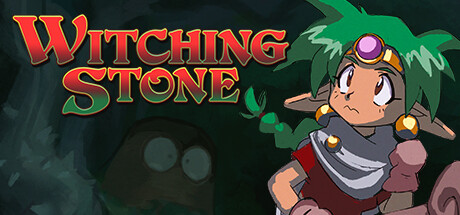
Witching Stone is a puzzle game matched with a deckbuilder! Customise your spellbook and weave spells with coloured stones.
Modeled estimate, not a reported figure. How we estimate →
Media

About
Stats
All-time low is the lowest price we've recorded for this game since we started tracking it.
Languages: English, Japanese, Simplified Chinese
Engagement
Reviews
Themes across 40 recent reviews and how positive each mention is. A keyword signal, not full sentiment analysis.
Reviews
This is a great and underrated game. I found character unlocks and secrets such as this to be extremely fun, overall this is a great puzzle rpg and i wish there were more games like this. This game is insanely fun and i would recommend it to any rpg puzzle enjoyer. I also hope one day we will get something alike to Witching Stone 2. Props to the developers!
Witching Stone, developed and published by Alexander Taylor, is an inventive blend of roguelite deckbuilding and spatial puzzle mechanics that delivers a fresh take on both genres. At its core, the game challenges players to cast spells by drawing paths through colored stones on a grid, with each combination activating a different effect based on your current build. What makes the game stand out is how it transforms what might seem like a basic match-based mechanic into a thoughtful, strategic system that rewards planning, experimentation, and adaptability. It’s a game that constantly pushes you to think several steps ahead while staying reactive to random elements that define roguelite gameplay. Players begin with a modest spellbook and a simple character, but as the run progresses, they accumulate new spells, enchantments, and passive bonuses that redefine their approach. The game isn’t just about stringing together the longest or most complex path — it's about finding synergy between your growing spell set and the dynamic board state. As new enemies appear with varied patterns, resistances, and disruptive abilities, you’re forced to adjust not only your pathing strategies but also your entire build philosophy. This system gives Witching Stone a satisfying learning curve, where each run brings new insights into optimal routes, spell synergy, and strategic risk-taking. The structure of the game is familiar to fans of roguelites. You traverse procedurally generated maps, choosing between battles, shops, rest points, events, and bosses. The tension lies in those decisions: do you push for a difficult elite fight for better rewards, or take a safer route and miss out on potential power spikes? These choices echo through each act, with long-term planning becoming essential for success. Boss battles punctuate each zone and serve as real skill checks — you can’t win by brute force alone; you must understand your tools and how to extract maximum value from your limited resources. Each failure feels like a lesson rather than a punishment, encouraging you to go back in with a revised strategy and greater knowledge. Visually, the game strikes a great balance between clarity and charm. The grid-based combat board is colorful but never cluttered, making it easy to track stone types and potential moves. Spell animations and effects are smooth, and each character has a unique design that adds personality without overwhelming the screen. Outside of battle, the UI is intuitive and responsive, with enough flavor in the menus and map designs to give the game a distinct identity. Music and sound design complement the pacing well — ambient tunes during exploration and more intense tracks during boss fights create an immersive and appropriately magical atmosphere. One of the game’s standout features is its character and modifier system. As you progress and complete objectives, you unlock new characters that dramatically shift your approach to combat. Each one comes with unique traits, opening up different strategies and spell interactions. Additionally, modifiers — which can be toggled before a run — add another layer of variety and challenge. Some increase enemy health, others limit your spell pool, or add environmental hazards that alter the grid. These elements greatly enhance replayability, allowing players to customize their experience and test their mastery in increasingly demanding scenarios. However, the game does have a few areas where it might not satisfy every kind of player. Because of its puzzle-centric core, turns can take a while — especially in the late game where builds become more complex and the cost of a misstep is higher. For those who prefer fast-paced or reactive gameplay, this methodical pace may feel like a slowdown. There’s also a learning curve tied to understanding how spells interact, and while the game tries to be intuitive, some effects and modifiers aren’t always clearly explained, which could be frustrating in high-stakes situations. The occasional opacity in mechanics might put off players who value complete transparency in combat systems. Despite these minor drawbacks, Witching Stone is a remarkable achievement, especially considering its indie origins. It successfully merges the addictive experimentation of deckbuilders with the cerebral satisfaction of puzzle-solving, creating a hybrid that feels fresh and thoughtfully crafted. The progression feels rewarding without being grindy, and every run carries the potential for both surprising victories and humbling defeats. Most importantly, it’s a game that respects the player’s intelligence — it challenges without hand-holding, but never feels unfair or deliberately obtuse. In the end, Witching Stone stands as a polished, creative, and deeply satisfying entry in the roguelite genre. It’s ideal for players who enjoy careful planning, theorycrafting, and adapting to ever-changing circumstances. While its deliberate pace and depth may not suit everyone, those who give it the time and attention it asks for will find it rich with strategic potential and long-term enjoyment. It’s not just a game about drawing lines on a board — it’s about forging a path through chaos, one stone at a time. Rating: 8/10
Related
Related
Trends
Modeled estimate over time, reconstructed from Steam's monthly review histogram.
Hours played at review time, across 40 reviews with recorded playtime.
positive critical· bar length = how often the theme comes up
This is an extremely simple and intuitive puzzle-roguelike that scratches an itch that's becoming more and more uncommon nowadays -- a game where gamebreaking combos are readily available, but require some serious elbow grease to unleash. The characters are fun (even if some of them are highly RNG-dependent to unlock), the music is great, and the build variety is immense. My only wish is for a greater badge pool in future updates; the early game especially can feel a tad linear unless you get wacky with spell/badge combinations. All told, a strong 8 out of 10 from me.
クロノアークや、ワイルドフロストなどの かわいい系ローグライクが好きならお勧め 上記より難易度は低めです 魔術師(ケリドエン)はすぐ死にます
It is the start/core of interesting combat... but no balancing or meaningful choices about enemies
engine is OP please never nerf
Witching Stone is a cute pixel drawn match based roguelike. The novelty wore off a little quickly and it seems a bit easy once you figure out what's what, but it's worth trying.
Really fun but I got my fill pretty fast. I beat the 'true ending' once, but I feel like its very hard to have consistent runs in this game which always feels bad. Still like it a bunch though.
Super fun and I can already tell could be as addicting as balatro was for me. Love it!
Witching Stone is good, but I am not good at it. I think I just have a hard time visualizing the optimal path through the puzzle grid to cast as many spells as possible each turn. Due to this hindrance, I find it just as difficult for me to get into the game and really enjoy it. I recommend it for people who are good at puzzles more than they are at roguelikes--and if you can get it on a really good sale.
Momentum
Pace estimated from the game's recent review growth (our daily snapshots) at its own sales-per-review ratio — a momentum signal, not booked sales.
Audience
Estimated from the language of this game's reviews — a proxy for where players are, not official Steam demographics.
Related
| NEKO ARENA | $30.7K | 611 | 82% | $1.99 |
| Isle of Jura | $30.7K | 1.5K | 63% | $0.79 |
| WIDECROSS | $30.7K | 183 | 54% | $6.99 |
| Straimium Immortaly | $30.7K | 174 | 90% | $6.99 |
| Mind the Vikings | $30.7K | 83 | 43% | $10.99 |
| Alchemist Tris's Desire | $30.7K | 78 | 86% | $18.99 |