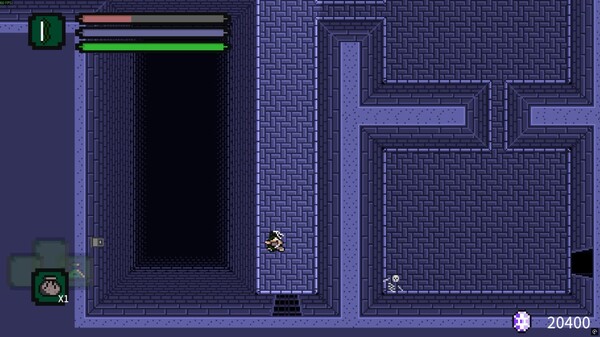
Wild Tower is a Three Kingdoms-themed 2D top-down dark fantasy action-adventure game with light Rogue elements. Step into the perilous tower, explore unknown rooms, scavenge powerful equipment, and confront formidable enemies lurking within in life-threatening battles.
Modeled estimate, not a reported figure. How we estimate →
Media

About
In 222 AD, Liu Bei launched a campaign against Wu. Overnight, hundreds of thousands of his soldiers mysteriously vanished.
When you wake from unconsciousness, you find yourself trapped inside an eerie tower that has risen from the ground. Surrounded by unfamiliar stone walls, the air thick with the stench of decay, the entire army has been swallowed by this colossal tower—only a handful of survivors remain.
Weapon in hand, you grope your way through layers of unfamiliar structures. Enemies may lurk in every shadow. There is no turning back in this tower—only forward, step by step, as you uncover the truth behind the army's disappearance.
Stay alive, find the exit, or—become part of the tower.
When the familiar expedition of Shu Han plunges into an eerie abyss, you will experience a wild legend never recorded in history.
Core Features
▸ Top-Down Hardcore Combat
Face powerful enemies, execute precise dodges, and master the Souls-like combat rhythm of seizing every attack opportunity.
▸ Forge Your Combat Style
Scavenge legendary weapons
Learn ancient skills
Obtain mysterious blessings
Stats
All-time low is the lowest price we've recorded for this game since we started tracking it.
Languages: English, Simplified Chinese, French, Italian, German, Spanish - Spain, Traditional Chinese, Russian, Japanese, Polish, Thai, Portuguese - Brazil +1 more
Reviews
玩了10分钟 目前给3个建议 希望作者能听取反馈 虽然从我买时候的0评论能看出来你的游戏没什么人买 但我希望你还是对自己游戏有信心会给它改好 1,玩家脚步声实在是太吵了,尤其是打开疾跑,完完全全的打桩机,震的耳膜痛 2,不同层次的地面可以考虑更改颜色而不是仅仅调整明亮度,目前的非本层地面变暗的效果观感很差 3,可以考虑用更大的地板砖代替目前的密密麻麻的地板砖 或者把地板砖之间的黑色缝隙颜色调的浅一点,现在的地板看的人密集恐惧症要犯了 4,这个可以酌情考虑 因为我现在也没玩多久 不太确定游戏总体难易度,感觉小怪起手有点快 几乎必吃伤害,如果预期中小怪没什么威胁可以试试小怪起手打人慢一点
The game’s objective is to climb a tower by clearing floors and defeating enemies. The graphics are very basic and minimal, and most rooms are large and empty, containing little of interest besides an enemy, an occasional chest, and common sparkling spots that hold some kind of item. Combat revolves around a single button. Holding it longer triggers a stronger attack that also has a ranged effect. There is also a stamina system that limits how often you can attack, especially if you combine attacks with dodging, which consumes a larger portion of stamina. Even so, encounters are not particularly difficult if you keep moving and prepare your strong attack. You can also run, which is essential for moving through empty rooms more quickly. Although running consumes stamina, it recharges quite fast if you pause briefly. You also have a bow that uses limited arrows, but its main purpose is to activate distant switches. Additional weapons become available as well, each with its own charged attack. One interesting mechanic is the field of vision. You cannot see around corners, and enemies remain hidden until you enter the room. Because enemies often wait next to doorways to ambush you, it is usually smart to charge a heavy attack before entering and lure them into range for an easy kill. In more direct encounters, you need to move close enough to trigger an enemy’s attack and then strike during the opening. Despite its simplicity, the gameplay loop is smooth and easy to follow. The tower layout remains the same in each run, but you can unlock shortcuts that make later runs faster, along with teleporters that allow you to reach previously unlocked floors. Each floor ends with a boss fight that is manageable as long as you watch for its special attack. Aside from chests, which contain the best rewards, enemies and sparkling spots respawn on every run. Even better, you keep everything you collect regardless of whether you die, fall off an edge into the void below, or return to camp using a quick teleport item. Returning to camp is important for character progression. You earn gems by defeating enemies, and these can be used to unlock various upgrades. Improvements are organized into four columns, and you must purchase the first option in a column to unlock the next one. These upgrades are not limited to stat boosts such as increased damage, stamina, or more valuable gems. They also unlock features like a merchant and a blacksmith who appear at the camp, as well as healing potions. Stat upgrades can be purchased multiple times, while unique options only need to be unlocked once. Both the merchant and the blacksmith offer services in exchange for gems. The merchant expands their stock as you progress and also buys items you do not need, although the selection is fairly limited. The blacksmith can craft equipment using gems and ores, but you must first find a blueprint for each piece of gear. In conclusion, this is a fairly standard dungeon crawler that does not stand out visually due to its basic art and environments. However, it is easy to pick up and play and avoids imposing overly restrictive design on the player.
Wild Tower is a chaotic and highly addictive roguelite tower defense game that successfully mixes strategic planning with fast-paced action. Instead of following the slower and more methodical style often associated with traditional tower defense games, it delivers a much more aggressive experience where players are constantly adapting to escalating enemy waves, evolving upgrade systems, and increasingly overwhelming battlefield conditions. The game combines satisfying progression mechanics with nonstop combat pressure, creating a gameplay loop that feels rewarding from the opening minutes and remains difficult to put down after multiple runs. At its core, the game revolves around defending a central tower from endless enemy assaults while gradually strengthening weapons, abilities, and defenses throughout each run. While the overall structure will feel familiar to fans of roguelite strategy games, Wild Tower stands out because of how quickly its battles escalate. Early waves begin relatively manageable, but before long the screen becomes filled with swarming enemies, explosions, projectiles, and overlapping upgrade effects that force players to constantly adjust their strategies. The game rarely allows players to settle into passive play, which gives every run a strong sense of momentum and tension. One of the most satisfying aspects of Wild Tower is its progression system. As players survive longer waves, they gain access to upgrades that can dramatically alter how defenses function. Some builds focus on overwhelming projectile spam, while others emphasize status effects, critical hits, area damage, or defensive endurance. The variety of upgrade combinations creates a strong sense of experimentation because small decisions early in a run can completely change how the later stages unfold. Discovering unexpectedly powerful synergies between abilities becomes one of the game’s biggest strengths and gives each session a unique feeling. The roguelite structure is implemented extremely well because failure rarely feels meaningless. Even unsuccessful runs contribute toward unlocking permanent upgrades, new options, and additional strategic possibilities for future attempts. This creates a constant feeling of long-term progress that encourages repeated play sessions. The game understands how important pacing is for roguelites, and it consistently rewards players with enough unlocks and experimentation opportunities to make returning for another run immediately appealing. Combat becomes especially entertaining once the battlefield starts descending into controlled chaos. Huge enemy waves flood the screen while upgraded towers unleash explosions, lasers, projectiles, and chain reactions in every direction. Watching carefully planned builds dismantle massive enemy groups creates an extremely satisfying payoff, especially during late-game moments where the entire screen becomes filled with destruction. At the same time, the game never becomes entirely passive because players still need to react quickly to dangerous enemy types and shifting battlefield conditions. Enemy design contributes heavily to the strategic depth. Different enemies pressure defenses in unique ways, forcing players to adapt their builds rather than relying on a single dominant strategy. Some creatures move quickly and overwhelm weaker defenses, while others absorb huge amounts of damage or attack from unexpected angles. This variety helps prevent the game from becoming too repetitive during the earlier portions of progression, and learning how to counter specific enemy combinations becomes an important part of mastering the game. Visually, Wild Tower uses a bright and colorful art style that fits the frantic pace of gameplay well. The presentation prioritizes readability over realism, which becomes extremely important during later waves when dozens of enemies and effects fill the screen simultaneously. Towers, enemies, upgrades, and attacks remain visually distinct enough to help players maintain awareness even during the most chaotic moments. While the environments themselves are fairly simple, the clarity of the combat effects and animations helps the action remain engaging throughout long sessions. The sound design also strengthens the overall experience considerably. Weapons feel impactful because of the strong audio feedback tied to attacks and explosions, while the soundtrack maintains a constant sense of urgency during battles. Music gradually intensifies as waves become more dangerous, helping reinforce the increasing pressure players face during longer runs. Combined with the rapid gameplay pace, the soundscape gives the entire experience a highly energetic and satisfying rhythm. Replayability is easily one of the game’s greatest strengths. Randomized upgrades, evolving builds, unlockable abilities, and different strategic approaches ensure that runs rarely play out the same way twice. Players are constantly encouraged to experiment with unusual combinations and alternative playstyles, which keeps the game engaging over extended periods of time. Even after discovering strong strategies, the random nature of progression systems still creates enough unpredictability to make every session feel slightly different. However, the game does suffer from some balancing problems. Certain upgrade combinations become overwhelmingly strong compared to others, which can make some runs feel dramatically easier depending on random upgrade availability. On the opposite side, unlucky upgrade choices can leave players struggling even when making solid strategic decisions. While randomness is expected in roguelites, there are moments where the balance between player skill and random progression feels uneven. The later stages can also become visually overwhelming. Massive enemy waves combined with countless projectiles and overlapping visual effects occasionally make it difficult to track important threats. While the game handles screen clutter better than many similar titles, extended sessions can still become exhausting because of the sheer amount of chaos happening simultaneously. Enemy variety, while solid overall, eventually begins to show limitations after many hours of play. Certain wave patterns and enemy combinations repeat frequently enough that experienced players may start recognizing predictable strategies for handling them. Additional biome variety and more unique enemy mechanics would help extend the game’s long-term freshness even further. Despite these flaws, Wild Tower succeeds because its core gameplay loop is incredibly satisfying. The combination of roguelite progression, strategic defense building, and fast-paced action creates an addictive cycle that constantly rewards experimentation and quick decision-making. The game understands exactly what makes progression-driven strategy games enjoyable and delivers that experience with strong pacing and chaotic energy. For players who enjoy roguelites, tower defense games, and strategy titles focused on build experimentation, Wild Tower offers an engaging and highly replayable experience. While it may not completely redefine the genre, its fast combat, rewarding progression systems, and satisfying strategic depth make it a standout indie release for fans of chaotic defense-focused gameplay. Rating: 6/10
Related
Related
Trends
Concurrent players on Steam, sampled daily since tracking started.
Momentum
Pace estimated from the game's recent review growth (our daily snapshots) at its own sales-per-review ratio — a momentum signal, not booked sales.
Related
| Zodiac Girls | $489 | 80 | 84% | $0.99 |
| Zahalia: The Knights of Galiveth | $494 | 53 | 55% | $0.49 |
| Street karate 3 | $495 | 60 | 75% | $4.99 |
| Devilish Girl | $495 | 79 | 73% | $4.99 |
| Desktop Agents - Cov1d-999 | $482 | 50 | 94% | $4.99 |
| Particle Wars | $481 | 53 | 94% | $0.49 |
Related
| 7 Days to Die | $425.3M | 398.5K | 87% | $44.99 |
| Palworld | $415M | 463.2K | 94% | $29.99 |
| Mount & Blade II: Bannerlord | $309.8M | 294.6K | 88% | $49.99 |
| Terraria | $187.5M | 1.5M | 97% | $9.99 |
| Clair Obscur: Expedition 33 | $177.7M | 274.2K | 95% | $39.99 |
| Don't Starve Together | $164.7M | 540.3K | 95% | $14.99 |