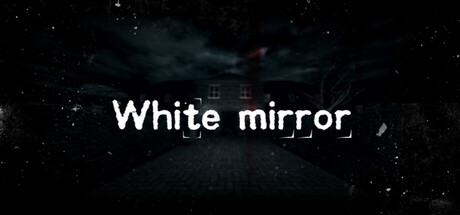
The main character is a hunter who looks for ancient relics. One day he set off to find a legendary mirror which concluded the great force and so great evil, keeping secrets of a magic artifact. You have a chance to know were is a mirror, but be careful the evil waits for you continually.
Modeled estimate, not a reported figure. How we estimate →
Media

About
Genres
Stats
All-time low is the lowest price we've recorded for this game since we started tracking it.
Languages: English**languages with full audio support
Engagement
Hours played at review time, across 40 reviews with recorded playtime.
Reviews
Themes across 40 recent reviews and how positive each mention is. A keyword signal, not full sentiment analysis.
positive critical· bar length = how often the theme comes up
Reviews
Grosse daube
[h2]🎵 𝔖𝔱𝔞𝔥𝔩𝔤𝔢𝔴𝔦𝔱𝔱𝔢𝔯 - 𝔖𝔱𝔞𝔞𝔱 𝔞𝔲𝔰 𝔖𝔱𝔞𝔥𝔩 (2026) 🎵[/h2] https://youtu.be/FRI7dAY1aDc https://youtu.be/6xhYVs8SRPE
10/10 martin is a stupid
jumpscares are boring i was just looking forthe seahorse
Игра ***** Вылетает при смене локации/загрузке Чувак Научись делать игры блииин
пон.
⭐⭐⭐⭐⭐
White Mirror by GDNomaD is a short first-person horror experience built around a classic premise: a mysterious artifact, an abandoned location, and a protagonist drawn into something they don’t fully understand. You play as a relic hunter searching for a powerful and dangerous mirror hidden within a decaying house, a setup that immediately signals familiar territory for fans of low-budget indie horror. There’s a certain charm in how directly the game presents its concept—no elaborate exposition, just a quiet entry into a place that clearly holds something wrong beneath its surface. For a brief time, that simplicity works in its favor, creating a sense of curiosity that encourages you to push deeper into the environment. The opening moments establish a modest but functional atmosphere. The house is dimly lit, quiet, and sparsely detailed, with an intentional emptiness that hints at past events without explicitly explaining them. Moving through its rooms, reading scattered notes, and following your journal objectives gives the illusion of piecing together a small mystery. However, this sense of discovery doesn’t last long. The game quickly reveals itself to be highly linear, guiding you from one objective to the next with little room for interpretation or exploration. Instead of letting players uncover clues organically, it relies on direct prompts that reduce the experience to a sequence of tasks, limiting immersion and diminishing the tension that the premise initially suggests. Gameplay is extremely minimal and rarely evolves beyond basic interaction. Most of your time is spent walking through the environment, picking up items, and completing simple objectives that require little thought. Puzzles are present but lack complexity, often feeling more like procedural steps than actual challenges. In some cases, unclear instructions—partly due to awkward translation—make these tasks more confusing than engaging, forcing players to rely on trial and error rather than logic. This lack of mechanical depth makes it difficult for the game to sustain interest, as there is little variation in what you are asked to do from start to finish. The horror elements are similarly restrained and, at times, underwhelming. The game attempts to build tension through darkness, ambient sound, and occasional scripted events, but these moments rarely escalate into sustained fear. Instead, it leans on predictable visual cues and mild jump scares that lack proper buildup. There are a few segments where a hostile presence is introduced, but these encounters are brief and mechanically simple, offering little real sense of danger. Rather than feeling hunted or threatened, you often feel like you are moving through a static environment where events occur around you without much consequence. Narratively, White Mirror hints at a deeper story involving the artifact and the house, but it never fully develops those ideas. Information is delivered through scattered notes and environmental details, yet the writing is inconsistent and sometimes difficult to follow. This makes it challenging to form a clear understanding of what is happening or why it matters. The game seems to gesture toward a larger mythology or psychological angle, but it doesn’t spend enough time exploring these concepts, resulting in a story that feels incomplete and fragmented. Visually, the game is functional but uneven. Some areas manage to capture a moody and oppressive tone, particularly through the use of low lighting and confined spaces. However, this is offset by a lack of detail and cohesion in the environment design. Rooms can feel empty or artificially constructed, and asset reuse becomes noticeable over time. The presentation never quite reaches the level needed to fully immerse the player, instead hovering in a space where it is serviceable but rarely compelling. The short runtime is one of the game’s most defining characteristics. A full playthrough can be completed in well under an hour, and while brevity can sometimes enhance horror by keeping experiences focused, here it contributes to a sense that the game ends before it truly begins. There is little time for tension to build, mechanics to evolve, or the narrative to develop, leaving the overall experience feeling more like a concept demo than a finished product. Technical roughness further reinforces this impression. Controls can feel slightly unpolished, interactions are occasionally unclear, and minor issues can interrupt the flow of play. While none of these problems are severe on their own, they add to the overall sense that the game lacks refinement. Combined with its limited content and shallow systems, these issues make it difficult for White Mirror to stand out, even within the crowded field of indie horror titles. In the end, White Mirror is a game that presents a familiar and potentially interesting premise but doesn’t build enough around it to create a lasting impact. It offers a brief glimpse into a dark and mysterious setting, supported by moments of mild atmosphere, but it lacks the depth, polish, and cohesion needed to elevate it beyond a basic experience. There are hints of creativity in its concept and occasional visual moments, but they are not enough to overcome its limitations. For players who enjoy exploring obscure indie horror releases, it may serve as a short curiosity, something to experience and move on from. For most others, it will likely feel underdeveloped and quickly forgotten, a reminder of how much execution matters in a genre that depends so heavily on immersion and tension. Rating: 4/10
It's an ok game expect for multiple crashes. https://youtu.be/siDQ4kFHI1k?si=k-0KpIadDR3snK2F
Empfehlenswert: Nein (persönliche Wertung: 1/10) Errungenschaften: Nein Positiv: - Es ist kurz Negativ: - Abstürze - Rätsel langweilig - Story schlecht - Atmosphäre kein Horror Fazit: White Mirror muss ich vor langer Zeit mal in einem Bundle geholt haben. Jedenfalls erinnere ich mich nicht daran es aktiv gekauft zu haben. Es reiht sich zu anderen billigen "Horror"-Spielen ein... Horror in Anführungszeichen, weil nicht wirklich was gruseliges passiert... Das Spiel ist kurz und das ist das einzig gute daran. Geprägt wurde meine Spielerfahrung durch sehr viele Abstürze, langweilige Rätsel (gefühlt immer das gleiche) und einer Story, die wirklich schlecht ist. Spart euch das Geld. Nicht Empfehlenswert!!!!
Related
Related
Trends
Modeled estimate over time, reconstructed from Steam's monthly review histogram.
Momentum
Pace estimated from the game's recent review growth (our daily snapshots) at its own sales-per-review ratio — a momentum signal, not booked sales.
Audience
Estimated from the language of this game's reviews — a proxy for where players are, not official Steam demographics.
Related
| The Deed II | $1.9K | 151 | 81% | $0.79 |
| Bacteria | $1.9K | 119 | 61% | $0.99 |
| Aftermath | $1.9K | 61 | 100% | $1.99 |
| Doodle Derby | $1.9K | 97 | 70% | $0.77 |
| Liquid Pinball | $1.9K | 113 | 68% | $0.54 |
| The Spirit Underneath | $1.9K | 126 | 37% | $0.99 |