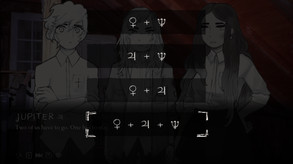
WE KNOW THE DEVIL is a visual novel about teens reluctantly fighting the devil at summer camp. Follow meangirl Neptune, tomboy Jupiter, and shy shy Venus as they get to know each other--but one always gets left out.
Modeled estimate, not a reported figure. How we estimate →
Media
About
Genres
Stats
All-time low is the lowest price we've recorded for this game since we started tracking it.
Languages: English
Engagement
Hours played at review time, across 41 reviews with recorded playtime.
Reviews
this game is like an experience you know you'll only have once with your friends it feels like it lasts forever until the next moment you're reminiscing about what once was I miss them.
A game for all those who felt the weight of expectations for far too many years. It's messy and raw but that's what makes it so special.
We Know the Devil is an unconventional visual novel that blends psychological horror, coming-of-age drama, and supernatural themes into a compact yet remarkably memorable experience. Developed by Pillow Fight and Worst Girls Games and published by Pillow Fight, the game takes place at a mysterious Christian summer camp where three teenagers—Neptune, Jupiter, and Venus—are assigned a strange task: spend a night in an isolated cabin and confront the Devil. While the premise initially suggests a traditional horror story, the game quickly reveals itself to be far more interested in exploring human relationships, loneliness, and the emotional struggles of adolescence. The narrative stands out because of how it approaches character interaction. Rather than following a fixed route, players decide which two girls spend time together during key moments. This simple mechanic creates a powerful sense of tension because one character is always left out. The resulting feelings of exclusion and imbalance become central to the story, reflecting the difficulties of maintaining friendships within a trio. Every choice subtly changes the emotional landscape, allowing different sides of each character to emerge and encouraging multiple playthroughs to fully understand their perspectives. The writing is easily one of the game's greatest strengths. Each protagonist possesses a distinct personality and emotional baggage that influences how they relate to one another. Neptune masks vulnerability behind confidence and sarcasm, Jupiter struggles with responsibility and expectations, while Venus constantly searches for acceptance and belonging. Their conversations feel natural and emotionally charged, shifting between humor, awkwardness, affection, and fear. Despite the game's relatively short length, the characters develop enough depth to leave a lasting impression, and their personal insecurities become the true driving force behind the story. Although marketed as a horror experience, the game relies less on traditional scares and more on psychological unease. The Devil functions as both a supernatural threat and a symbolic representation of fear, shame, and alienation. Strange events occur throughout the night, but the most unsettling moments often stem from the characters' emotional conflicts rather than any visible monster. This approach creates a lingering atmosphere of discomfort that remains effective long after the story ends. The game uses horror as a lens through which to examine identity and social anxiety, giving it a unique voice within the genre. The visual presentation reinforces this tone exceptionally well. Character portraits are expressive and distinctive, while the backgrounds utilize a faded photographic style that resembles old snapshots from a forgotten summer. This artistic direction gives the game a dreamlike quality, making the camp feel both familiar and unnerving. The contrast between realistic environments and stylized character art contributes to the feeling that reality is slowly unraveling around the protagonists. The overall aesthetic is memorable and perfectly suited to the story's themes. Sound design also plays an important role in establishing the mood. The soundtrack features atmospheric electronic compositions that quietly build tension throughout the experience. Rather than relying on dramatic musical cues, the audio remains subtle and haunting, complementing the emotional weight of the dialogue and supernatural events. Together, the visuals and music create an immersive environment that feels isolated, melancholic, and occasionally surreal. Replayability is stronger than expected thanks to the branching narrative structure. Different combinations of character interactions unlock alternate scenes, new insights, and multiple endings. Players who invest time in exploring every route gain a much fuller understanding of the story and its themes. This design ensures that the experience remains engaging beyond a single playthrough and rewards those willing to examine every perspective. We Know the Devil is not a game designed for everyone. Its storytelling embraces ambiguity, symbolism, and emotional subtext, often leaving certain details open to interpretation. Players seeking straightforward horror or fast-paced gameplay may find its approach unusual. However, those interested in character-driven narratives, experimental storytelling, and meaningful thematic exploration will discover a thoughtful and emotionally resonant experience. It succeeds as both a supernatural tale and a reflection on adolescence, identity, and the fear of being excluded from the people who matter most. Rating: 9/10
While a lot to like in this game, it falls through in missing some crucial QOL improvements many other VNs offer as a baseline - - No autoskip of previously read text (There is an 'auto' option but it is incredibly slow so wasn't worth using) - No text speed options - No ability to edit the audio (Which will occasionally play earsplitting jumpscare sounds) These combined made it a frustrating game to play even if short. If those features were to be added, the review would be changed to a positive, but for now be warned.
I wasn’t impressed with the writing and that’s why I quit playing after maybe an hour. If it gets better later it didnt do enough to get me intrigued or to care for the main cast of three. I only kind of liked one, and the other two were very forgettable. I do like the hand drawn art, but that alone wasn’t enough.
Replaying the whole game for new character moments is clunky, but every playthrough made the story hit me harder. The other overthinking queers would probably also enjoy this I hope. Anyway remember to be a good, pure child and not let the devil in <3
I wish I had played this game 10 years ago. It's beautiful, it make you think, it heals your soul and I love it. Everyone involve in this game, thank you very much.
just. OUGHHH play this game
👍
Related
Related
Trends
Concurrent players on Steam, sampled daily since tracking started.
Audience
Estimated from the language of this game's reviews — a proxy for where players are, not official Steam demographics.
Related
| Enter The Backrooms | $139.5K | 1.1K | 87% | $9.99 |
| Syn-Chorus 01: The New Life | $139.4K | 355 | 83% | $10.99 |
| LAST EMBRYO -EITHER OF BRAVE TO STORY- | $139.7K | 611 | 93% | $12.99 |
| Crowns and Pawns: Kingdom of Deceit | $139.4K | 477 | 81% | $19.99 |
| Wrestling Revolution 3D | $139.7K | 415 | 88% | $9.99 |
| Dwelvers | $139.4K | 318 | 69% | $14.99 |
Related
| The House in Fata Morgana | $1.7M | 5.9K | 95% | $16.24 |
| It gets so lonely here | $0 | 2.2K | 94% | Free |
| Little Misfortune | $4.1M | 14K | 92% | $19.99 |
| The Hex | $1.2M | 5.5K | 94% | $9.99 |
| Cat in the Box | $143.5K | 1.6K | 94% | $6.99 |
| Higurashi When They Cry Hou - Ch.5 Meakashi | $141.9K | 1.1K | 98% | $7.99 |