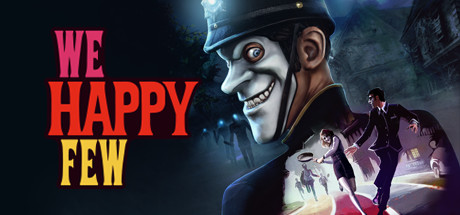
From the independent studio that brought you Contrast, We Happy Few is an action/adventure game set in a drug-fuelled, retrofuturistic city in an alternative 1960s England. Hide, fight and conform your way out of this delusional, Joy-obsessed world.
Modeled estimate, not a reported figure. How we estimate →
Media

About
Genres
Stats
All-time low is the lowest price we've recorded for this game since we started tracking it.
Updates
Build ids and update times come straight from Steam's PICS — the same source SteamDB reads. Patch history grows as we record new builds.
Engagement
Hours played at review time, across 602 reviews with recorded playtime.
Reviews
Themes across 598 recent reviews and how positive each mention is. A keyword signal, not full sentiment analysis.
positive critical· bar length = how often the theme comes up
Reviews
I first bought we happy few in 2019, when I was 16. I’m 23 now and it’s still my favorite game of all time. I don’t know what it is but I just find it so comforting and I always find myself coming back to it. I just finished it again and now I don’t know what to do with myself lol. It definitely had its problems and bugs in the beginning, and it still has some, but nothing progress interfering anymore. I wish it had gotten a better start because I really believe it’s something special. The characters are so lovable and the stories are so heartbreaking and bittersweet. If we happy few has no fans, I’m dead😆
[h3] 少数幸运儿,什么都要但又不深入! [/h3] 我是在去年12月1日开始游玩的,先说说游戏推荐点吧: 1.快活的音乐:开发商Compulsion Games算一名“偏科生”了,该工作室开发的《午夜以南》属于在游戏性很差但音乐和美术很顶的。而在《少数幸运儿》,其迷幻摇滚的配乐真旋律抓耳又带点诡异感,让人感觉真服用了“快活丸”带点上头 2.精良的剧情:剧情也是《少数幸运儿》的推荐点之一,反乌托邦的设定本身对我很有吸引力,《少数幸运儿》剧情里的“英式幽默”和带“缺陷”的三名主角的从虚伪幸福到勇于反抗的剧情,算是我认为反乌托邦题材作品里剧情很出彩的一款 不过,前面讲了该工作室属于“偏科生”,所以这游戏有很多问题: 1.画蛇添足的生存:《少数幸运儿》属于什么都要但又不深入的作品,作为反乌托邦强剧情的游戏,还强缝合生存系统打乱节奏,结果缝合还特拉胯——比如背包里堆着一大堆食物,饿了却只要吃任意一个就饱腹,搜刮欲望下降许多;后期如果解锁了“不知疲惫”这项技能,主角直接光合作用,直接让生存变纯属多余的设定 2.树敌的战斗系统:游戏里只要与任意敌人被动触发战斗状态,无论敌人是谁,因为什么原因,路人看见都要上来打,主角也几乎只能近身肉搏,亚瑟篇有次我遇到瘟疫病人让我切战斗后,整个花园区路人就对我追杀,直到不情愿去躲藏十几秒才结束 3.超长的跑图环节:许多的任务属于是超级长的折磨跑图,有些任务还是要从A点跑到B点,然后又跑回A点再跑C点的糟糕跑图,无意义还很无聊 4.建筑和克隆人:地图有些地方很空,建筑大量属于是只能看不能进的房子,能进的都还是复制粘贴的,以至于潜入盗窃都直接跑到某某柜子拿完走人;街道上一堆克隆人,有些时候还能看见三四位统一穿搭统一面貌的人走在一起就很难绷 总结,如果不是因为剧情我还是很难给好评的,但游戏还是不推荐你们亲自游玩了,真要体验剧情的可以上B站观看。 希望这条评测能对你有所帮助~
We Happy Few is a bold and unconventional blend of dystopian narrative, survival mechanics, and psychological horror, set in a striking alternate-history version of 1960s England. Developed by Compulsion Games, the title introduces players to the fictional city of Wellington Wells, a once-proud British town now controlled by a totalitarian regime and crippled by mass denial. The inhabitants are kept docile through a mandatory drug called Joy, which masks the horrors of reality with a colorful, hallucinatory facade. This concept sets the tone for a deeply unsettling yet captivating experience that strives to explore themes of conformity, trauma, and rebellion. At its core, We Happy Few tells the stories of three flawed, reluctant protagonists who awaken to the truth behind the city's synthetic happiness. Each of the three characters—Arthur, Sally, and Ollie—has a unique narrative arc, gameplay mechanics, and personal motivations, and this structure offers multiple perspectives on the haunting world around them. Arthur, a mild-mannered bureaucrat, begins the journey by choosing to stop taking his Joy and uncovering the dark secrets of his past. Sally's chapter emphasizes stealth and emotional vulnerability, while Ollie brings more brute force and chaotic energy to the equation. These distinct storylines allow the game to explore different tonal ranges, from melancholy introspection to unhinged rage, giving players a layered, multifaceted narrative. The setting is arguably We Happy Few's most powerful asset. Wellington Wells is designed with a surreal, retro-futuristic aesthetic, juxtaposing 1960s optimism with Orwellian dread. The streets burst with artificial color and cheer, but decay and violence lurk just beneath the surface. When players are on Joy, everything seems whimsical and inviting—bright murals, singing bobbies, and dancing townsfolk—but once the drug wears off, the illusion fades, revealing the squalor, rot, and social collapse that define the true world. This duality is brilliantly executed and becomes a core mechanic: taking Joy lets players blend in, but also comes with hallucinations, memory loss, and withdrawal. Refusing the drug makes you a Downer, hunted by society for daring to see the truth. Gameplay in We Happy Few is a mix of exploration, crafting, stealth, combat, and light survival elements. Players must manage hunger, thirst, stamina, and sleep, especially on higher difficulty settings, though these mechanics can be toned down or turned off for those more focused on narrative. Crafting plays a key role, allowing players to scavenge and create tools, healing items, or disguises. Combat is serviceable but not particularly refined—brawling with enemies works, but the mechanics feel weighty and occasionally clunky. Stealth is often a better option, especially in hostile zones where being spotted without a proper disguise can lead to chaotic chases and quick deaths. The game’s AI can be inconsistent, sometimes making stealth encounters feel unfair or frustrating. NPCs may react unpredictably, and environmental navigation, particularly in procedurally generated areas, can occasionally lead to repetition or confusion. Despite this, the moment-to-moment gameplay remains tense and immersive, especially when players must disguise themselves, sneak through dangerous areas, and make moral decisions about how to treat others. There’s a strong sense of consequence in many actions, especially in the narrative-driven side quests, which often reveal the deep emotional scars left by the regime's manipulation and propaganda. Musically and aurally, We Happy Few excels. Its soundtrack shifts seamlessly between eerie ambience and upbeat, ironic pop numbers that reinforce the contrast between the world’s cheerful surface and grim reality. The voice acting is also a standout, with a particularly strong performance from Arthur’s voice actor, whose dry wit and emotional growth anchor the game's first and most substantial arc. Dialogue is sharp, often darkly humorous, and the writing, while sometimes overwritten, succeeds in conveying a deeply fractured society grappling with denial and regret. Technically, We Happy Few had a rough launch, and its early reception was marred by bugs, uneven difficulty spikes, and unclear direction. However, post-release updates and patches have significantly improved performance, stability, and the overall flow of gameplay. Additional content expansions and DLCs further expanded the lore and introduced new gameplay elements that enhance the core experience. Ultimately, We Happy Few is not a conventional game, nor is it always smooth or easy to digest—but it is ambitious, thought-provoking, and unlike anything else. It tackles serious subject matter—addiction, societal control, repression—through a stylized, sometimes absurdist lens, and in doing so, it carves out a unique space in the gaming landscape. Its fusion of storytelling and gameplay isn’t always perfectly executed, but the commitment to atmosphere, thematic depth, and artistic vision makes it memorable. For players willing to forgive some rough edges in exchange for a distinct and immersive world filled with mystery, moral ambiguity, and haunting beauty, We Happy Few offers a rewarding journey. It may not suit everyone’s taste, especially those seeking polished combat or tight gameplay loops, but for those intrigued by the power of storytelling in interactive media, it’s a trip well worth taking—Joy or no Joy. Rating: 8/10
Игра кайф мне все понравилось стилистика биошок и дизонорет но только первый акт останые не проходил не оч понравилось
Легендарная narкотрипная игра, где-то душная где-то веселая но было балдёжно проходить эту игру. 10 ежевичного радостина из 10
quando joguei isso em 2018, parecia bem mais legal, na epoca zerei e tal, o jogo tem seu charme, mas quedas de frames sem parar, uma simplicidade estranha, e essa cores psicodelicas me deram ate tontura. Acho que porque joguei muitos outros jogos, apagou o brilho desse Dropei, nao recomendo.
Really good game, graphics, story, and gameplay, don't let other people's hate drive you away from this game because its really good, just wait for a sale of course
比较独特是画风和世界观,但是玩久了感觉心理承受不了,看到街上心理已经扭曲的人们磕着“JOY”,我还得要时不时得磕几粒,自己玩着玩着都有点心理不适。开放世界塑造了,有一些支线任务,但是我获得的很多道具都用不上,最主要道具感觉就是回复生命的药,其余的包括生存要素有点画蛇添足的意味。打击感很一般,战斗主要是靠潜行刺杀。综合下来,的确是带给了我非常难忘的体验,一个反乌托邦的看似美好的世界,但游玩的整体过程太过艰辛,不过还好买的时候才十几块钱,要是一百多我肯定就不推荐
"We Happy Few" was capable of so much more. While the plot is amazing, the playstyle may not be to everyone's taste. Although I think it's great, I wish there were more distinctive human models for the typical male NPC. Any characters that have no importance. Doctors & Bobbies are the only male NPCs who I believe look fantastic; the rest are just "Arthur dressed differently". The NPCs for women aren't much better either; I find that battles may grow boring. they are usually slower than you, they're not the sharpest, and they take too long to notice you, therefore I wish there was more diversity and that hiding, sneaking, or utilizing joy in general was more significant. However, It's a game that should definetly be exsperienced!
Это моя любимая игра и я требую продолжения.
Related
Related
Trends
Modeled estimate over time, reconstructed from Steam's monthly review histogram.
Engagement
DAU/MAU are modeled from peak concurrent players (≈×8 and ×28) — Steam publishes no active-user counts, so treat these as rough estimates, not reported figures.
Audience
Audience
Languages: English*, French, Italian, German, Spanish - Spain, Japanese, Portuguese - Brazil, Russian, Simplified Chinese*languages with full audio support
Estimated from the language of this game's reviews — a proxy for where players are, not official Steam demographics.
Games most often reviewed by the same players — an audience-affinity signal from our review sample, not full ownership data.
Related
| Ghostwire: Tokyo | $19.2M | 12.5K | 84% | $59.99 |
| Warhammer 40,000: Darktide | $19.2M | 136.6K | 72% | $9.99 |
| VTOL VR | $19.2M | 21.6K | 98% | $29.99 |
| Tokyo Xtreme Racer | $19.1M | 15.5K | 94% | $49.99 |
| Generation Zero® | $19M | 42K | 72% | $24.99 |
| Slay the Princess — The Pristine Cut | $19.4M | 30.8K | 97% | $17.99 |