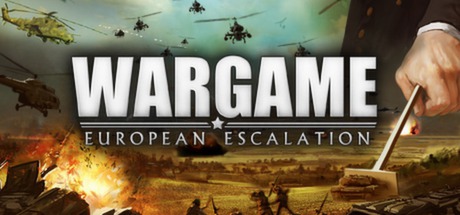
Wargame: European Escalation, developed by Eugen Systems, is a real-time tactics experience that strips away many of the familiar conventions of the RTS genre and replaces them with something far more deliberate and demanding. Set against the backdrop of an alternate Cold War conflict in Europe, it focuses not on spectacle or rapid-fire micromanagement, but on the slow, calculated application of military doctrine. From the outset, it becomes clear that this is a game about thinking several steps ahead—about understanding terrain, unit roles, and timing—rather than reacting quickly in the moment.
Instead of building bases or harvesting resources, players operate within a deployment system tied to map control. Key sectors generate command points, which are then used to call in units from a pre-constructed deck. This immediately shifts the dynamic away from economic growth and toward territorial dominance and efficiency. Every unit placed on the battlefield is a deliberate investment, and losing forces without purpose can quickly put you at a disadvantage. The absence of traditional base-building removes the safety net found in many RTS games, forcing players to engage directly with the battlefield and its shifting frontlines.
Combat unfolds in a way that emphasizes preparation over execution. Engagements are often decided before the first shot is fired, based on positioning, reconnaissance, and the composition of forces. Units behave according to detailed statistical models, with factors like armor direction, weapon range, and line of sight playing critical roles. Tanks are vulnerable from the sides and rear, infantry can ambush from forests or urban cover, and anti-air systems can deny entire sections of the map if used effectively. This creates a layered tactical environment where knowledge and planning outweigh reflexes, and where a well-placed ambush can dismantle a numerically superior force.
Reconnaissance is arguably the most important element of the game’s design. Information is power, and the ability to see the enemy before they see you often determines the outcome of a battle. Dedicated recon units, combined with careful positioning, allow players to build a picture of the battlefield and anticipate enemy movements. Without this information, even the most powerful units can be rendered ineffective or destroyed without warning. This emphasis on visibility adds a constant tension, as players must balance aggression with caution, always aware that unseen threats may be waiting.
The scale of the maps reinforces this methodical pacing. Large, detailed environments feature a mix of open terrain, forests, and urban areas, each affecting how units perform. Movement across these spaces is deliberate, and establishing control over key routes and defensive positions becomes essential. The game encourages players to think in terms of frontlines and flanking maneuvers rather than isolated skirmishes, creating a sense of continuity across the battlefield. Combined with a wide array of historically inspired units drawn from NATO and Warsaw Pact arsenals, the result is a strategic sandbox where experimentation and adaptation are constantly rewarded.
The single-player campaign offers a series of structured operations that highlight different aspects of the game’s mechanics. Rather than focusing heavily on narrative, these missions act as tactical scenarios, each presenting unique challenges that require careful planning and execution. While this approach reinforces the game’s strategic depth, it can also feel somewhat impersonal, as the story takes a backseat to gameplay. The AI provides a reasonable challenge, though it occasionally struggles with consistency, leading to moments where its behavior feels either overly passive or unpredictably aggressive.
Multiplayer is where the game truly comes into its own. Facing human opponents brings out the full complexity of its systems, as both sides engage in a constant battle of information, positioning, and deception. Matches often unfold slowly, with long periods of maneuvering punctuated by sudden, decisive engagements. The psychological aspect becomes just as important as the tactical one, with feints, misdirection, and timing playing key roles in securing victory. This depth gives the game a lasting appeal, particularly for players who enjoy competitive strategy.
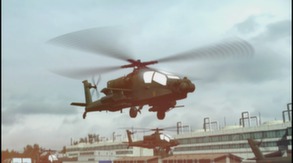
Visually, Wargame: European Escalation is functional rather than flashy. Its engine allows players to zoom seamlessly from a broad strategic overview down to individual units, which is invaluable for maintaining situational awareness. While the graphics are serviceable and provide enough detail to distinguish units and terrain, they lack the polish and spectacle of more modern titles. The interface, while comprehensive, can feel dense and unintuitive at first, requiring time to fully understand and use effectively.
The game’s biggest barrier is its learning curve. It does little to guide new players, expecting them to engage with its systems and learn through experience. Concepts like line of sight, supply management, and unit specialization are not always explained clearly, and early matches can feel overwhelming. This initial difficulty may discourage some players, but those who persist will find a deeply rewarding system that offers a level of tactical nuance rarely seen in the genre.
In the end, Wargame: European Escalation is a game that demands patience and rewards thoughtful play. It does not aim to be accessible or immediately gratifying, instead offering a slower, more cerebral approach to strategy that emphasizes planning and understanding over speed. While its presentation and onboarding may feel dated, its core design remains compelling, providing a rich and challenging experience for those willing to invest the time to learn it.
Rating: 7/10