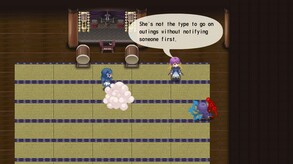
Select one of four protagonists, and resolve the spiriting away incident plaguing all of Gensokyo! There are over 100 allies called "shikigami" to recruit. Combine shikigami however you like and bring the incident to its resolution!
Modeled estimate, not a reported figure. How we estimate →
Media

About
Stats
All-time low is the lowest price we've recorded for this game since we started tracking it.
Languages: Japanese, English
Engagement
Hours played at review time, across 40 reviews with recorded playtime.
Reviews
Themes across 40 recent reviews and how positive each mention is. A keyword signal, not full sentiment analysis.
positive critical· bar length = how often the theme comes up
Reviews
This game is really fun. If you liked Genius of Sappheiros, you'll like this. If you never played Genius of Sappheiros, this is pretty much a standard turn-based RPG, but they add a lot of twists to add depth to the battle system. Elements can be used to fill up a "land" bar, similar in some ways to Chrono Cross where repeated use of an element turned the battlefield a certain color. Unlike in Chrono Cross, there are more levels to fill, and there are more perks to increasing the potency of a certain element in any given battle. For example, if you repeatedly use earth elements, and equip specific armor and weaponry with an earth affinity, you might get free HP regen. Unlike in most RPGs, there are specific stats that affect whether you can inflict status ailments on enemies, and bosses can often be affected by status efects. There are also specific stats which affect status resistance. Status ailments come in three varieties. Quick status ailments last only the given turn. Permanent status ailments last for several turns. Variety status ailments inflict debuffs on enemy stats. There are a wide array of different status effects which you can use to gain an advantage, such as poison, berserk, or even just outright being able to control enemy units, or charm them into inadvertently supporting you. There are formations similar to Saga, which offer trade offs such as faster turn times or increased attack or magic power for specific placements within a formation. Formations also affect how often certain characters get targeted, as well as your character's susceptibilities to column or row attacks. In general, formations are important to consider in order to maximize your damage output and minimize enemy damage outputs. Skills are learned by equipping specific weapons. There are slash, stab, and crushing weapons, and each have their own skill trees. Each weapon has different skills which can be learned as well as options to improve upon existing skills, so there are multiple considerations when equipping weapons rather than just looking at their stats. Each character can also equip up to three shikigami. These modify your characters' stats and provide you with their own movepools, which improve over time. This allows for a lot of customization for each character in the game. Compared to Genius of Sappheiros, there's still a lot of customization, but each character feels slightly less unique. Every character can theoretically do similar things, but some character have better stats in certain areas than others. Some characters are fast or physically powerful, and won't be great at using magic. Other characters are more inclined toward magic use. Some characters are more frail than others, etc. But all characters can theoretically gain access to all of the learnable skills in the game. Each character has one unique spell card, and the protagonist characters (4 of them) have access to a few unique spells. Each character also has a unique last word ability, which isn't always available, but after repeated battles may become available to use. These range from being able to stun all enemies for one turn, guaranteed, to being able to throw out a strong AOE attack. One thing I like about Devil of Decline is that it has a much bigger roster of playable characters than Genius of Sappheiros, including Touhous I really enjoy such as Hong Meiling. The battle system in general is very good. There are a lot of considerations to make. For example, some skills slay certain "races" of enemies, such as wolf fang doing supereffective damage against beast or reptile enemies, or Brandish doing effective damage against aquatic enemies. Almost all enemies have specific elemental resistances or weaknesses, as well as specific immunities or vulnerabilities to different types of status ailments. Controlling the elements on the field can be very important, and oftentimes focusing down specific enemies matter a lot. Sometimes status ailments are the only way to get through otherwise challenging encounters. Other times, you will need to change your formation to minimize exposure to specific types of attacks or focus damage on a specific tanky party member. Many RPGs make a mistake of making the random battles almost an after thought while putting most of the gameplay focus into bosses. This is a major error because most of the time you spend playing RPGs is often spent fighting "random battles" instead of boss battles. Within a few hours of Genius of Sappheiros or Devil of Decline, however, you will quickly find that the random battles actually put up a decent challenge, requiring you to think about your party loadouts, equipment, and strategy. And this is what I love about these games, because the turn-based battles tend to be very strategic in terms of how you approach them. The bosses have quite a bit of thought put into them as well. There are also sorta minibosses spread around each map, which appear as slightly different redder enemy icons. These tend to yield higher exp bonuses as well as higher drop rates, and thus you can often go through an area avoiding a lot of regular encounters while prioritizing these miniboss fights if you desire. There are a couple of things I'm not hugely enamored about. I don't like how new characters and shikigami all start at level 1. This can make the game feel grindy at times, and if you really prefer specific characters over others, like I do, it's annoying to have to replace old veterans in favor of new characters who initially feel like dead weight. Another thing I dislike is that when you retreat from an encounter, the enemy remains on the map, and sometimes in tight corridors, you might end up running into them again. I think it would have been better to have enemies disappear after you run. The map design can also be confusing at times, and there were moments where I genuinely was not sure where to go or what to do in Devil of Decline. This happened more often than with Genius of Sappheiros, partially because Devil of Decline is a more open and less linear game. However, overall, I think this is a really solid Touhou RPG not to mention a solid RPG in general, and I would highly recommend it for enthusiasts of turn based RPGs.

If, somehow, you played an older version of Devil of Decline years ago through some mysterious and possibly illegal means before Strawberry Bose added a lot of DRM and always-online stuff with Twitter, I'm going to try to list the differences between those versions and this one, for your convenience. I am currently playing through the game and will update this as I come across something. -The four starting characters have field abilities or items or mechanics unique to them, including Yukari having a time limit on how long she can take to beat the game -Every character has spellcards with powerful effects, that are distinct from Last Words. These cost no MP but have to be discovered in the world to gain more uses per healing circle -Satori can be turned into a master character -Tenshi can be turned into a master character -Eirin can be turned into a master character -Some areas have miasma on them which turns them into dungeons where you can't leave except via teleportation, you have to find a miniboss and defeat it -Some overworld enemies have a different colored map sprite and contain harder enemies that reward more XP -Weapon skills seem to be able to be mastered several times over to improve their damage -Can check bestiary entries in combat to review enemy weaknesses and drops, provided you have the entry already -A few censored monster designs, mostly some of the topless girl youkai. Yes, the game used to have partial nudity. The clothes they were given look unnatural and forced, but that could just be because I'm used to the uncensored designs -The combat UI "action wheel" behaves more like Genius of Sappheiros' now. Spell Cards are just shown with a giant "Spell Card" icon written in text, rather than having any sort of unique icons for them -Can convert master characters into shikigami. They preserve their levels, meaning you can bring people along to train if you want to swap someone out later
[h1]沼のように時間がかかる東方二次創作RPG第二段[/h1] switchとsteamでそれぞれ博麗神社の地下(EXクリア後のダンジョン)まで行きました。 switchでは美鈴でプレイ、steamでは白蓮でプレイ済です。 [h1]どんなゲーム[/h1] 4名いる主人公(美鈴・霊夢・白蓮・紫)から、1名選んで最大5名のパーティでゲームクリアを目指します。 メインキャラクター(以下主人と表記)1名につき、最大3つまでの式神を装備させられます。 式神で能力値や使用出来るスキルが変わります。 難易度は霊夢や白蓮を選んだ場合は前作より少し下がるくらいですが、 難しい事に変わりません。 逆に美鈴を選ぶと大きく下がります。 [h1]長所[/h1] ・式神を用いた戦略性の高さ 170体以上存在する式神を上手く用いる事で「コレ無理だろ」と思うような相手でも 突破する事が出来ます。 装備も同様です。 ボス毎に式神を含めた装備を考えるのが本作の醍醐味です。 便利機能として、装備セットを記憶させられます。 ・装備を集める楽しさ(前作のレビューからのコピペ) このゲームで装備を手に入れる手段としては ・宝箱から入手 ・敵を倒して確率で入手 ・香霖堂で素材を合成して入手 なお、このゲームはお金がありませんので「購入」や「売却」はありません。 装備の数は1000はあるのではないかと思いますので全てを集めるにはとてつもない時間がかかります。 ・国産RPG好きに贈るパロディ(前作のレビューからのコピペ) ウィザードリィ、ドラクエ、ファイナルファンタジー、ロマサガ、メガテン等 往年のRPGブームを支えた作品のオマージュが随所に見られます。 このサークルの作品全般がこんな感じなのですが、これでも本作はやりすぎないように自重したかと思います。 [h1]短所[/h1] ・一部のキャラの性格 短所と言ってわかりませんが、夢子・神綺・魅魔様の性格が少しおかしいです。 夢子・神綺はゲーム上仕方ないかも知れませんが、 魅魔様はとても軽いノリです。 ・主人や式神の育てるのが面倒臭さ ゲーム後半で仲間になった主人や式神も一律でLV1で始まります。 式神の成長要素はLVだけなのですが、主人には武器LVも存在しますので これが時間かかるので後半になってからキャラを入れ替えるのは 一時的に戦力が落ちます。 特にLV99で真価を発揮する式神がそこそこいますが、 必要経験値を少なくするとかして欲しかったです。 ・バグ EX後半のダンジョンでそこそこ見られますが、特に致命的ではありません。 しかし、博麗神社の地下4で次の階段を下りたらローディング画面から先に進まなくバグが存在します。 ※3回やって2回発生しました。このバグは12/17にメビウスに問い合わせしました。 12/24になっても返信ありませんでした。 ゲーム内の実績とsteam実績がリンクしているようですが、 全実績取得だけが解除されないようです。 ※こちらは自分で確認していません。 [h1]総評[/h1] 前作同様にとにかく時間がかかるゲームなのでそれが嫌な方は回れ右が無難かと思います。 終盤のバグがなければと思わざるを得ない名作です。 東方玄夢妖譚もこの勢いで移植して欲しいですが、 これはコンシューマに移植されていないので厳しいかなと思います。
89012035
WIZライクとサガライク、ついでにペルソナの付け替えという感じのゲームデザイン。 基本的には面白い。 ・気になる点 クリア後ですら仲間がレベル1技能0 ・良くない点 アイテムコンプは勝手にユーザーがやりこむことだとしても、EXもクリア後になった段階での錬金要求数がさすがに頭おかしい。もう倒すべき裏ボスもいない段階で、その裏ボスが落とす素材を狩り続ける(主にスーパーアジアンと魔王の彫像)ことになるんだが、その装備使いどころないよ? コンプ目的以外で需要の無い装備はさすがにどうかと思う。 ・致命的な点 一部マップや博麗神社の地下で何度も無限ロード地獄に陥る。たまに突破できるのでお祈りしかないが、裏ボスも倒して最後のやりこみだーって時にこれはあまりにもひどい。 特に神社の地下に関しては最後の最後、ここまで来てコレか……で楽しさも全部吹き飛ぶ。やりこみゲーなのにストレスをゲーム外の要素で背負わされるのは論外。 追記 ゲーム内で全実績取れてるのに、steam実績の全実績介助が取れてない。ここまできて? さすがに許せない。スレッドにも同じ報告結構あるので今更直るもんでもないでしょうね。
昔PC版をクリアしたが、Steam版がリリースされたのを知り懐かしくなって購入。 ロマサガテイストなゲームなので、ロマサガ沼にハマった人はハマる可能性が高いと思われるゲーム。 敵がかなり強く、バトルはとてもやりごたえがある。 どのキャラにどの式神をセットするのかをあれこれ考えるのが楽しい。 非常にボリュームのある作品で、難易度イージーでも全てを網羅するには100時間以上はかかると思われる。 私は難易度ハードで200時間以上かかった。
Basically, an extremely flexible RPG about learning and exploiting its own mechanics. Every character can equip any shikigami to use any skill at variable degrees of effectiveness, leading to many viable strategies that can be used to take down any tough enemy, and basic stats affect a lot so buffs and debuffs play a big part in the game. Easily one of my favorite games of all time and also the one I've replayed the most across all its past releases, it feels amazing finally being able to play its definitive version in English after about 13 years.
One of the best turn based JRPG in my opinion. And it's touhou
The Devil of Decline is a surprisingly well-made mechanics-first JRPG inspired by the SaGa series and Persona. The story is your usual goofy Touhou world-threatening incident, but serves its purpose in moving you forward and delivering a few chuckles. Many of the inhabitants of Genoskyo have been spirited away, disappearing entirely or being lift in a weakened spirit form. Worse yet, the entire world has shifted and rearranged itself into a chaotic three stratum nightmare. The Disgaea series is a good frame of reference for those not familiar with Touhou. It's nothing special, but it is certainly fun. The music and art are fairly standard 2010s indie game fare. They get the job done. Game mechanics is where Devil of Decline really shines. At its core, you have a standard 5 person command-based JRPG set up. Buffs, debuffs, status ailments, and so on are all extremely important here. You return to full health after each battle, with only MP and limited-use Spell Cards being expended. If you lose a battle, you simply return to the last healing point, which is generally just the Hakurei Shrine. That sounds generous, but even standard enemies can be deadly, with AoE afflictions, high damage, and instant-death spells being regular threats. Boss fights start to become difficult fairly early in the game and only get harder as time goes on, outside of a couple of exceptions. Most every boss will require you to use everything in your arsenal to barely squeak by, with many even requiring build changes to deal with their particular mechanics. I've played a lot of JRPGs over the years, and only a small handful offer as consistently rewarding boss fights as Devil of Decline. The game allows for rather open exploration for the majority of its runtime, so if a boss is proving too difficult you can almost always explore elsewhere first and return when prepared, perhaps having changed up your characters builds in the meantime. That of course raises the question of what character customization looks like. There are about 20 characters to recruit to your team, each having their own stat growths, a limit-break-esque Last Word, and a limited-use-per-heal Spell Card. The Last Words and Spell Cards can be damage, mitigation, healing, or really anything. From there, customization is largely up to the player. You can equip swords, spears, or striking weapons, each of which has its own skill level that raises over time and a large number of weapon techniques learnable based on the equipped weapon, much like many SaGa games. Additionally, each character can equip three shikigami which function much like Personas, providing stat boosts, passives, and active spells and abilities. There's somewhere in the neighborhood of 170 shikigami, which, combined with weapon and character selection allows for a huge amount of customization. There are a handful of other mechanics borrowed from SaGa games like elemental field levels and party formations as in Romancing SaGa 3. If you like hard, tactical battles and lots of character customization in your JRPGs, it doesn't get much better than Devil of Decline.
While the system isn't like Genius of Sappheiros, I still enjoyed it for what it was.
Related
Related
Trends
Concurrent players on Steam, sampled daily since tracking started.
Audience
Estimated from the language of this game's reviews — a proxy for where players are, not official Steam demographics.
Related
| 镖行天下 | $33.1K | 196 | 89% | $4.99 |
| Castle of Shikigami | $33.1K | 123 | 60% | $11.99 |
| Endless Dark | $33.1K | 120 | 99% | $7.99 |
| 1HEART | $33.1K | 175 | 60% | $9.99 |
| Caroline's Fantasies | $33.1K | 82 | 76% | $12.99 |
| Sinless + OST | $33.1K | 292 | 72% | $4.99 |